English Tenses: Quick Reference
Compare the structures and simple examples of 12 English tense forms in one printable reference table.
What’s in the worksheet?
- Printable reference with examples
- Clear explanations for guided or independent use
Use a one-page chart to review twelve commonly taught tense-and-aspect forms, grouped as simple, continuous, perfect and perfect continuous. Each row supplies an affirmative structure and an example.
Worksheet preview
Open PDF ↗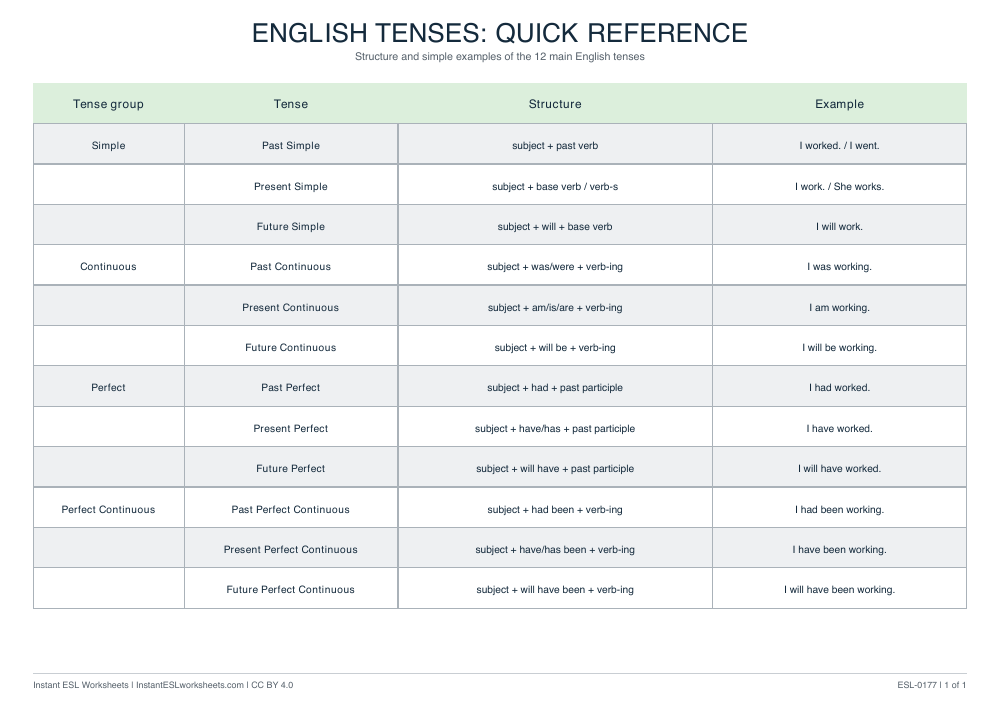
Page 1 of 1 · A4 printable PDF
A simple way to teach it
Before the lesson
Choose only the rows relevant to the learner's current work. The A1-C2 range describes the chart's breadth, not a requirement for beginners to learn all twelve forms.
- Find a familiar row and identify the subject, helping verbs and main-verb form in its example.
- Compare related rows, such as I work, I am working and I have worked, noticing what changes in the structure.
- As an optional teacher-added task, build a new affirmative example for one selected row and explain an appropriate context.
Support and extension
For support, cover the advanced rows. Extend by matching selected forms to contexts from another lesson. This is a structural reference, not a complete guide to tense uses, questions or negatives; no gap-fill exercise or answer key is supplied.
Suggested approach. Adjust the pace and number of questions to suit your class.