Who Gets to Be Flexible?
C1 reading: The consultancy described its new staffing policy as flexible working. Includes vocabulary, six comprehension questions, discussion prompts and full-sentence answers.
What’s in the worksheet?
- 4 vocabulary explanations
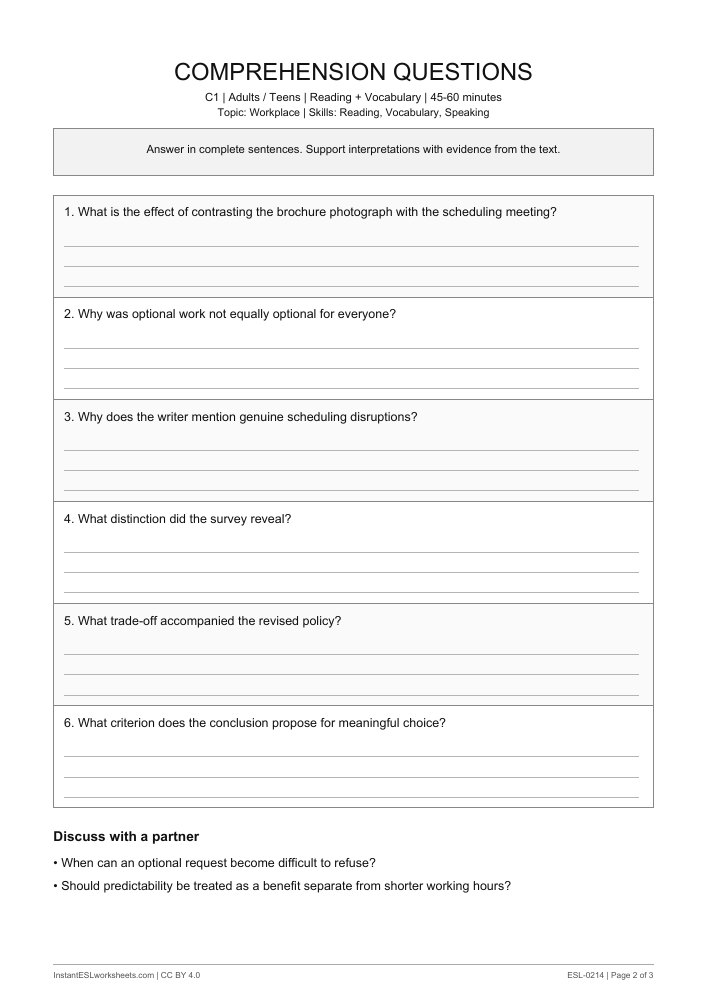
- Six comprehension questions and two discussion prompts
- Separate full-sentence answer key and teaching notes
Distinguish control over working hours from uncertainty about when work will arrive. The consultancy example examines why an optional request may carry different reputational costs for senior and junior staff.
Worksheet preview
Open PDF ↗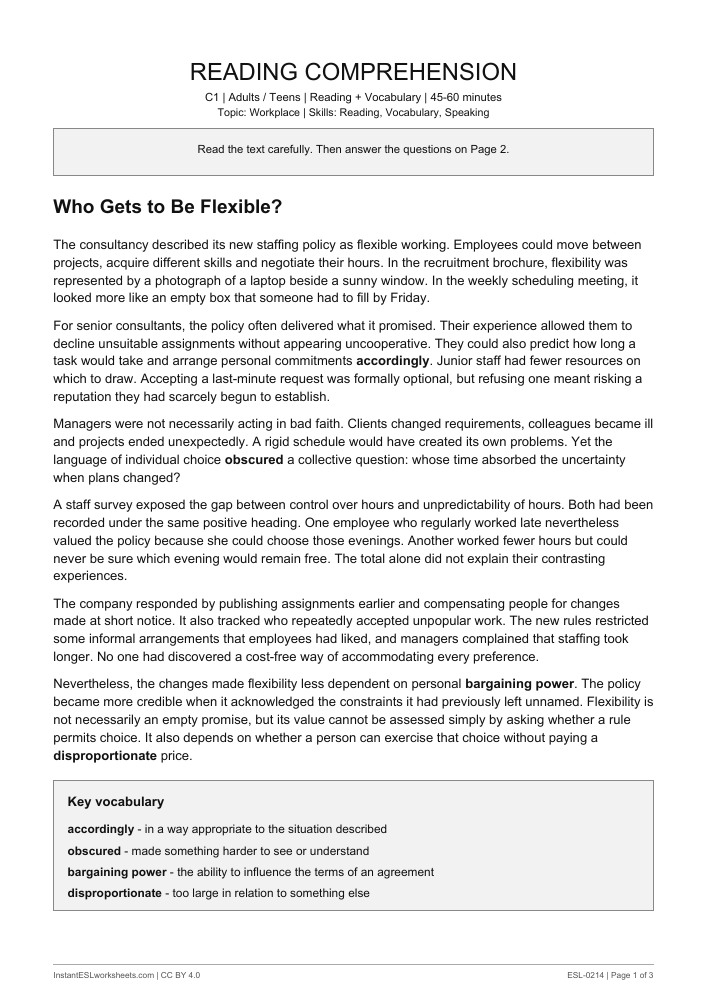
Page 1 of 3 · A4 printable PDF
Page 2 of 3 · A4 printable PDF
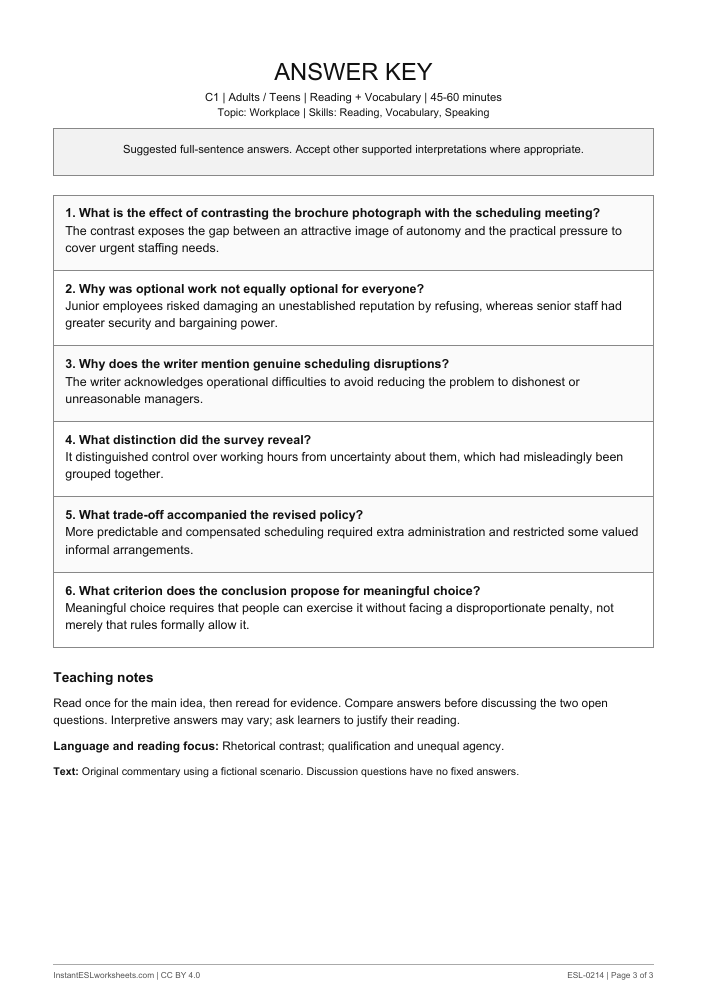
Page 3 of 3 · Answer key · A4 printable PDF
A simple way to teach it
Before the lesson
Use the text, questions and key, introducing bargaining power, obscured and disproportionate as needed. The workplace scenario is fictional, not advice about a specific employer.
- Compare the brochure's image of autonomy with the Friday staffing experience. Find why juniors may feel unable to refuse.
- Answer the six questions, including the concession that disruption is not always bad faith. Separate shorter hours from predictable or chosen hours.
- Review supported interpretations and the proposed changes. Discuss whether a choice is meaningful when exercising it brings a disproportionate penalty.
Support and extension
Support with allowed / practically possible comparisons. Extend by evaluating a hypothetical staffing rule against predictability, compensation and the distribution of unpopular assignments.
Suggested approach. Adjust the pace and number of questions to suit your class.