A Museum of Ordinary Things
B2 reading: The object that caused the longest discussion at the new neighbourhood museum was a cracked plastic lunchbox. Includes vocabulary, six comprehension questions, discussion prompts and full-sentence answers.
What’s in the worksheet?
- 4 vocabulary explanations
- Six comprehension questions and two discussion prompts
- Separate full-sentence answer key and teaching notes
Consider why an ordinary lunchbox becomes a contested museum exhibit. The reading explores how personal stories add meaning while potentially favouring contributors who can tell compelling stories.
Worksheet preview
Open PDF ↗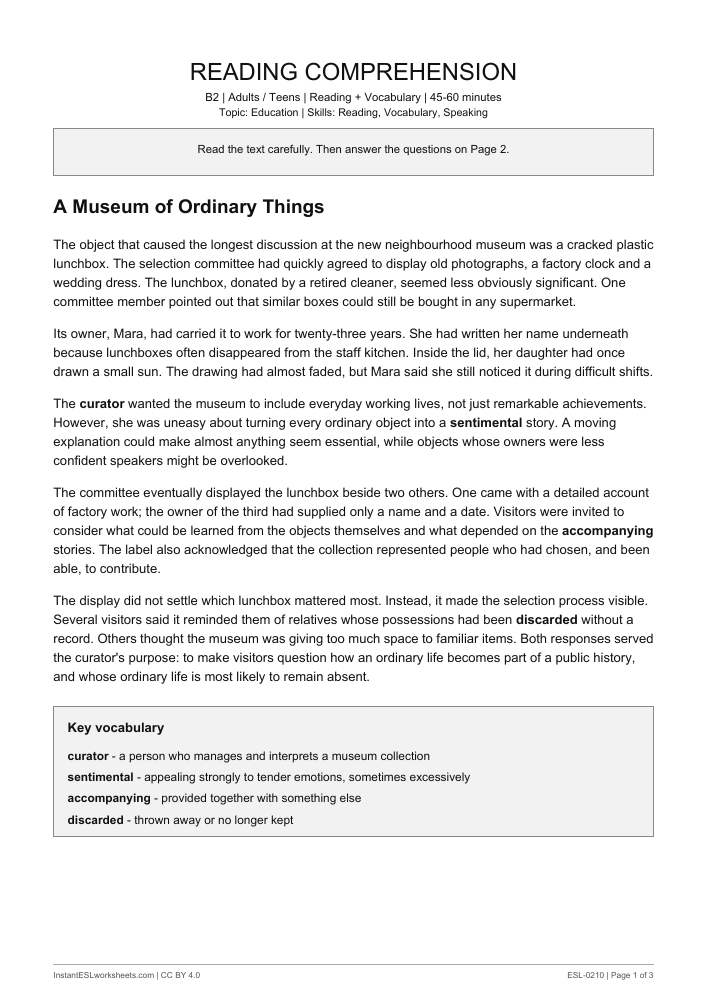
Page 1 of 3 · A4 printable PDF
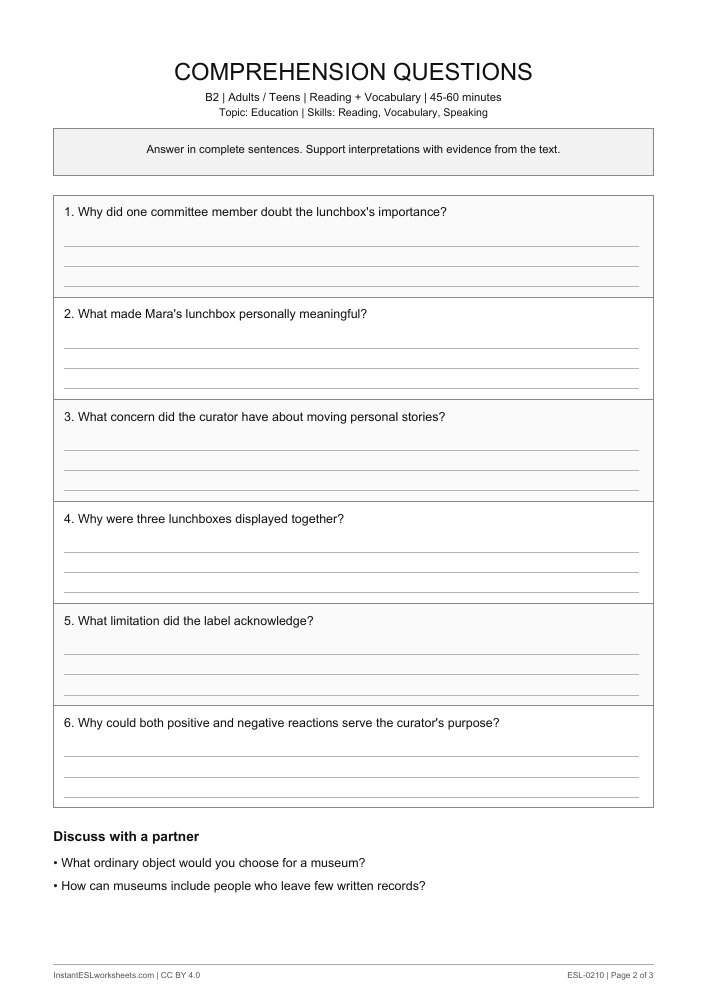
Page 2 of 3 · A4 printable PDF
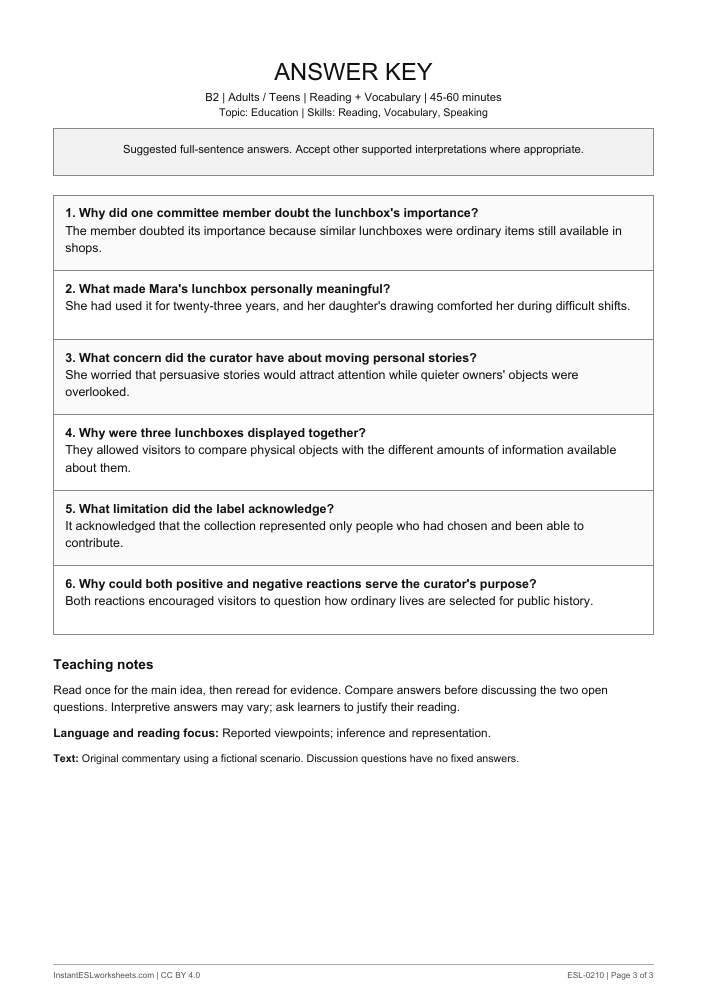
Page 3 of 3 · Answer key · A4 printable PDF
A simple way to teach it
Before the lesson
Print the reading and questions and reserve the suggested answers. Check curator, sentimental, accompanying and discarded; learners need no museum-history background.
- Read for why the committee questions the first lunchbox and what Mara's account adds. Separate the object's everyday availability from its personal significance.
- Answer the six questions, comparing the three lunchboxes and the label's acknowledgement of selection. Explain why both appreciation and criticism matter.
- Accept other interpretations supported by the passage. Discuss how to choose everyday objects when some people leave fewer records.
Support and extension
Support with object / story / selection questions. Extend by proposing a label that acknowledges limited knowledge rather than inventing a dramatic history.
Suggested approach. Adjust the pace and number of questions to suit your class.