The Three Sounds of -ed - Pronunciation Reference
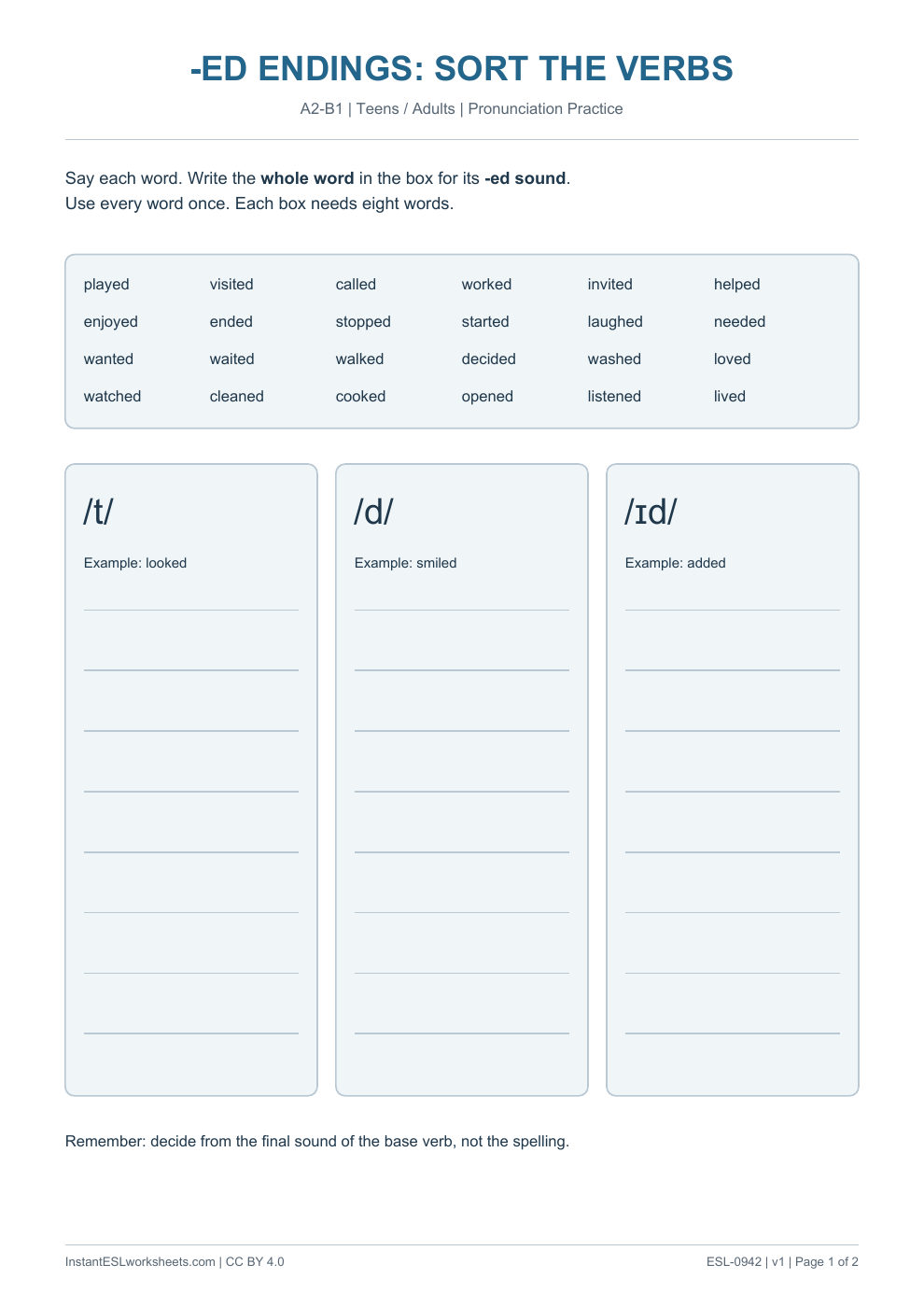
See how regular -ed endings sound as /t/, /d/ or /ɪd/. A one-page A2–B1 reference with 30 common verbs, sound-based rules and syllable comparisons.
What’s in the worksheet?
- Three sound columns with ten common verbs each
- No-extra-syllable and extra-syllable examples
- Sound-not-spelling reminders
Recognise the three regular -ed endings from the final sound of the base verb, rather than from spelling.
Worksheet preview
Open PDF ↗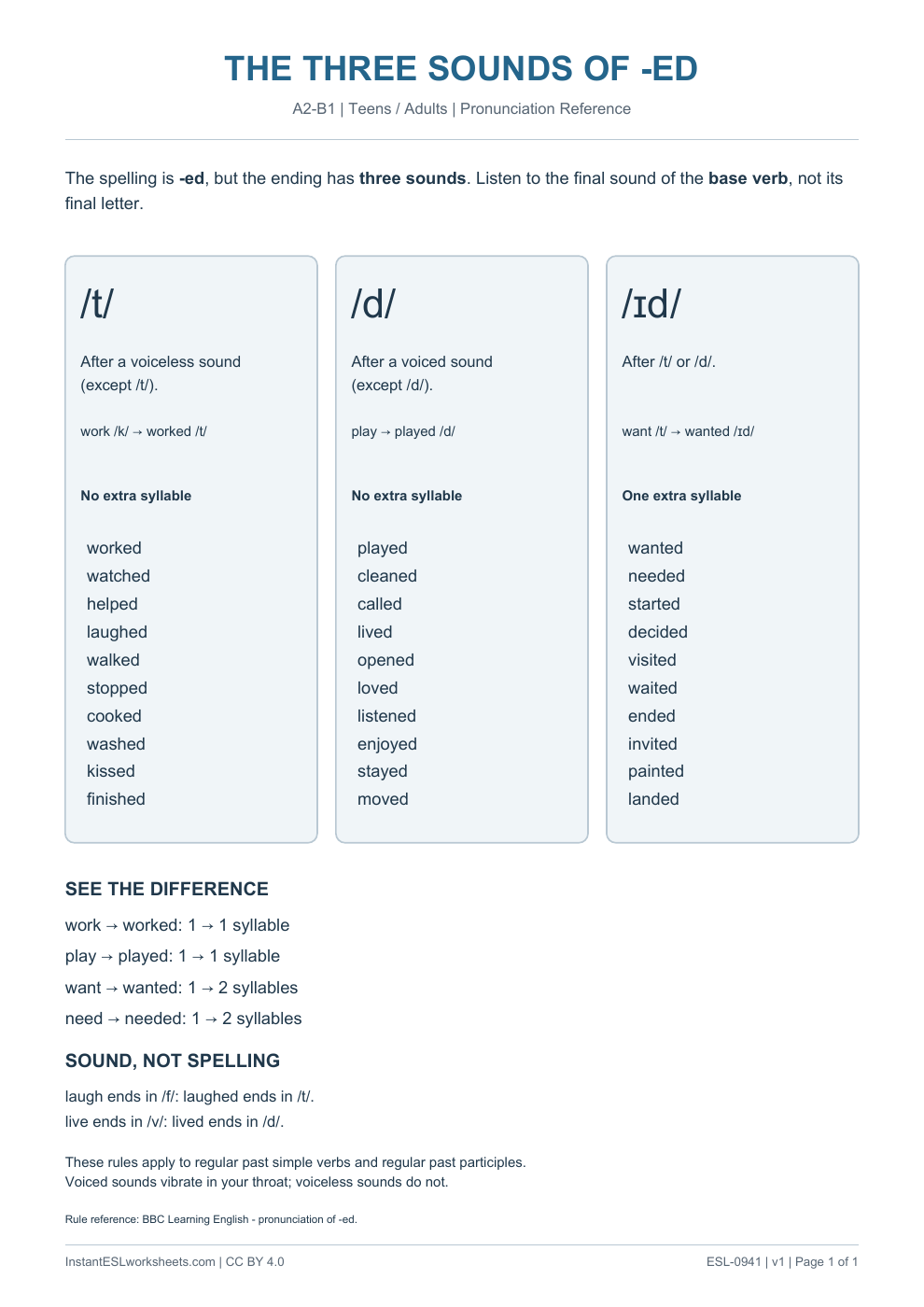
Page 1 of 1 · A4 printable PDF
A simple way to teach it
Before the lesson
Print one reference per learner. Prepare to model work/worked, play/played and want/wanted. No student answer key is needed.
- Model the three contrasts and point to their sound columns. Show how wanted and needed gain a syllable, while worked and played do not.
- Read several verbs from each column aloud. Draw attention to laughed: its base verb ends in /f/, so the ending is /t/.
- Keep the reference beside a past-tense task. When a learner is unsure, identify the final base-verb sound together and check the column.
Support and extension
Use only a few familiar verbs at first. For further practice, use the separate -ed sorting sheet; this page is a reference, not a written exercise.
Suggested approach. Adjust the pace and number of questions to suit your class.