The Four-Day Experiment
B2 reading: When the small design company Lineworks announced a four-day working week, its manager emphasised that this was a trial, not a permanent benefit. Includes vocabulary, six comprehension questions, discussion prompts and full-sentence answers.
What’s in the worksheet?
- 4 vocabulary explanations
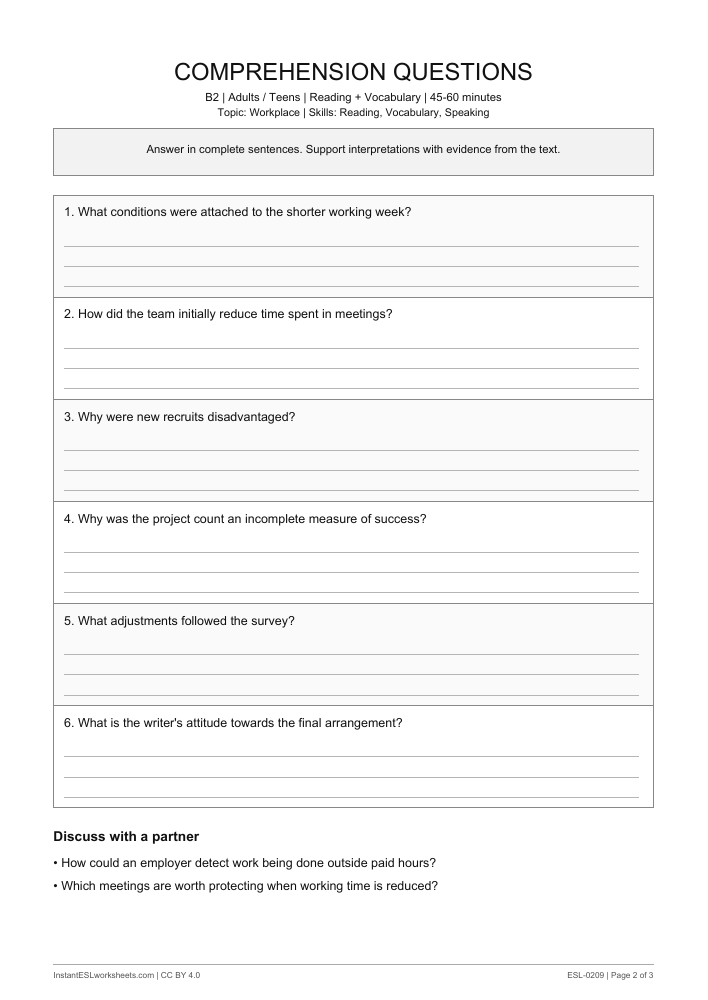
- Six comprehension questions and two discussion prompts
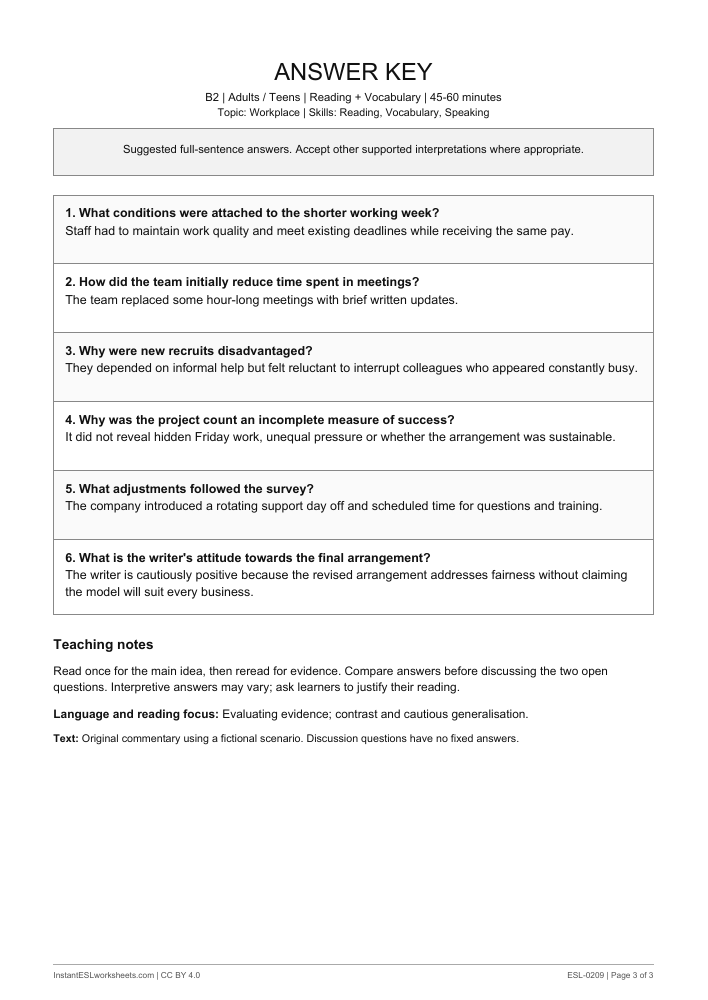
- Separate full-sentence answer key and teaching notes
Evaluate a fictional four-day working-week trial whose project totals initially conceal uneven effects on staff. Learners weigh reduced meetings against hidden support work and fewer opportunities for new recruits to ask questions.
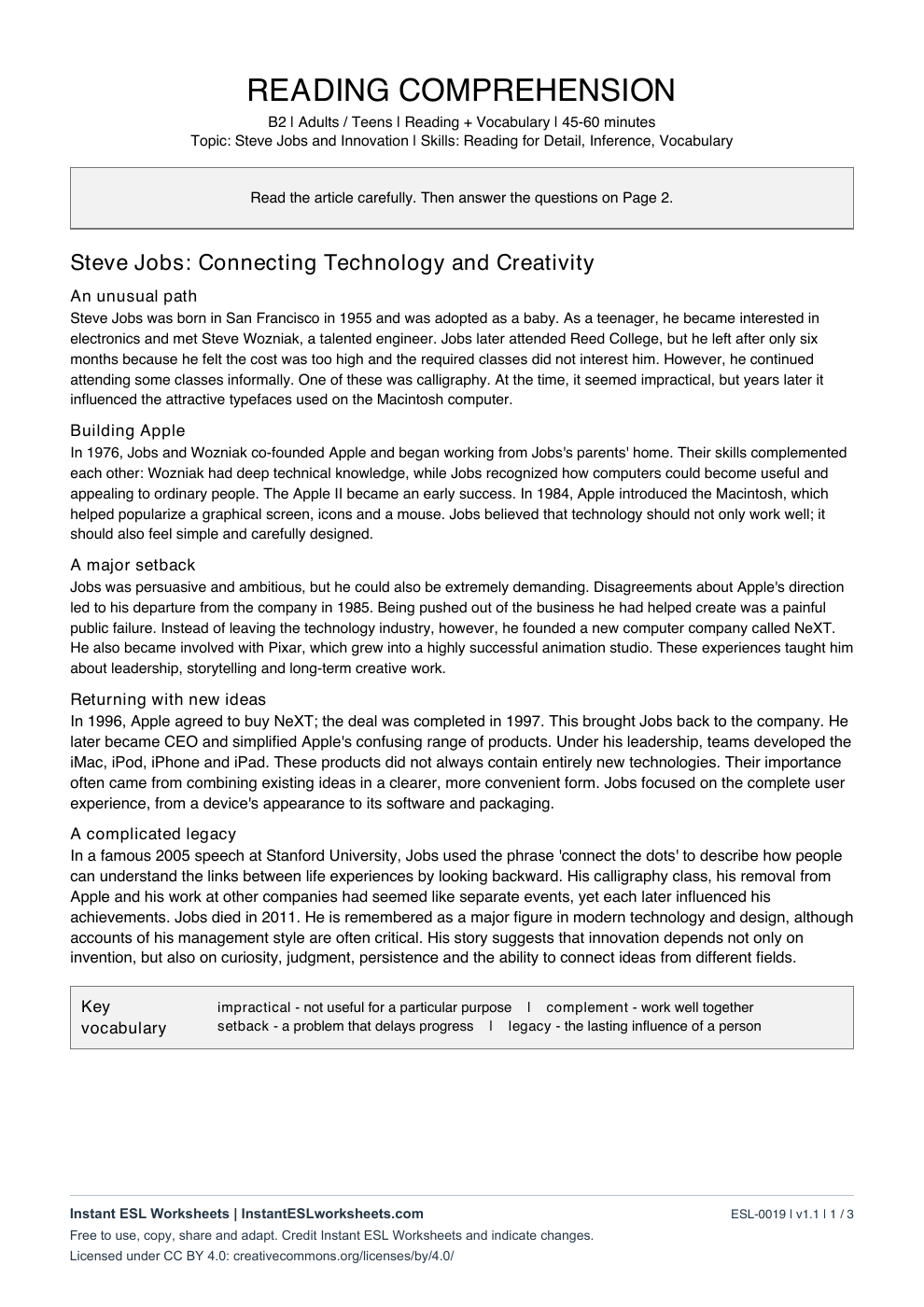
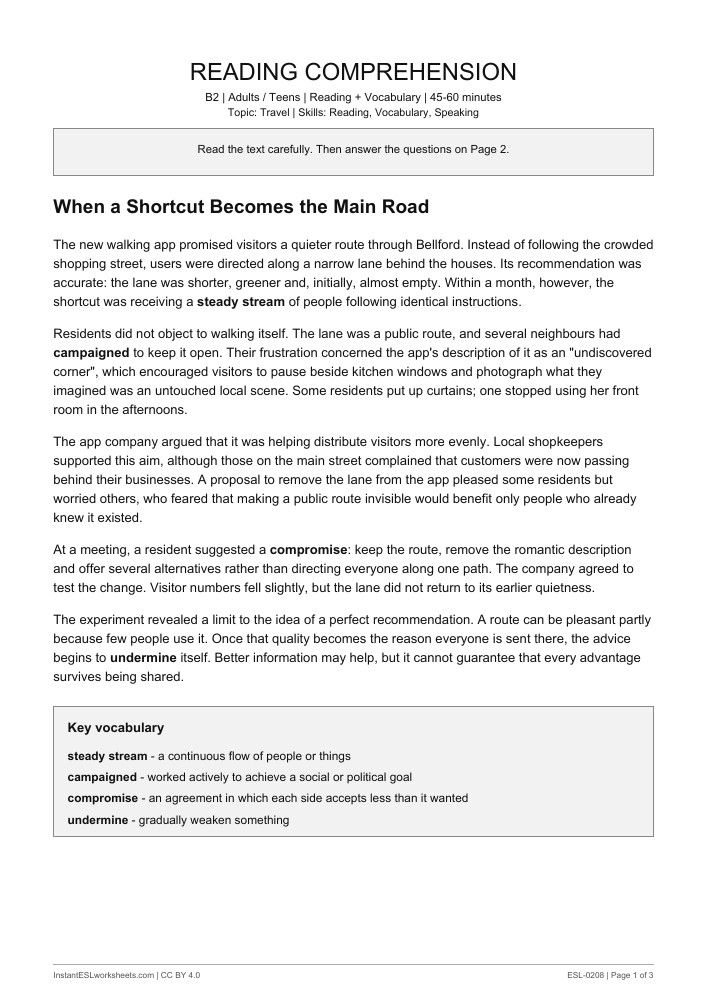
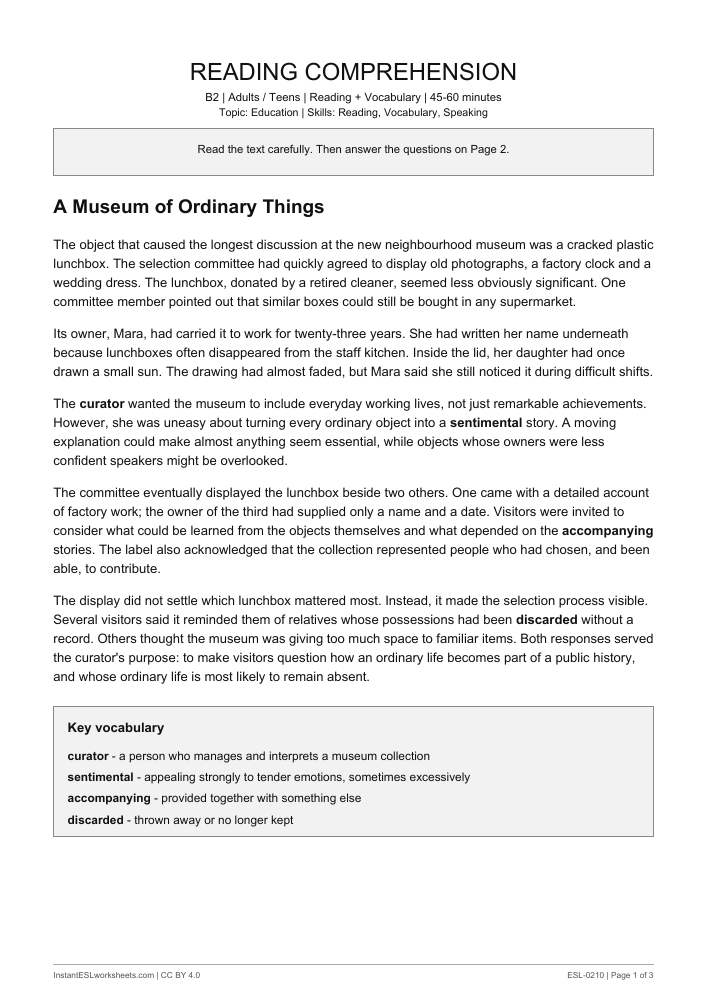
Worksheet preview
Open PDF ↗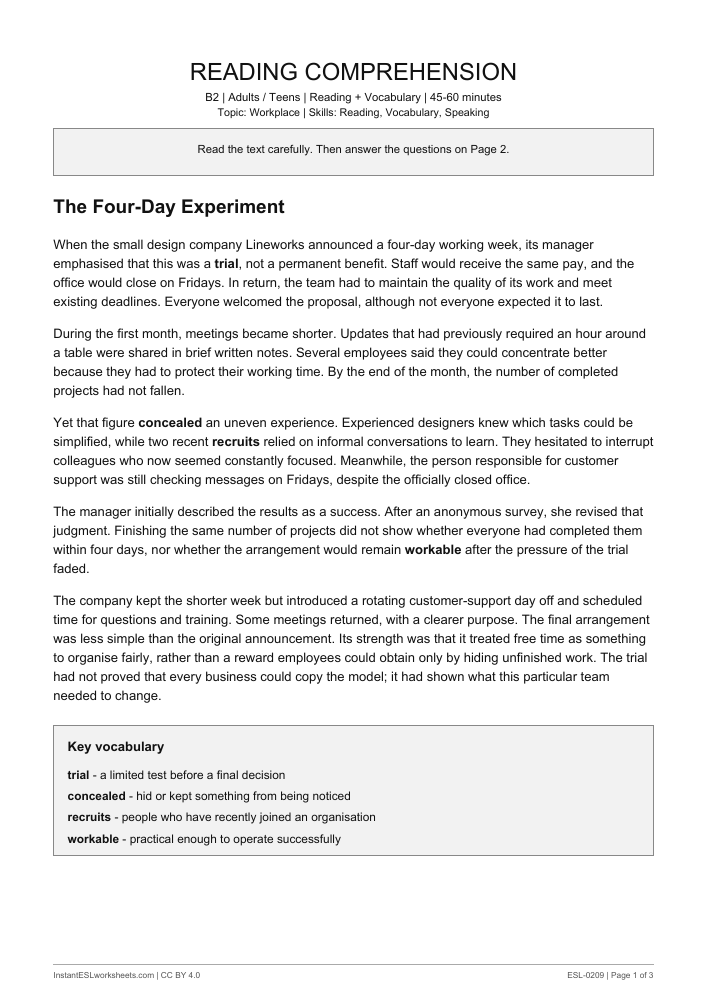
Page 1 of 3 · A4 printable PDF
Page 2 of 3 · A4 printable PDF
Page 3 of 3 · Answer key · A4 printable PDF
A simple way to teach it
Before the lesson
Use the three reading pages and clarify trial, concealed, recruits and workable. The Lineworks story is not evidence from a real workplace study.
- Read for the conditions of the trial and the initial changes to meetings. Ask why an unchanged project count seems persuasive.
- Answer the six questions, adding what the staff survey reveals. Track the revised support arrangements, training opportunities and restored meetings.
- Review supported alternatives with the key. Discuss ways to detect work outside paid hours and decide which meetings are useful.
Support and extension
Offer an initial measure / missing evidence / revision table. Extend by proposing one additional evaluation question, avoiding a blanket conclusion that shorter weeks always succeed or fail.
Suggested approach. Adjust the pace and number of questions to suit your class.