The Repair Table
B1 reading: When the kettle in our shared flat stopped working, I put it beside the rubbish bin. Includes vocabulary, six comprehension questions, discussion prompts and full-sentence answers.
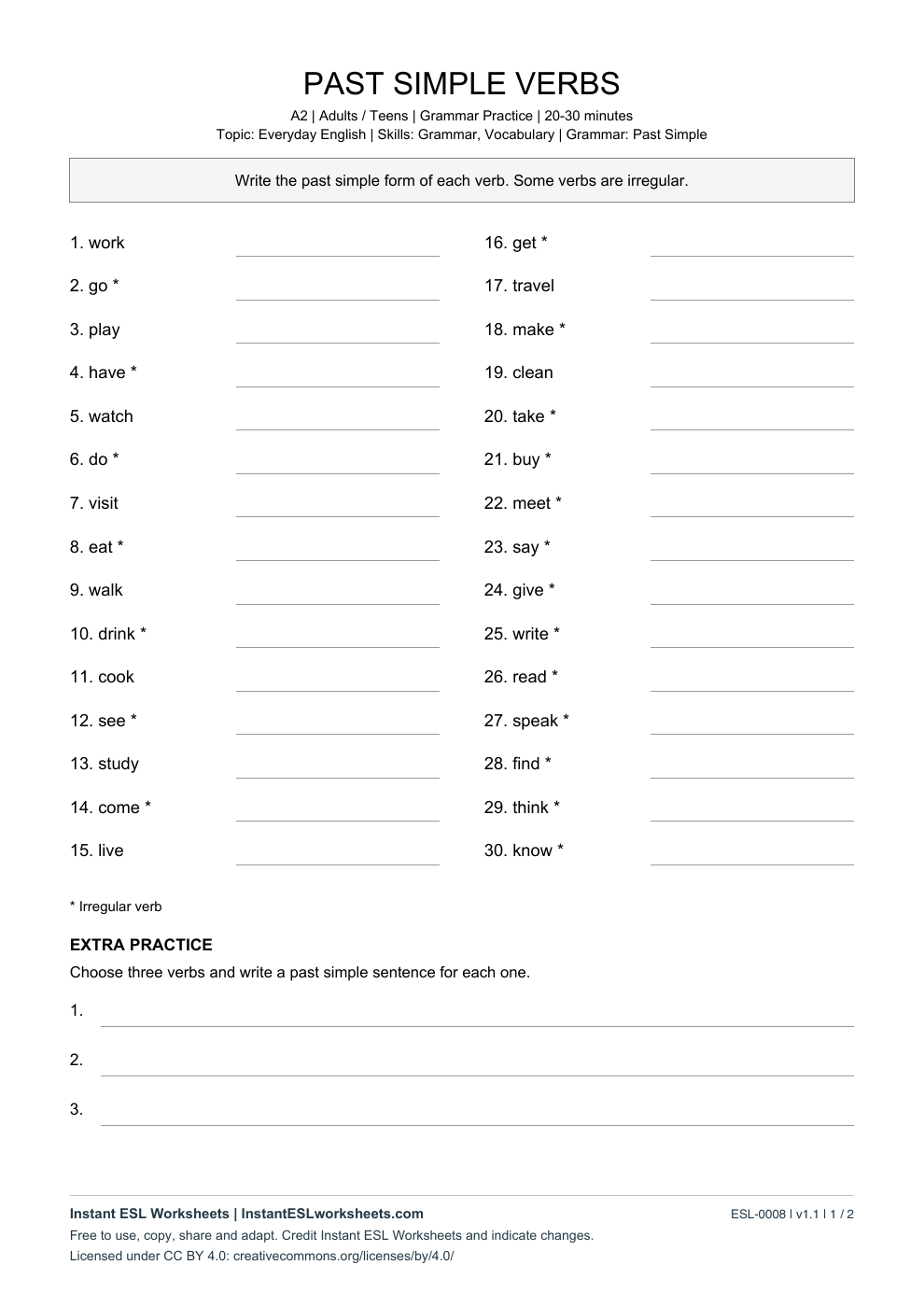
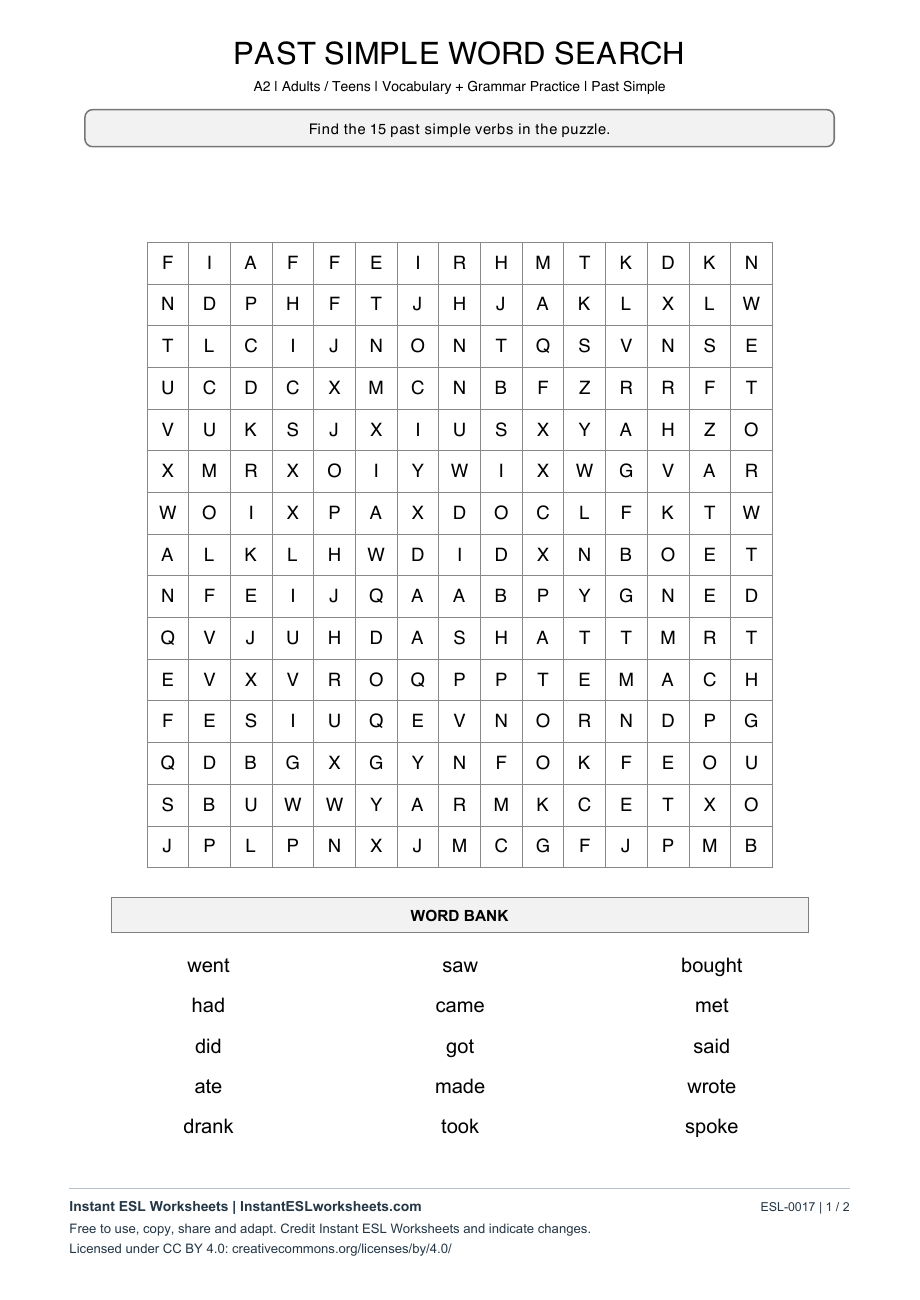
What’s in the worksheet?
- 4 vocabulary explanations
- Six comprehension questions and two discussion prompts
- Separate full-sentence answer key and teaching notes
Explore a repair visit that changes the narrator's expectations: visitors learn alongside volunteers rather than simply leaving broken objects. The kettle story contrasts saving money with spending more time.
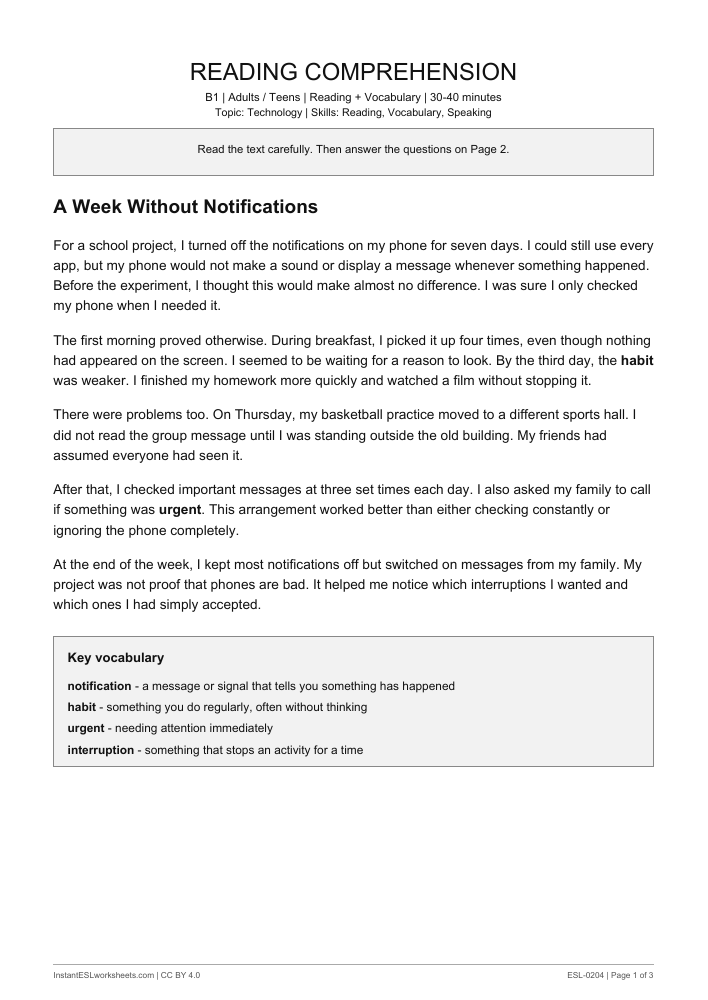
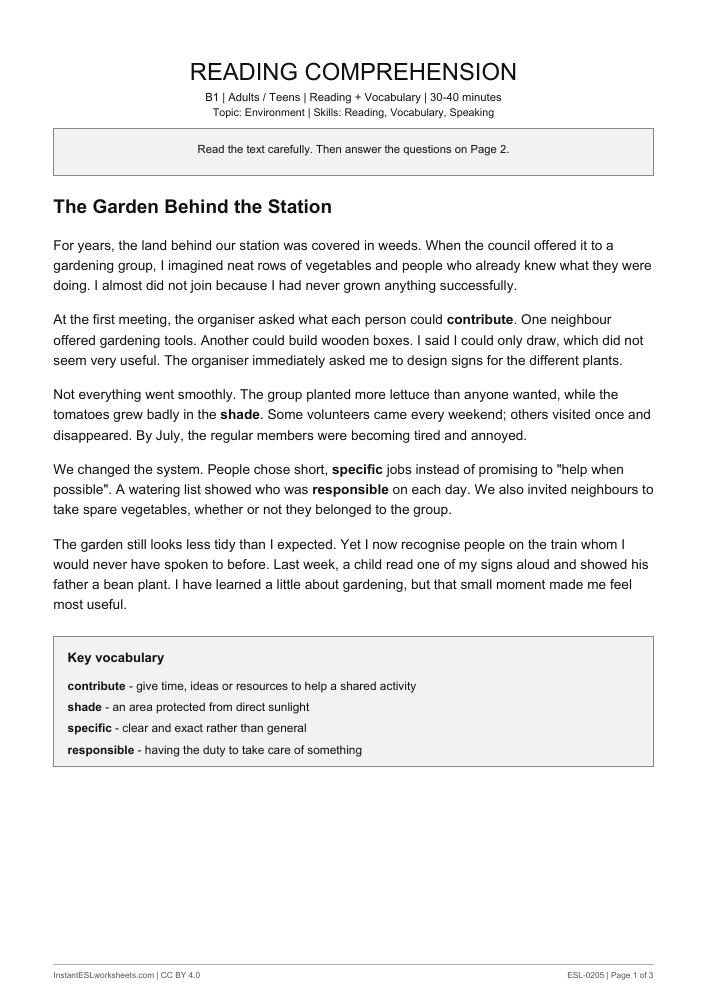
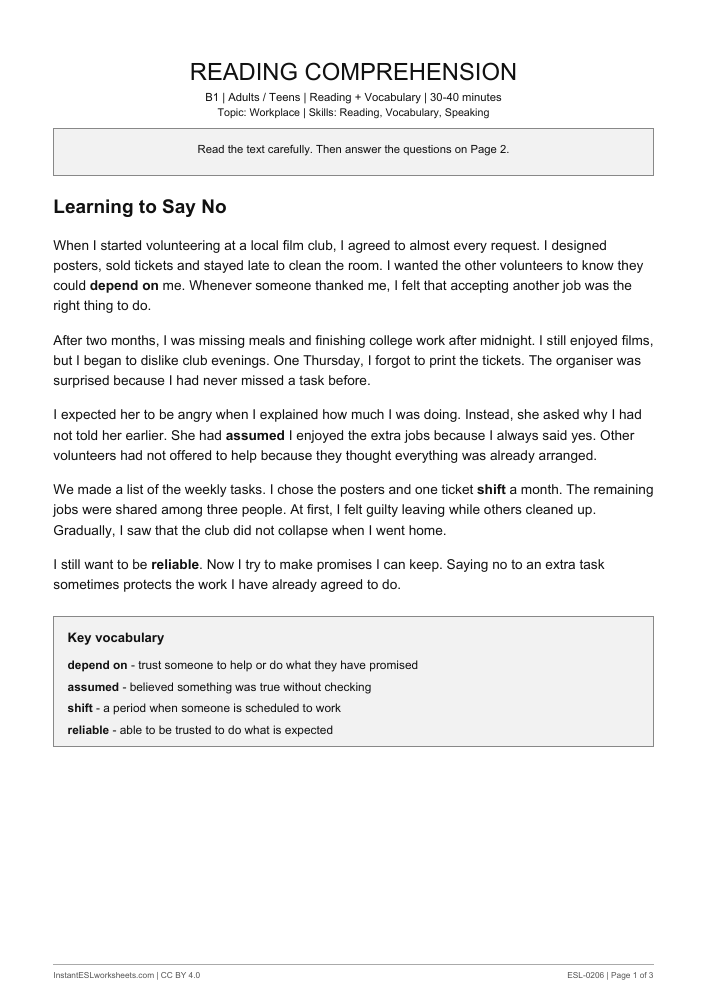
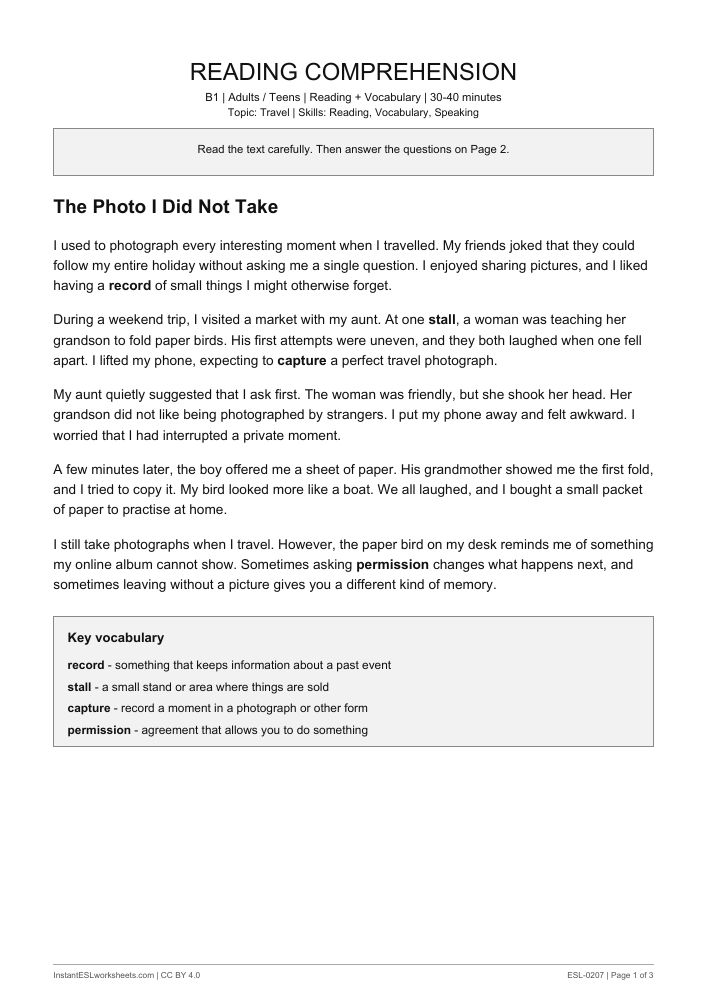
Worksheet preview
Open PDF ↗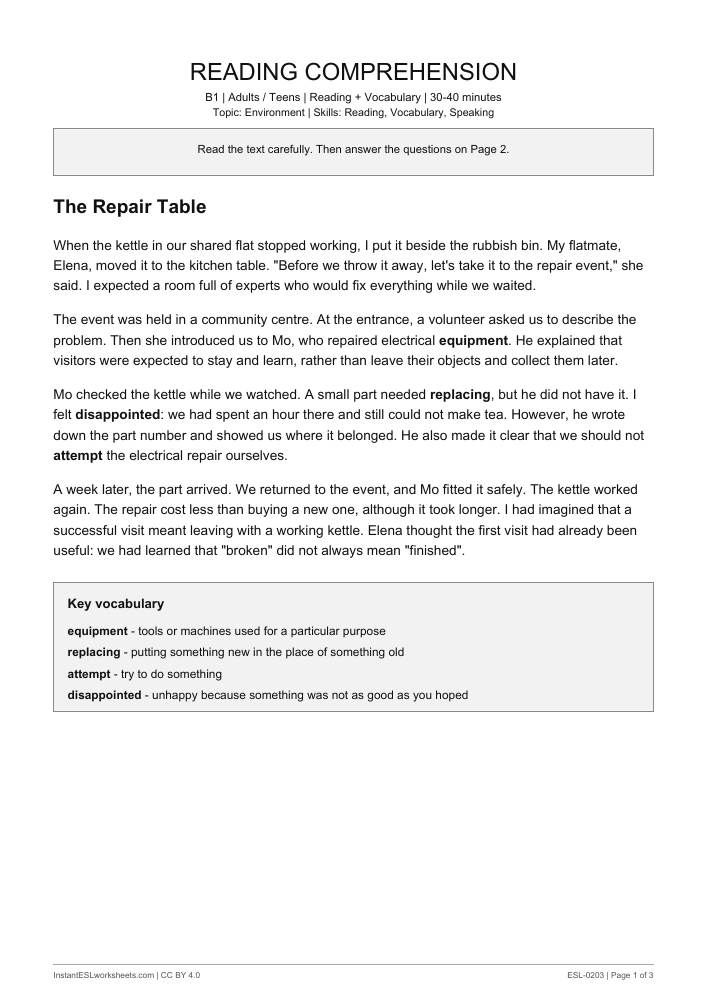
Page 1 of 3 · A4 printable PDF
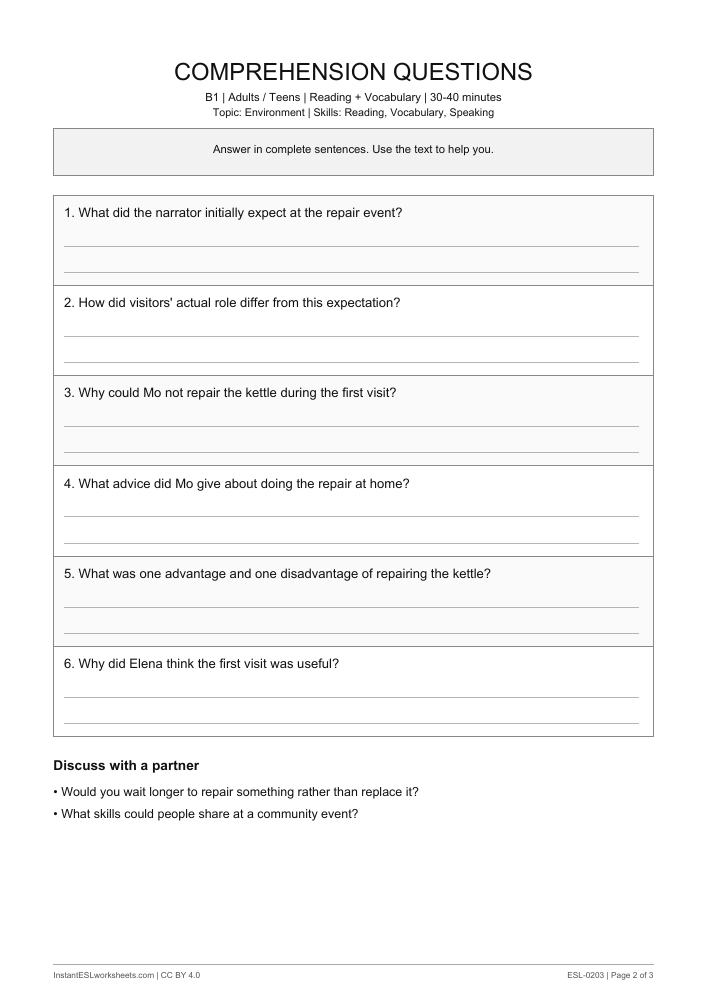
Page 2 of 3 · A4 printable PDF
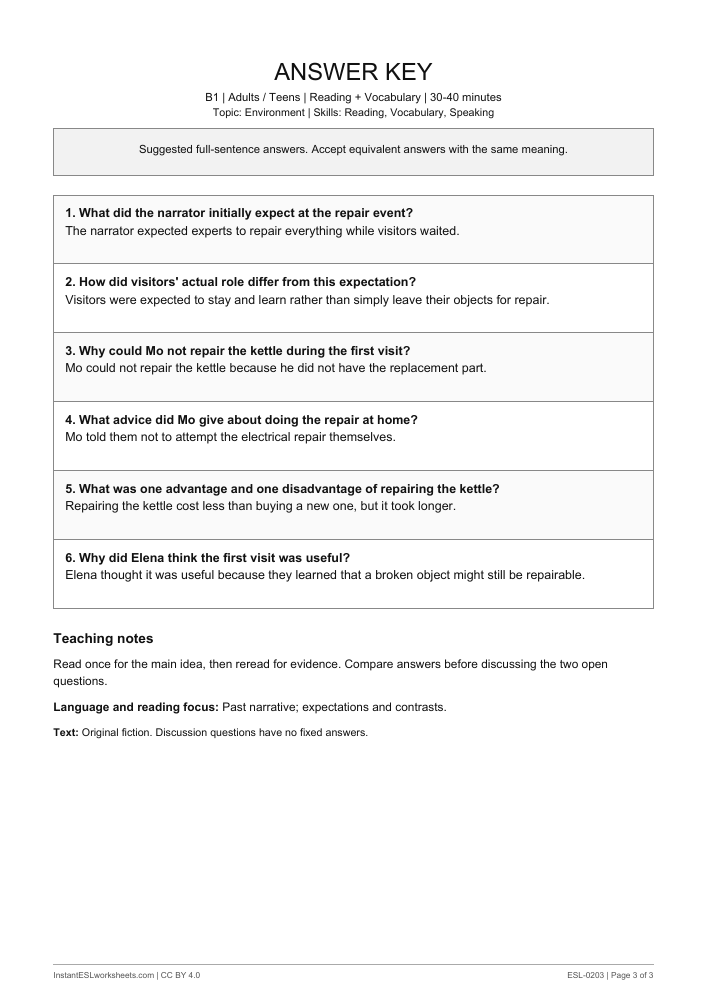
Page 3 of 3 · Answer key · A4 printable PDF
A simple way to teach it
Before the lesson
Print the text and questions, reserving the suggested answers. Clarify equipment, replacing, attempt and disappointed. This is a reading lesson, not instructions for repairing electrical equipment.
- Read to identify what the narrator expected and what Mo asks visitors to do. Follow the missing part and return visit in order.
- Answer the six questions with evidence, including Mo's safety warning. Keep the lower cost and longer repair process as separate comparisons.
- Check alternative wording against the key. Discuss whether waiting for a repair is worthwhile and which non-hazardous skills a community could share.
Support and extension
Give learners an expected / actual chart for support. Extend with a short recommendation about a repair service, but do not turn the activity into practical electrical repair.
Suggested approach. Adjust the pace and number of questions to suit your class.