Getting to Know You
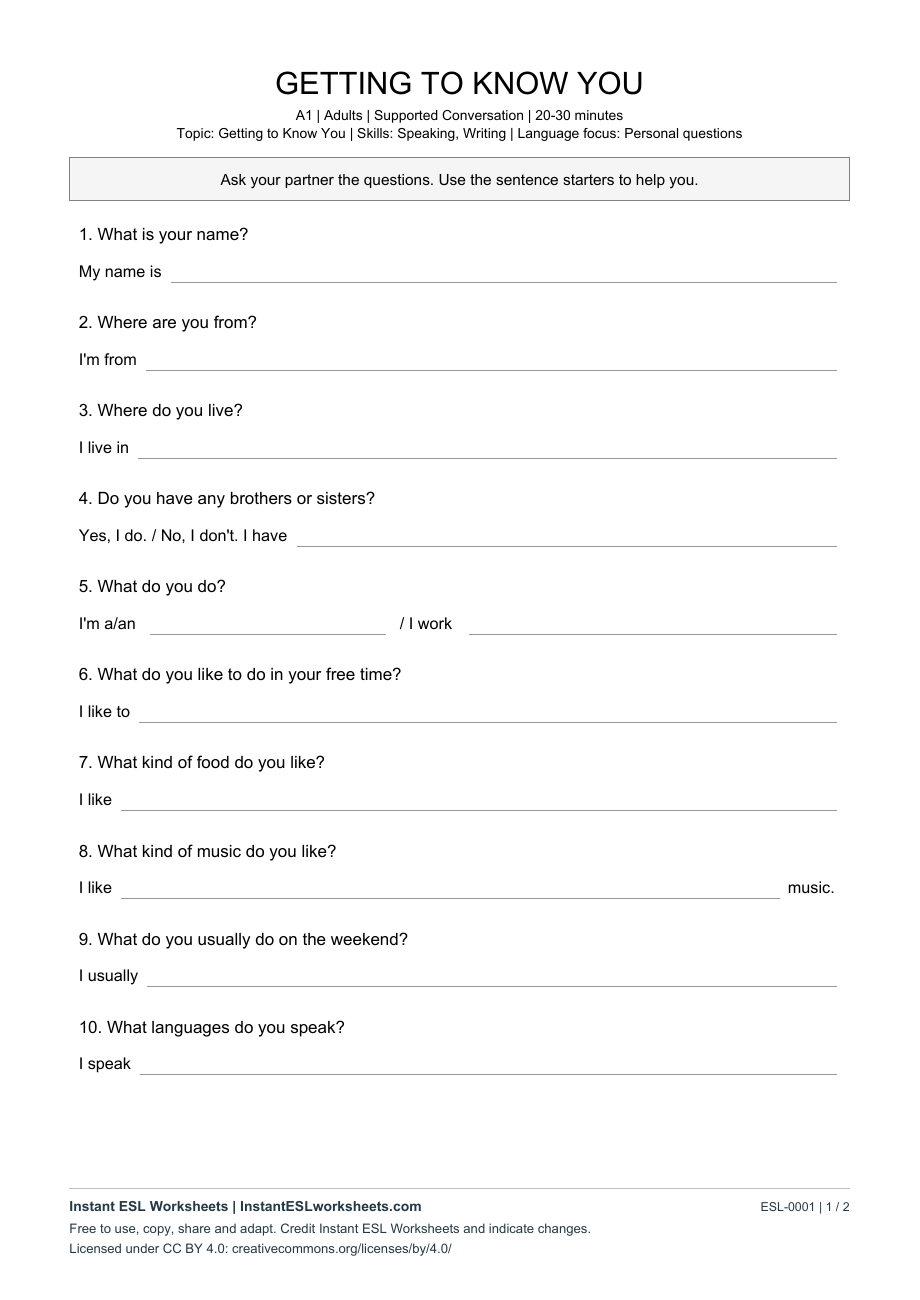
Ten personal questions with sentence starters and an open-answer version. Help A1 adults introduce themselves and ask a partner about everyday life.
2 pages · Free PDFPreview lesson →
The worksheet library
Free printable activities for adults and teens, from A1 to C2, plus handwriting and number sheets for children.
Looking for inspiration? Explore lesson collections →
Showing 181–192 of 215 worksheets
Ten personal questions with sentence starters and an open-answer version. Help A1 adults introduce themselves and ask a partner about everyday life.
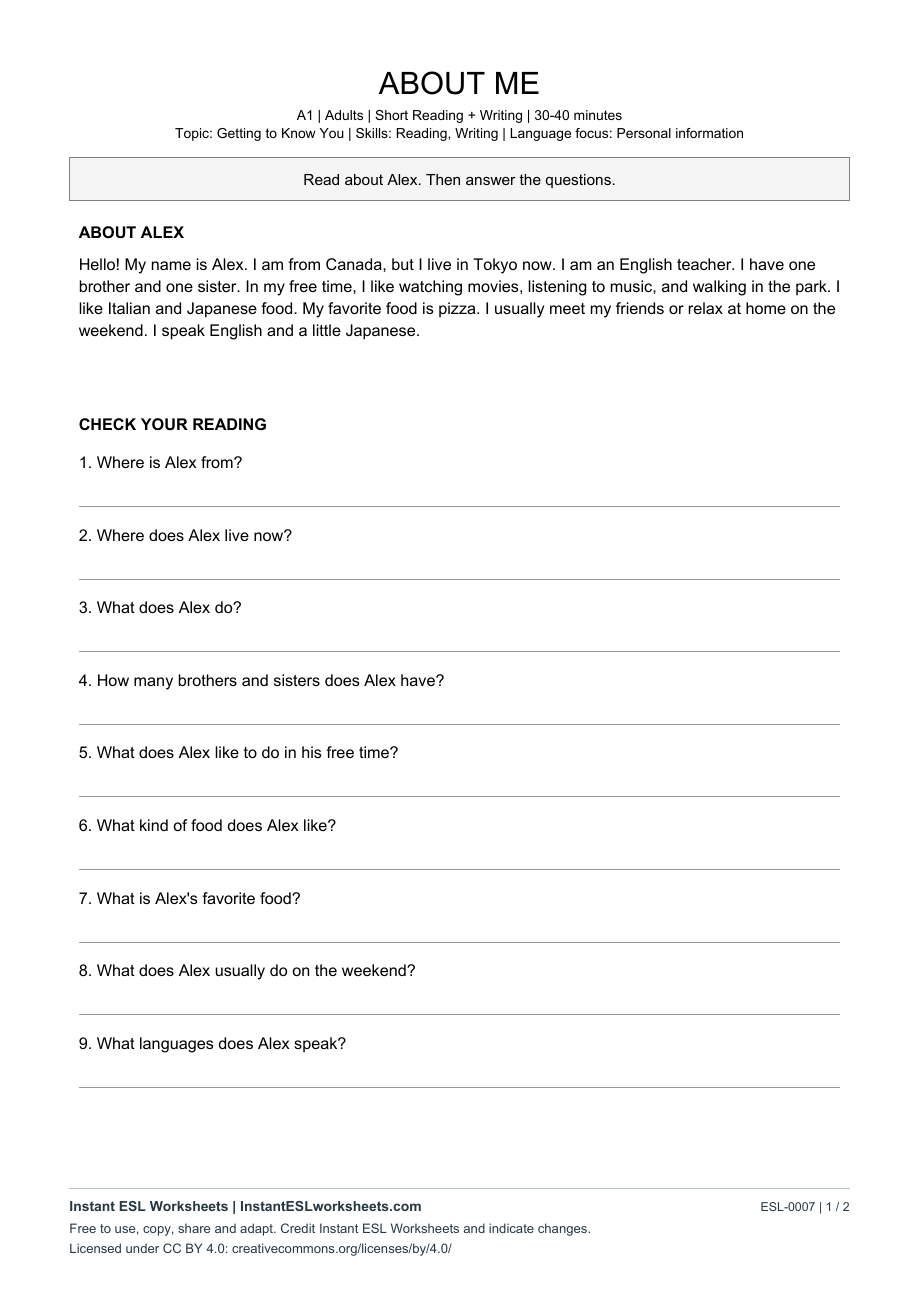
Read a short introduction to Alex, answer nine comprehension questions, then write a personal introduction using sentence starters. An A1 reading and writing activity.
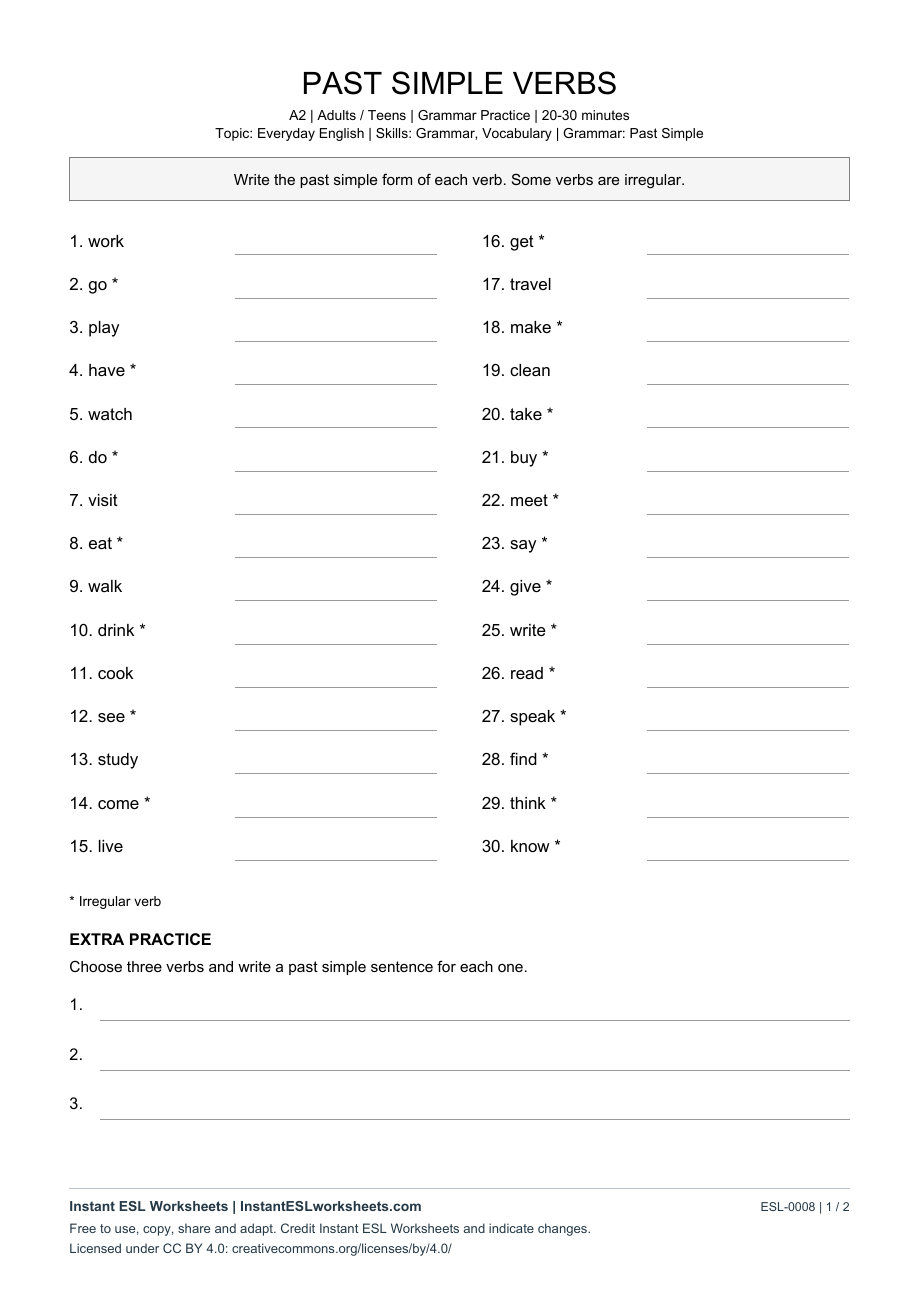
Practise the past simple forms of 30 regular and irregular verbs, then use selected verbs in original sentences. Includes a separate answer key.
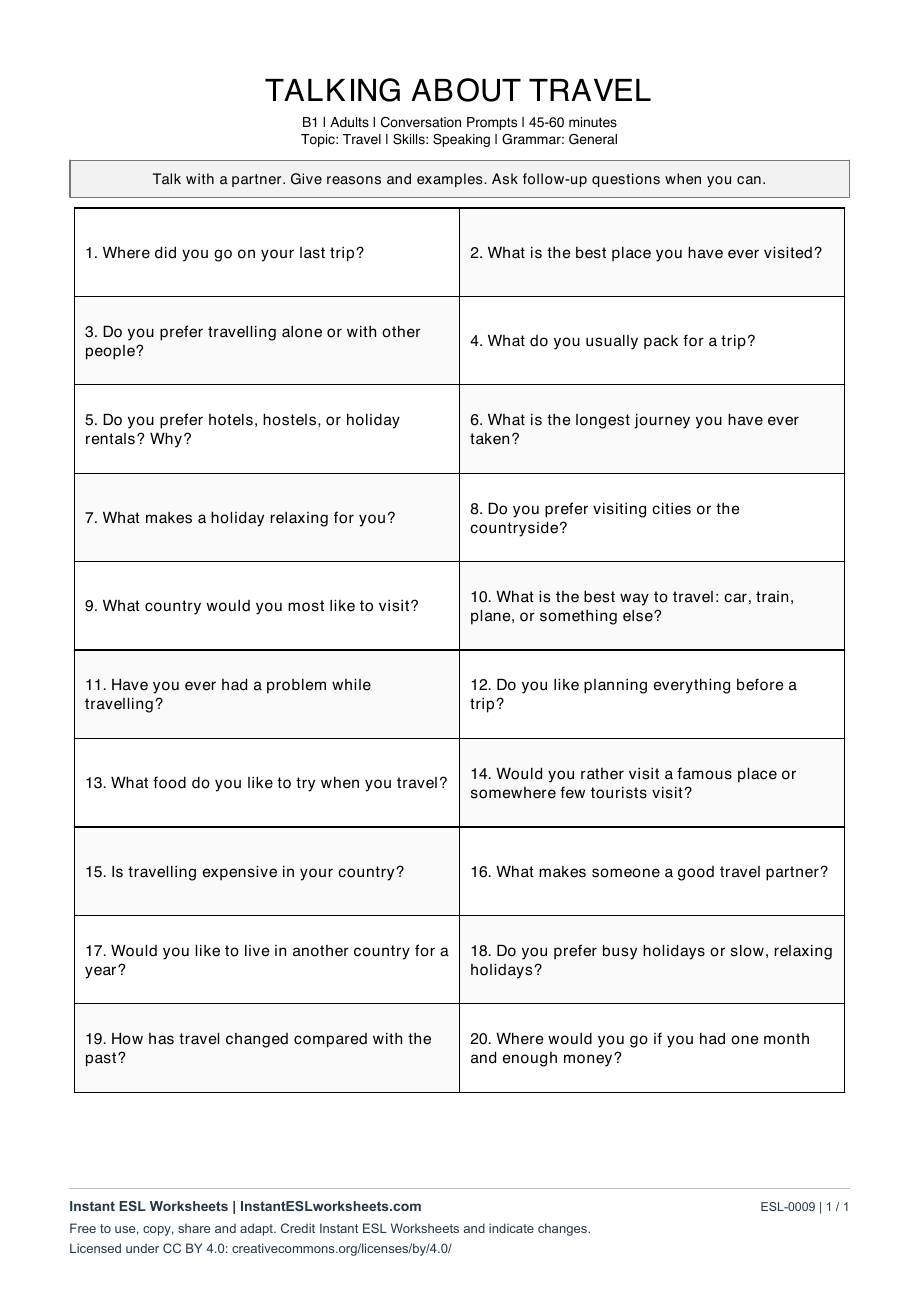
Twenty B1 conversation questions about journeys, holidays and travel preferences. Practise sharing experiences and giving reasons with a partner.
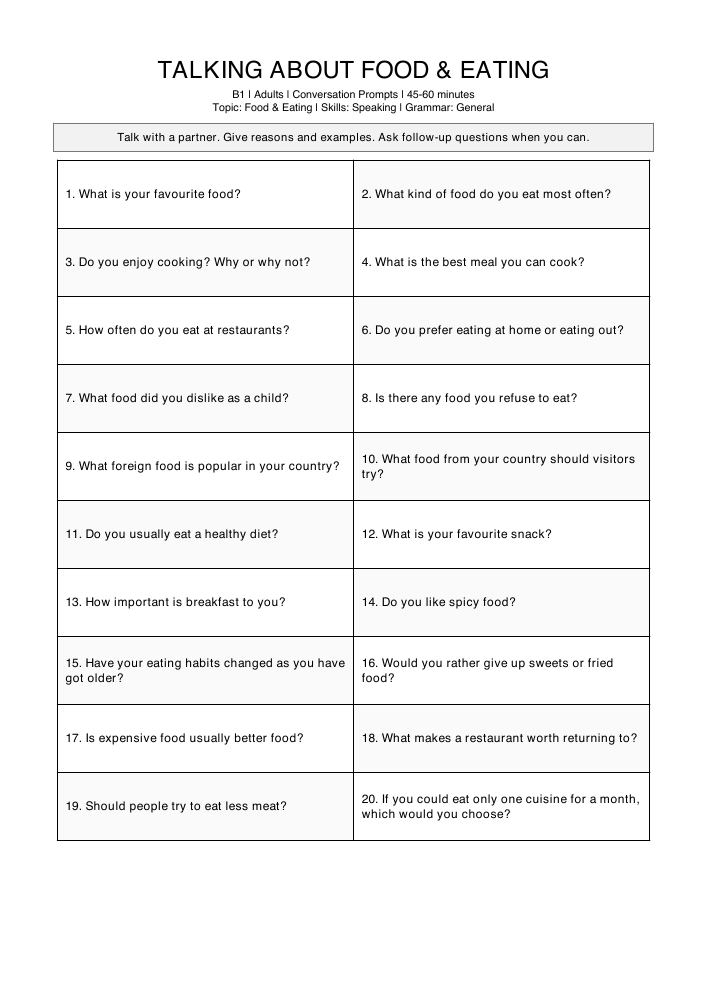
Twenty conversation prompts to get adults talking about food, cooking and eating habits. Practise giving reasons, sharing experiences and asking follow-up questions.
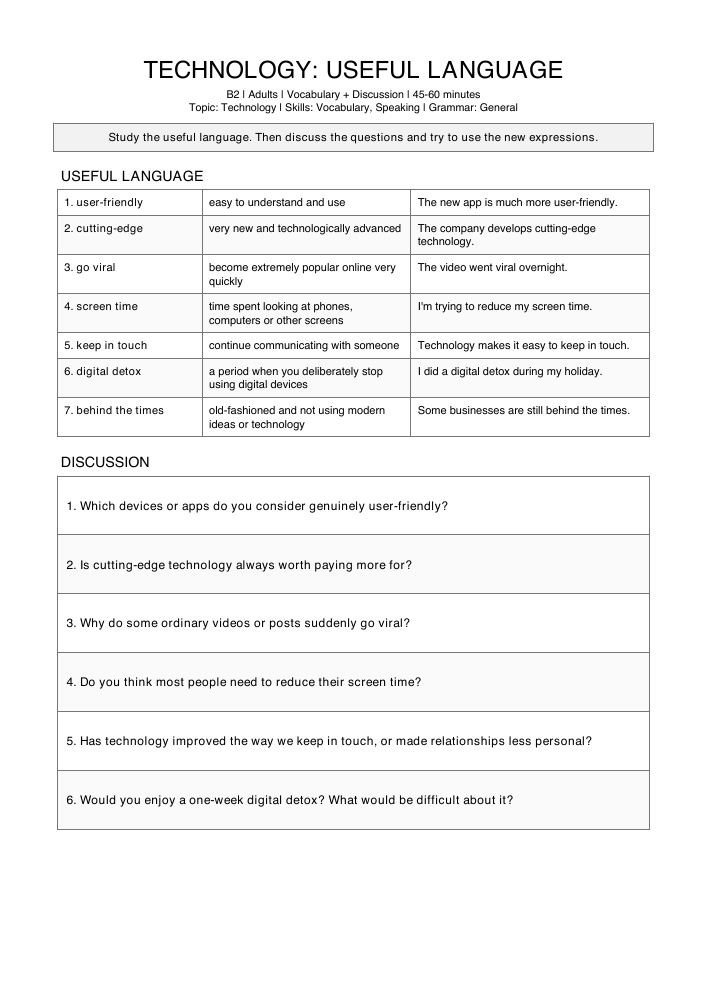
Explore everyday technology through seven useful expressions and six discussion questions, from screen time and going viral to taking a digital detox.
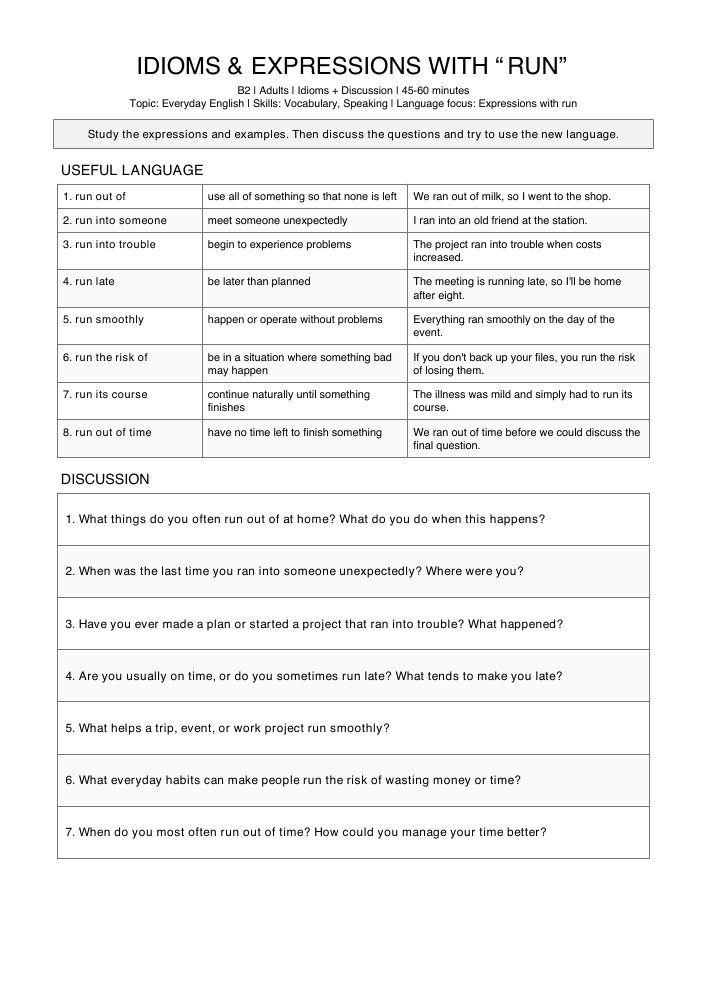
Build confidence with eight everyday expressions using run, then put them into practice through seven personal discussion questions.
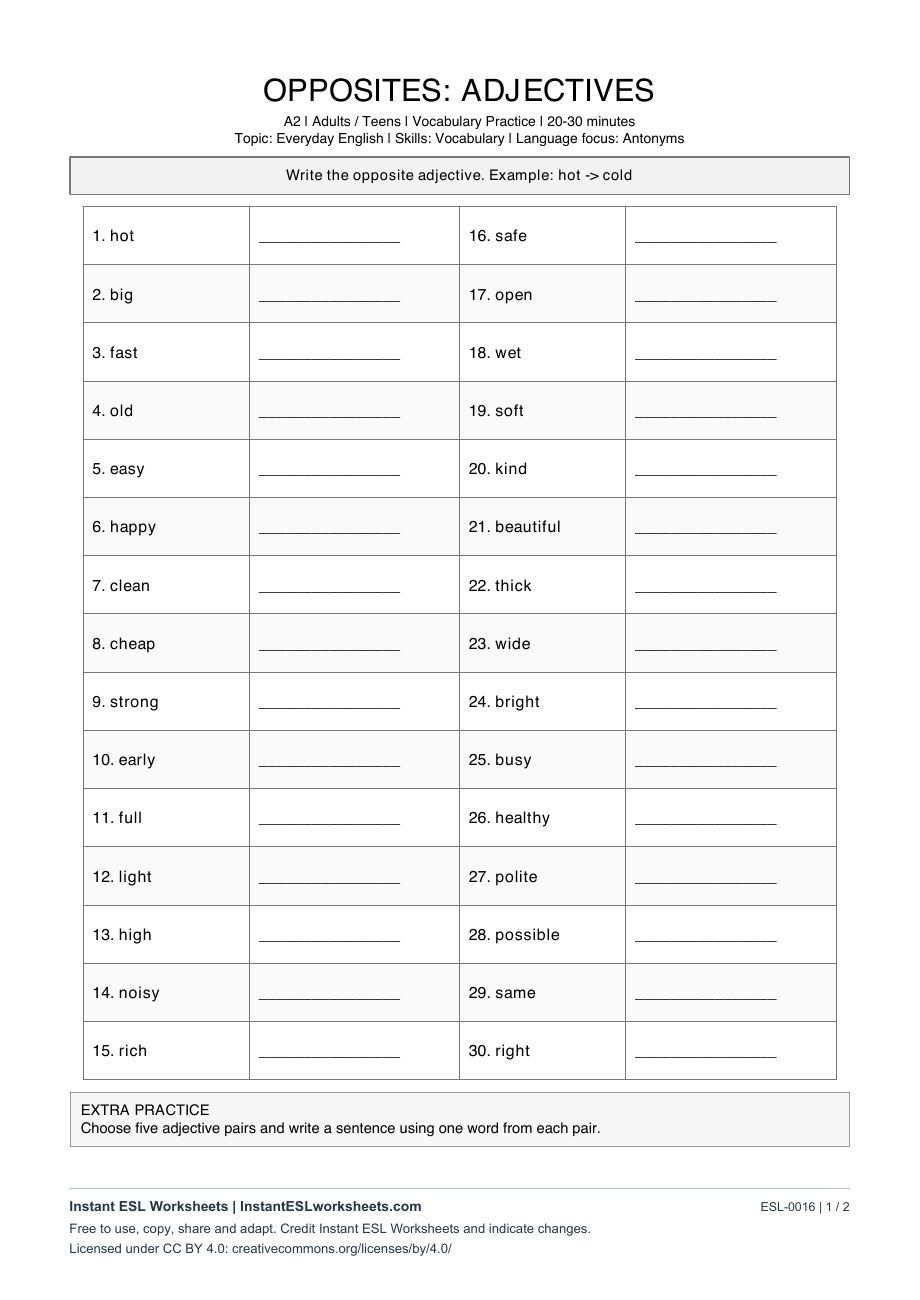
Practise common opposite adjectives in 30 prompts, followed by sentence writing. Includes suggested answers on a separate page.
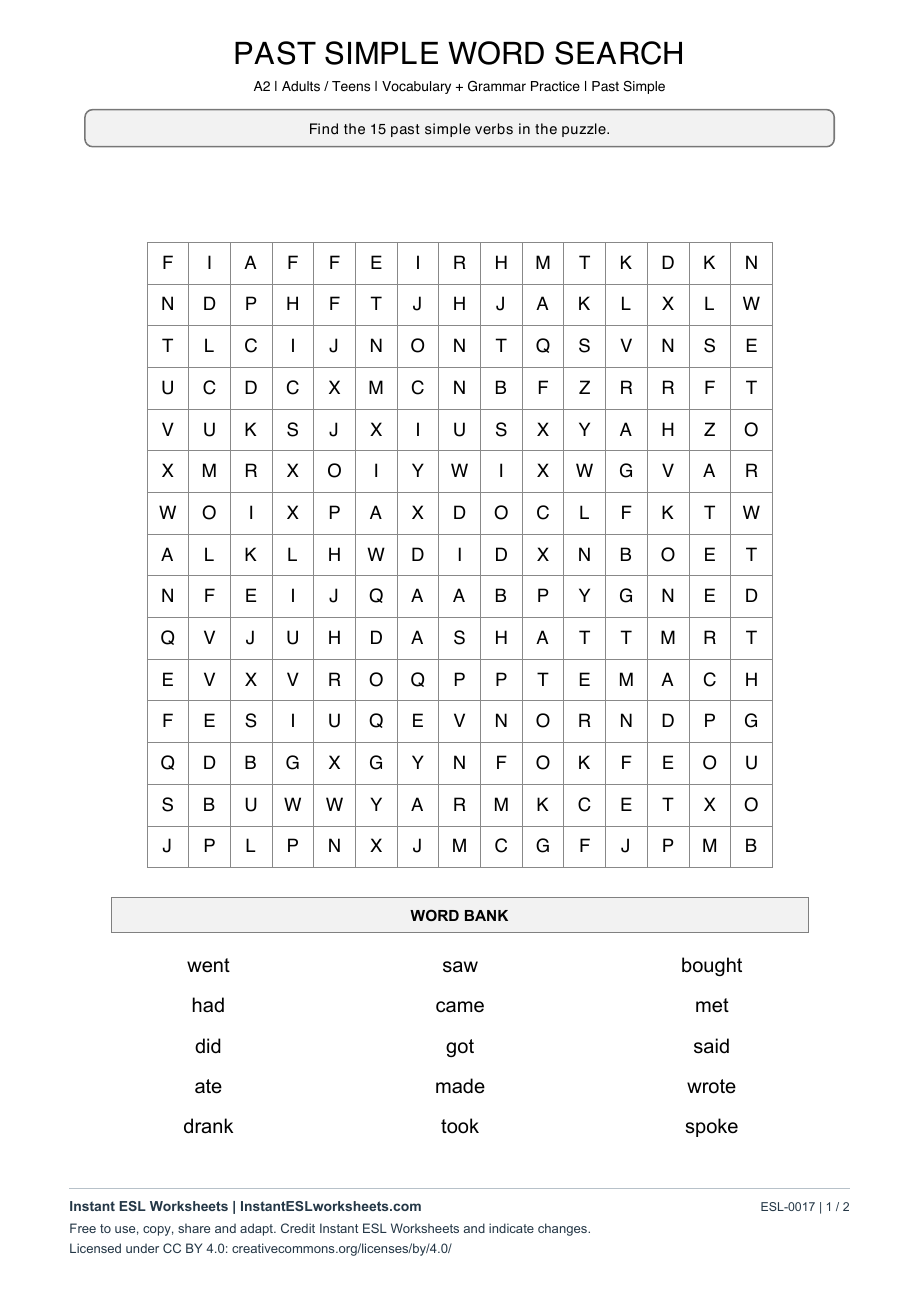
Find 15 past simple verbs in a word-search grid with a word bank. Includes the solution grid on a separate answer page.
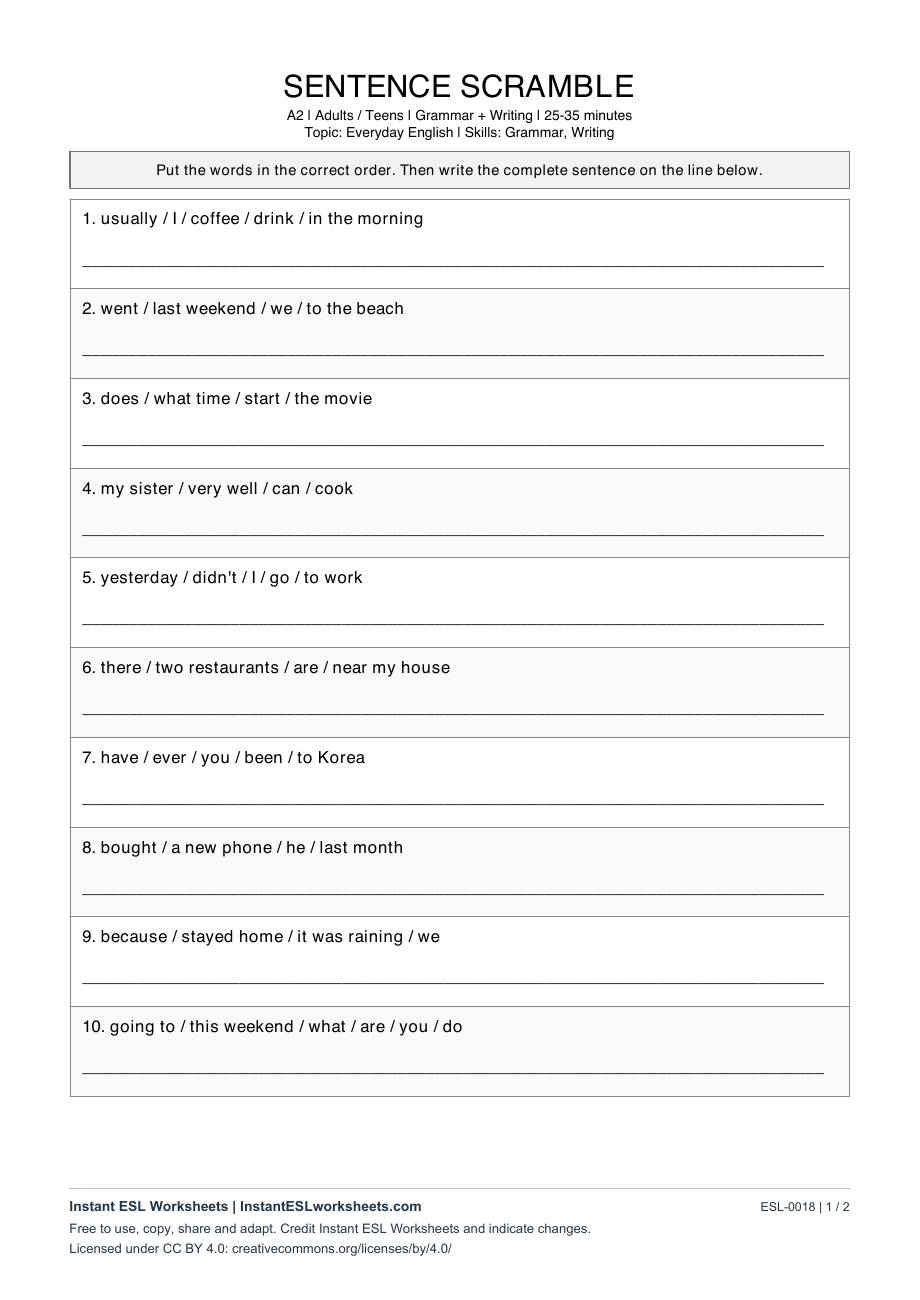
Reorder words to make English sentences and questions. An A2 grammar and writing worksheet with a separate answer key.
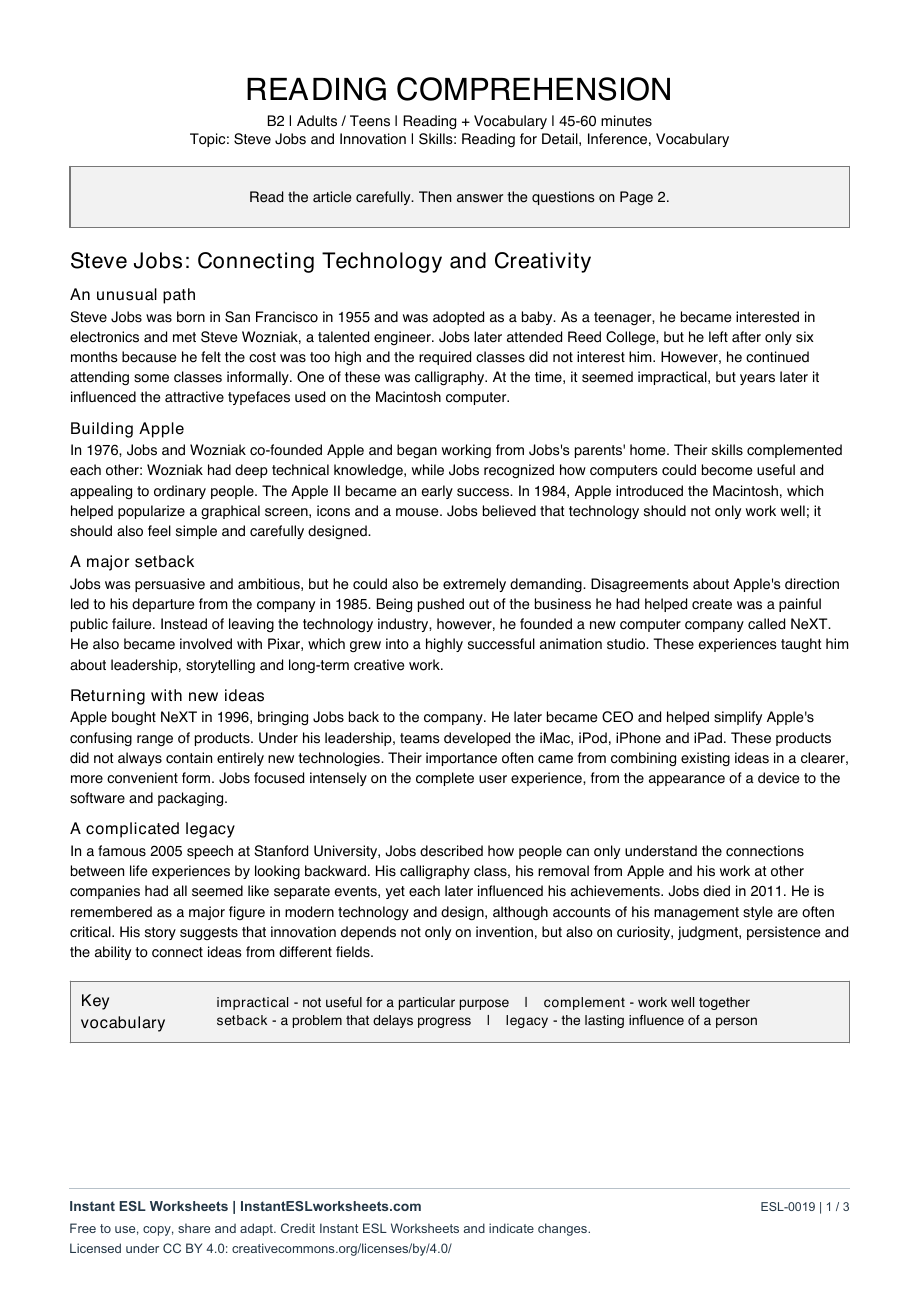
Read about Steve Jobs and the connections between technology, creativity and experience. Includes eight comprehension questions, key vocabulary and suggested answers.
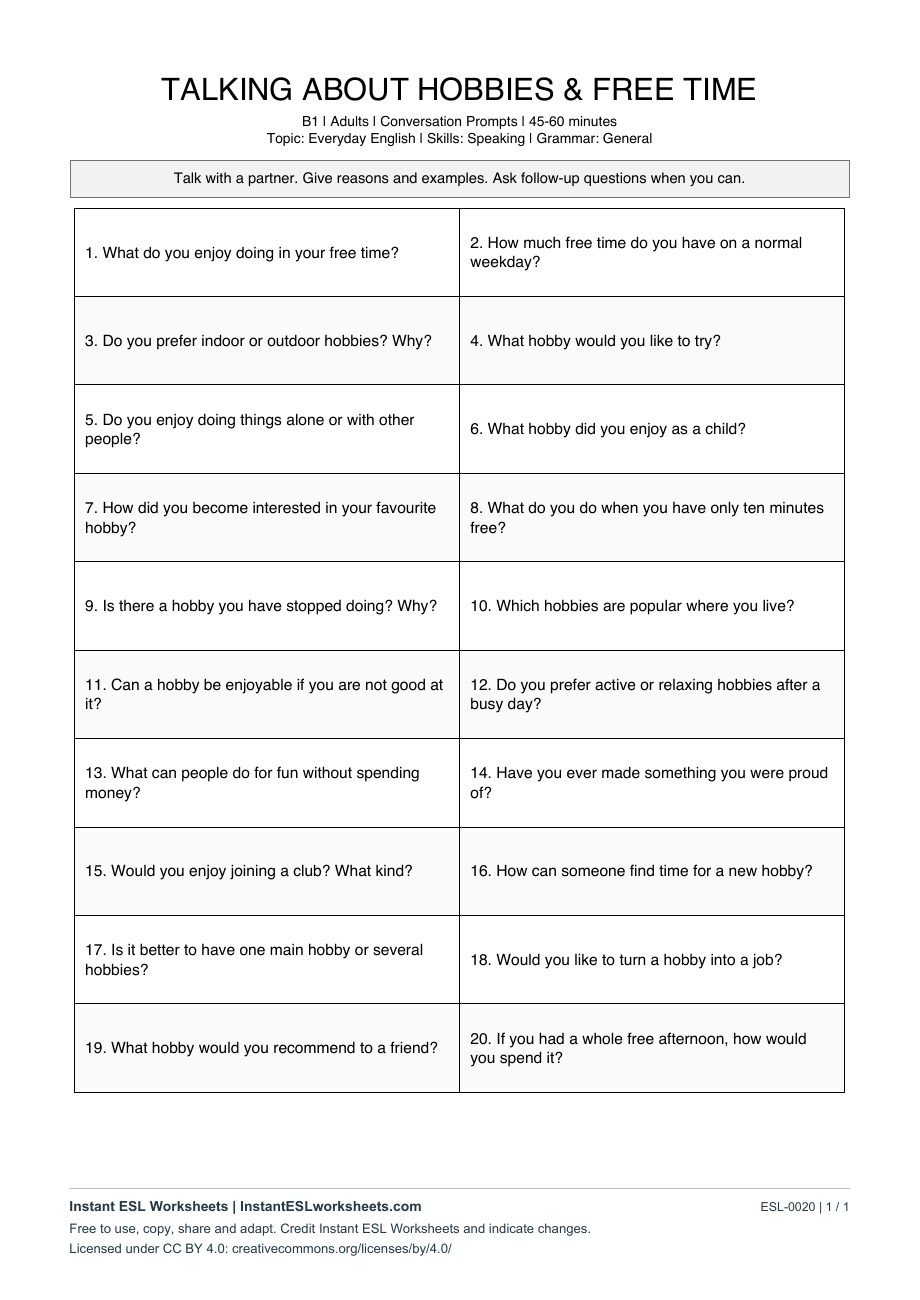
A one-page B1 conversation worksheet with 20 questions about hobbies & free time. Learners exchange personal experiences, explain preferences and discuss everyday choices.
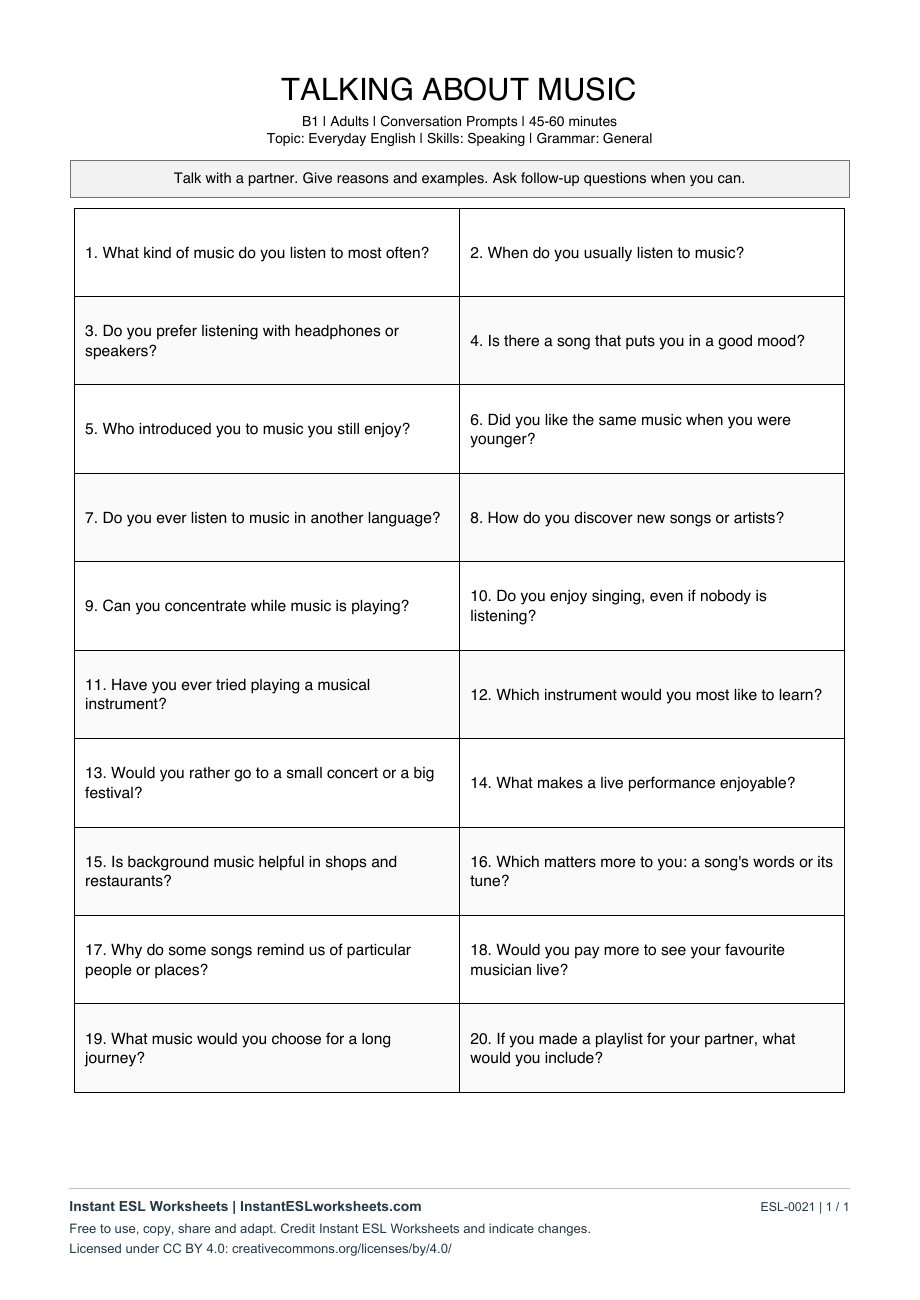
A one-page B1 conversation worksheet with 20 questions about music. Learners exchange personal experiences, explain preferences and discuss everyday choices.
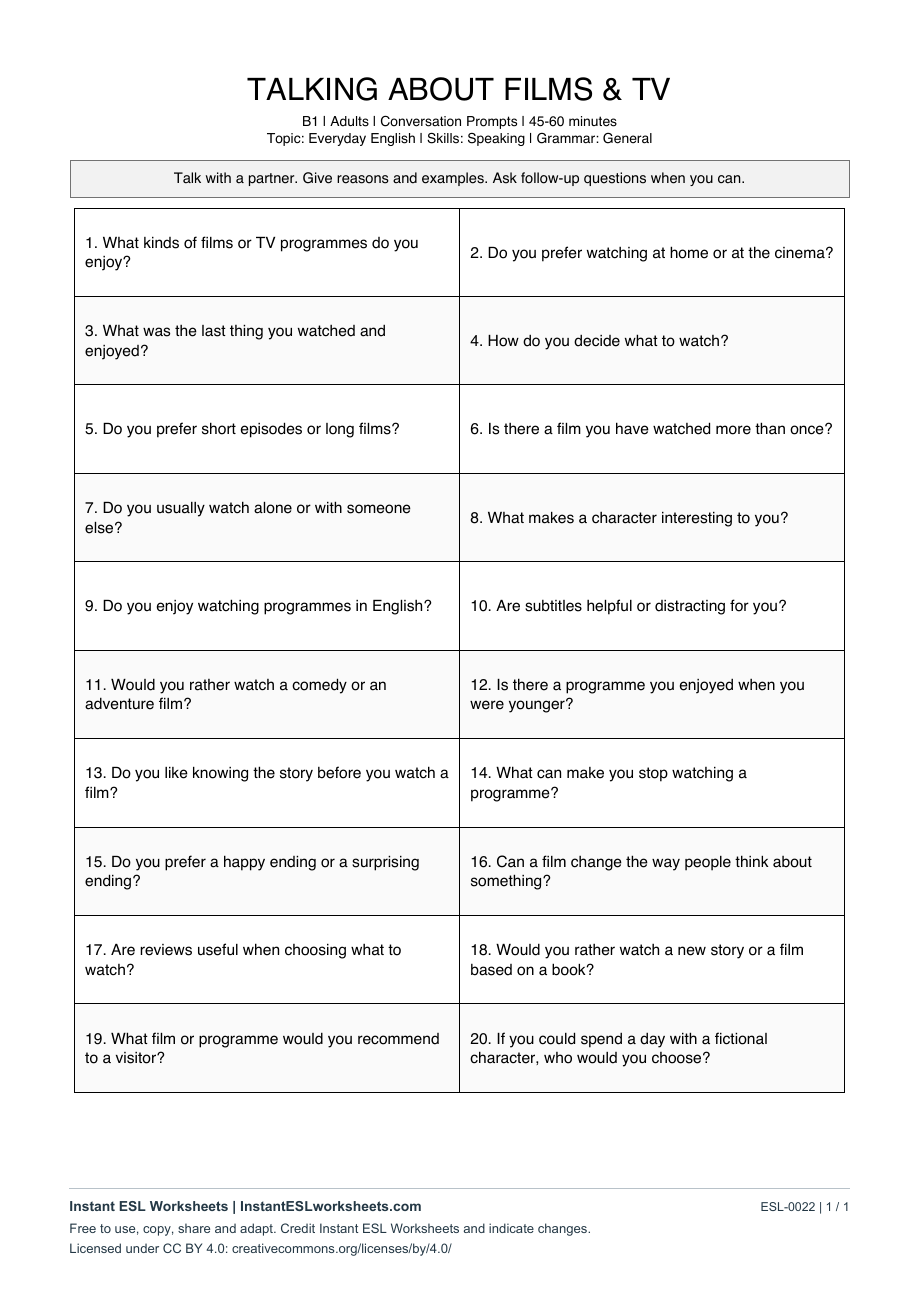
A one-page B1 conversation worksheet with 20 questions about films & tv. Learners exchange personal experiences, explain preferences and discuss everyday choices.
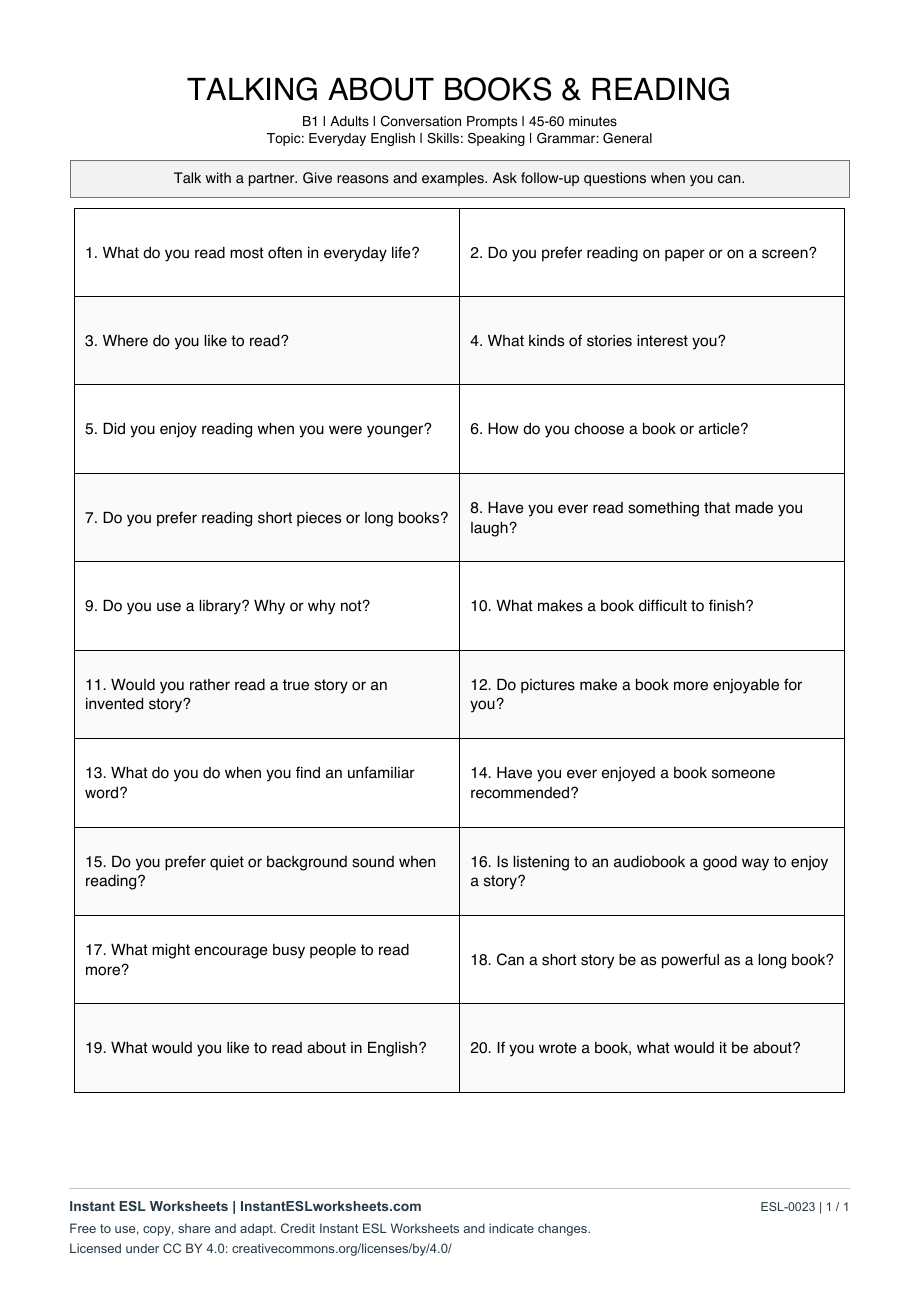
A one-page B1 conversation worksheet with 20 questions about books & reading. Learners exchange personal experiences, explain preferences and discuss everyday choices.
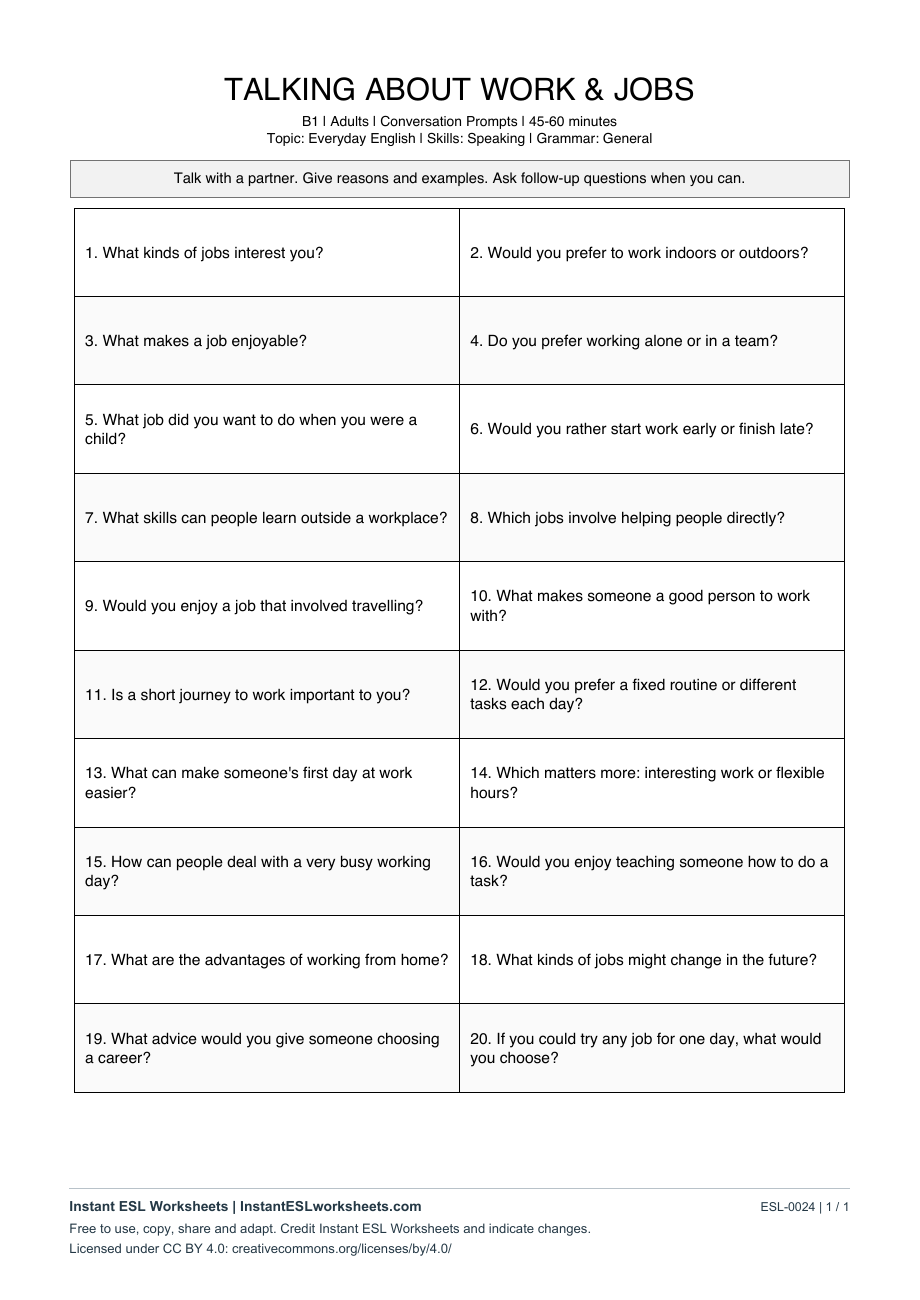
A one-page B1 conversation worksheet with 20 questions about work & jobs. Learners exchange personal experiences, explain preferences and discuss everyday choices.
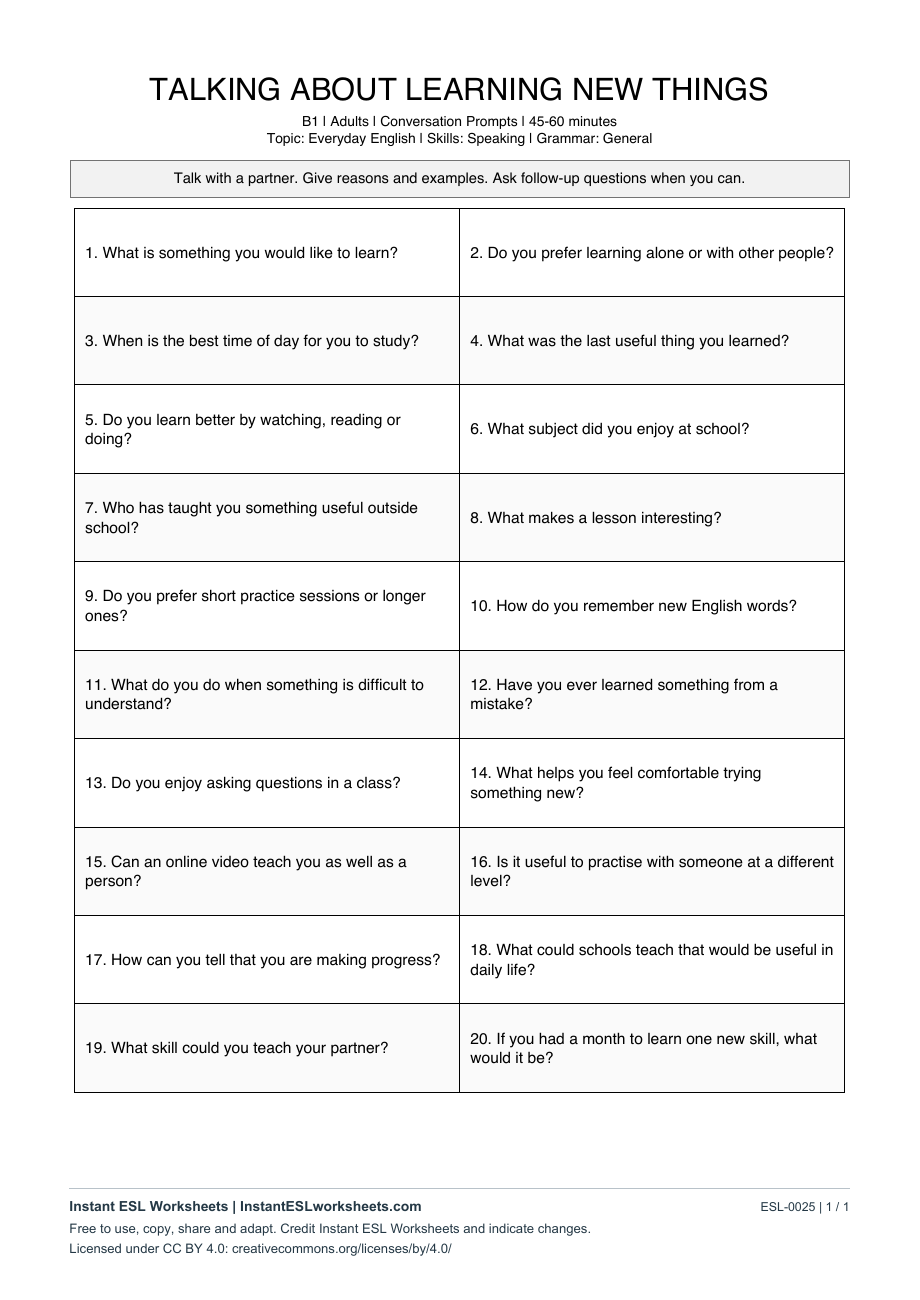
A one-page B1 conversation worksheet with 20 questions about learning new things. Learners exchange personal experiences, explain preferences and discuss everyday choices.
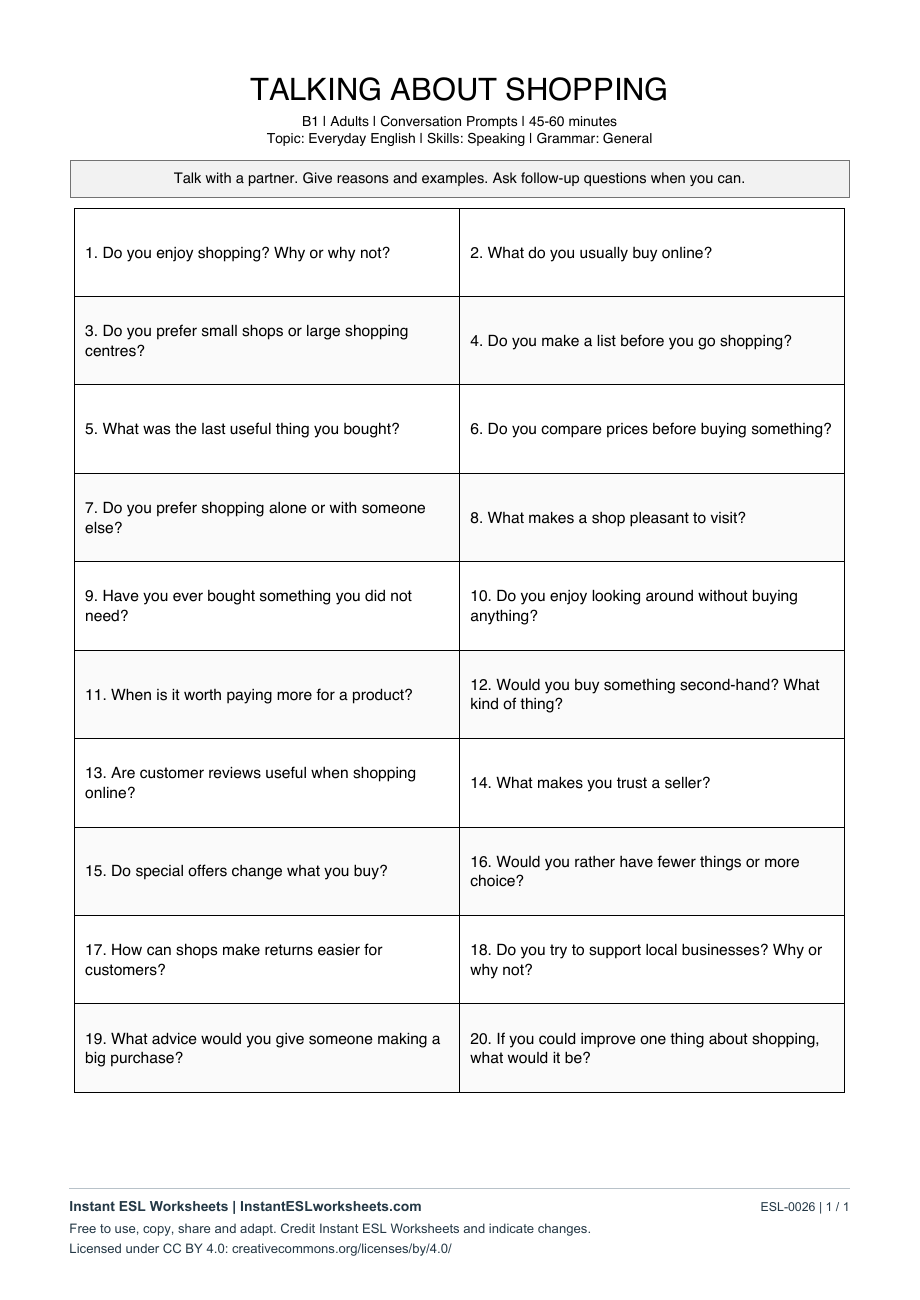
A one-page B1 conversation worksheet with 20 questions about shopping. Learners exchange personal experiences, explain preferences and discuss everyday choices.
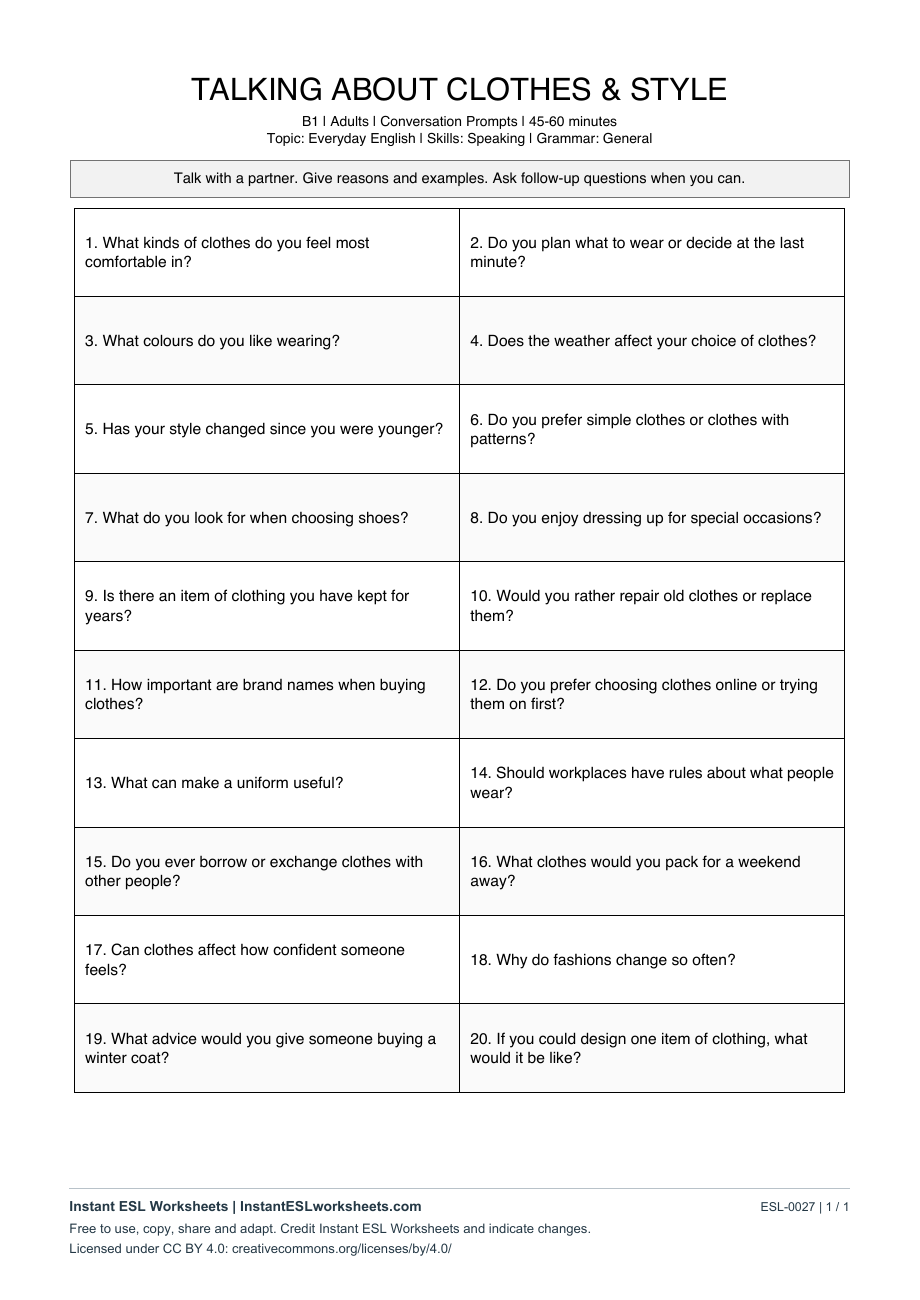
A one-page B1 conversation worksheet with 20 questions about clothes & style. Learners exchange personal experiences, explain preferences and discuss everyday choices.
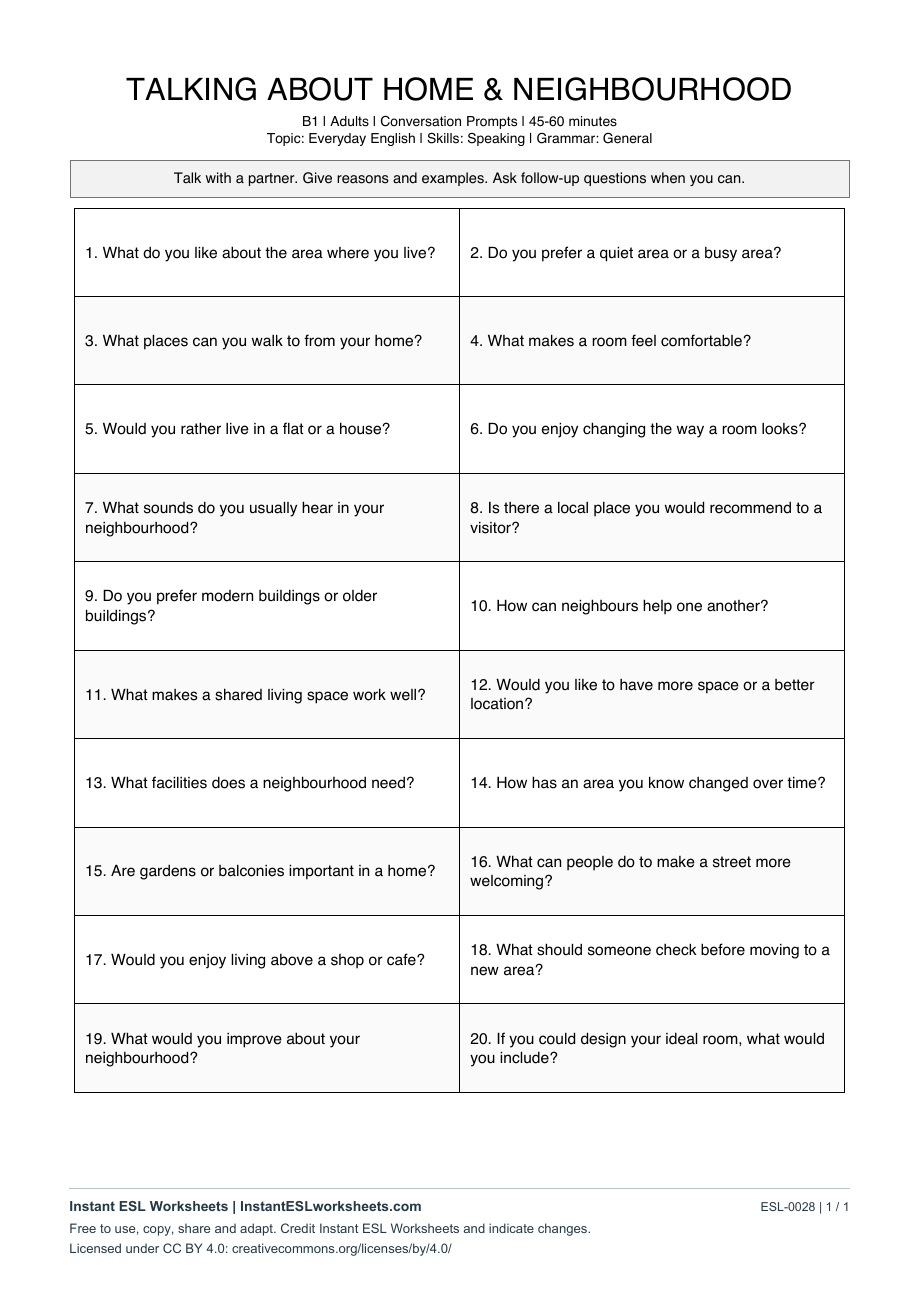
A one-page B1 conversation worksheet with 20 questions about home & neighbourhood. Learners exchange personal experiences, explain preferences and discuss everyday choices.
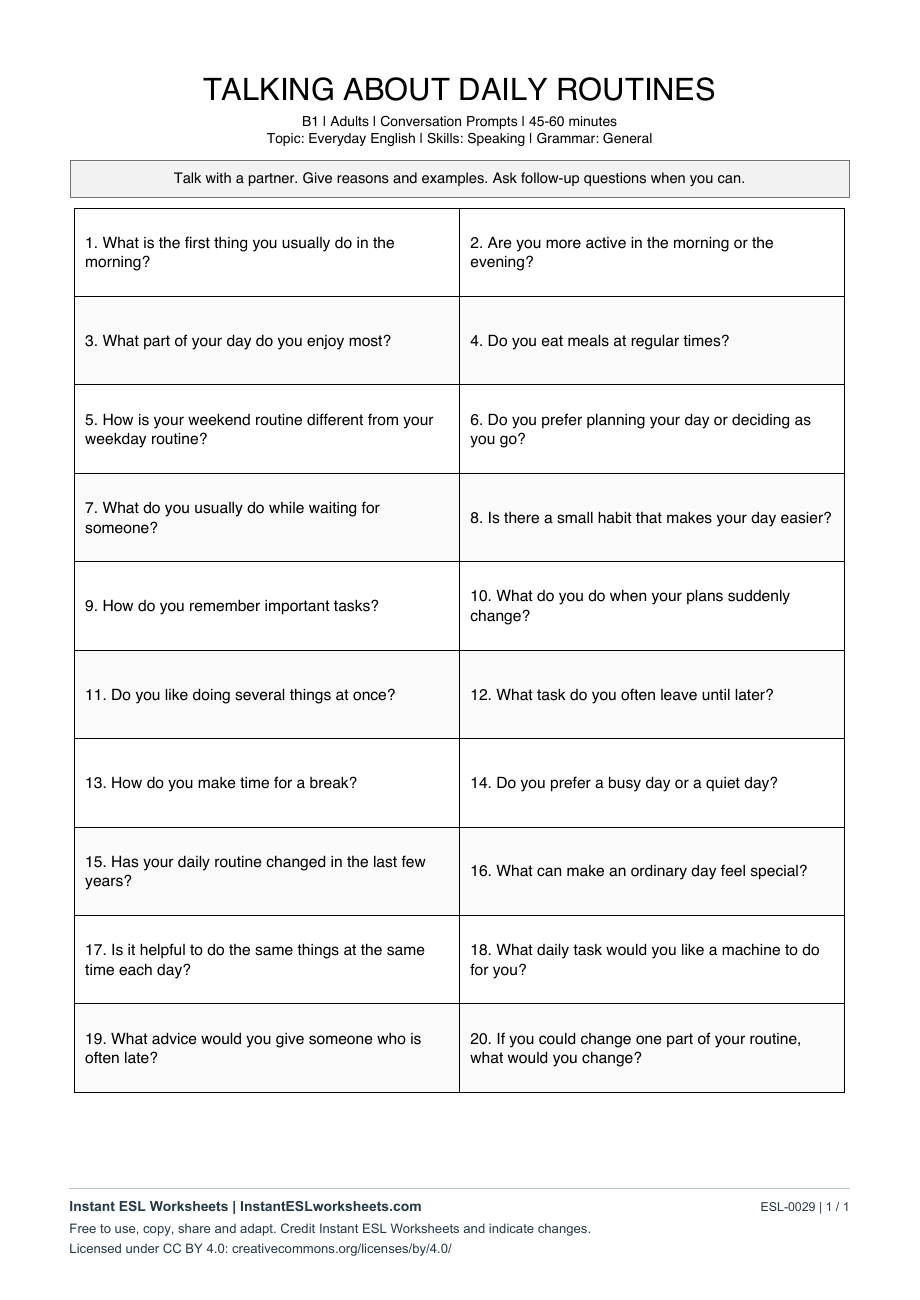
A one-page B1 conversation worksheet with 20 questions about daily routines. Learners exchange personal experiences, explain preferences and discuss everyday choices.
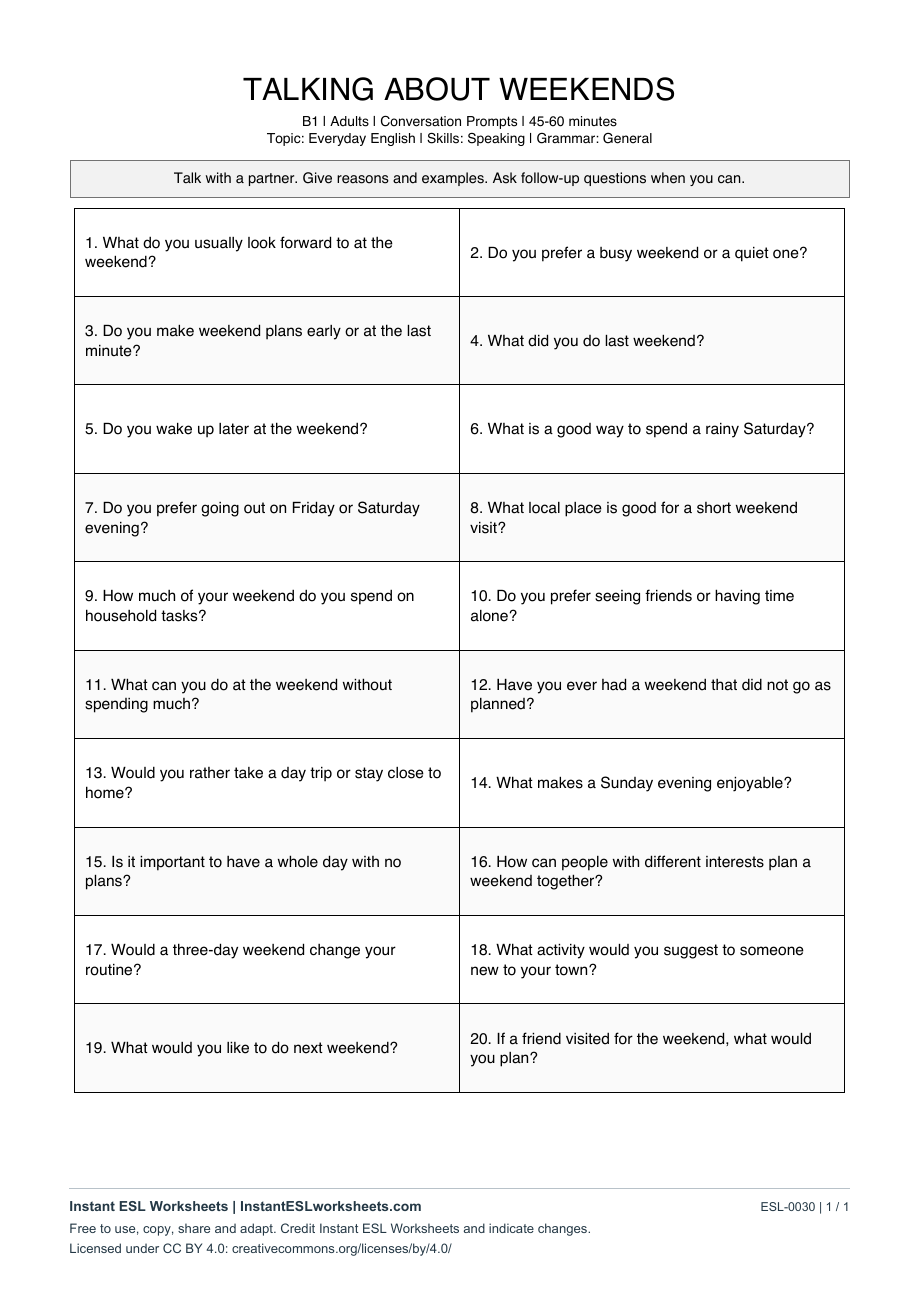
A one-page B1 conversation worksheet with 20 questions about weekends. Learners exchange personal experiences, explain preferences and discuss everyday choices.
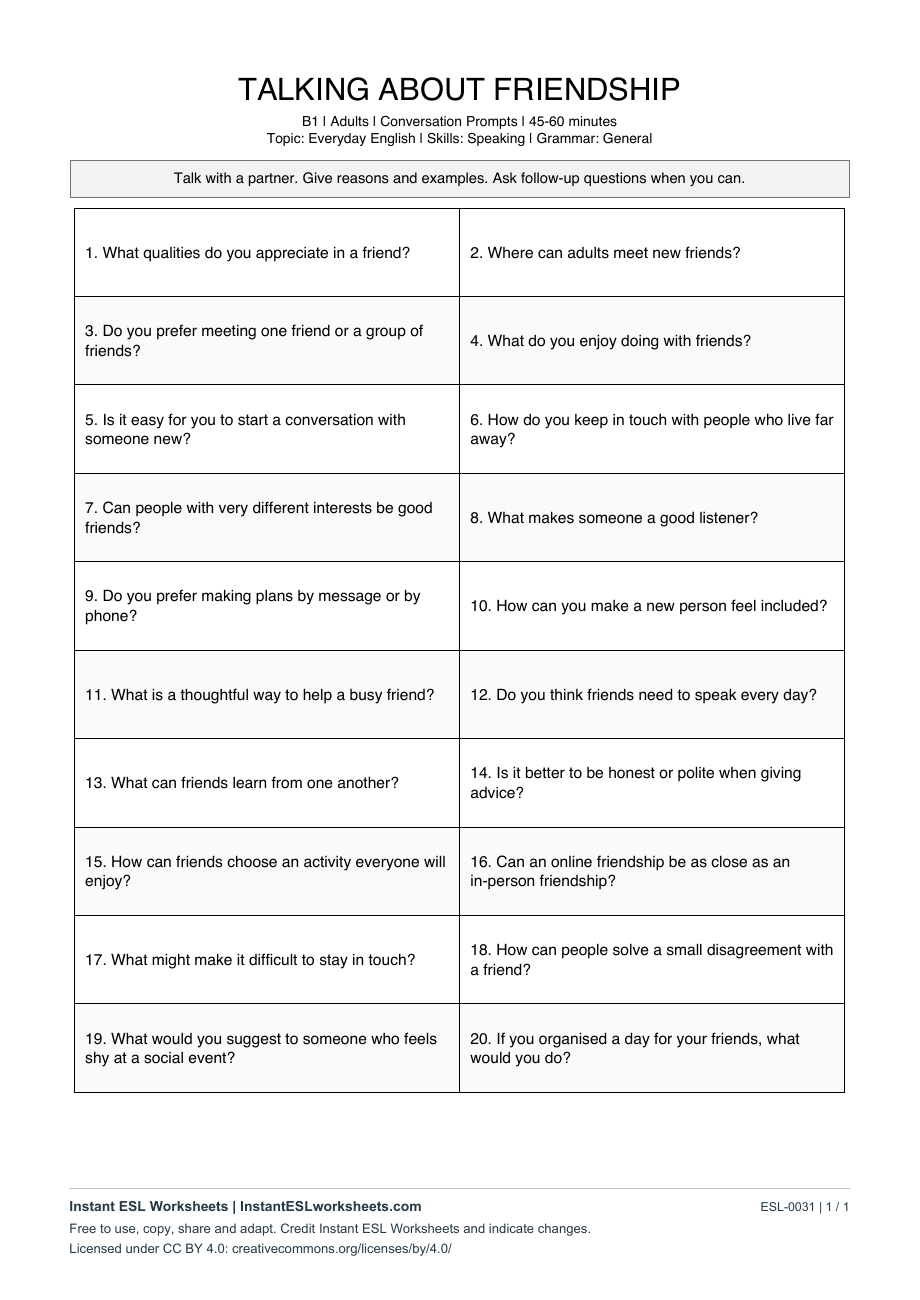
A one-page B1 conversation worksheet with 20 questions about friendship. Learners exchange personal experiences, explain preferences and discuss everyday choices.
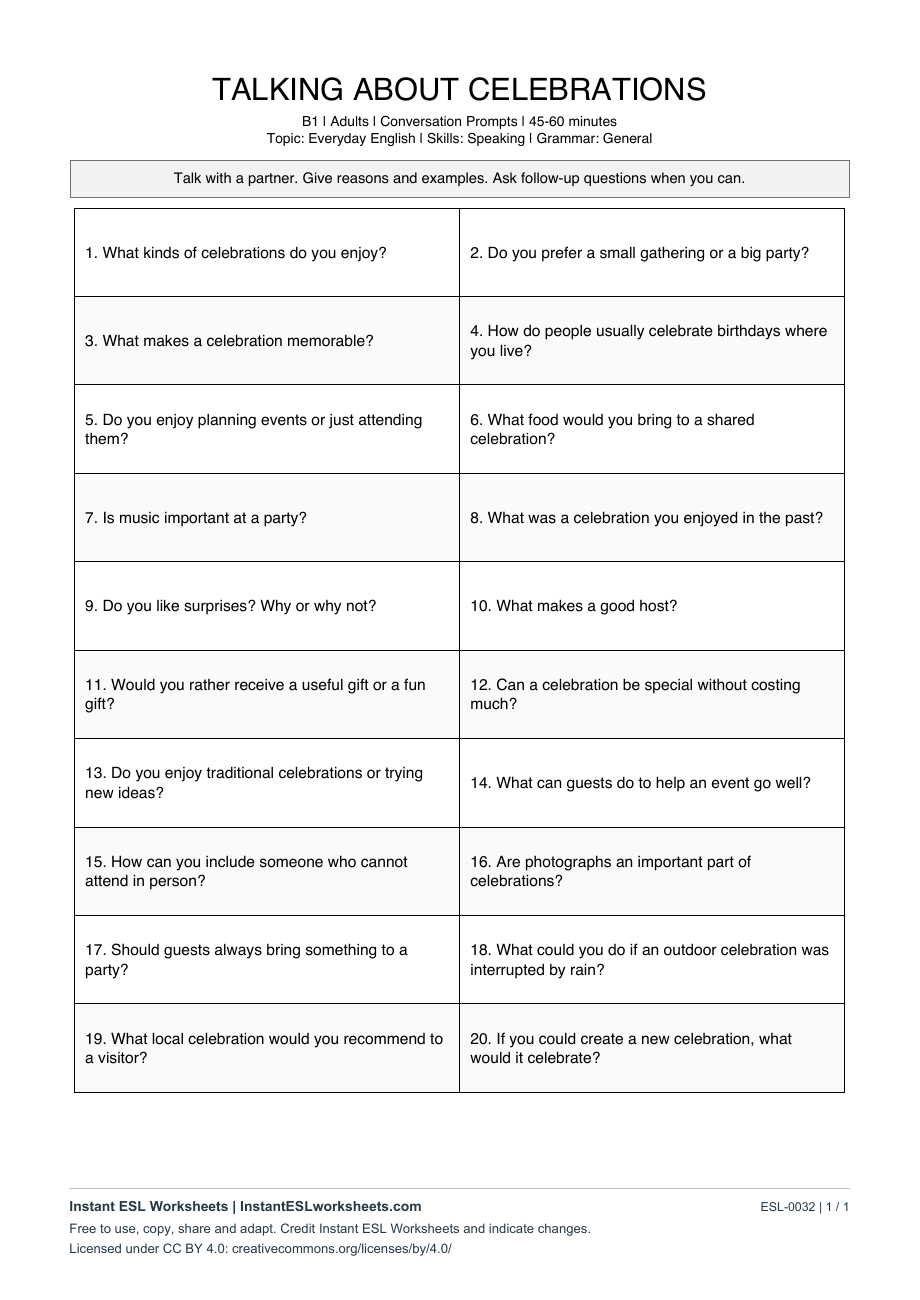
A one-page B1 conversation worksheet with 20 questions about celebrations. Learners exchange personal experiences, explain preferences and discuss everyday choices.
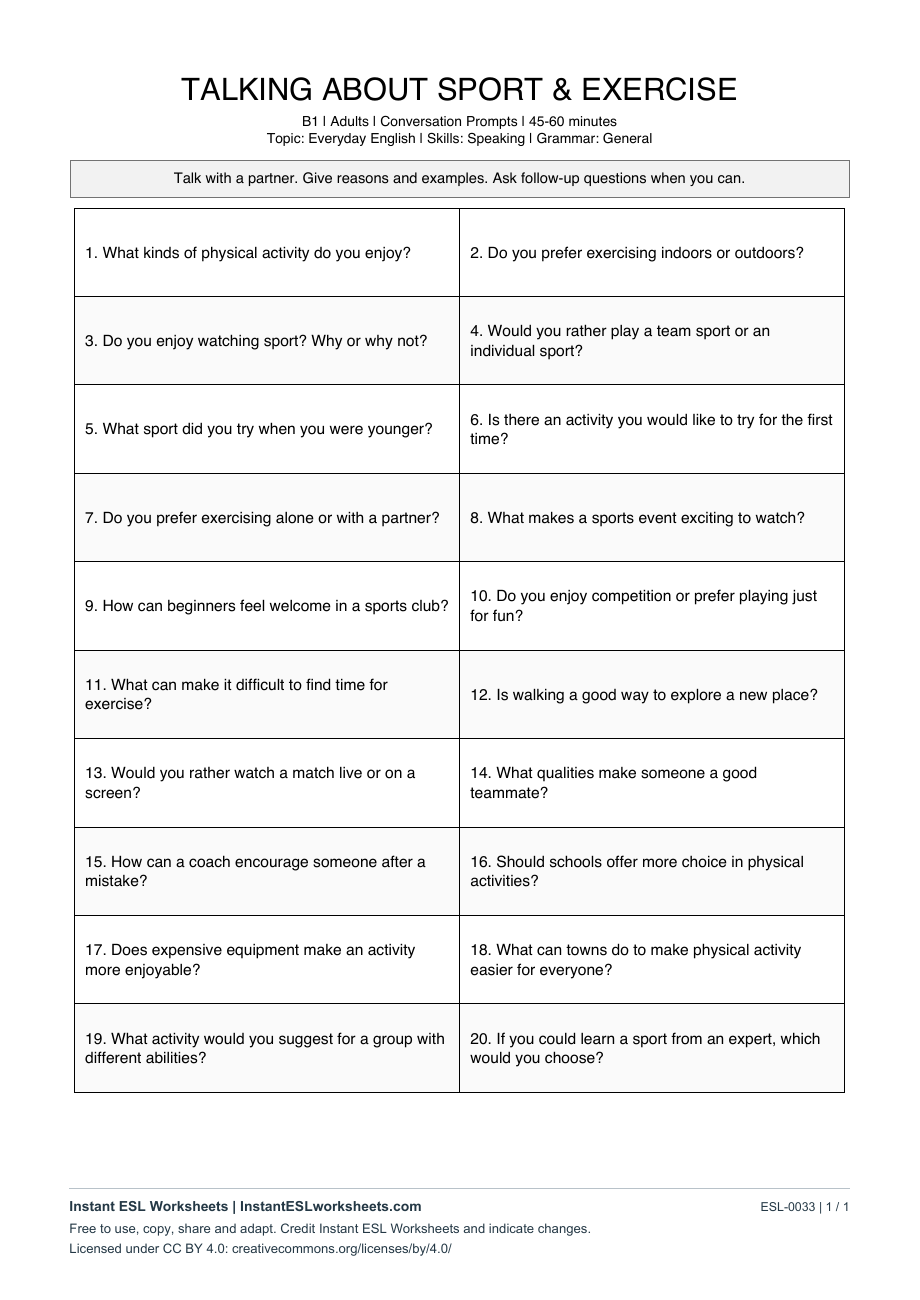
A one-page B1 conversation worksheet with 20 questions about sport & exercise. Learners exchange personal experiences, explain preferences and discuss everyday choices.
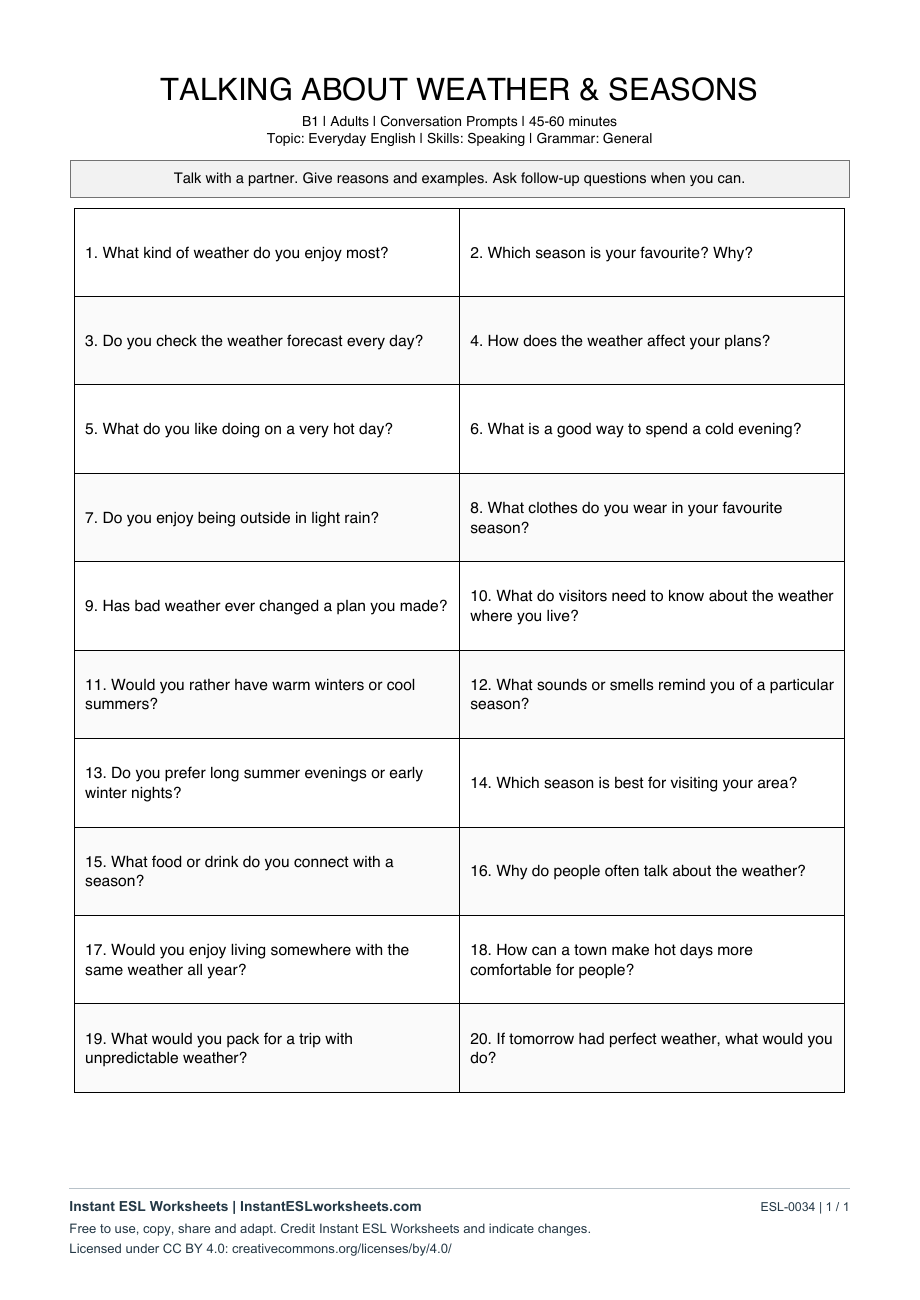
A one-page B1 conversation worksheet with 20 questions about weather & seasons. Learners exchange personal experiences, explain preferences and discuss everyday choices.
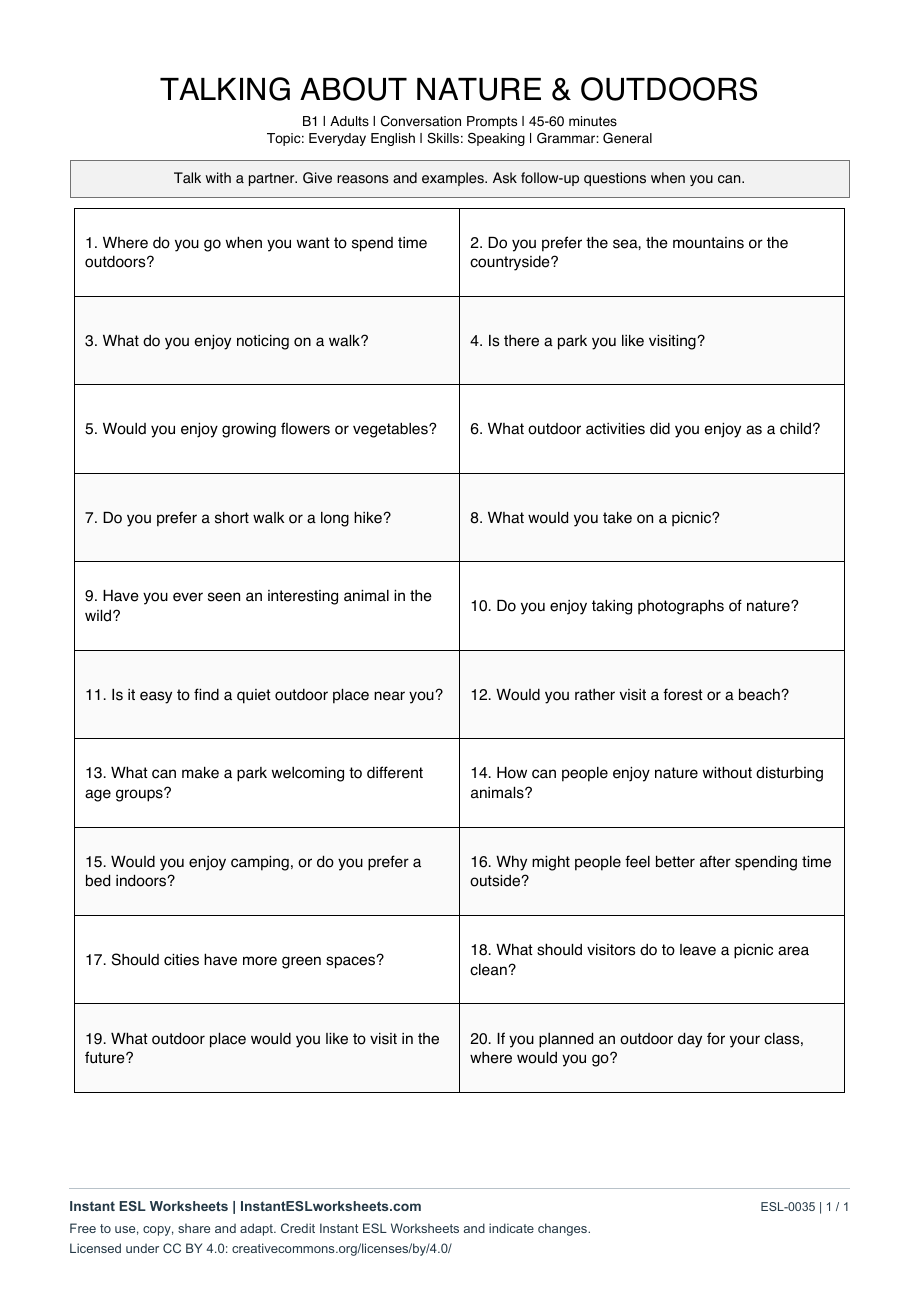
A one-page B1 conversation worksheet with 20 questions about nature & outdoors. Learners exchange personal experiences, explain preferences and discuss everyday choices.
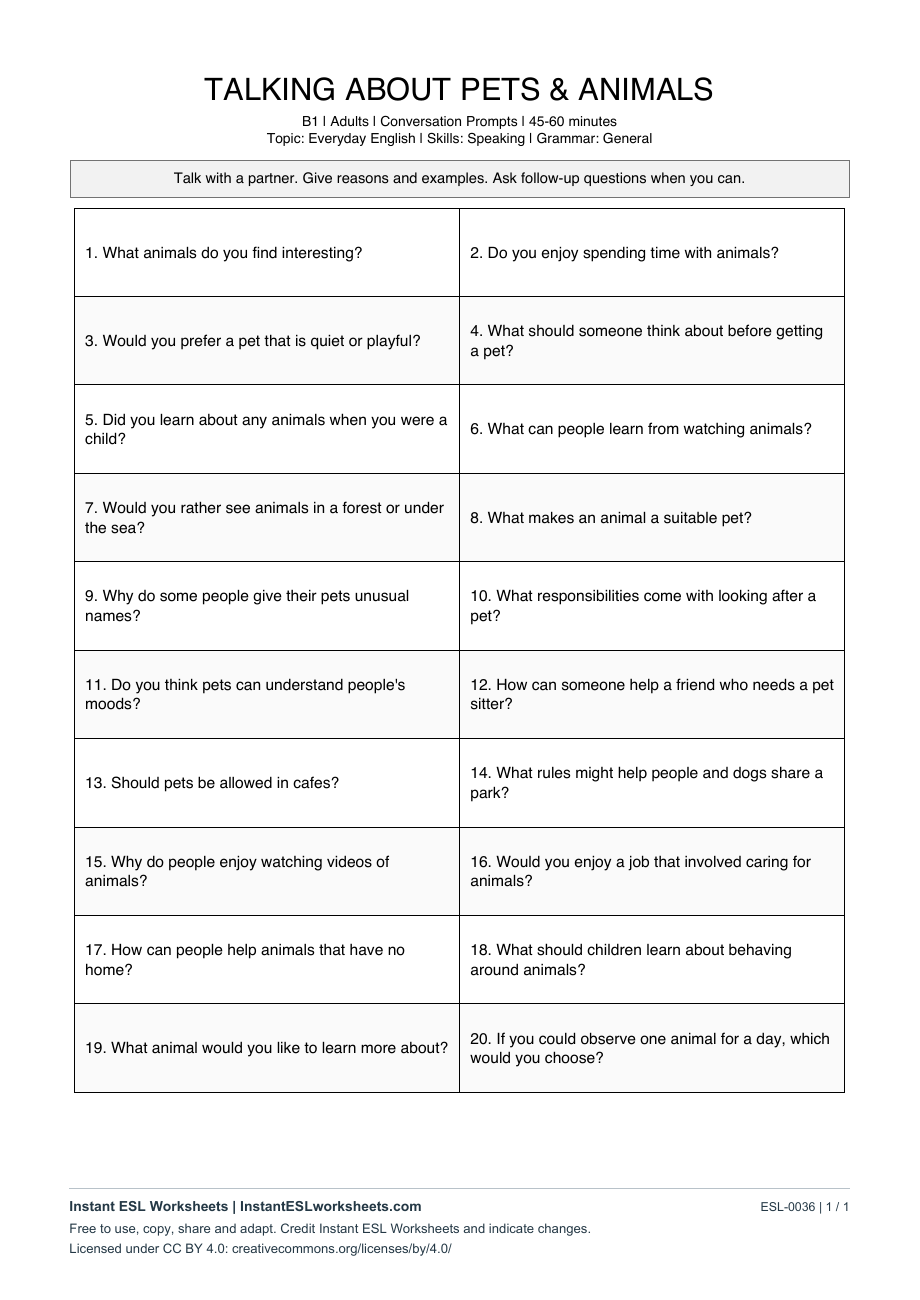
A one-page B1 conversation worksheet with 20 questions about pets & animals. Learners exchange personal experiences, explain preferences and discuss everyday choices.
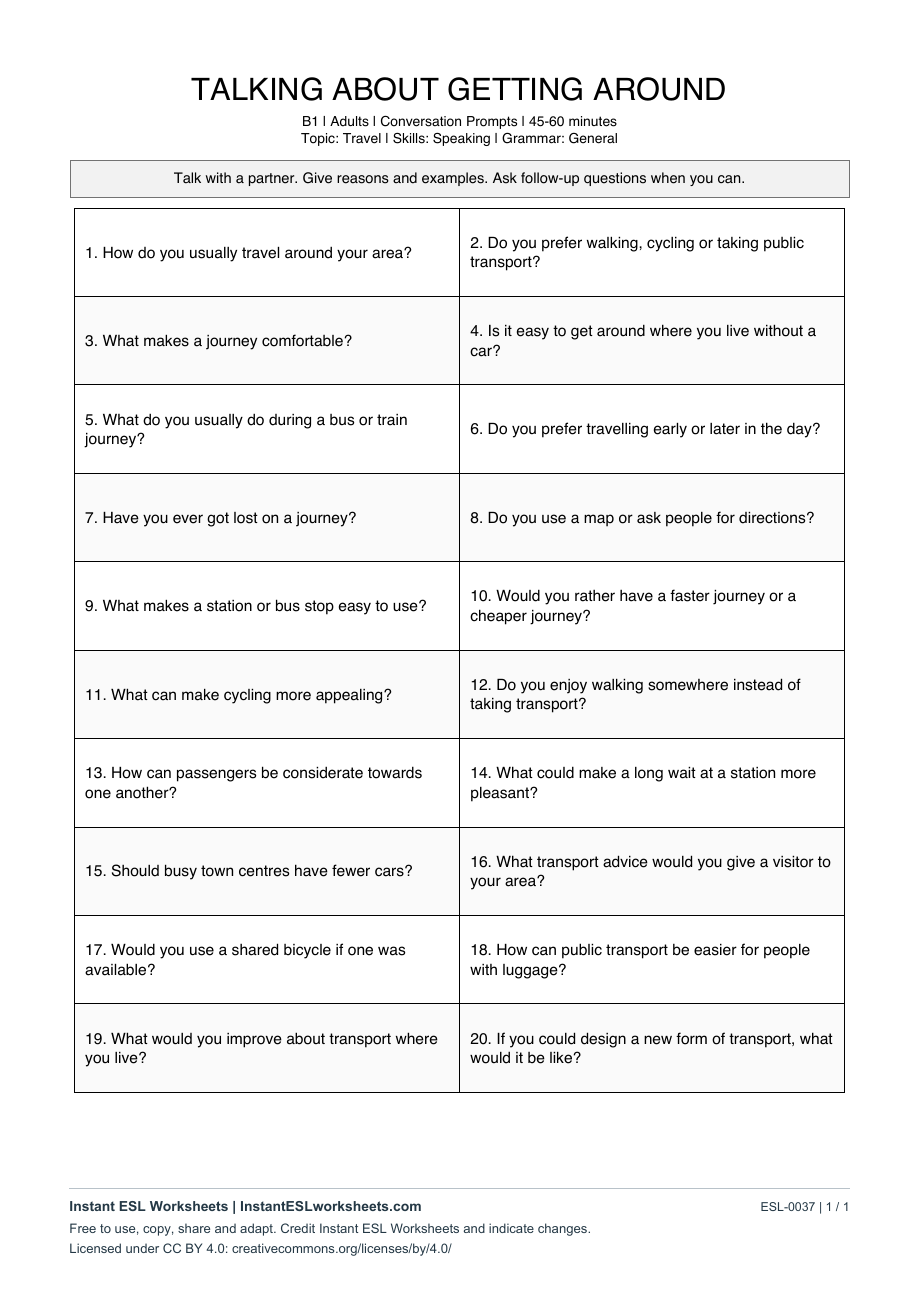
A one-page B1 conversation worksheet with 20 questions about getting around. Learners exchange personal experiences, explain preferences and discuss everyday choices.
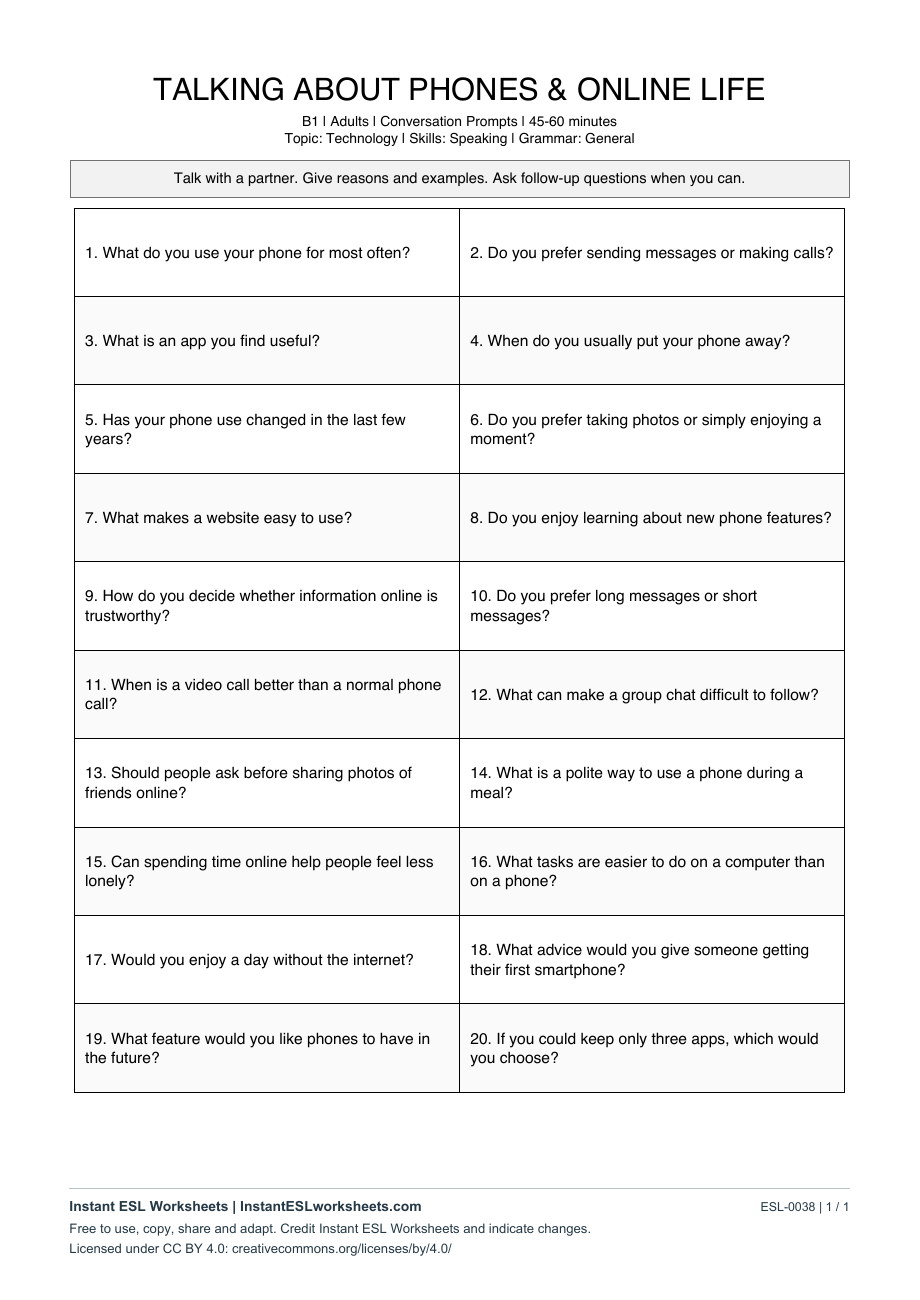
A one-page B1 conversation worksheet with 20 questions about phones & online life. Learners exchange personal experiences, explain preferences and discuss everyday choices.
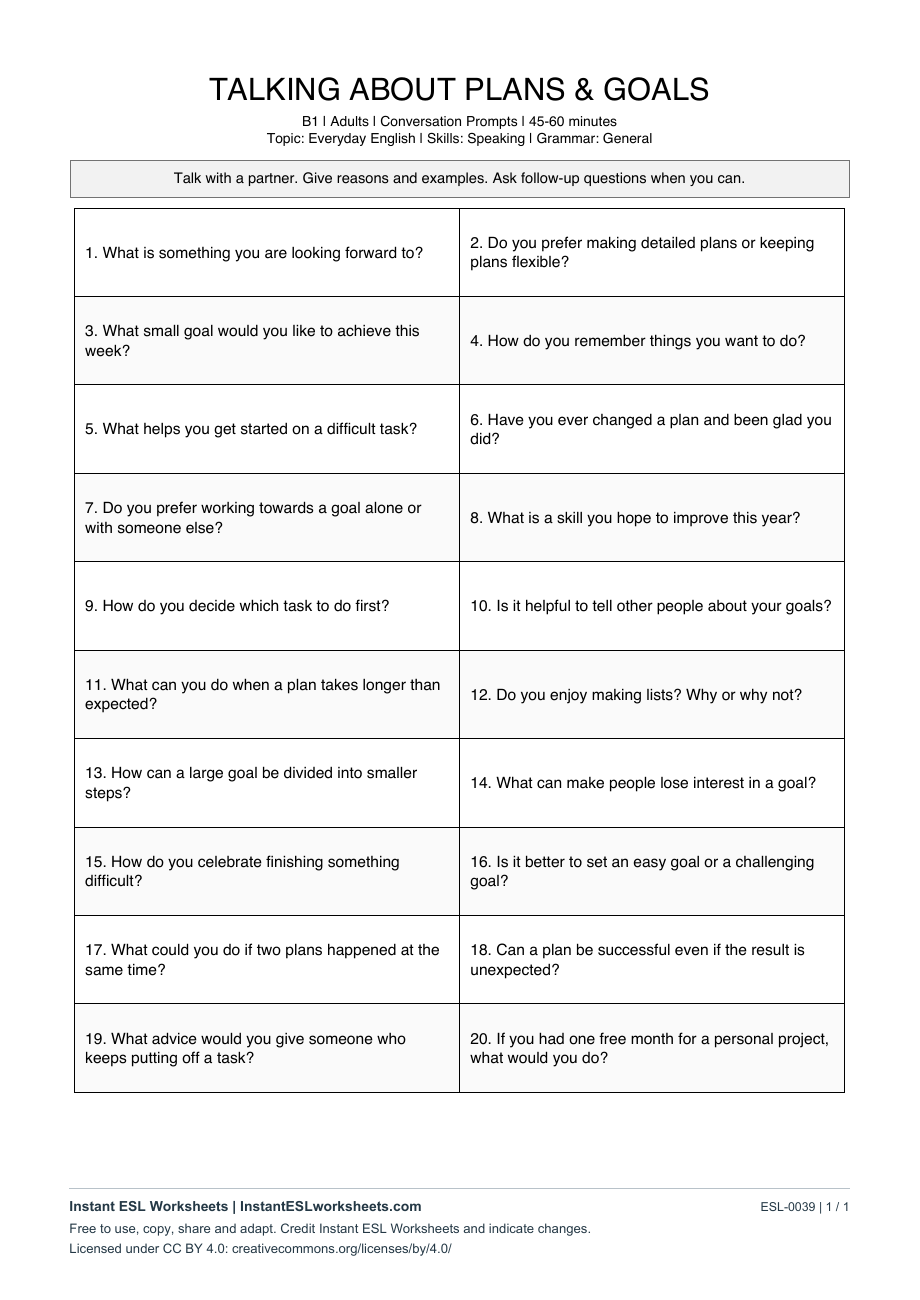
A one-page B1 conversation worksheet with 20 questions about plans & goals. Learners exchange personal experiences, explain preferences and discuss everyday choices.
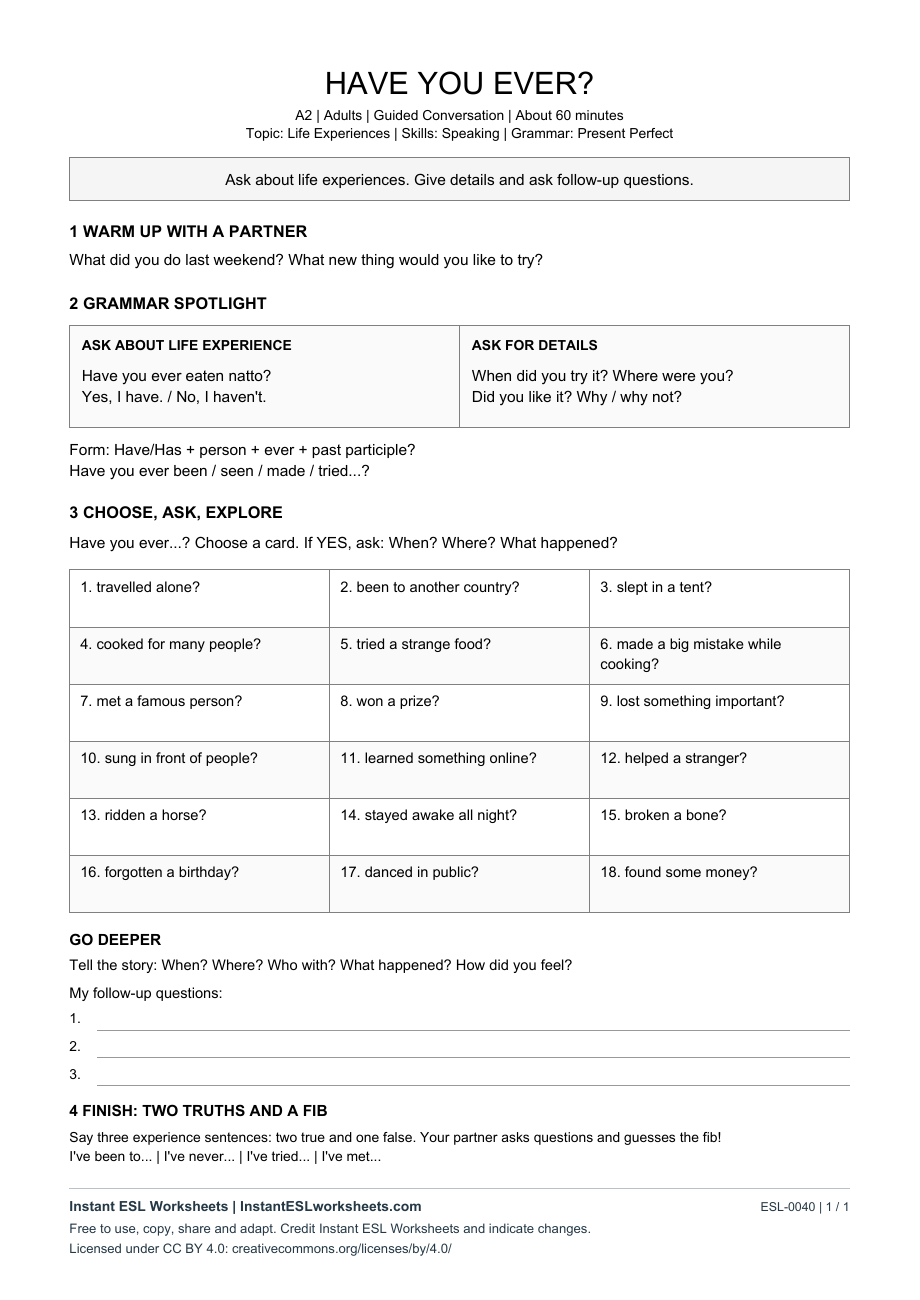
A guided conversation lesson about life experiences using Have you ever...? Practise present-perfect questions and past-simple follow-ups with 18 prompts.
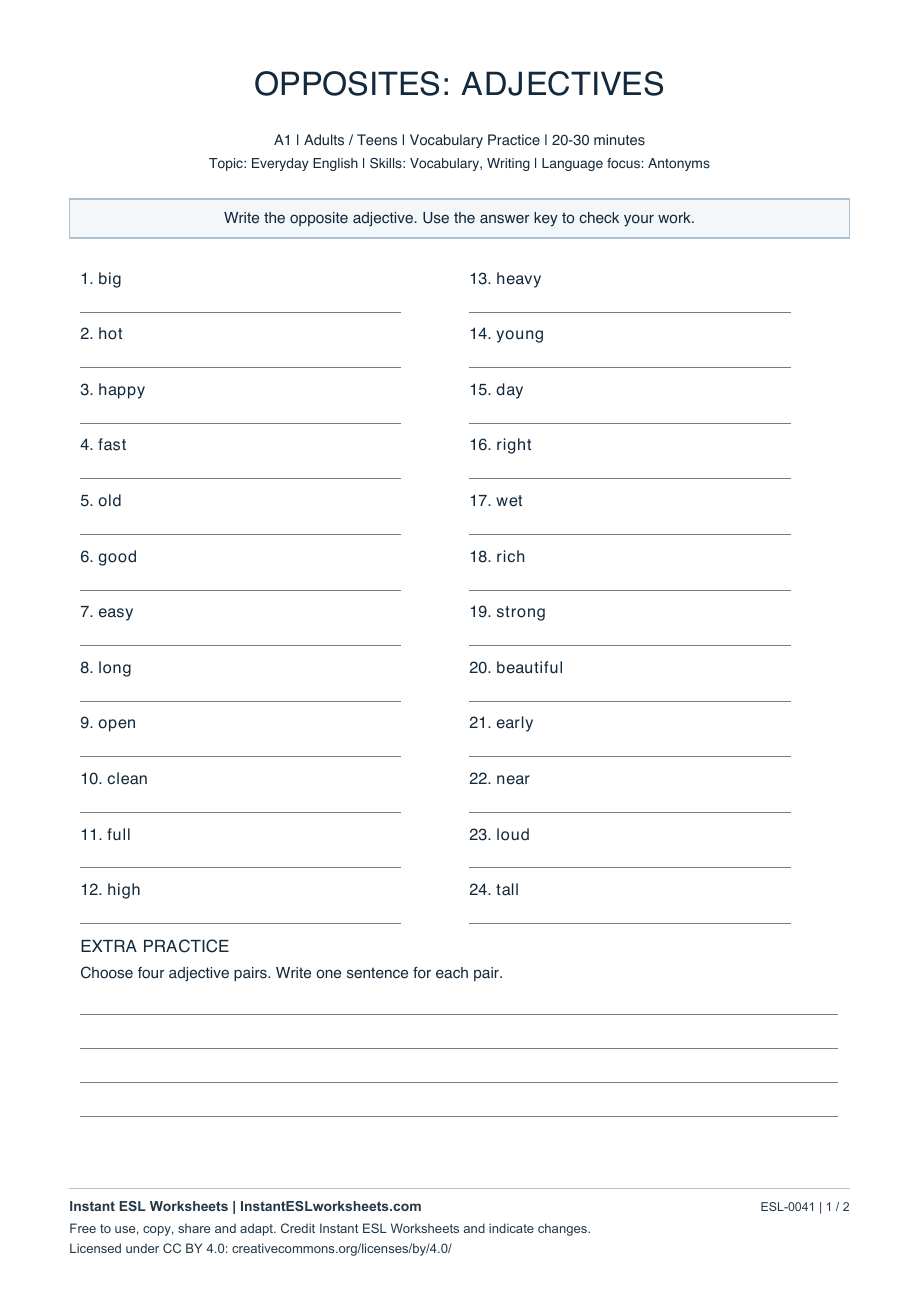
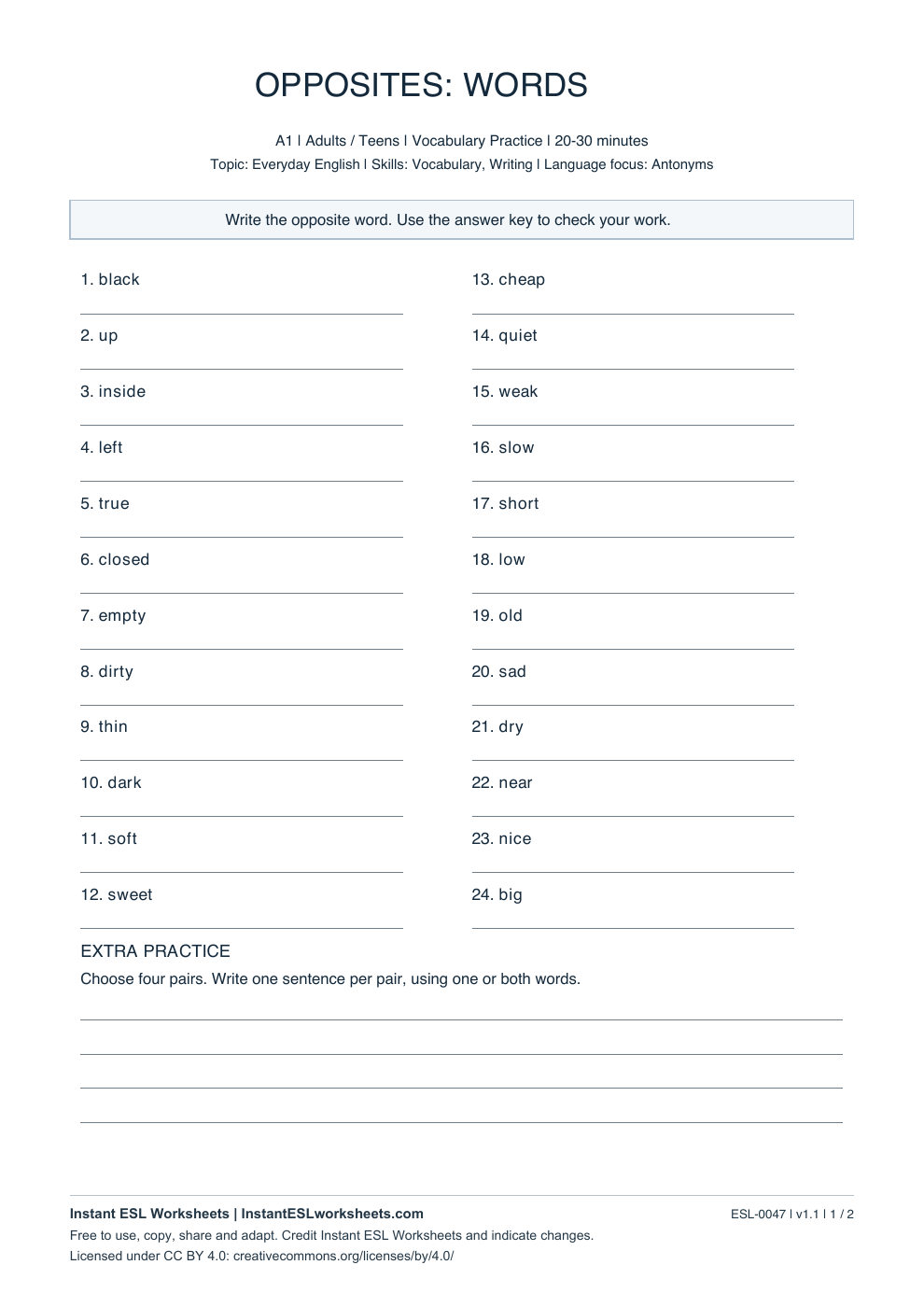
Practise 24 adjective opposites at A1 level, then write sentences using selected pairs. Includes suggested answers on page 2.
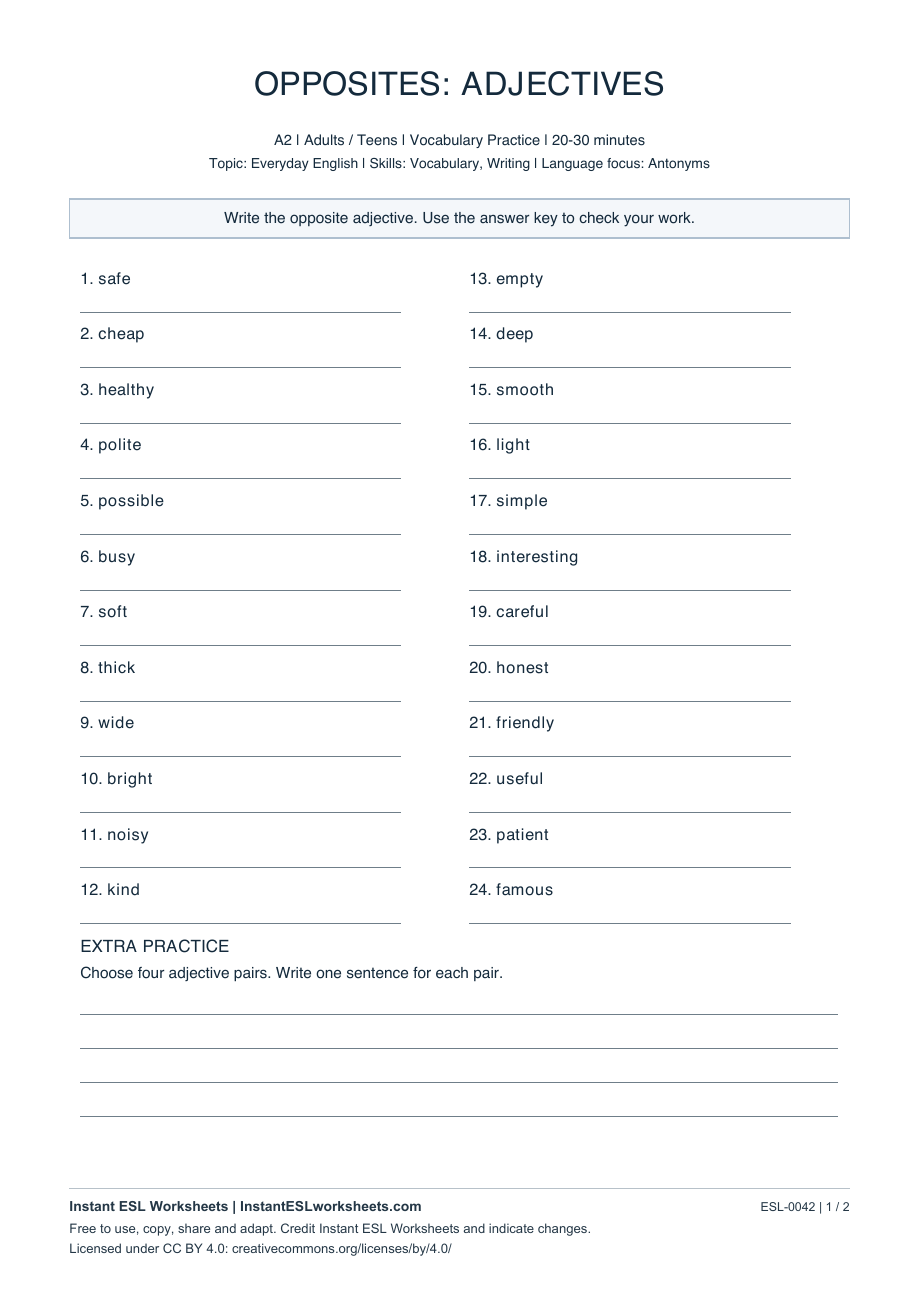
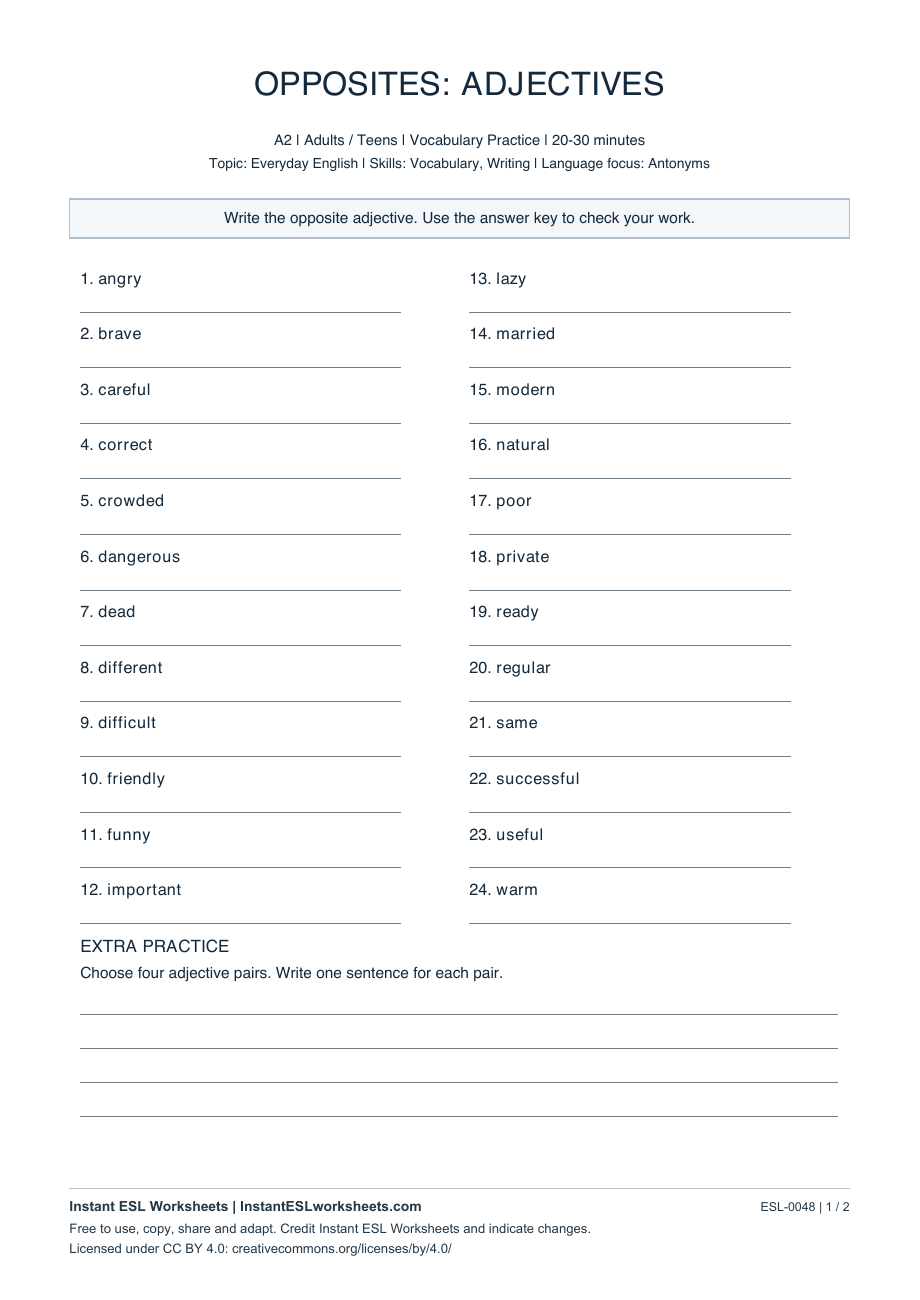
Practise 24 adjective opposites at A2 level, then write sentences using selected pairs. Includes suggested answers on page 2.
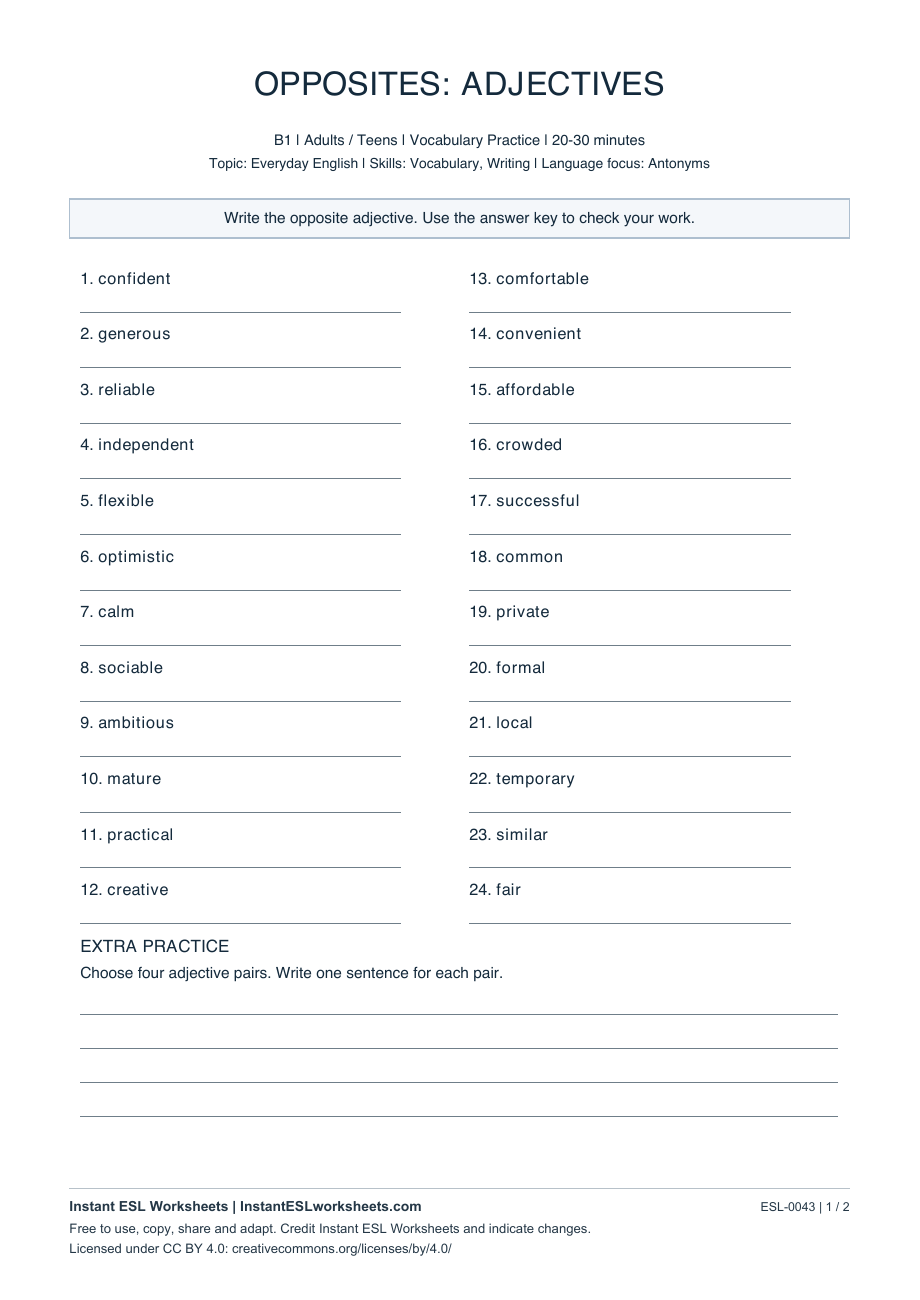
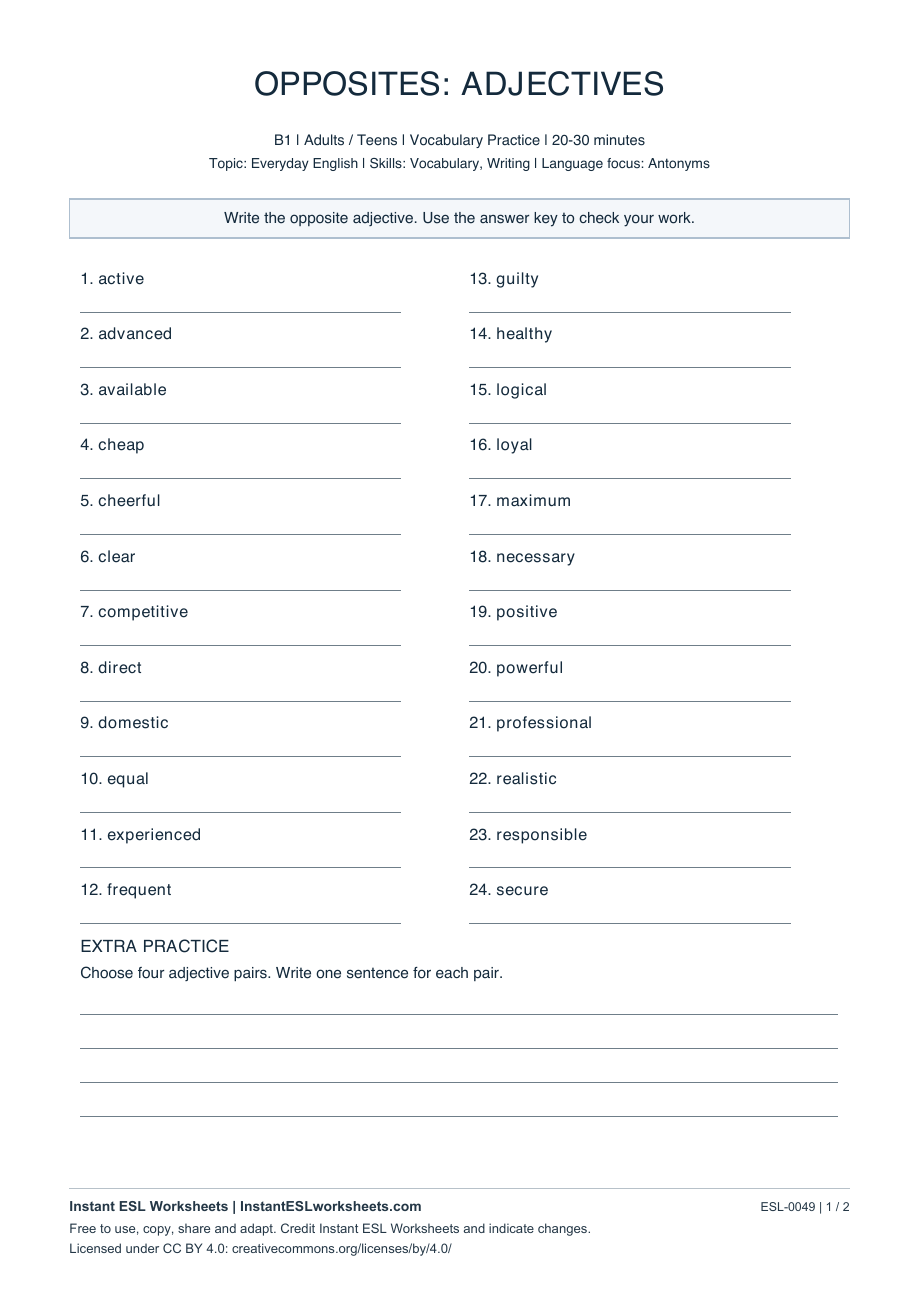
Practise 24 adjective opposites at B1 level, then write sentences using selected pairs. Includes suggested answers on page 2.
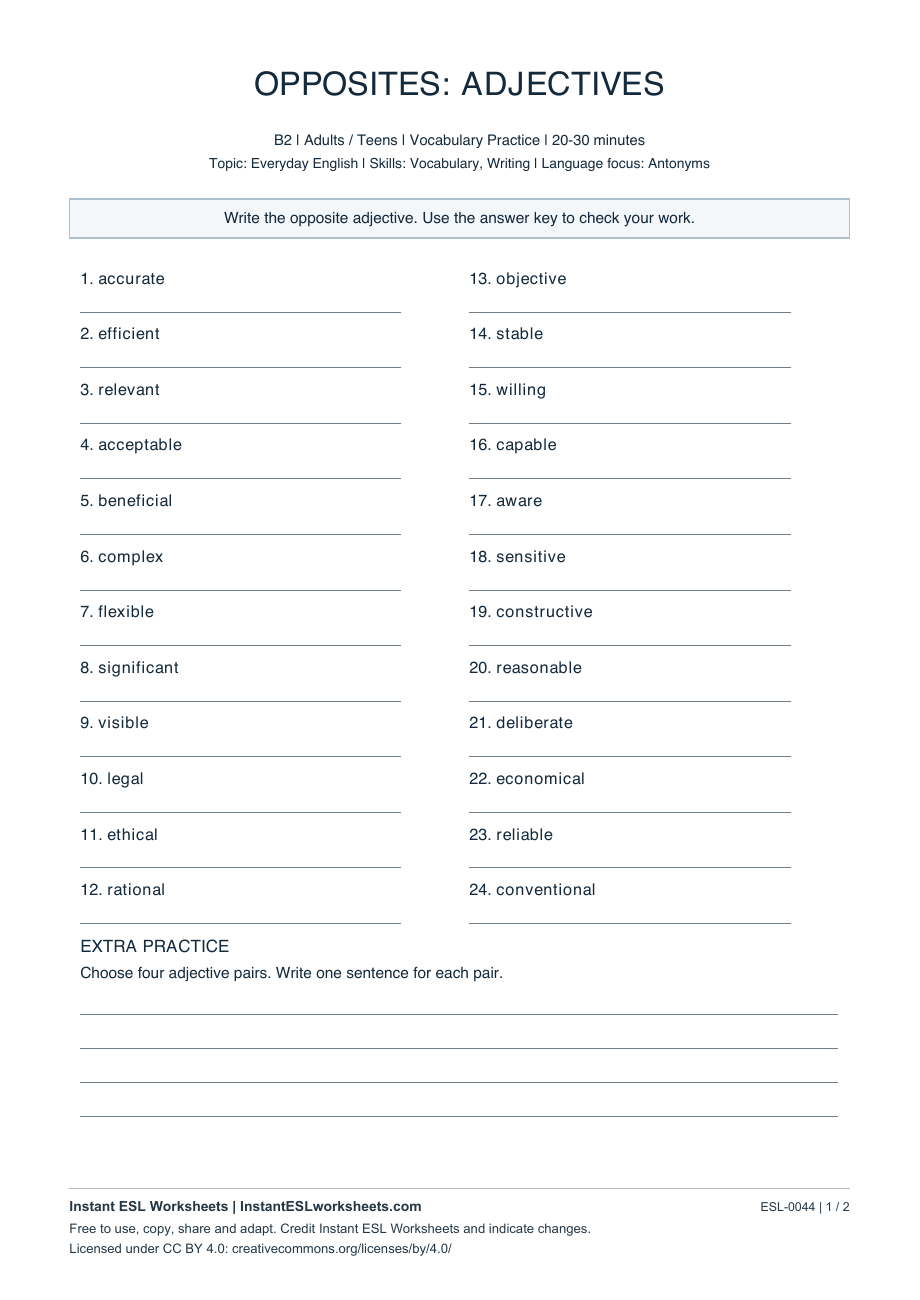
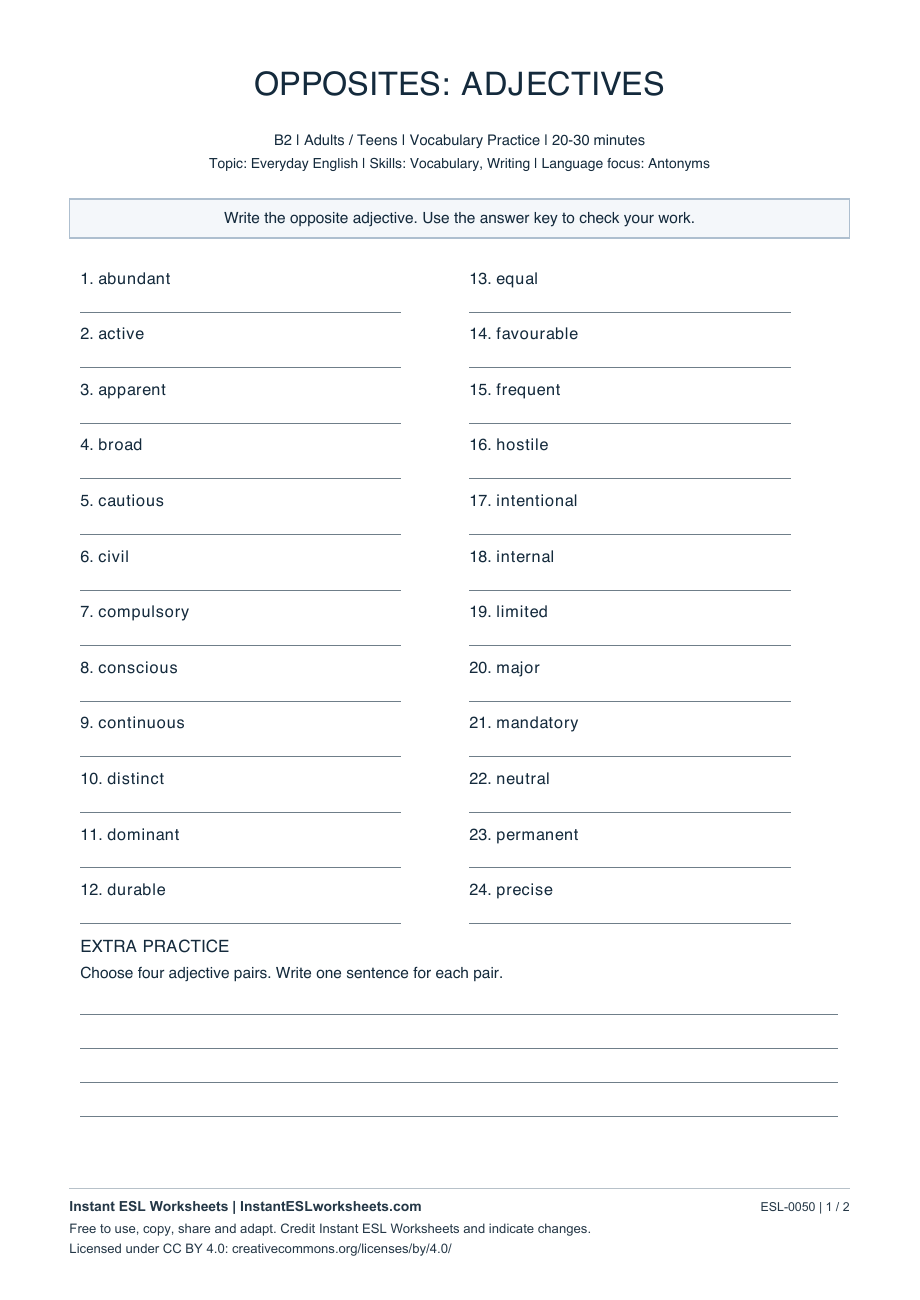
Practise 24 adjective opposites at B2 level, then write sentences using selected pairs. Includes suggested answers on page 2.
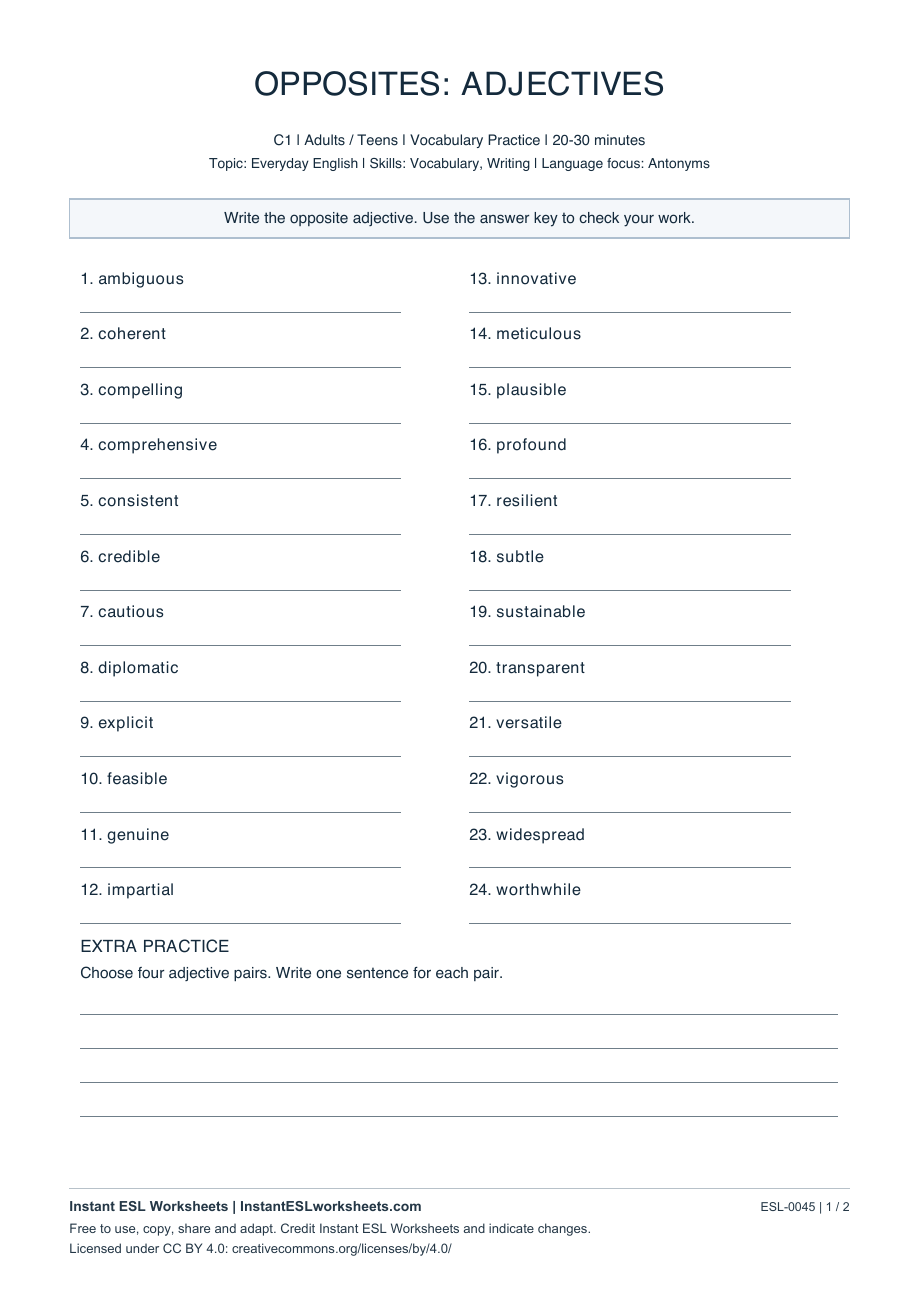
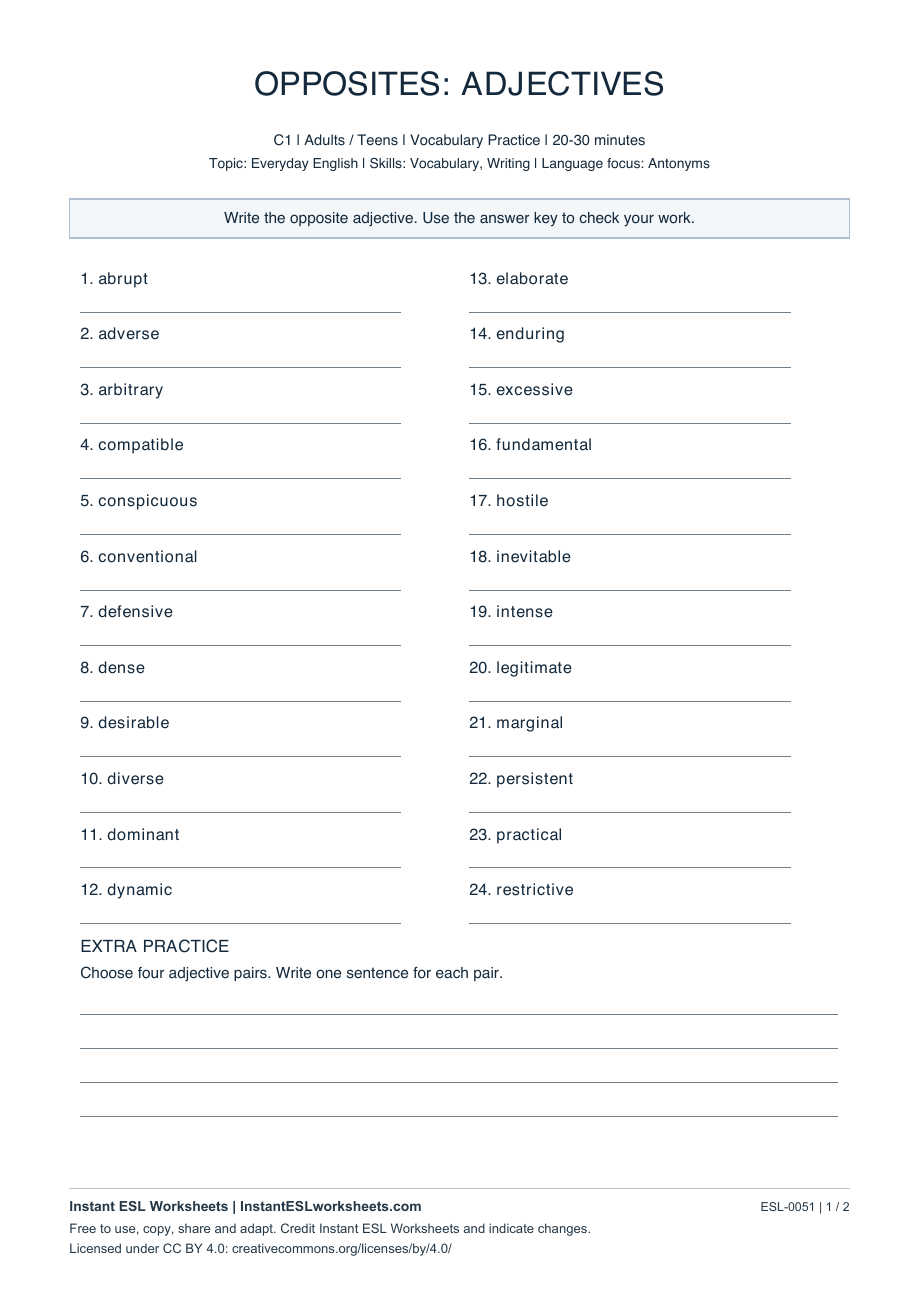
Practise 24 adjective opposites at C1 level, then write sentences using selected pairs. Includes suggested answers on page 2.
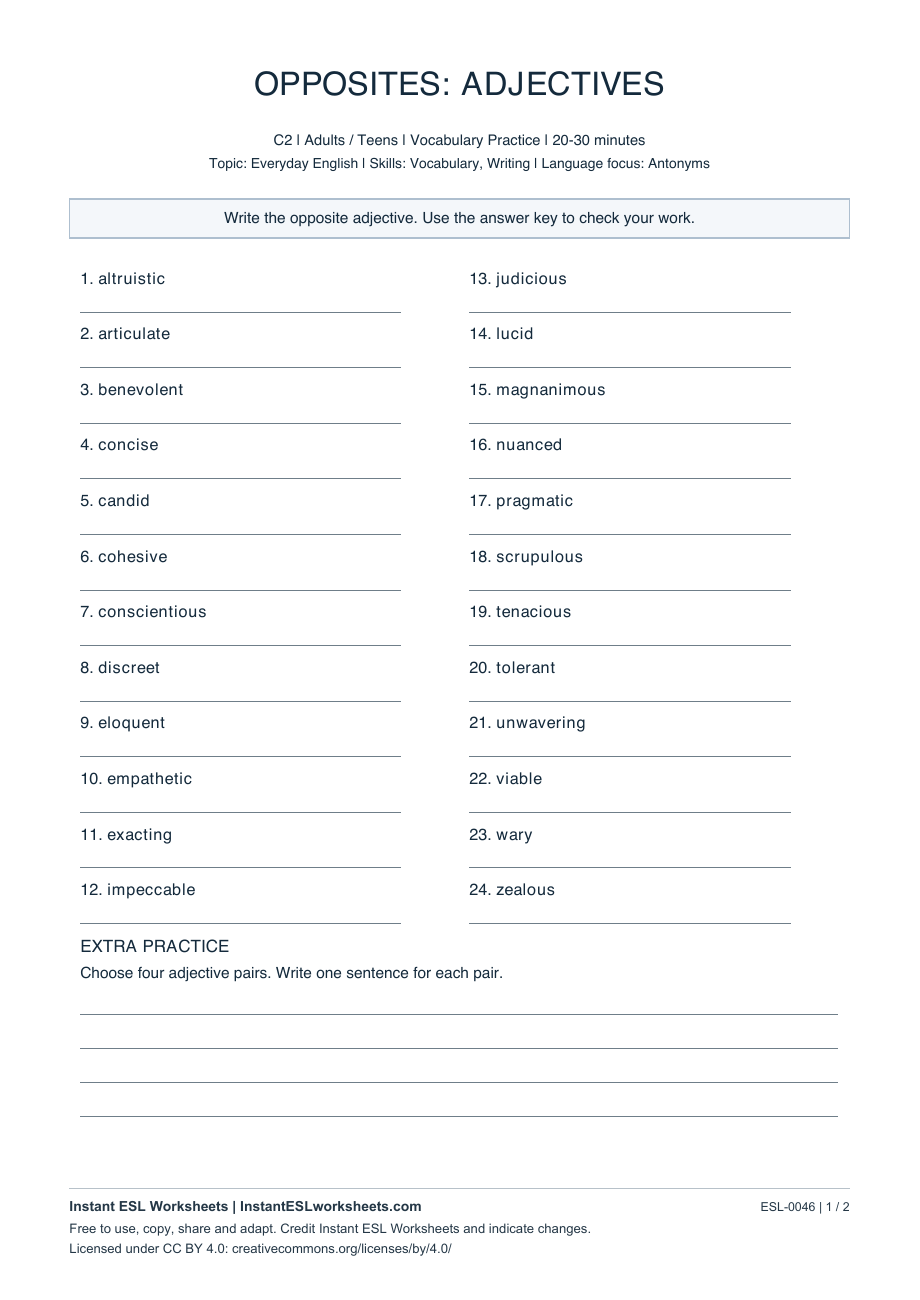
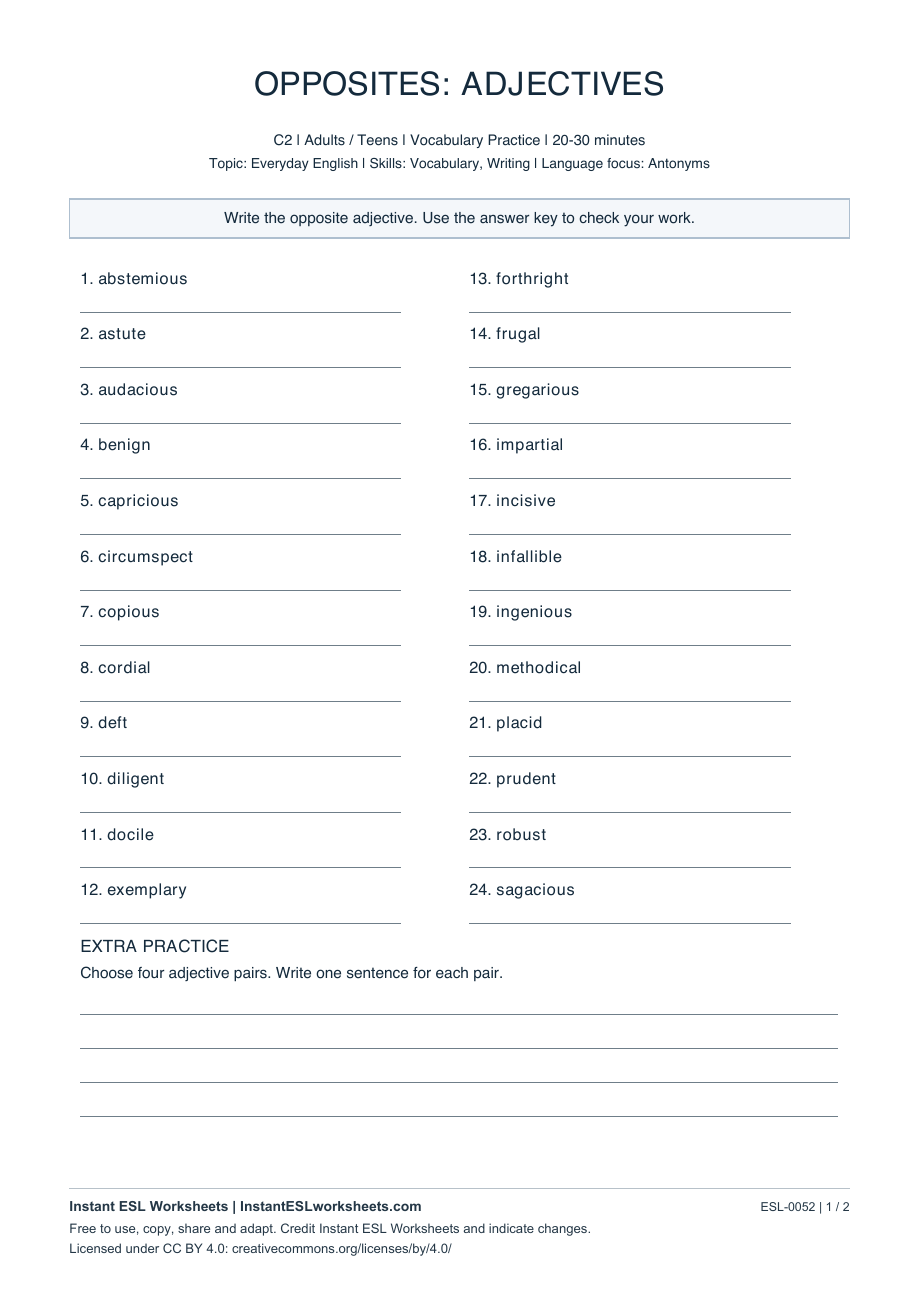
Practise 24 adjective opposites at C2 level, then write sentences using selected pairs. Includes suggested answers on page 2.
Practise 24 adjective opposites at A1 level, then write sentences using selected pairs. Includes suggested answers on page 2.
Practise 24 adjective opposites at A2 level, then write sentences using selected pairs. Includes suggested answers on page 2.
Practise 24 adjective opposites at B1 level, then write sentences using selected pairs. Includes suggested answers on page 2.
Practise 24 adjective opposites at B2 level, then write sentences using selected pairs. Includes suggested answers on page 2.
Practise 24 adjective opposites at C1 level, then write sentences using selected pairs. Includes suggested answers on page 2.
Practise 24 adjective opposites at C2 level, then write sentences using selected pairs. Includes suggested answers on page 2.
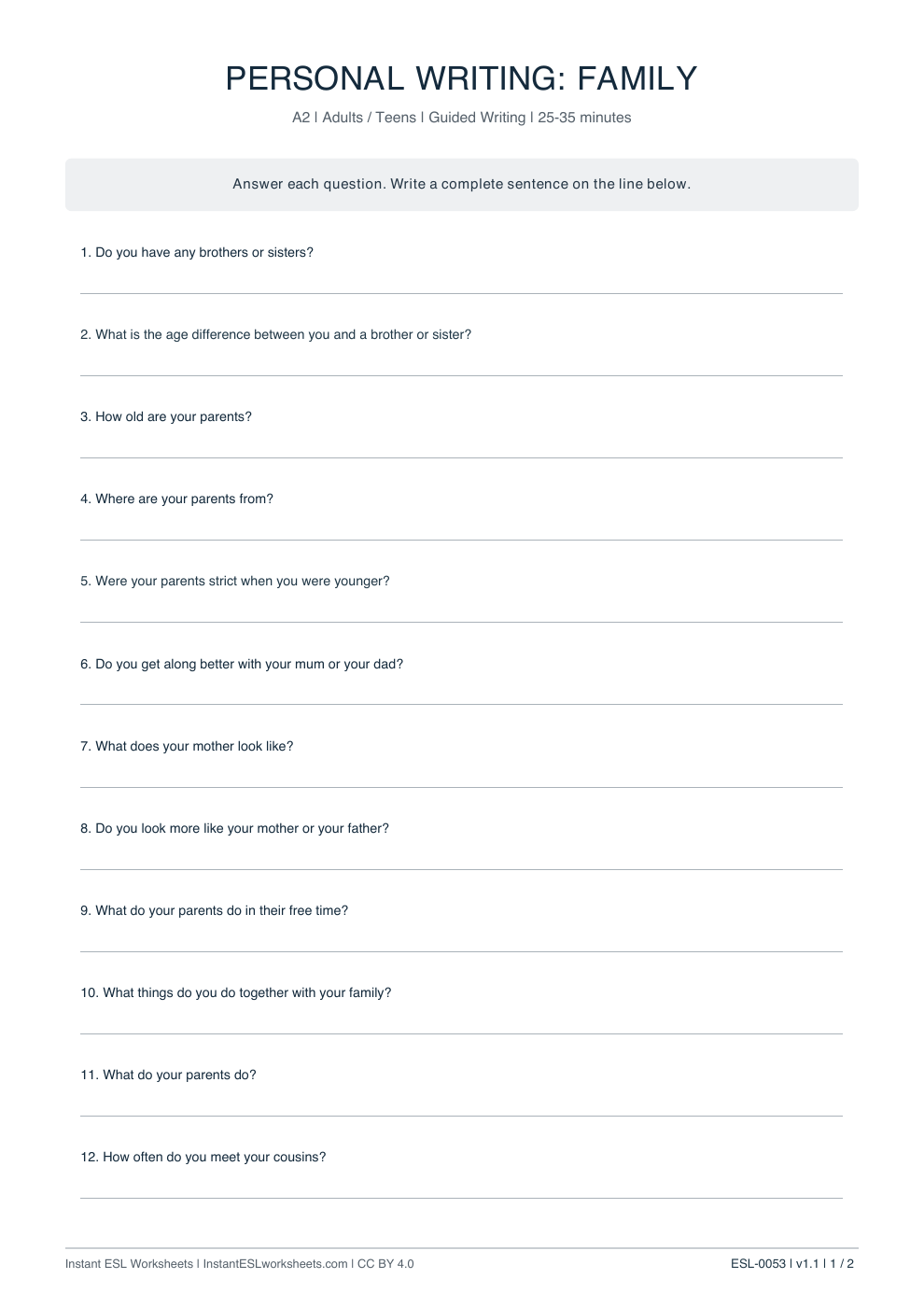
A printable A2 worksheet for extended discussion and writing on family.
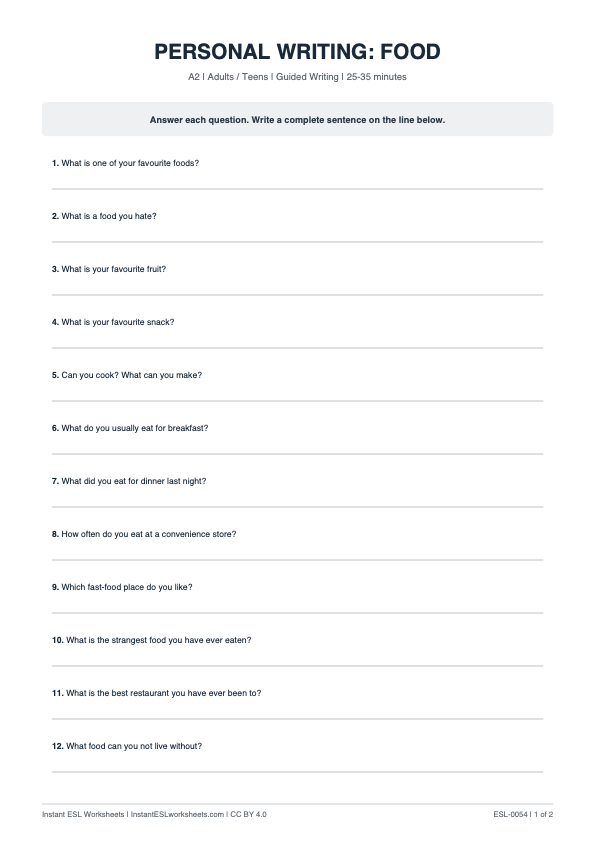
A printable A2 worksheet for extended discussion and writing on food.
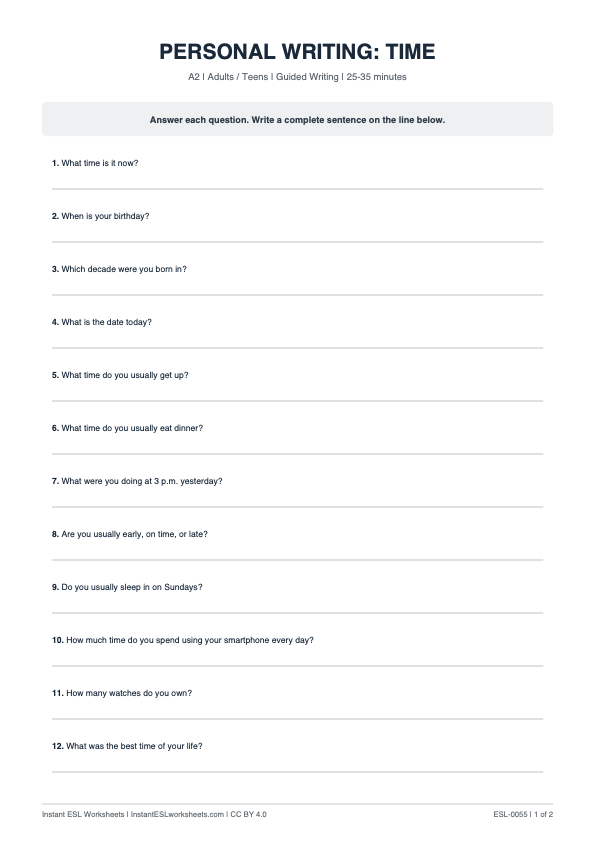
A printable A2 worksheet for extended discussion and writing on time and routines.
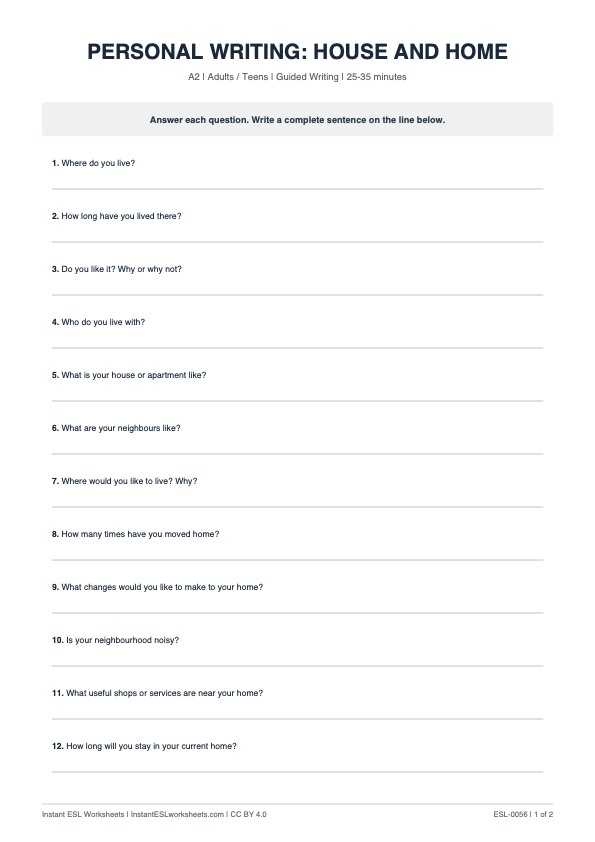
A printable A2 worksheet for extended discussion and writing on house and home.
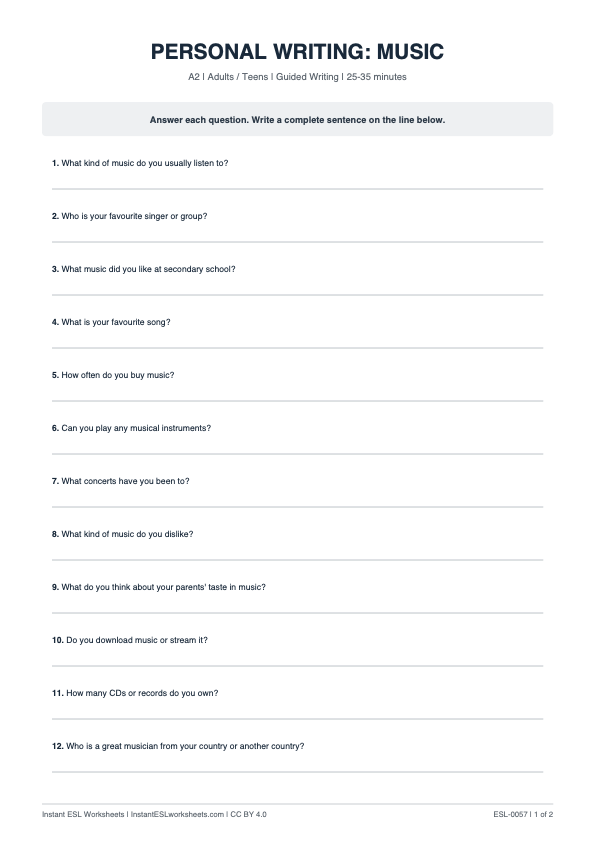
A printable A2 worksheet for extended discussion and writing on music.
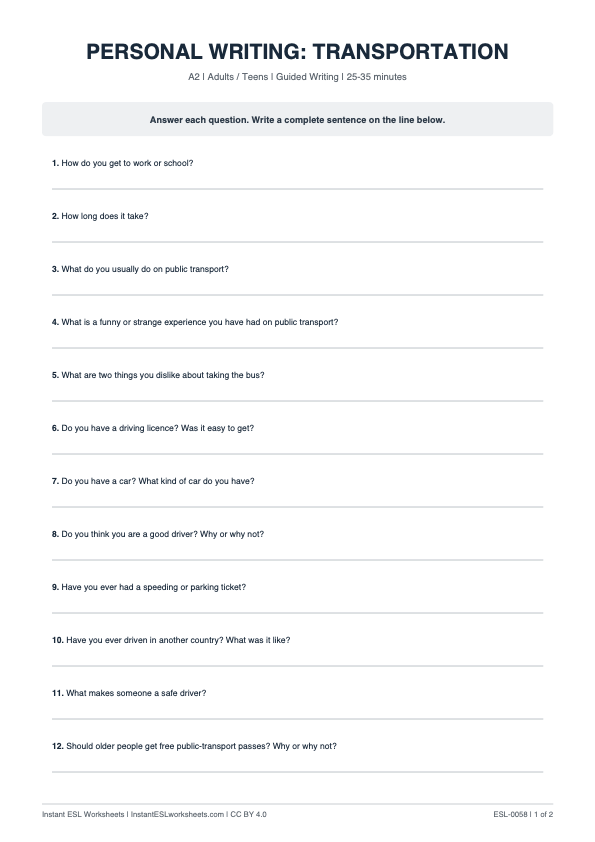
A printable A2 worksheet for extended discussion and writing on transportation.
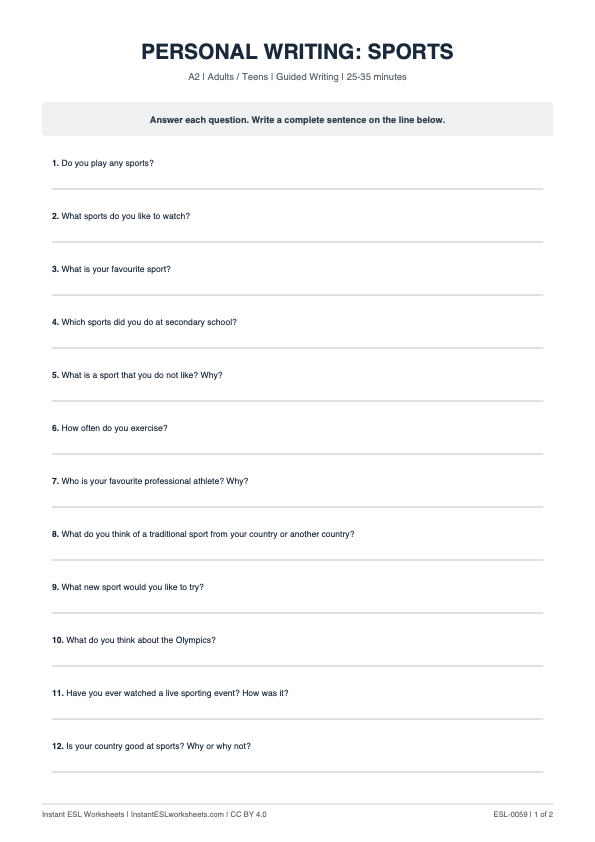
A printable A2 worksheet for extended discussion and writing on sports.
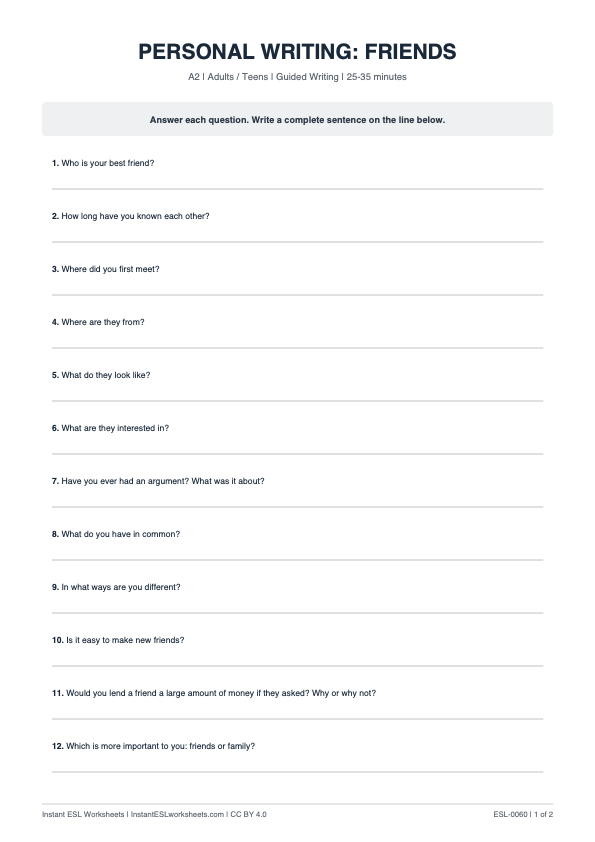
A printable A2 worksheet for extended discussion and writing on friends.
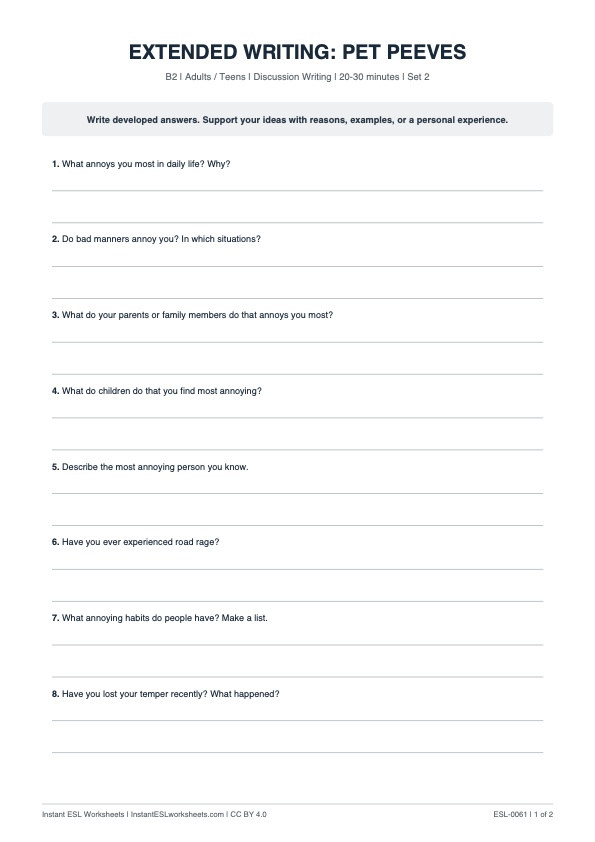
A printable B2 worksheet for extended discussion and writing on pet peeves.
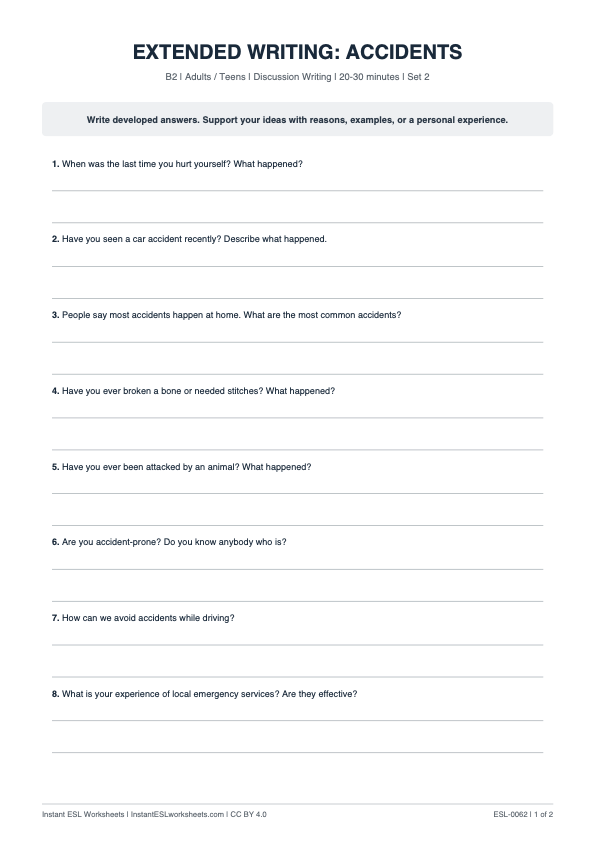
A printable B2 worksheet for extended discussion and writing on accidents.
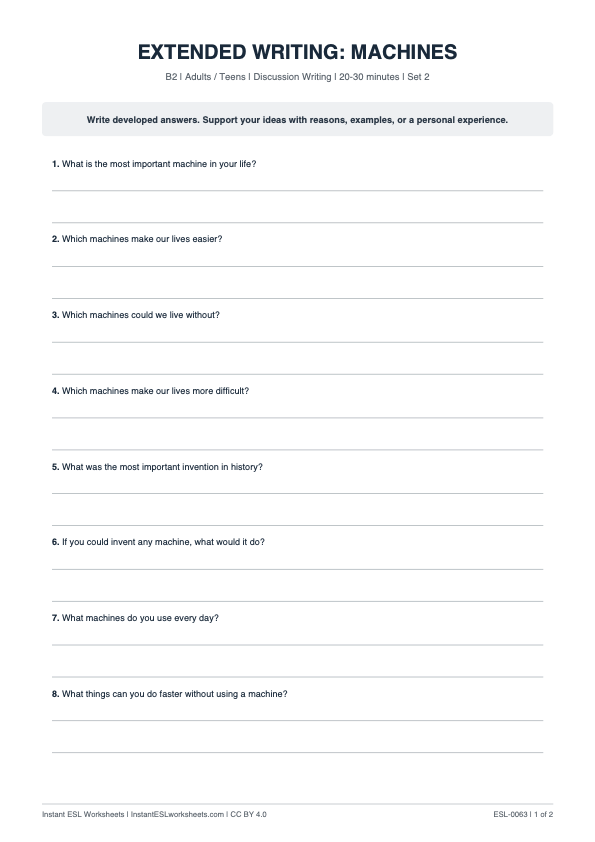
A printable B2 worksheet for extended discussion and writing on machines.
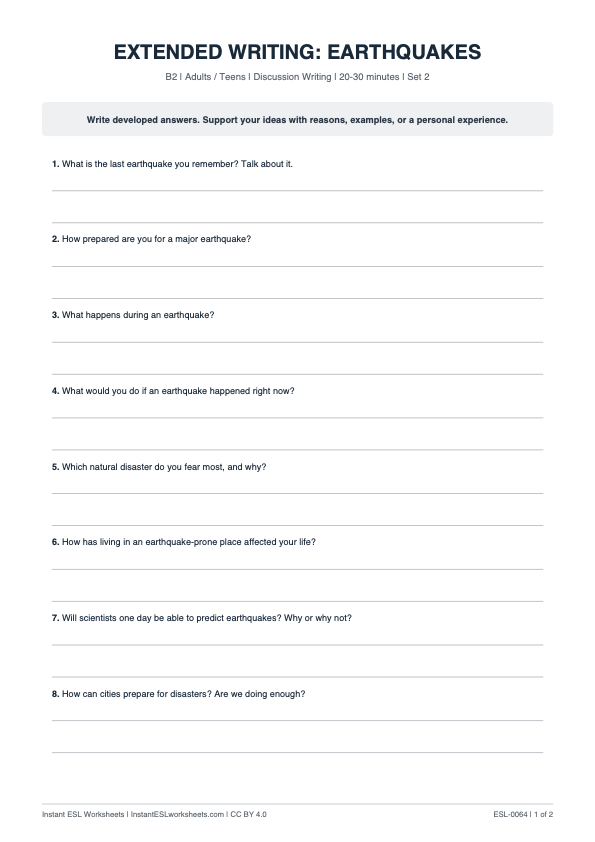
A printable B2 worksheet for extended discussion and writing on earthquakes.
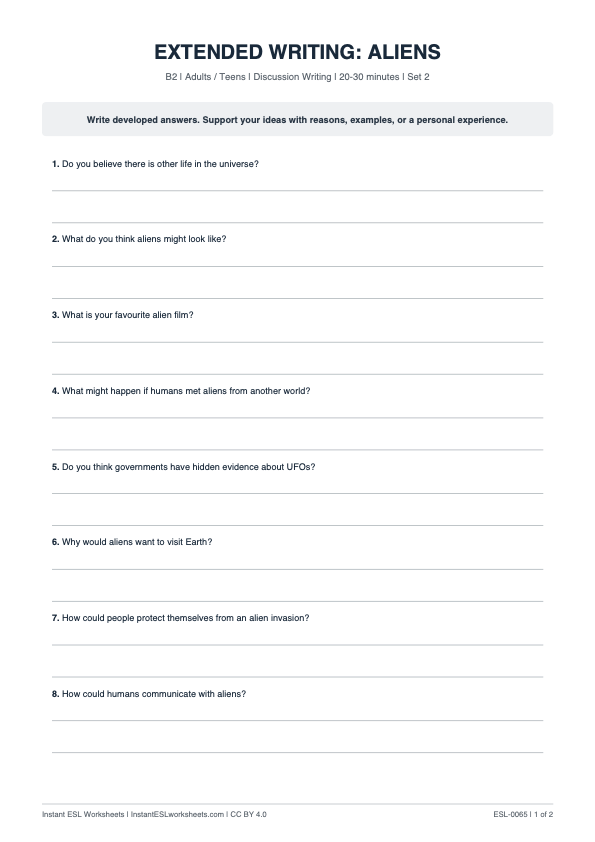
A printable B2 worksheet for extended discussion and writing on aliens.
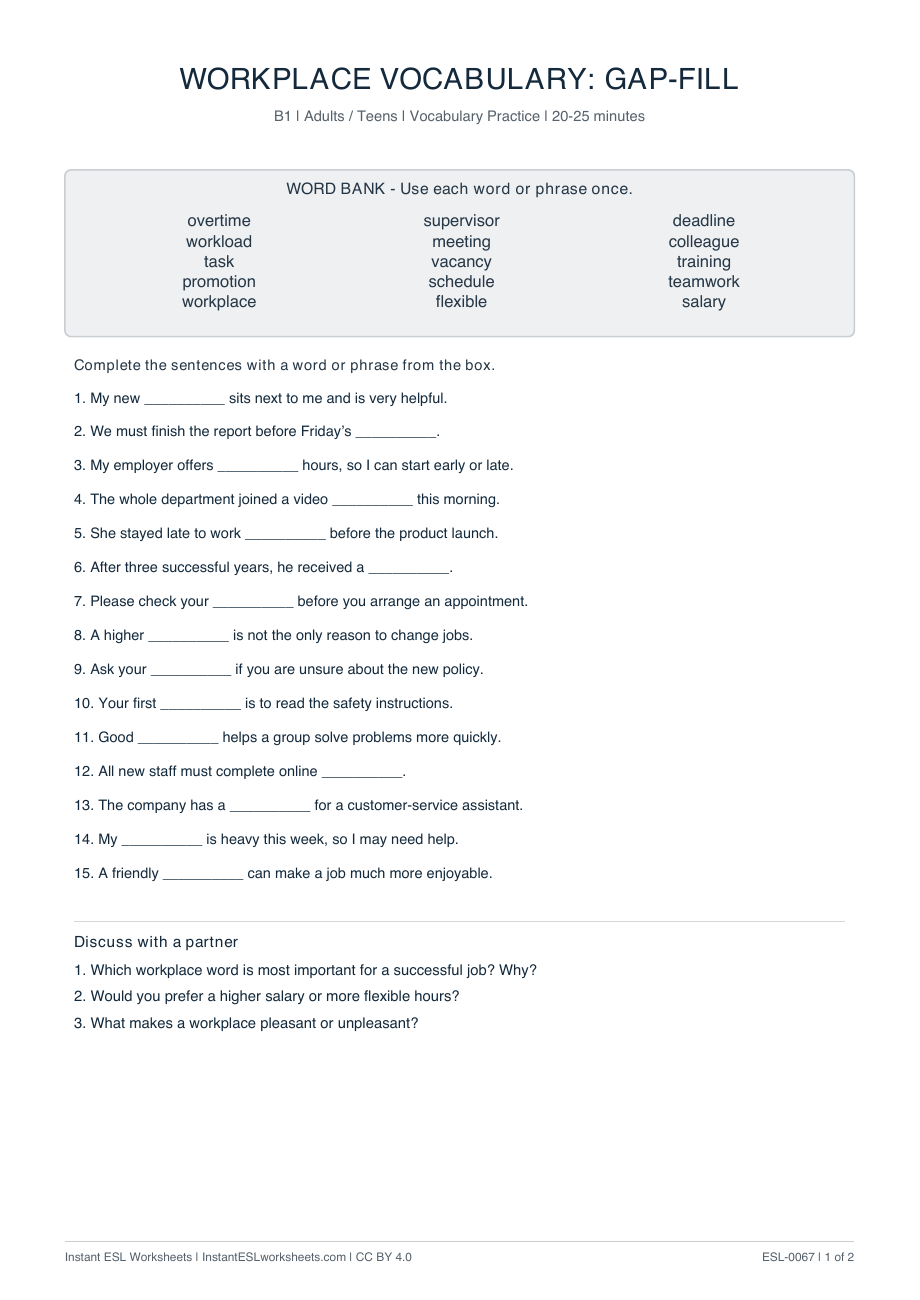
Build confidence with 15 useful workplace words and phrases. Complete contextual gap-fill sentences, then discuss the topic with a partner. Includes a full-sentence answer key.
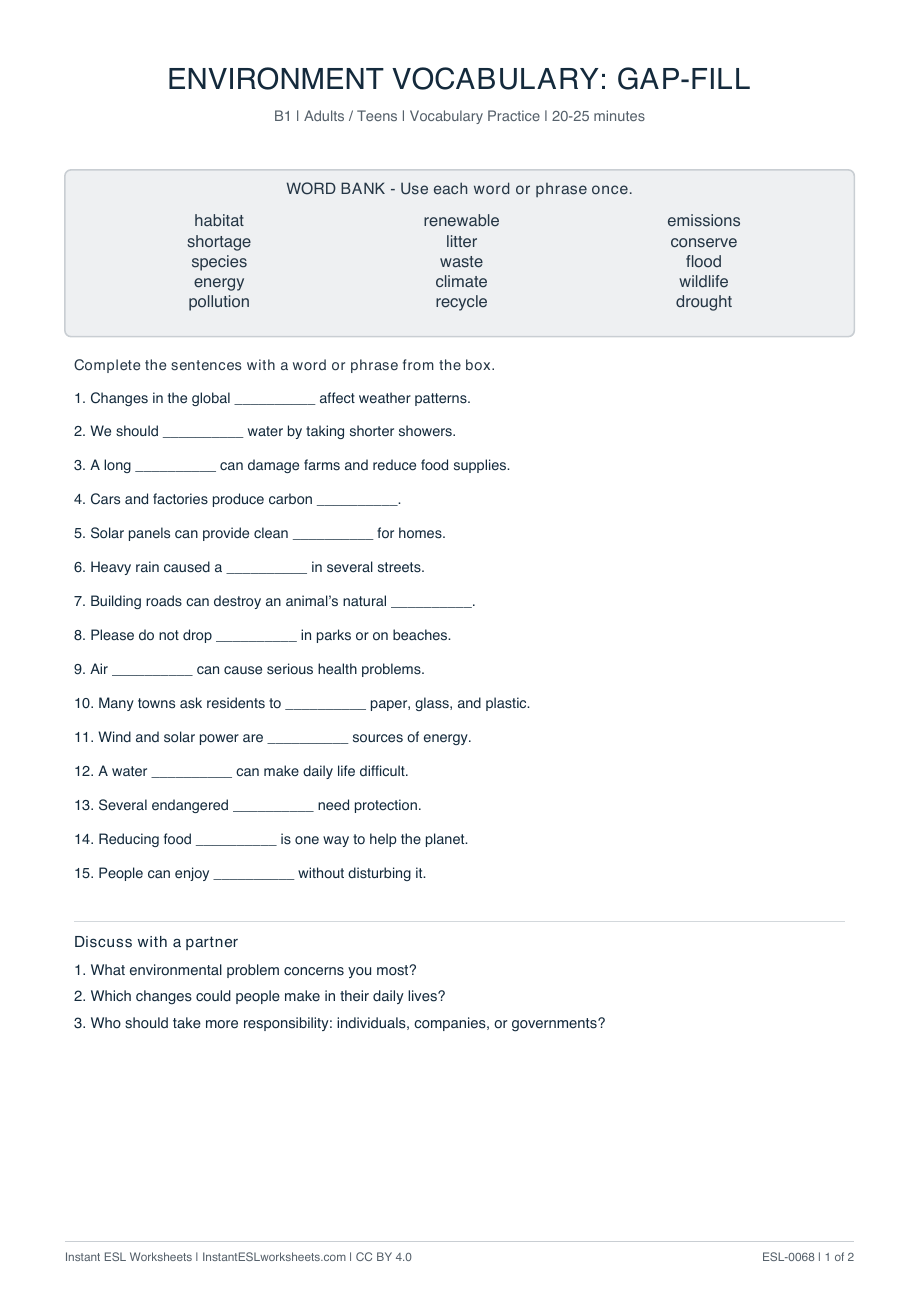
Build confidence with 15 useful environment words and phrases. Complete contextual gap-fill sentences, then discuss the topic with a partner. Includes a full-sentence answer key.
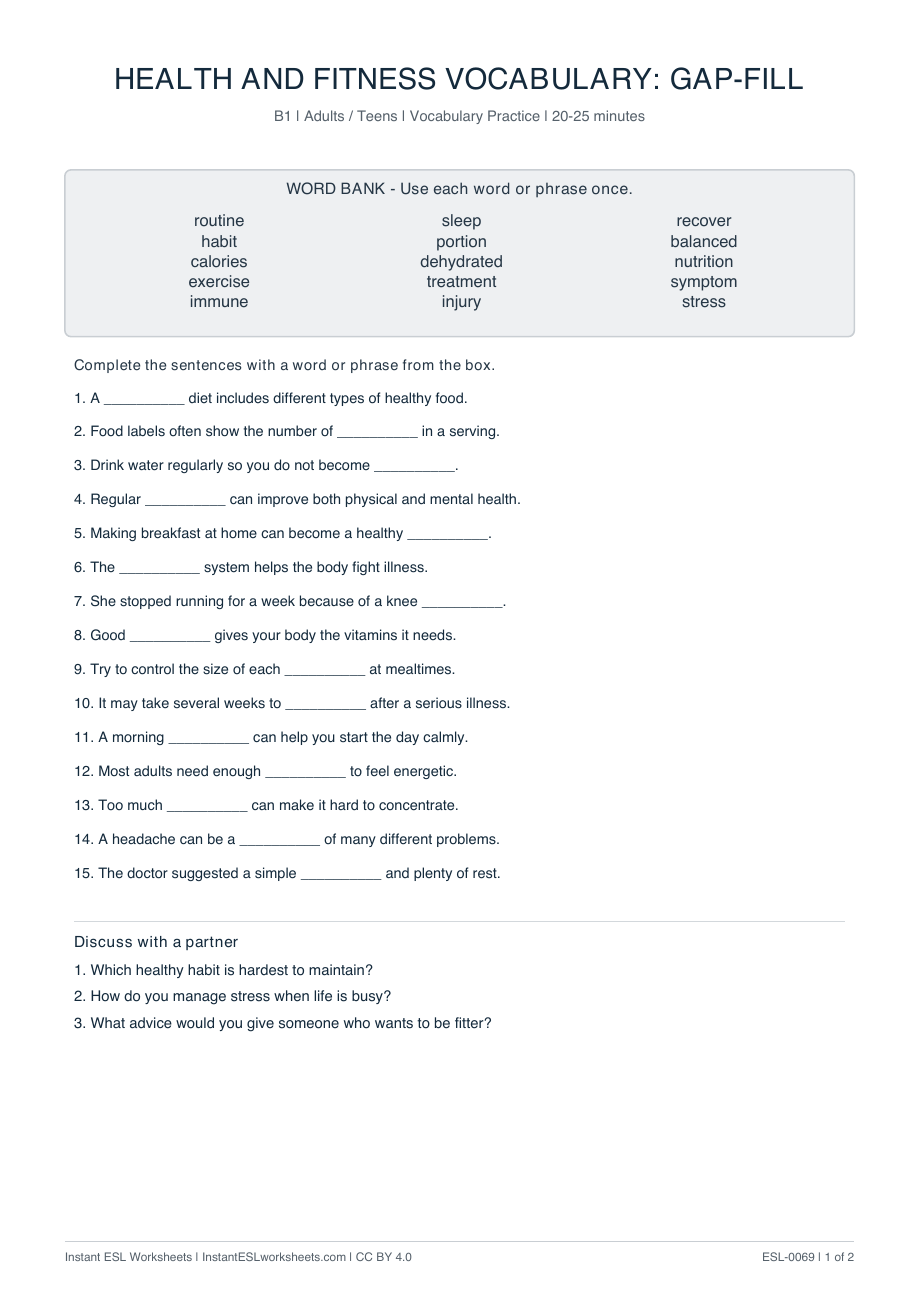
Build confidence with 15 useful health and fitness words and phrases. Complete contextual gap-fill sentences, then discuss the topic with a partner. Includes a full-sentence answer key.
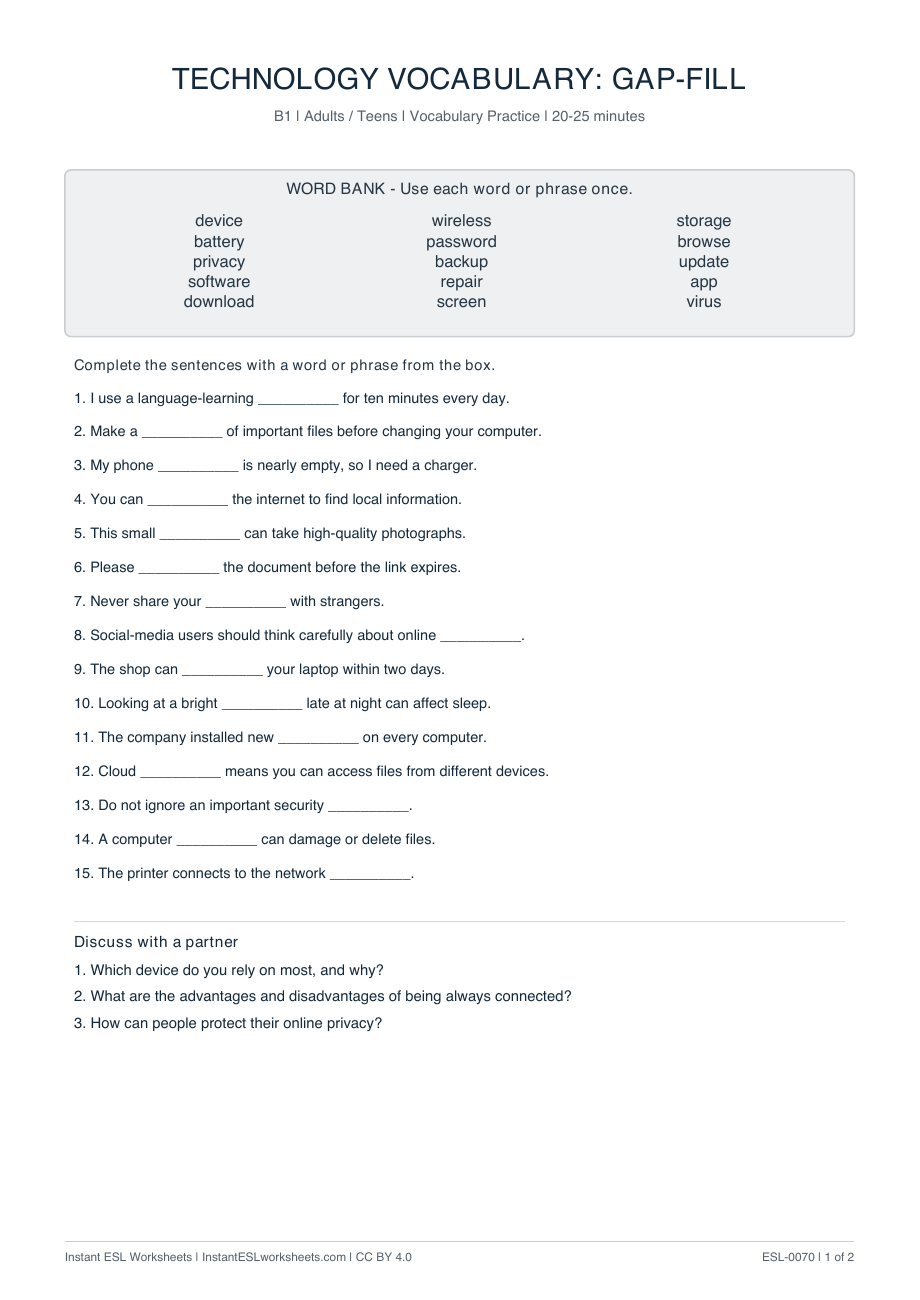
Build confidence with 15 useful technology words and phrases. Complete contextual gap-fill sentences, then discuss the topic with a partner. Includes a full-sentence answer key.
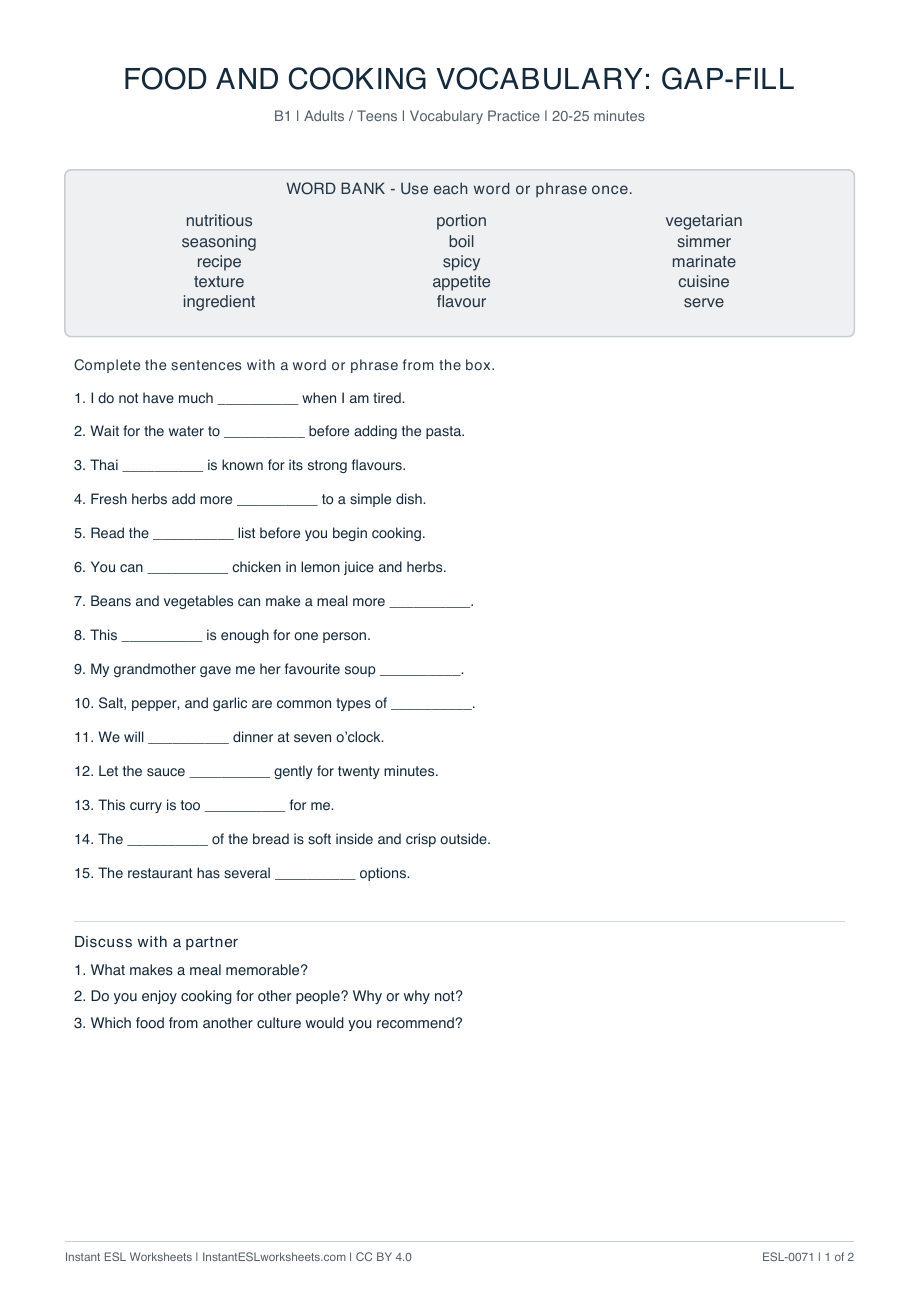
Build confidence with 15 useful food and cooking words and phrases. Complete contextual gap-fill sentences, then discuss the topic with a partner. Includes a full-sentence answer key.
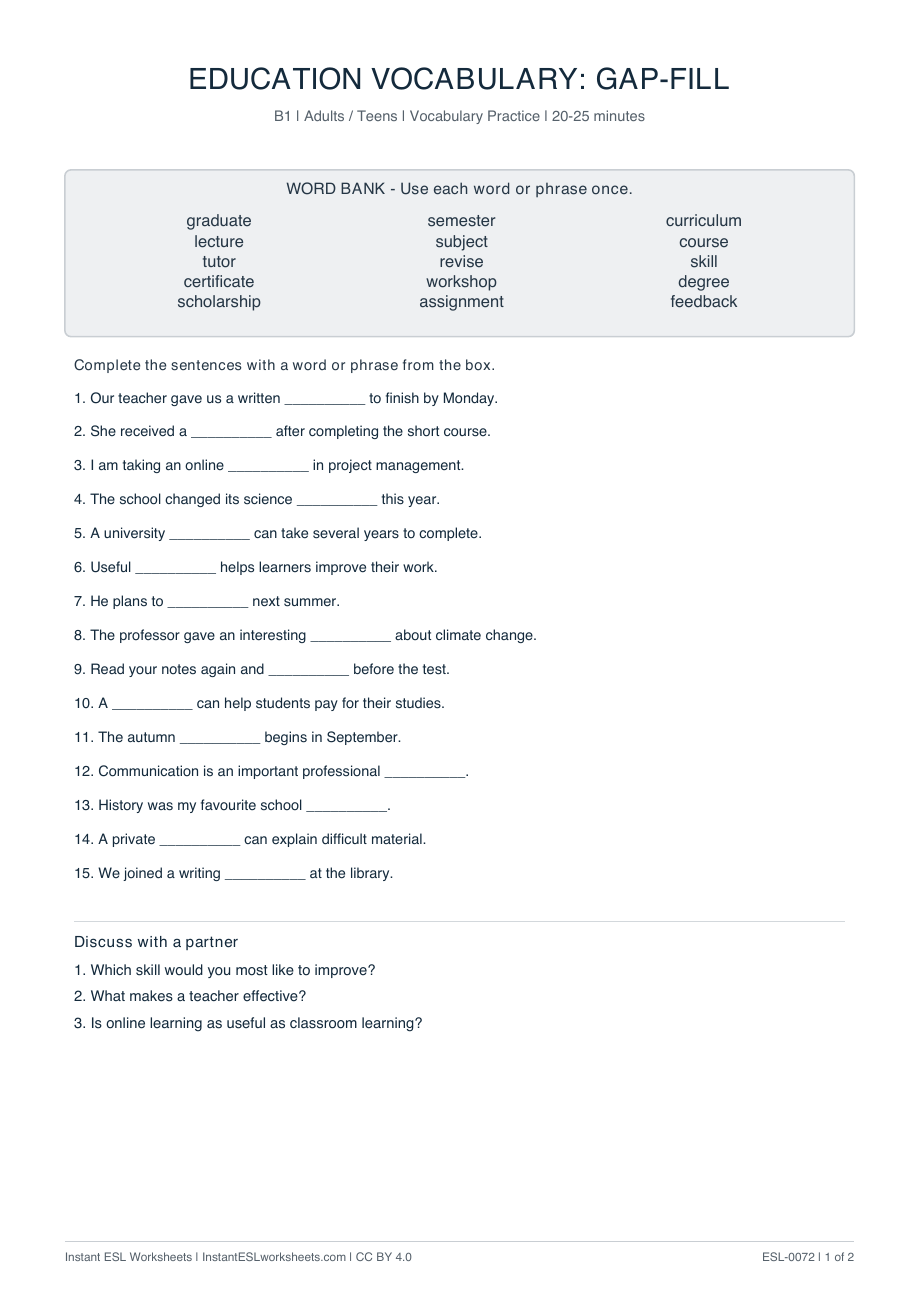
Build confidence with 15 useful education words and phrases. Complete contextual gap-fill sentences, then discuss the topic with a partner. Includes a full-sentence answer key.
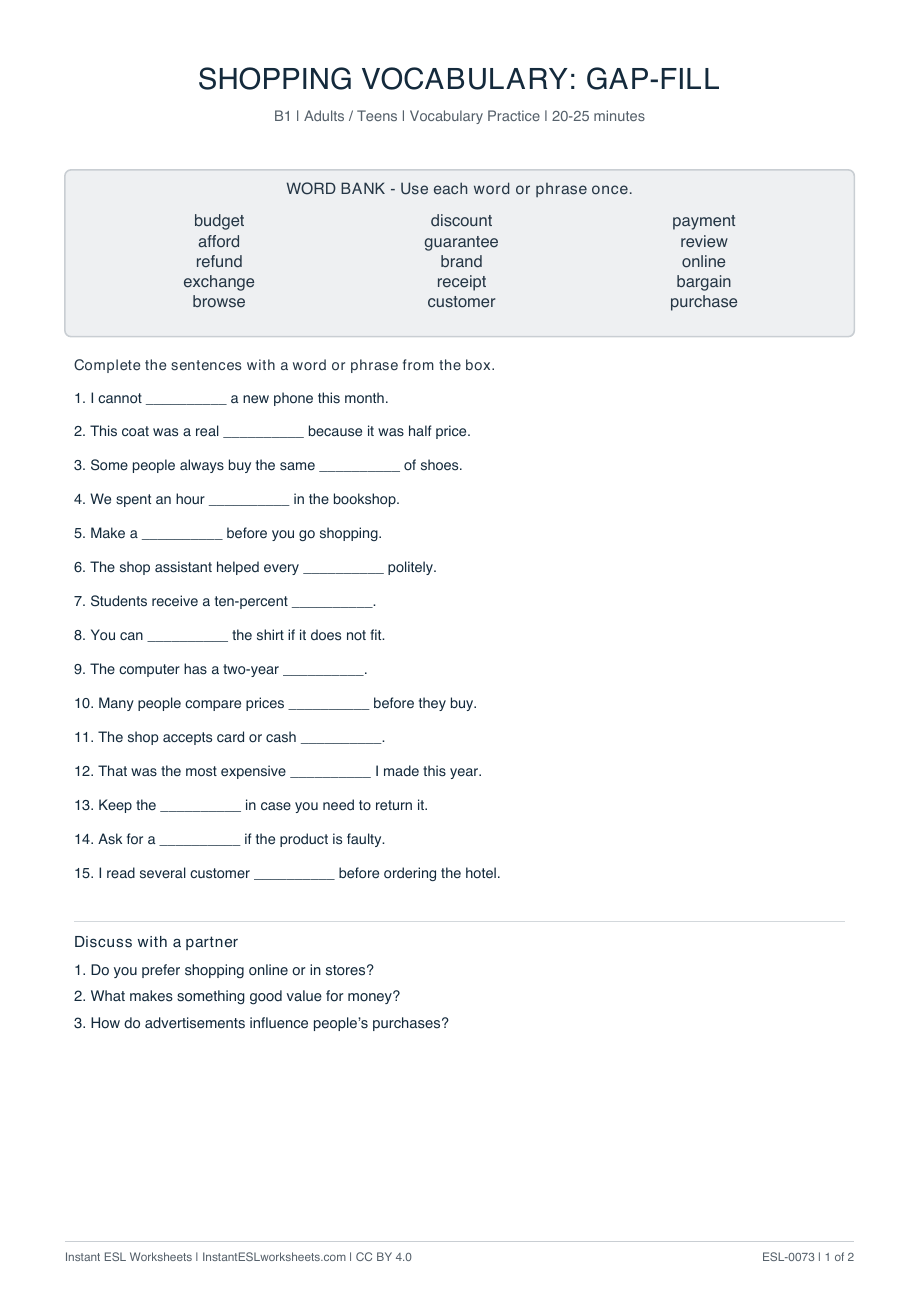
Build confidence with 15 useful shopping words and phrases. Complete contextual gap-fill sentences, then discuss the topic with a partner. Includes a full-sentence answer key.
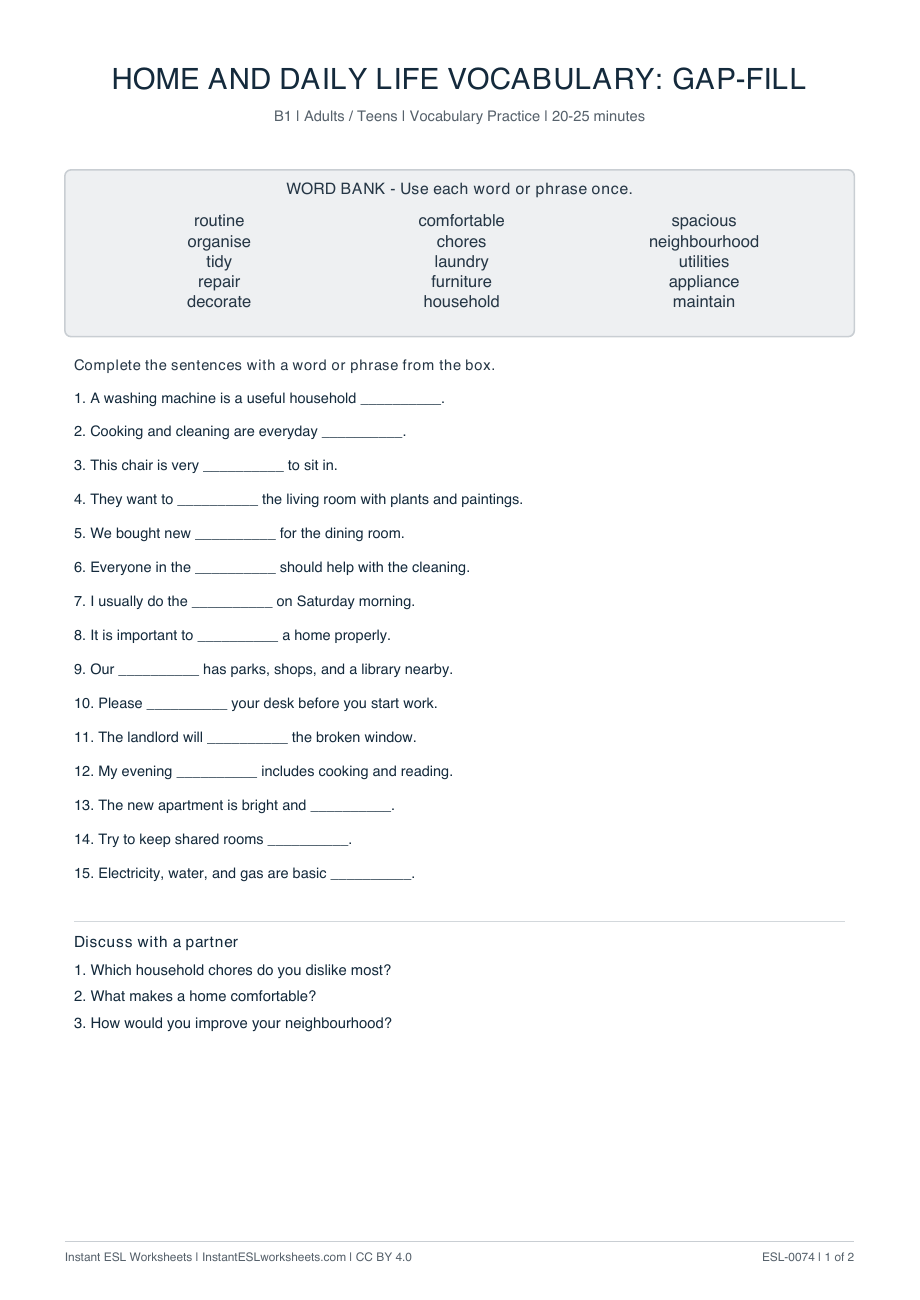
Build confidence with 15 useful home and daily life words and phrases. Complete contextual gap-fill sentences, then discuss the topic with a partner. Includes a full-sentence answer key.
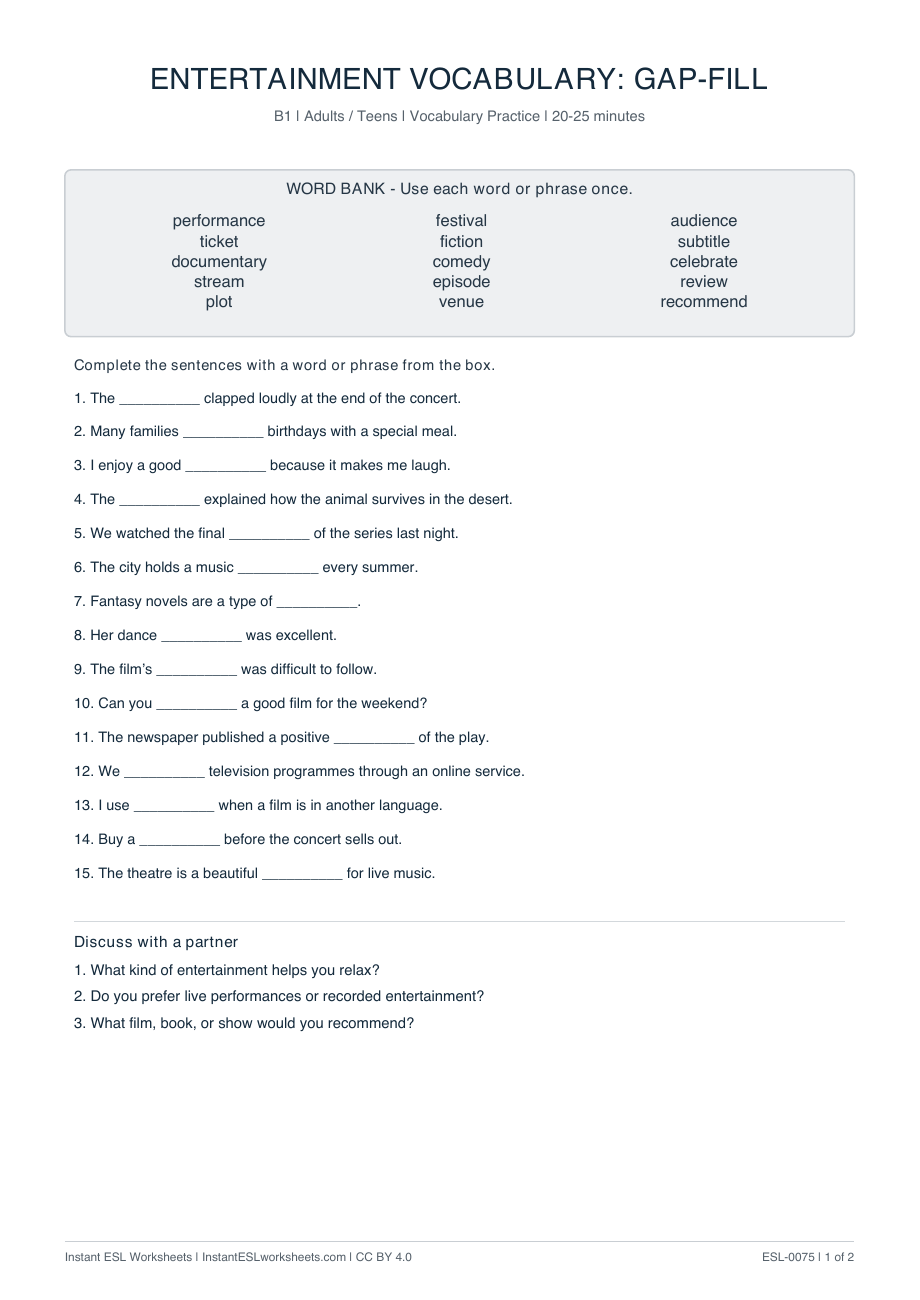
Build confidence with 15 useful entertainment words and phrases. Complete contextual gap-fill sentences, then discuss the topic with a partner. Includes a full-sentence answer key.
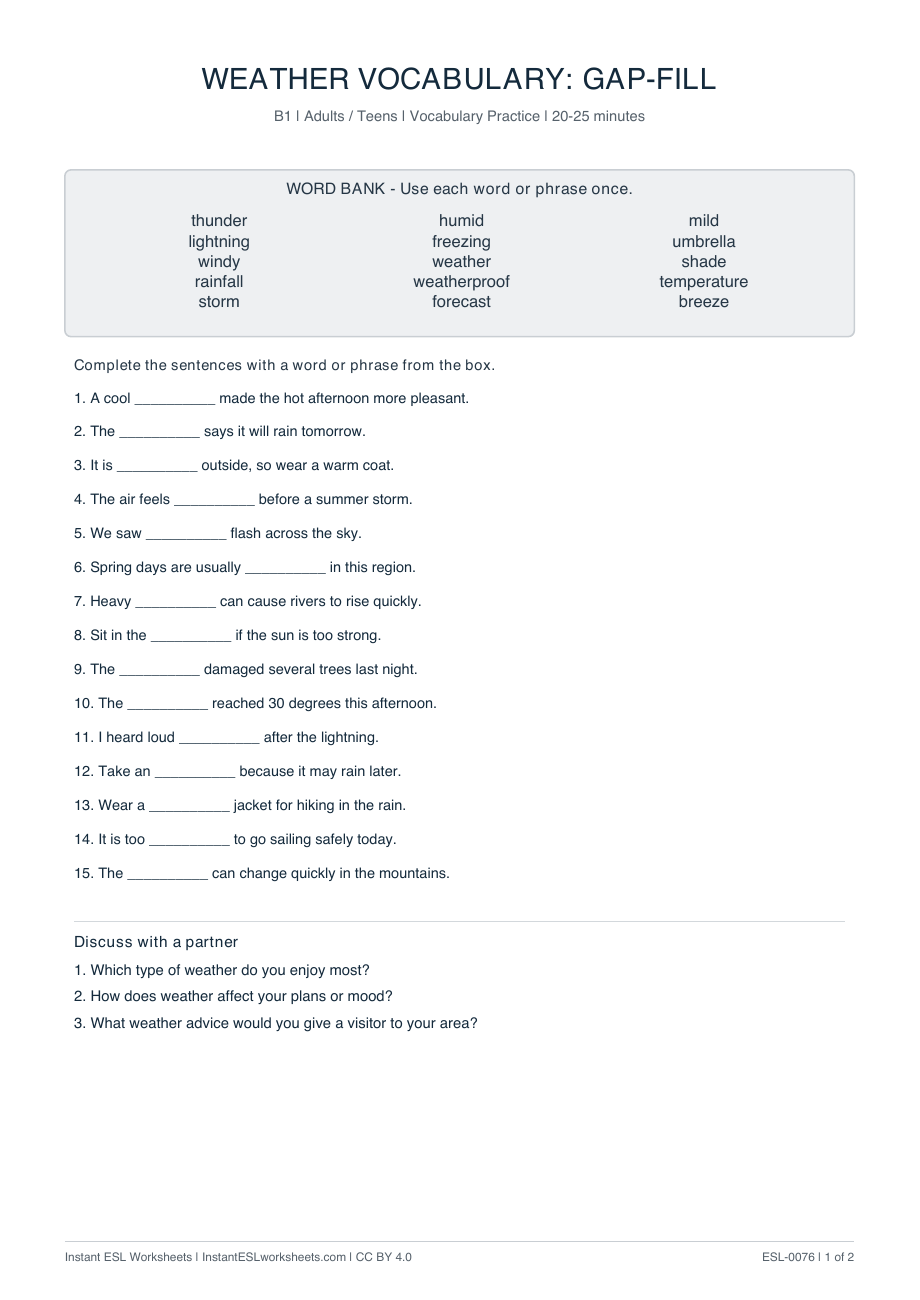
Build confidence with 15 useful weather words and phrases. Complete contextual gap-fill sentences, then discuss the topic with a partner. Includes a full-sentence answer key.
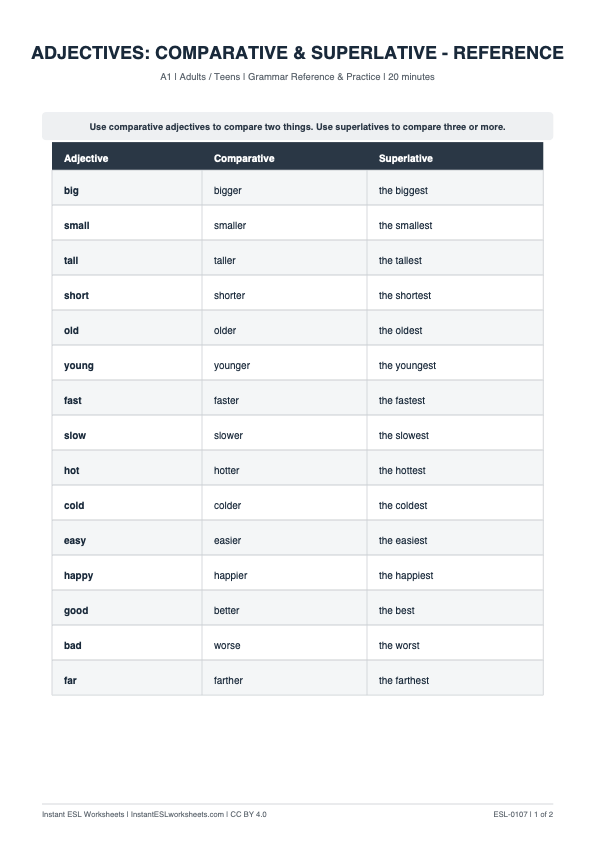
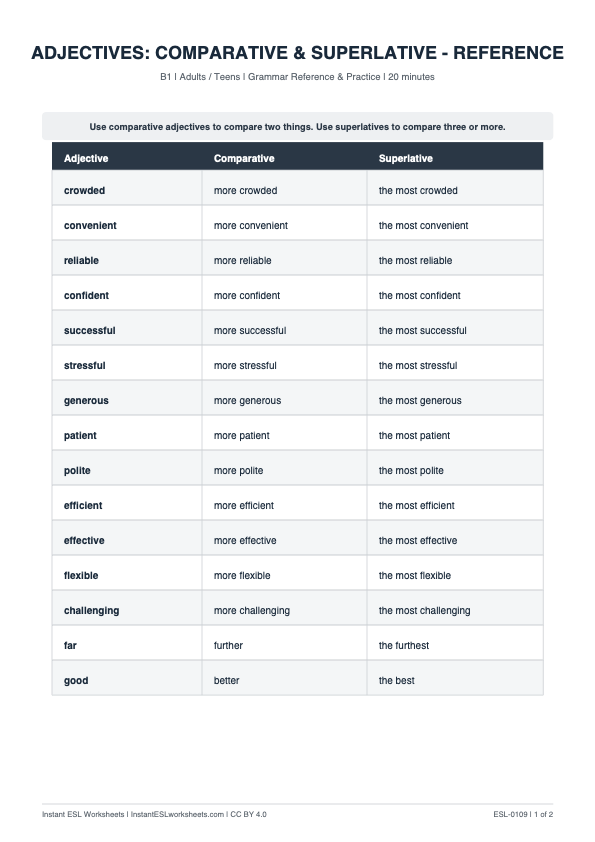
Use adjective forms at A1 level. Page 1 is a clear reference table; page 2 gives learners one missing form in every row to complete.
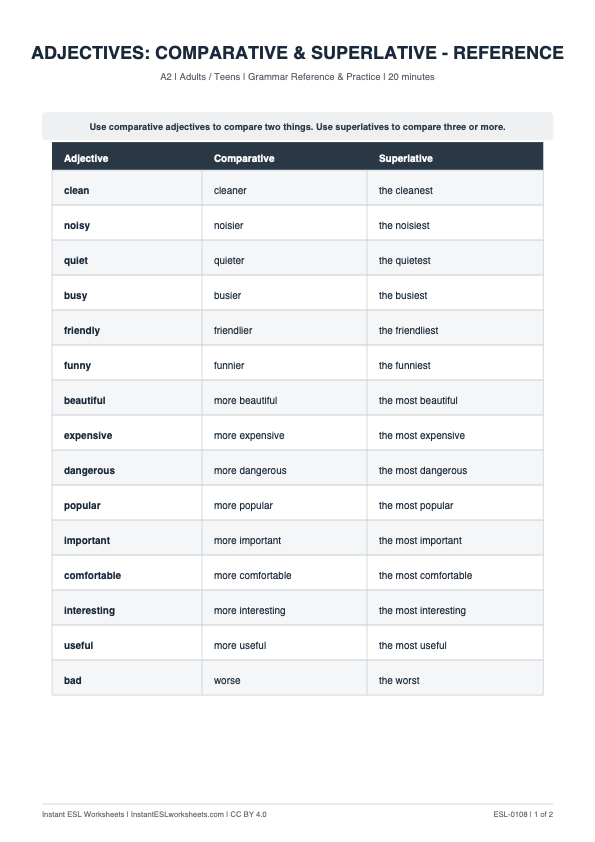
Use adjective forms at A2 level. Page 1 is a clear reference table; page 2 gives learners one missing form in every row to complete.
Use adjective forms at B1 level. Page 1 is a clear reference table; page 2 gives learners one missing form in every row to complete.
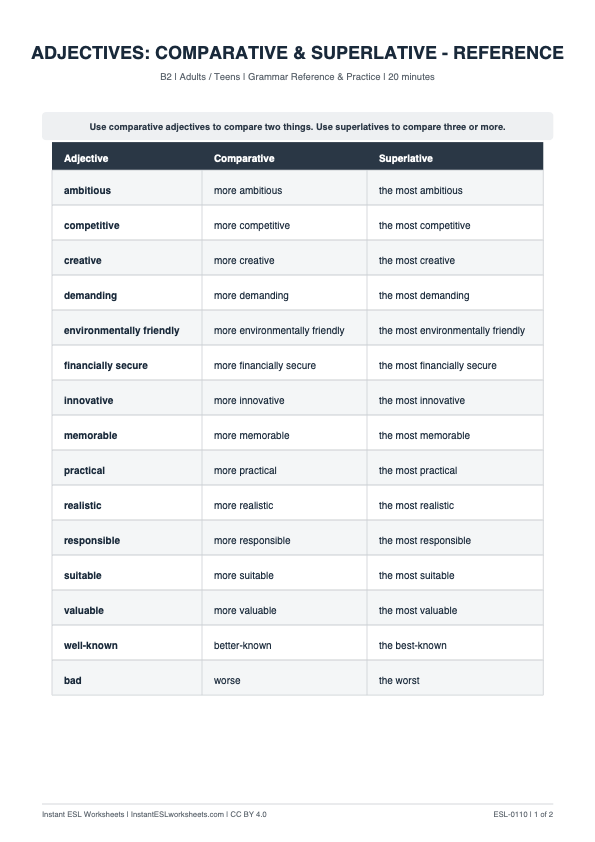
Use adjective forms at B2 level. Page 1 is a clear reference table; page 2 gives learners one missing form in every row to complete.
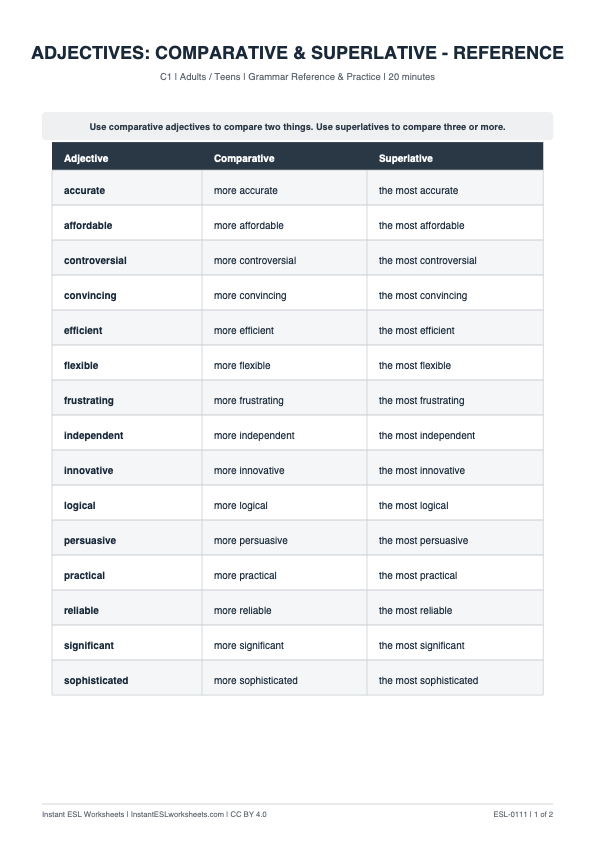
Use adjective forms at C1 level. Page 1 is a clear reference table; page 2 gives learners one missing form in every row to complete.
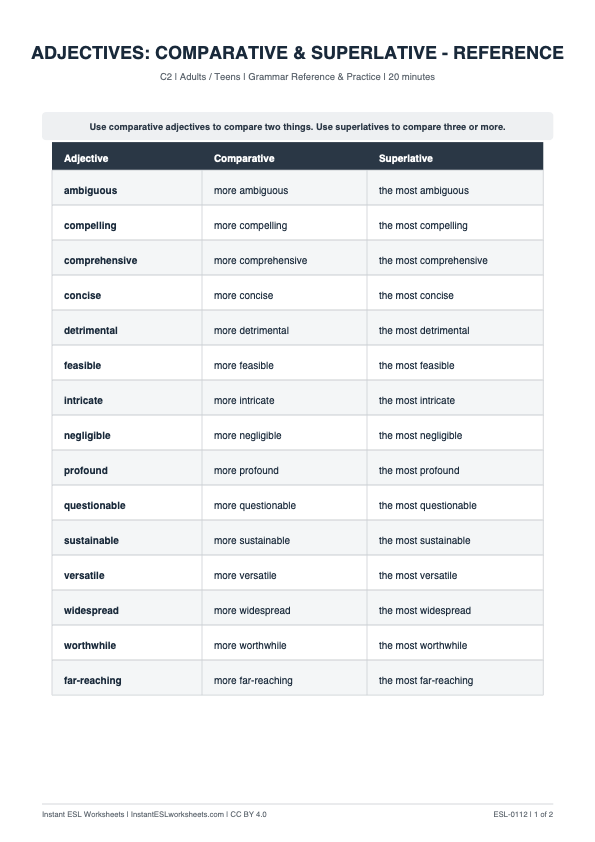
Use adjective forms at C2 level. Page 1 is a clear reference table; page 2 gives learners one missing form in every row to complete.
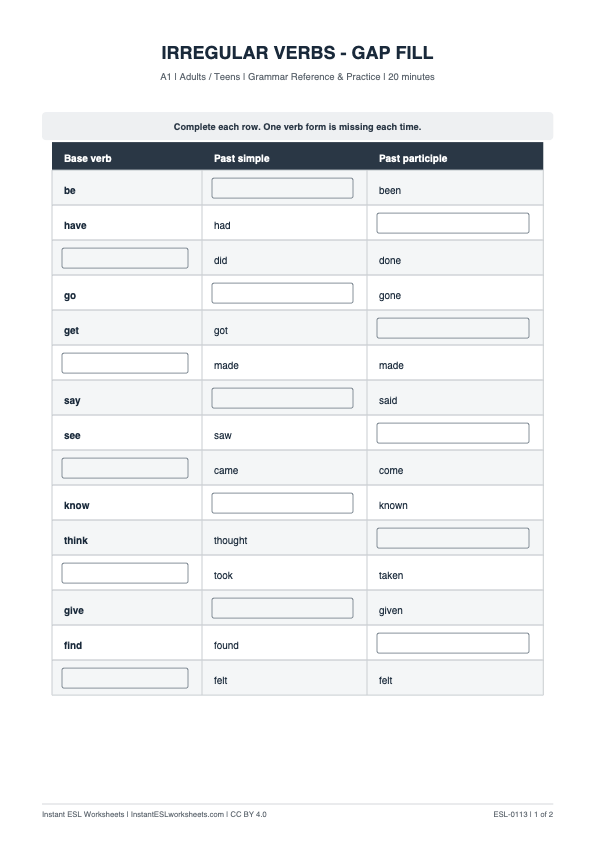
Practise 15 useful irregular verbs at A1 level. Complete one missing verb form in every row, then check the completed answer table on page 2.
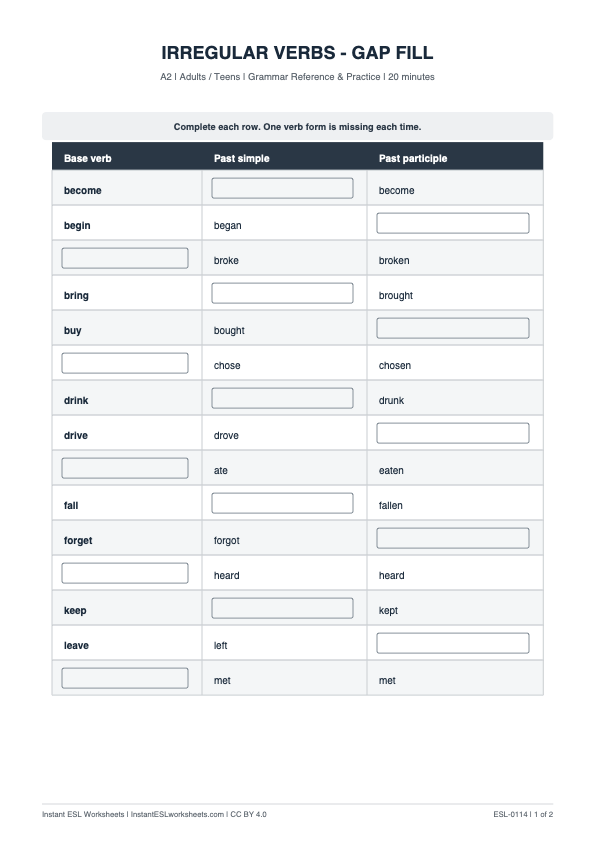
Practise 15 useful irregular verbs at A2 level. Complete one missing verb form in every row, then check the completed answer table on page 2.
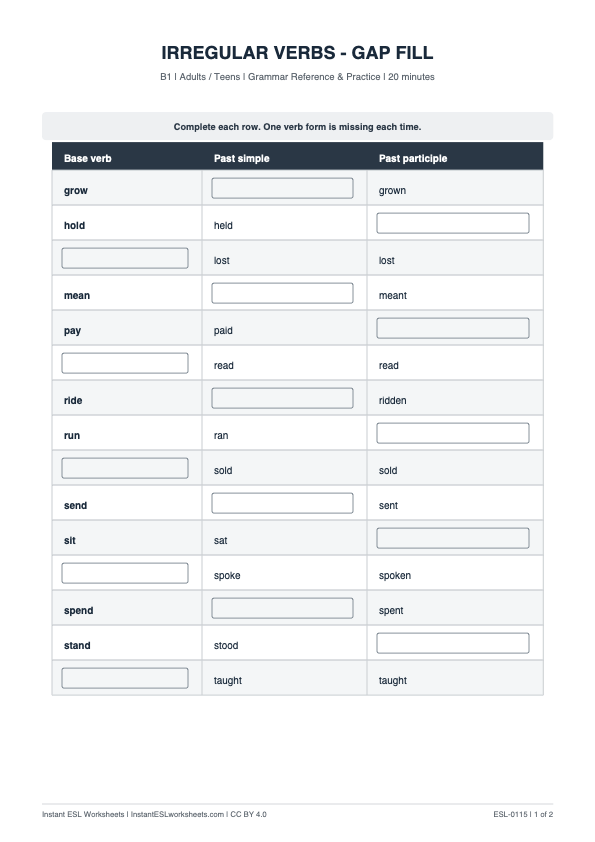
Practise 15 useful irregular verbs at B1 level. Complete one missing verb form in every row, then check the completed answer table on page 2.
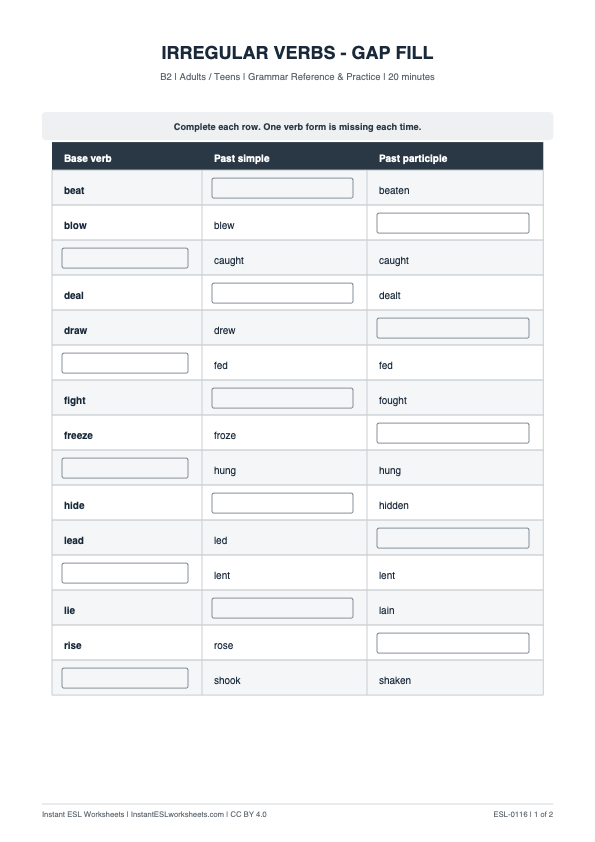
Practise 15 useful irregular verbs at B2 level. Complete one missing verb form in every row, then check the completed answer table on page 2.
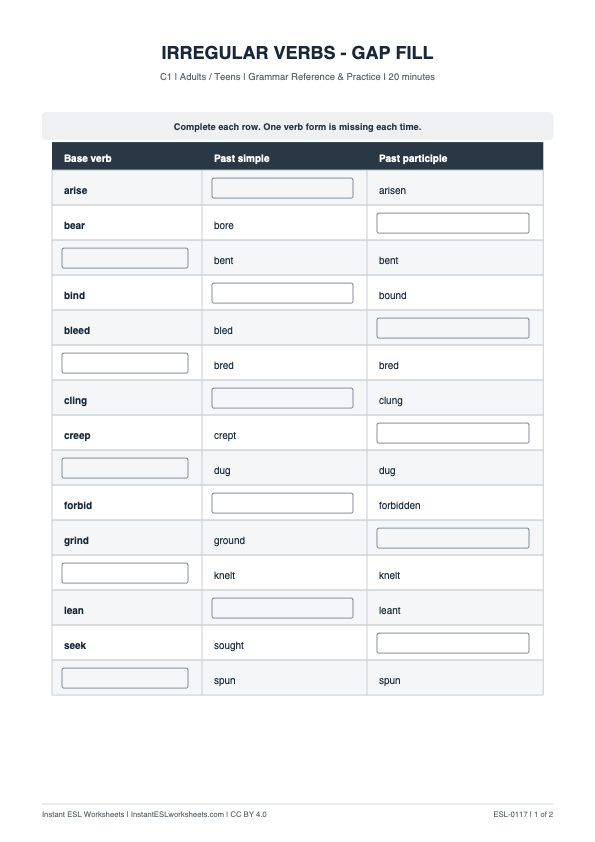
Practise 15 useful irregular verbs at C1 level. Complete one missing verb form in every row, then check the completed answer table on page 2.
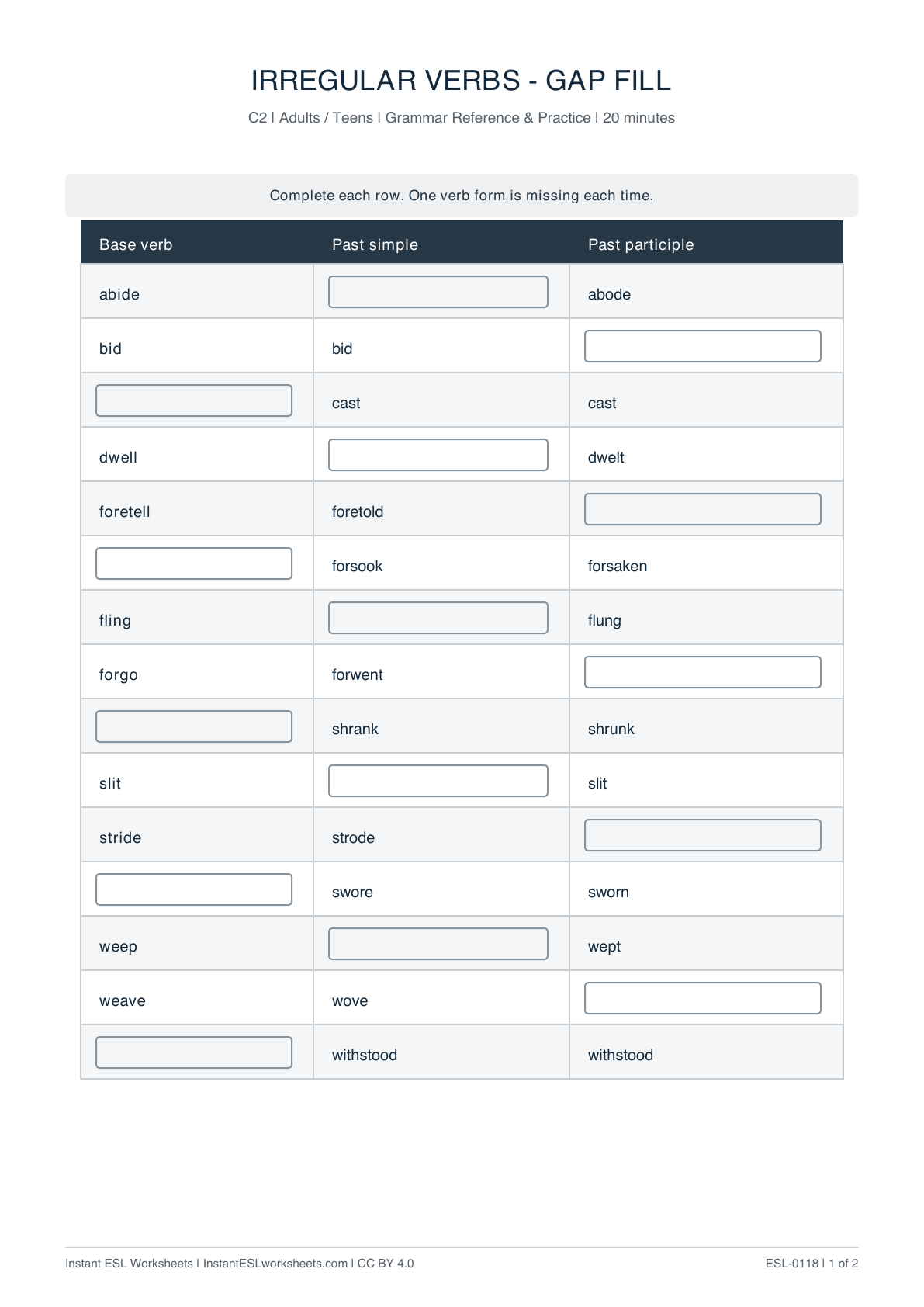
Practise 15 useful irregular verbs at C2 level. Complete one missing verb form in every row, then check the completed answer table on page 2.
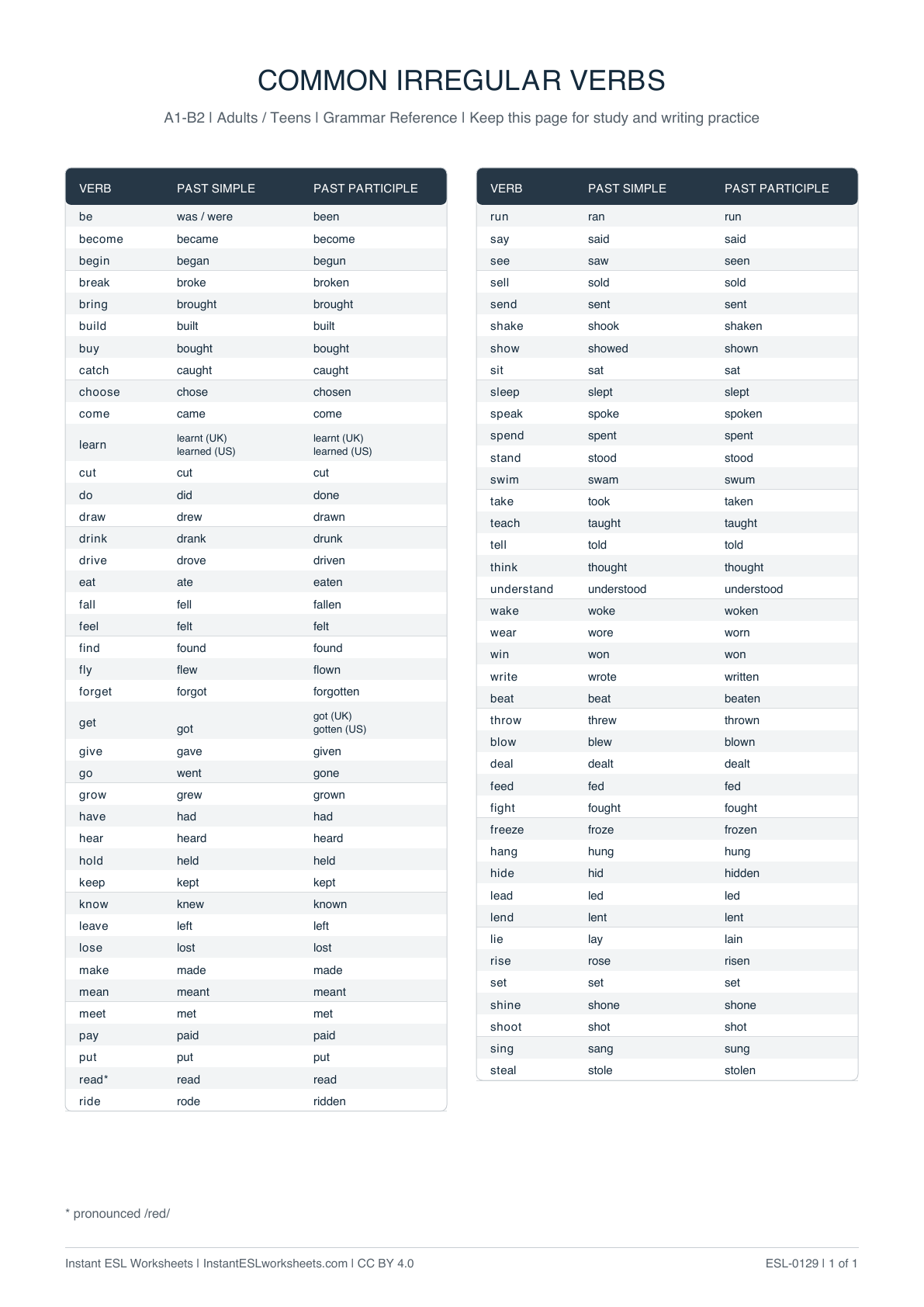
A one-page reference sheet of 80 common irregular verbs for A1 to B2 learners, including clear UK and US variants where they differ.
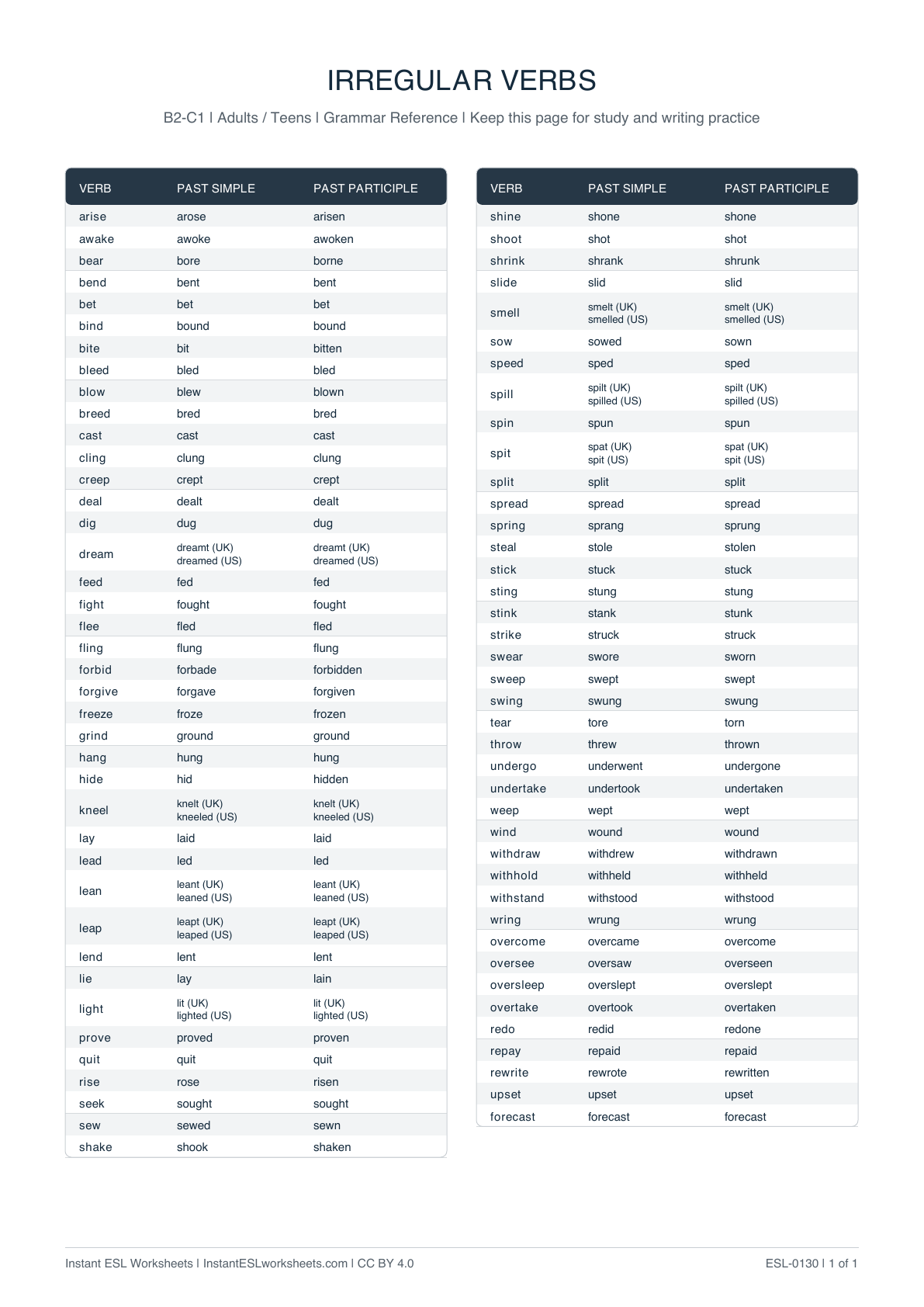
A one-page reference sheet of 80 less common irregular verbs for B2 to C1 learners, including clear UK and US variants where they differ.
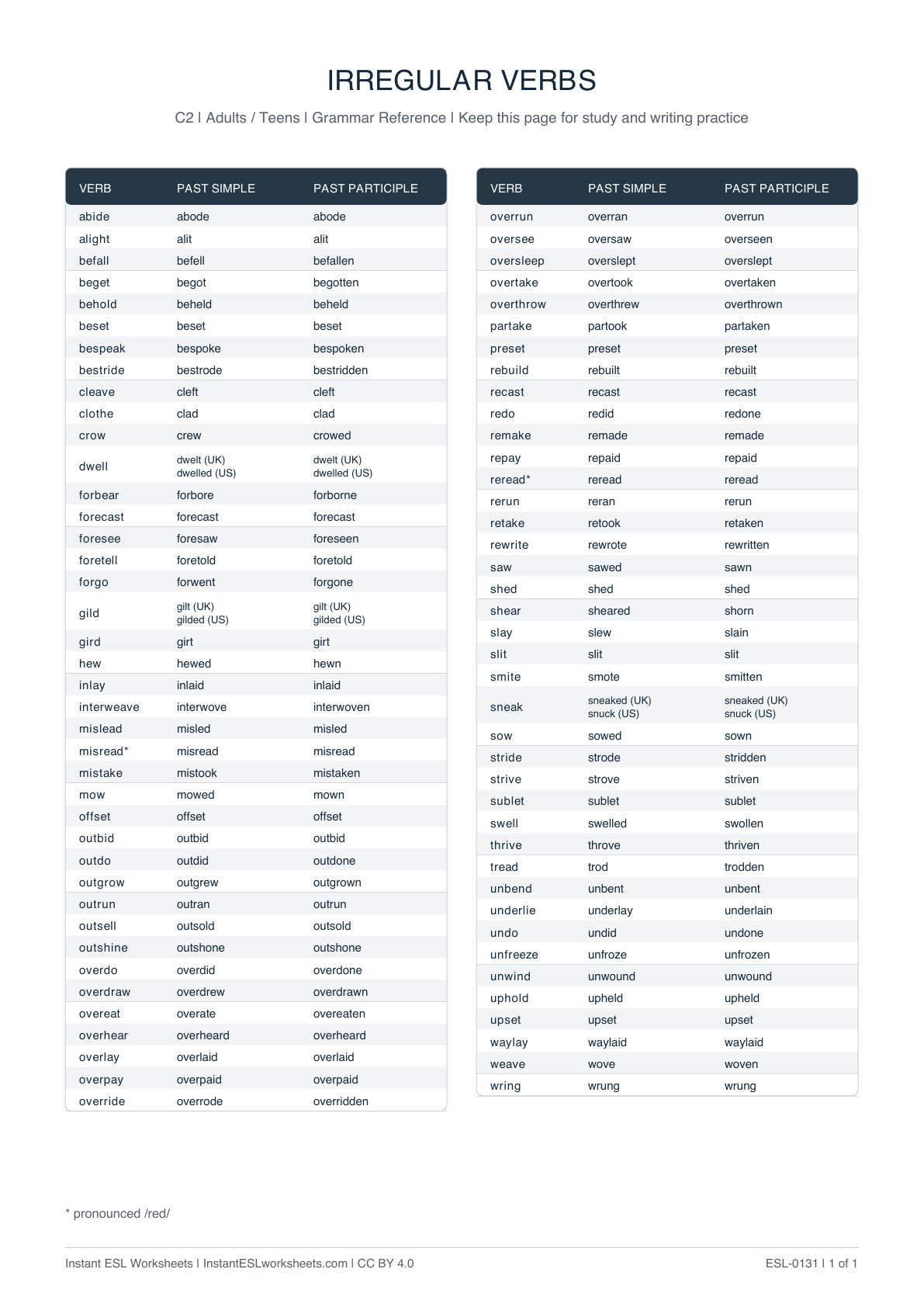
A one-page reference sheet of 80 advanced irregular verbs for C2 learners, including clear UK and US variants where they differ.
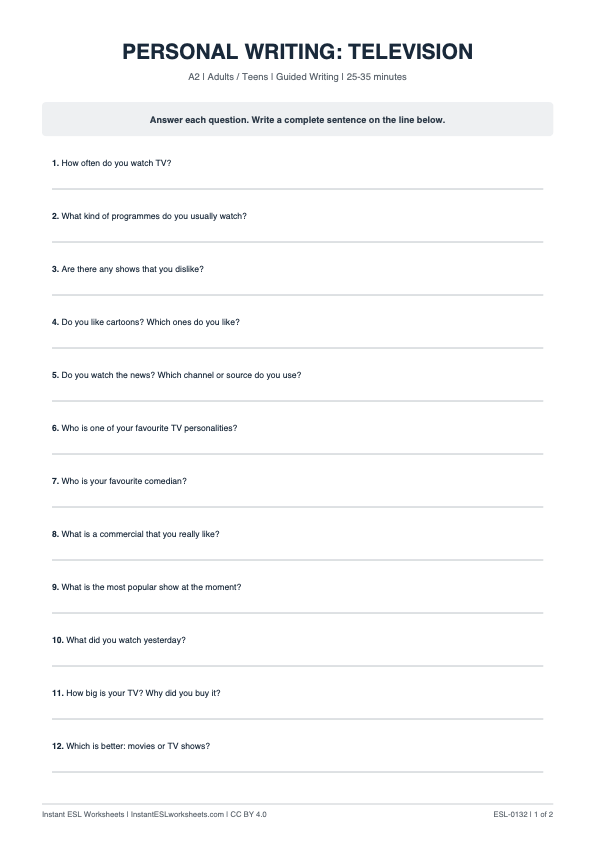
A printable A2 worksheet for extended discussion and writing on television.
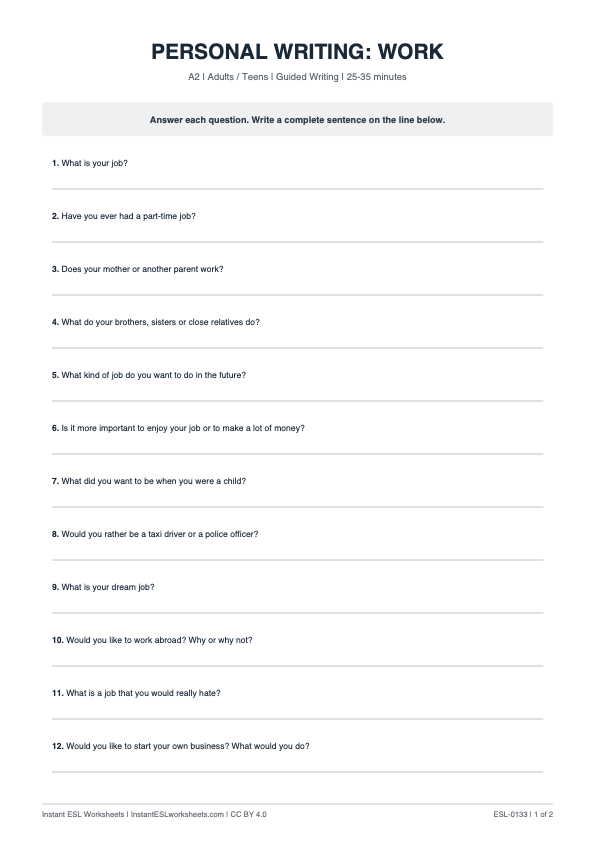
A printable A2 worksheet for extended discussion and writing on work.
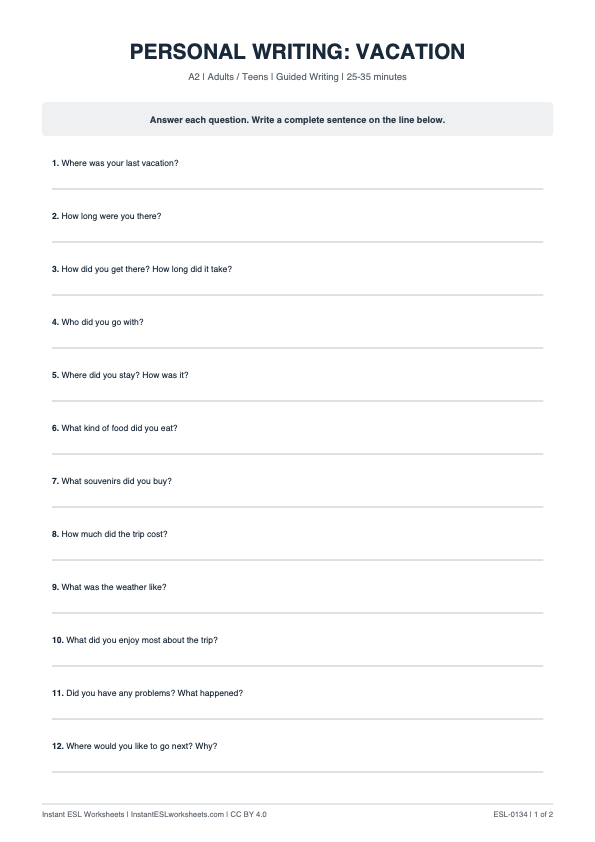
A printable A2 worksheet for extended discussion and writing on vacation.
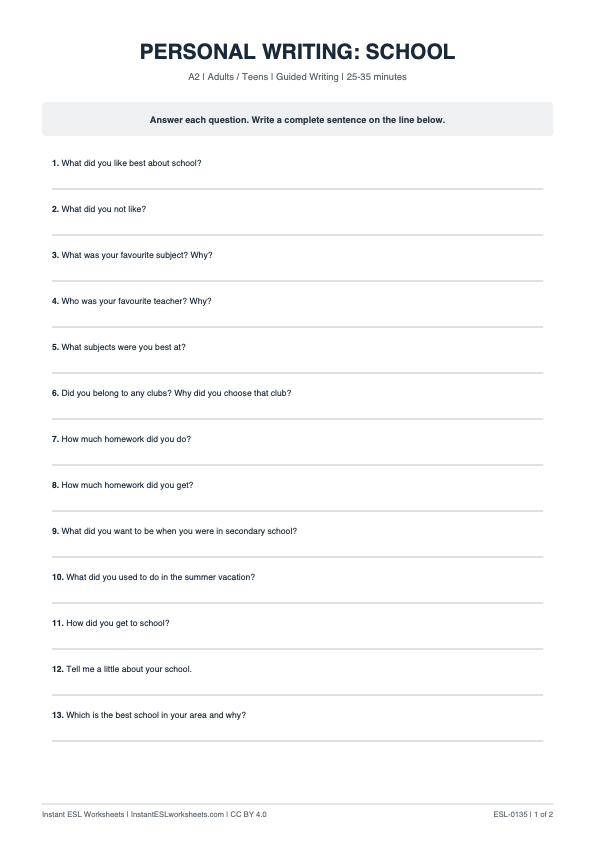
A printable A2 worksheet for extended discussion and writing on school.
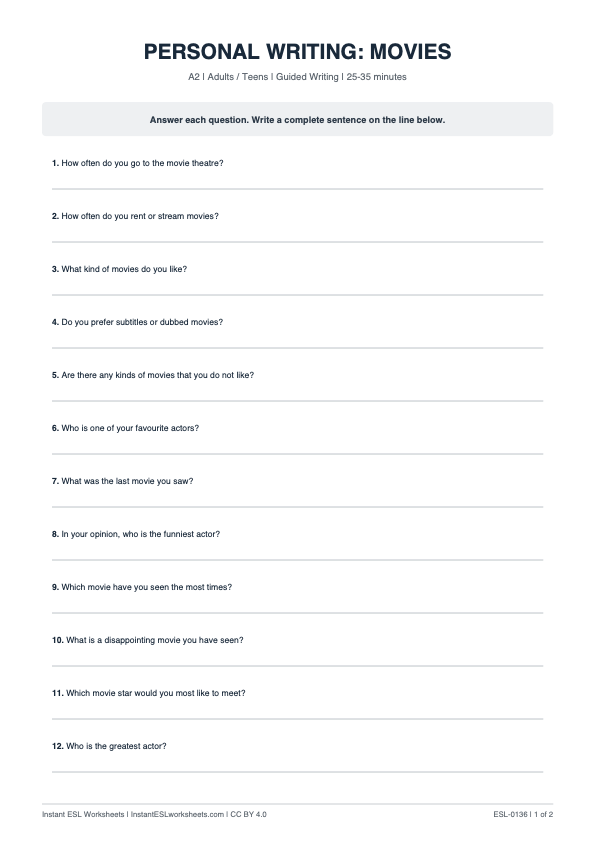
A printable A2 worksheet for extended discussion and writing on movies.
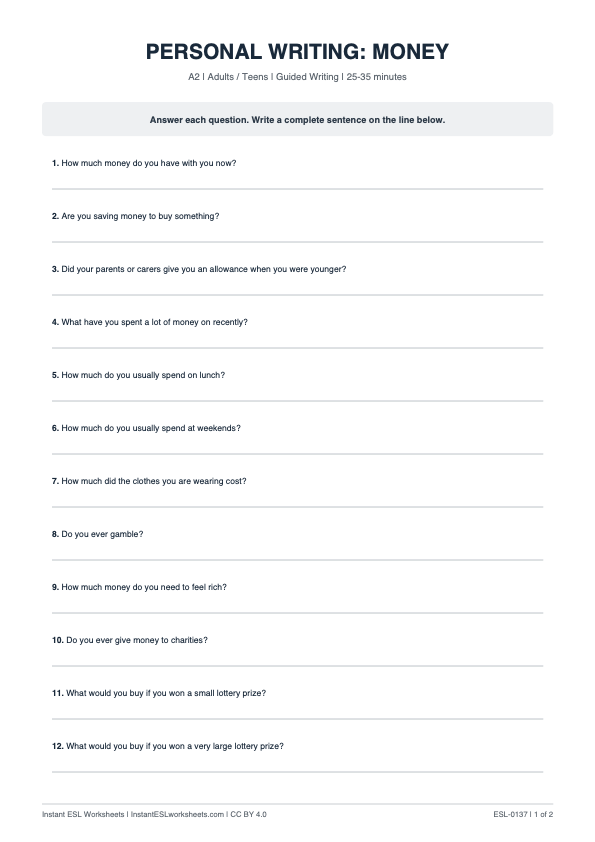
A printable A2 worksheet for extended discussion and writing on money.
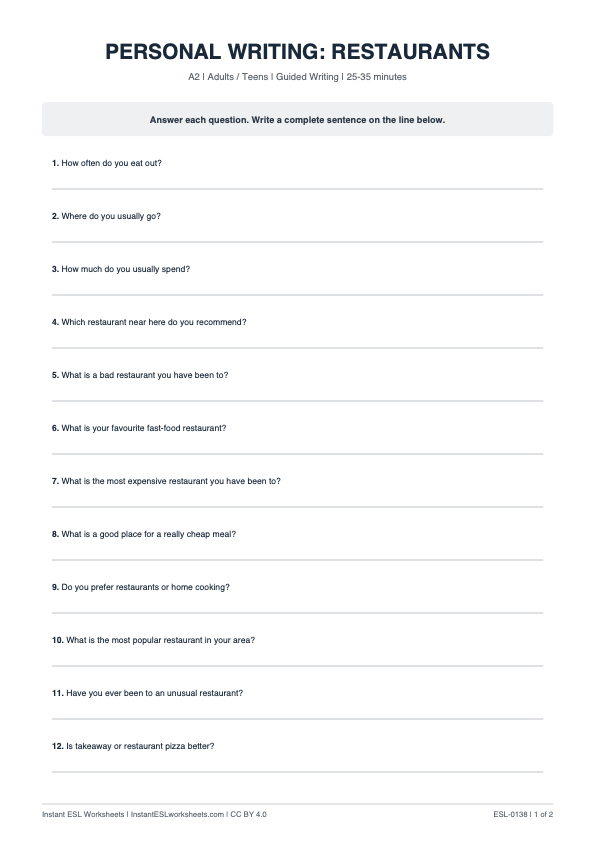
A printable A2 worksheet for extended discussion and writing on restaurants.
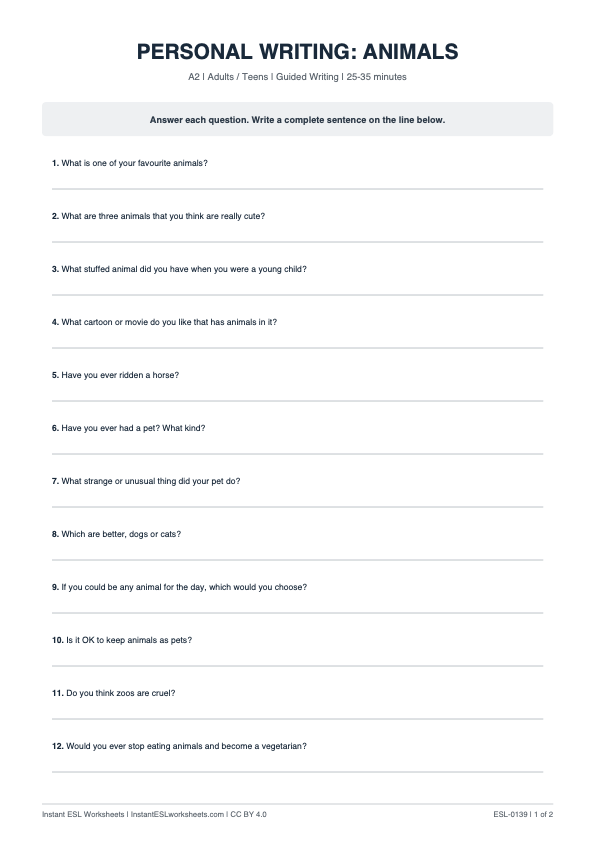
A printable A2 worksheet for extended discussion and writing on animals.
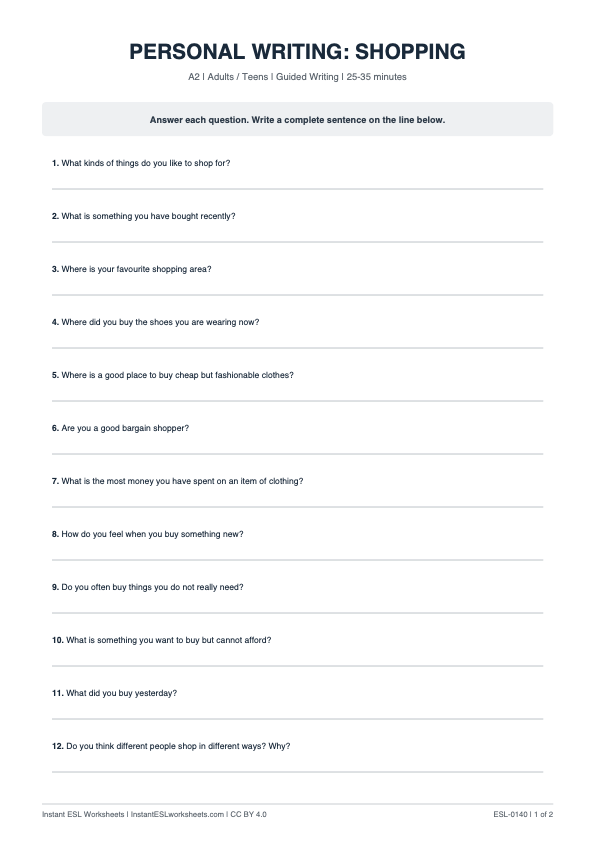
A printable A2 worksheet for extended discussion and writing on shopping.
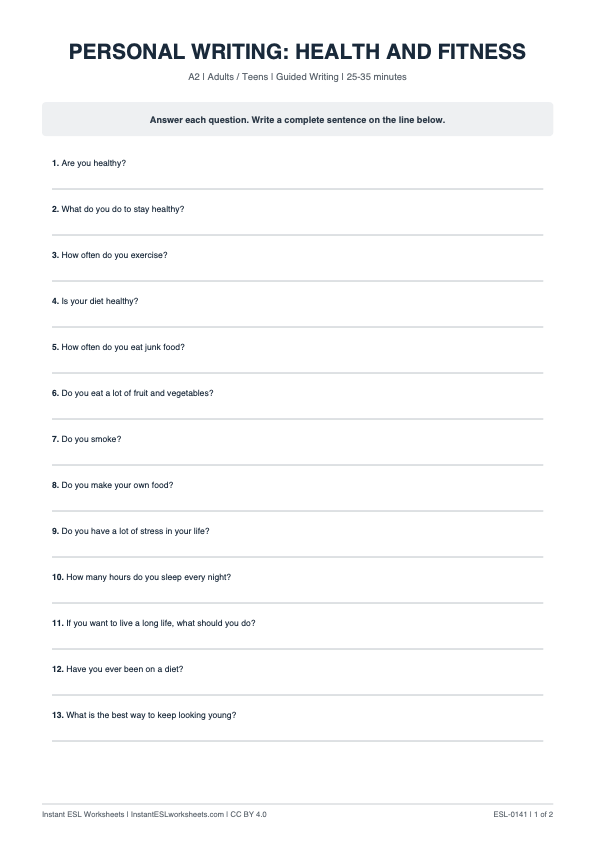
A printable A2 worksheet for extended discussion and writing on health and fitness.
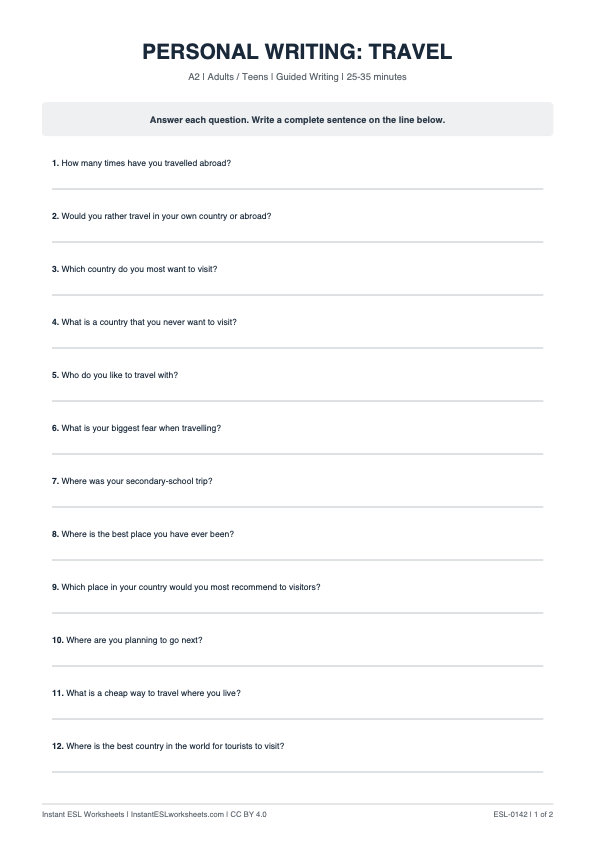
A printable A2 worksheet for extended discussion and writing on travel.
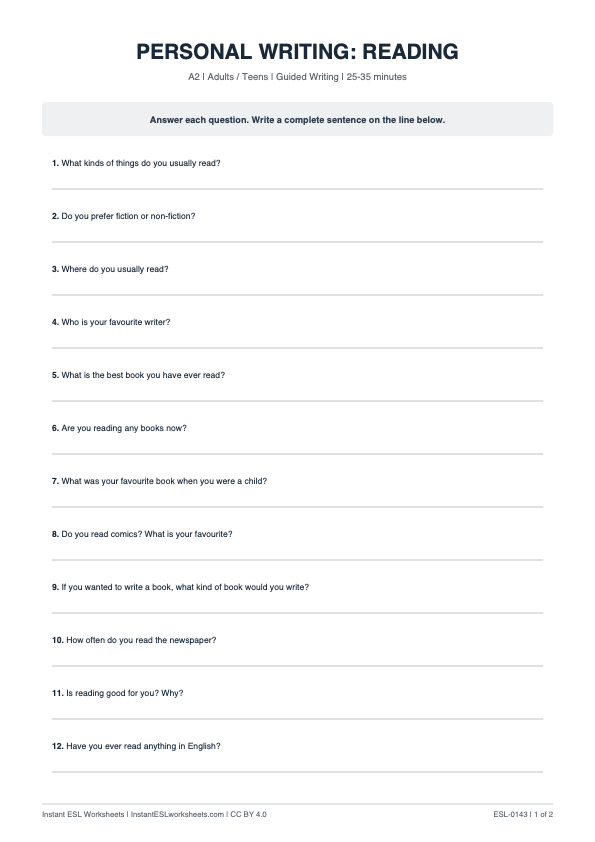
A printable A2 worksheet for extended discussion and writing on reading.
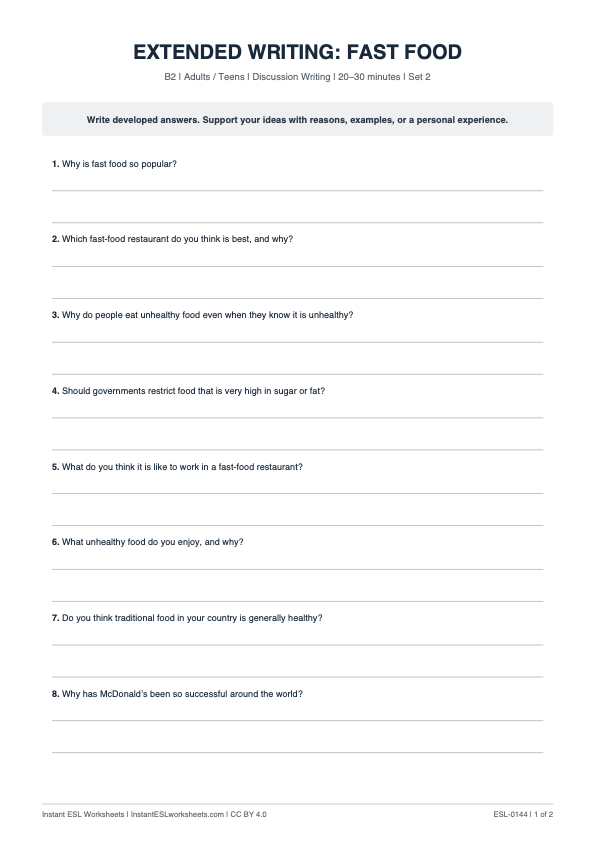
A printable B2 worksheet for extended discussion and writing on fast food.
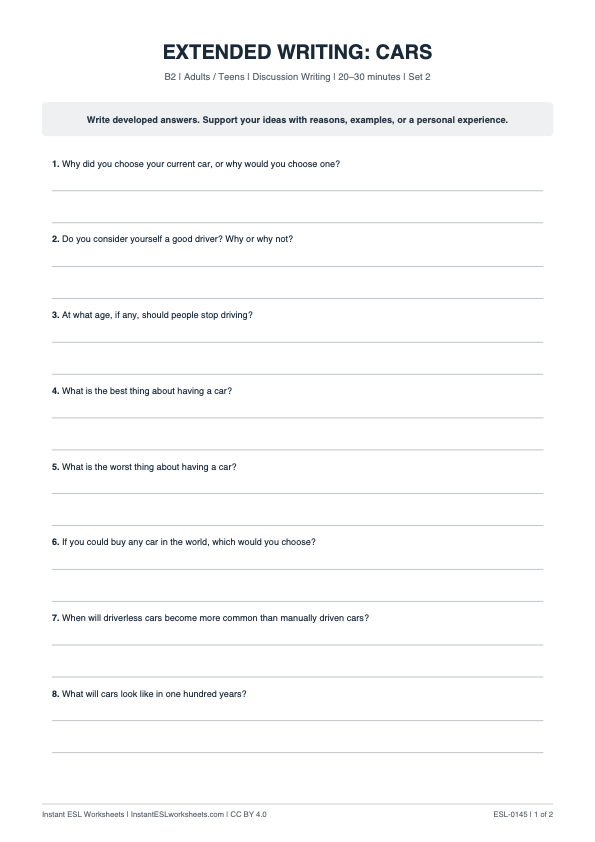
A printable B2 worksheet for extended discussion and writing on cars.
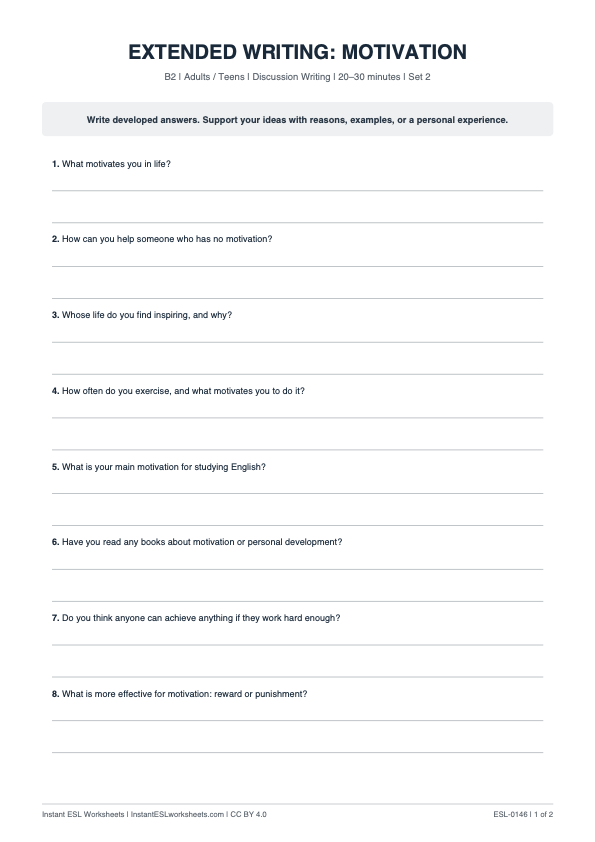
A printable B2 worksheet for extended discussion and writing on motivation.
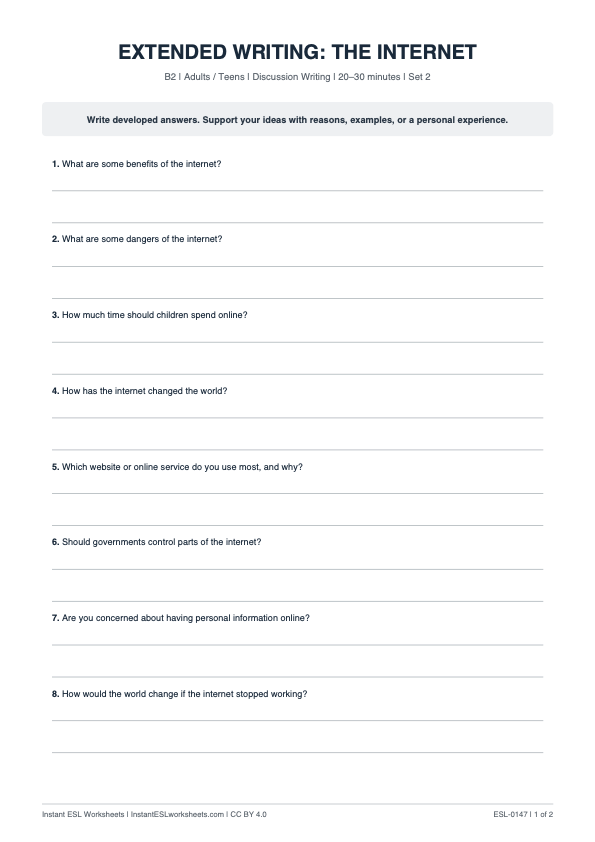
A printable B2 worksheet for extended discussion and writing on the internet.
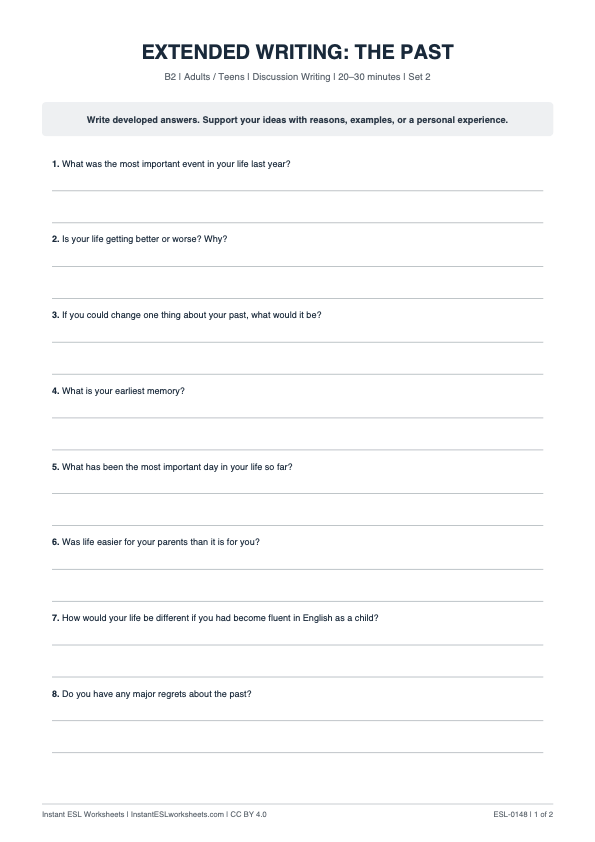
A printable B2 worksheet for extended discussion and writing on the past.
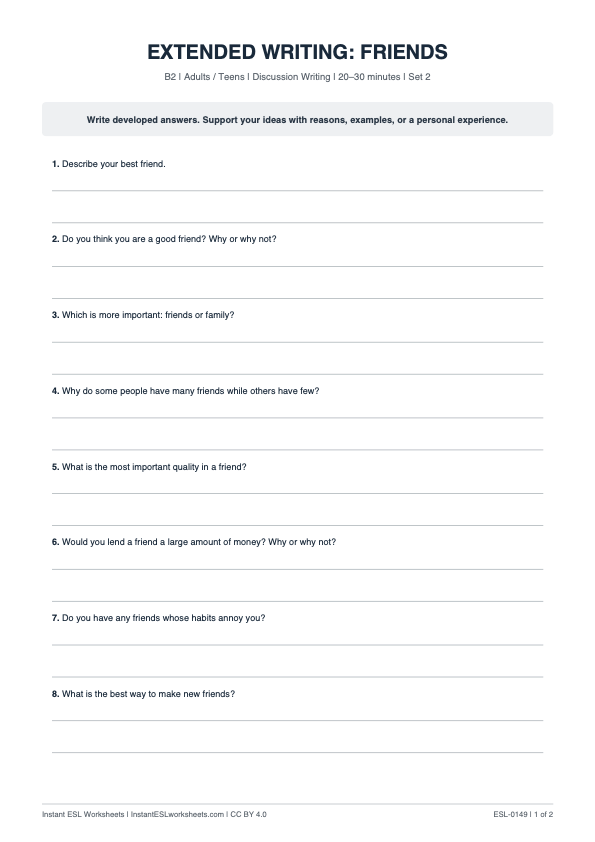
A printable B2 worksheet for extended discussion and writing on friends.
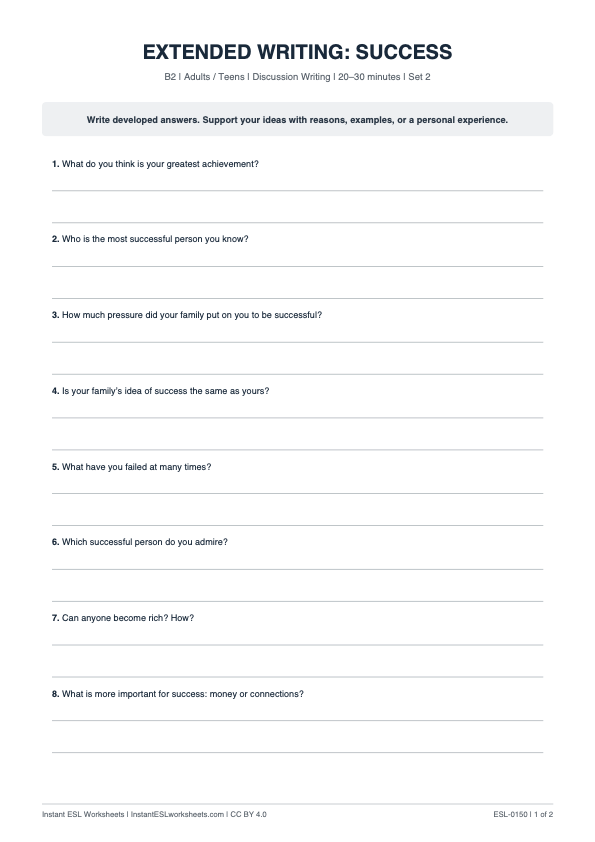
A printable B2 worksheet for extended discussion and writing on success.
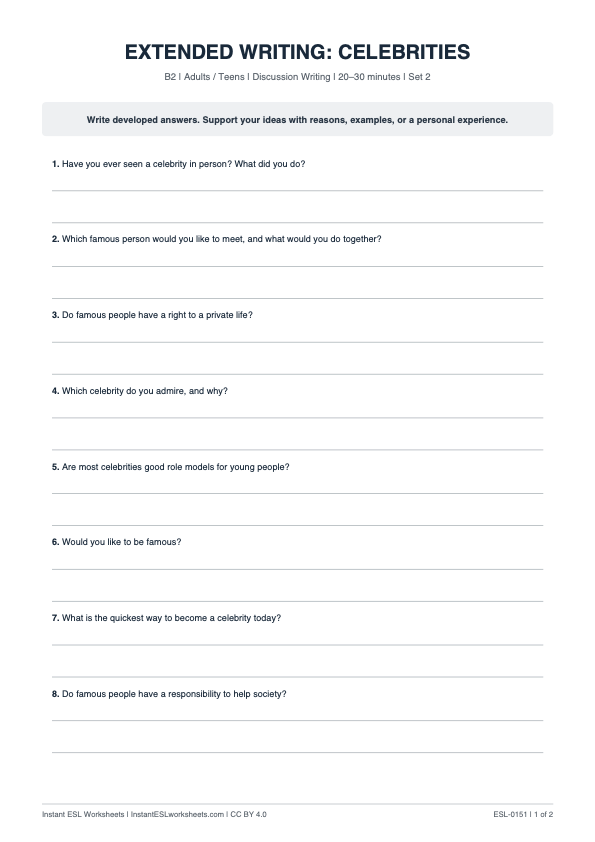
A printable B2 worksheet for extended discussion and writing on celebrities.
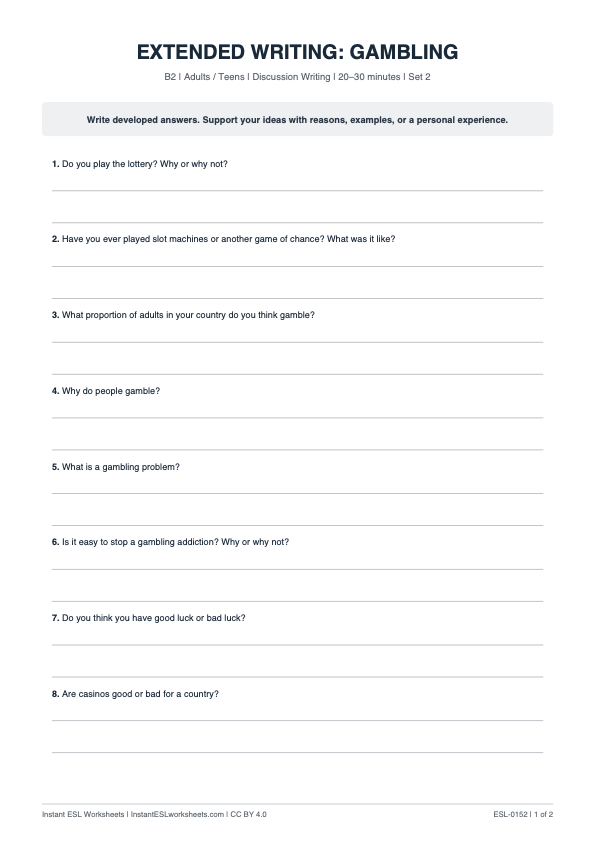
A printable B2 worksheet for extended discussion and writing on gambling.
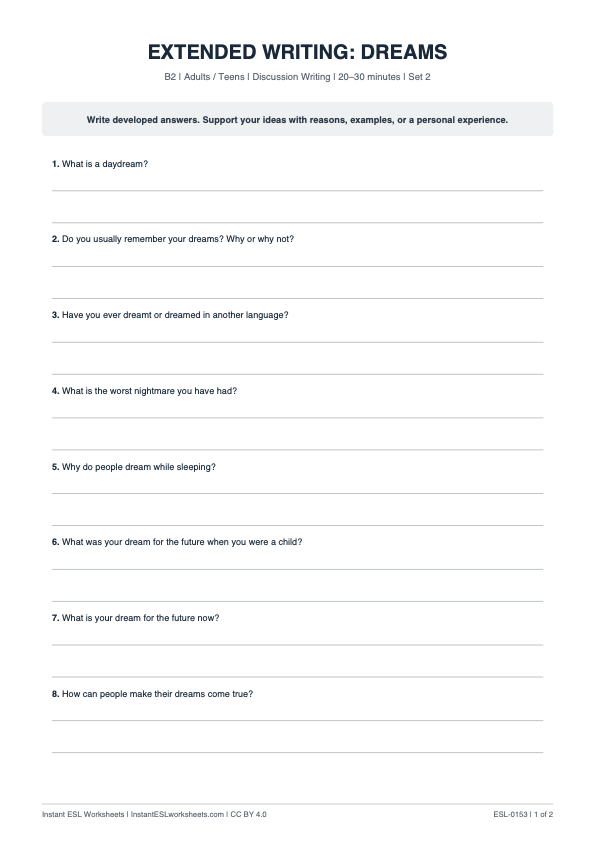
A printable B2 worksheet for extended discussion and writing on dreams.
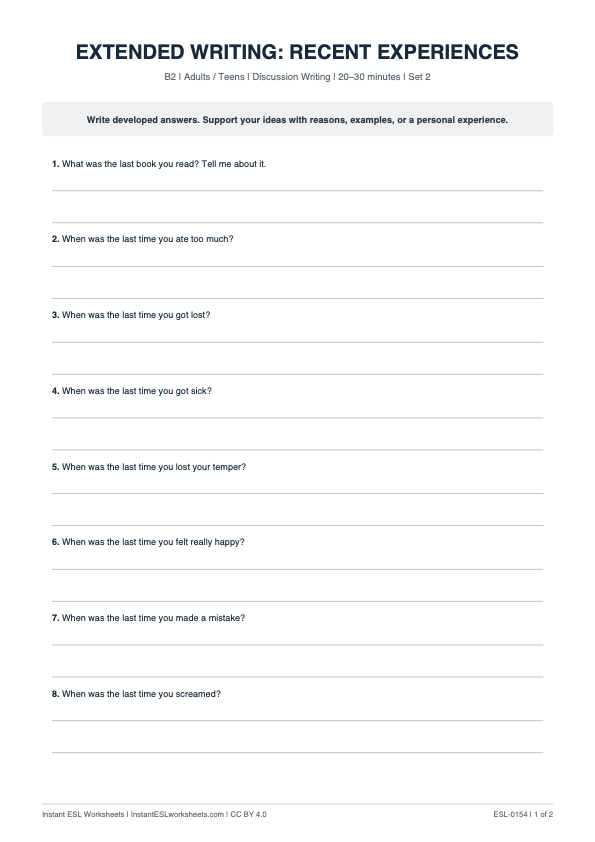
A printable B2 worksheet for extended discussion and writing on recent experiences.
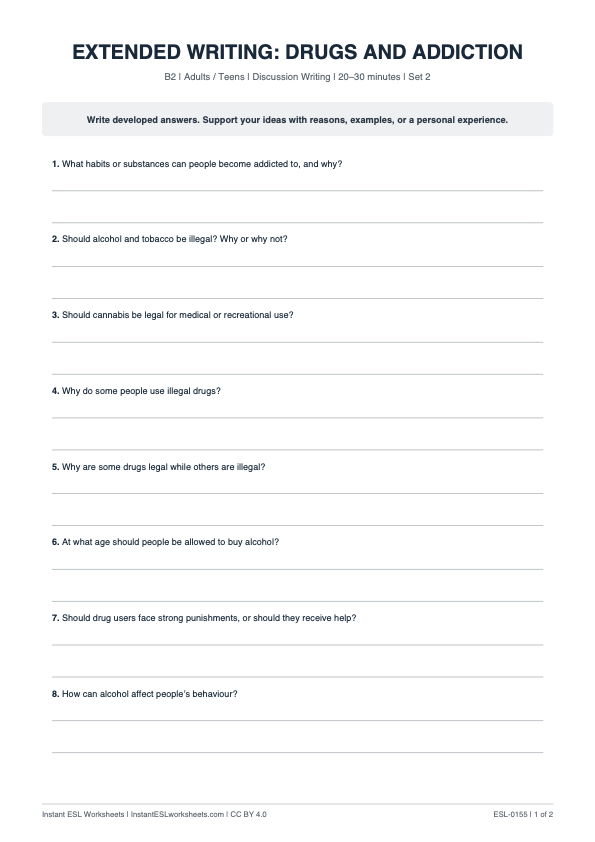
A printable B2 worksheet for extended discussion and writing on drugs and addiction.
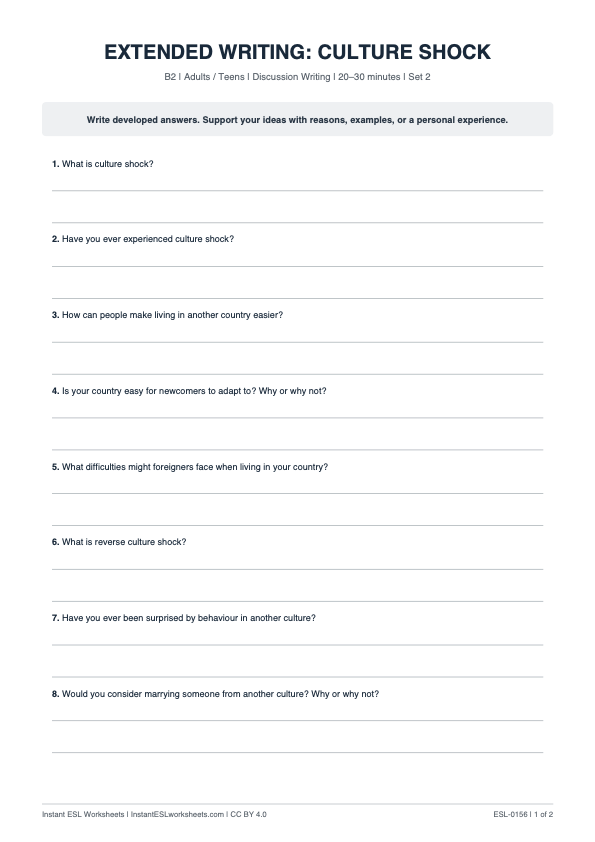
A printable B2 worksheet for extended discussion and writing on culture shock.
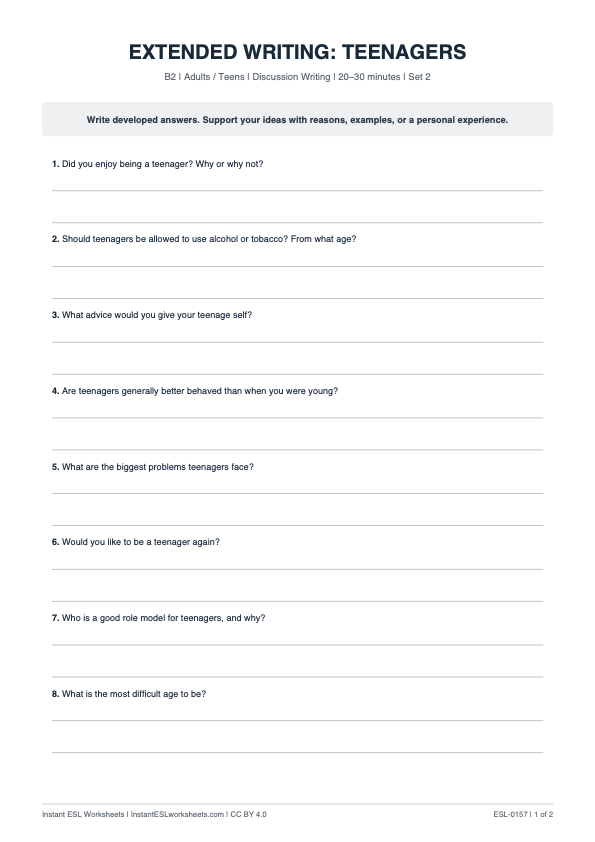
A printable B2 worksheet for extended discussion and writing on teenagers.
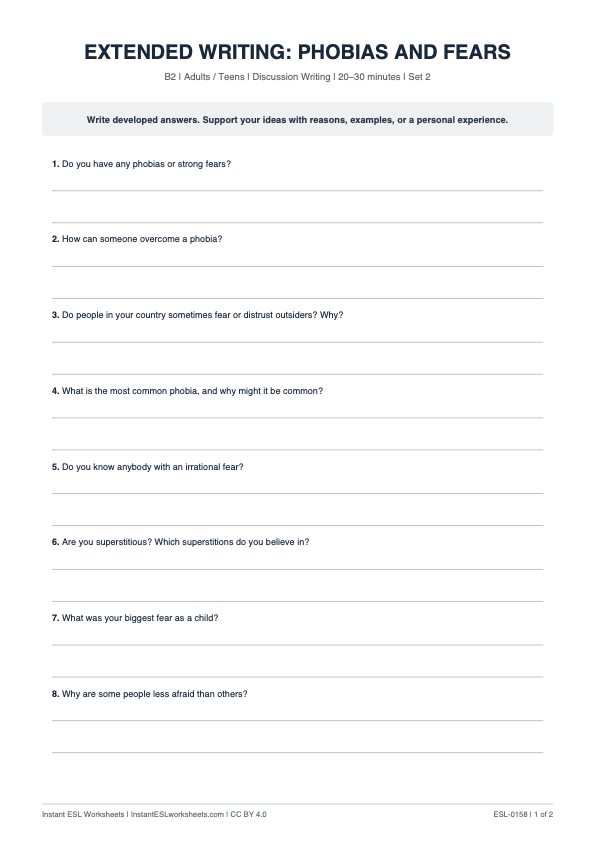
A printable B2 worksheet for extended discussion and writing on phobias and fears.
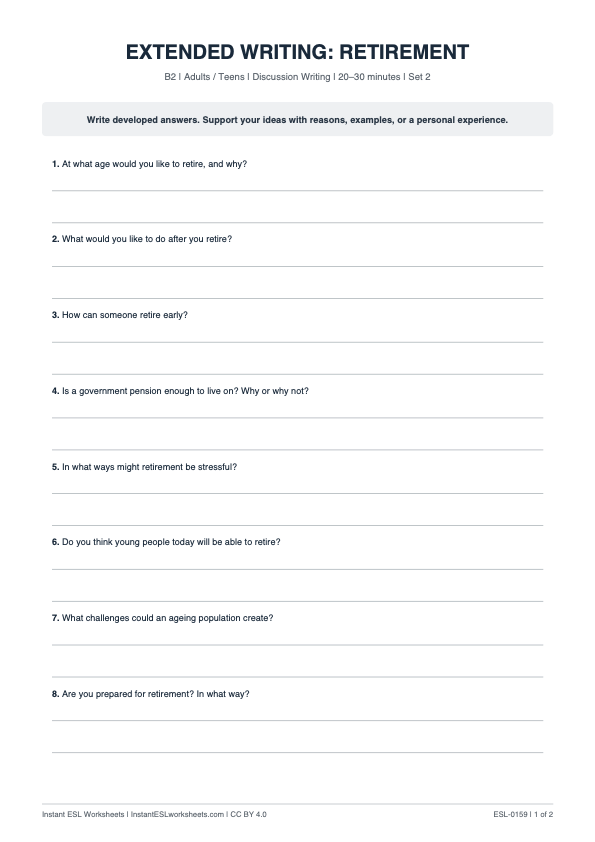
A printable B2 worksheet for extended discussion and writing on retirement.
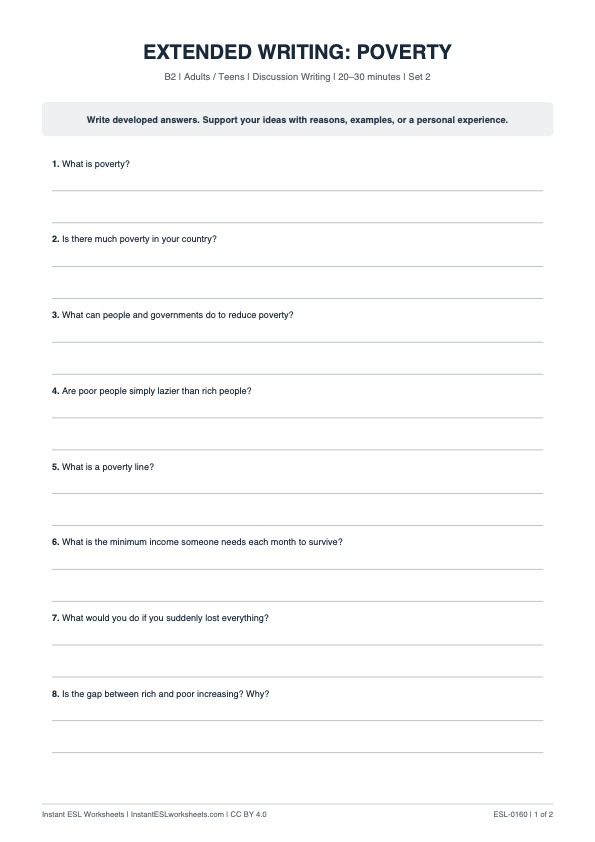
A printable B2 worksheet for extended discussion and writing on poverty.
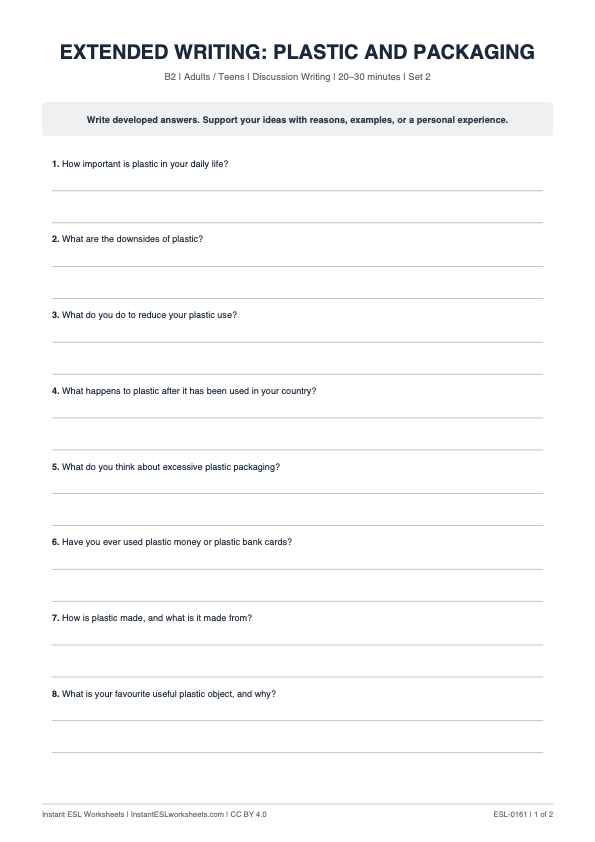
A printable B2 worksheet for extended discussion and writing on plastic and packaging.
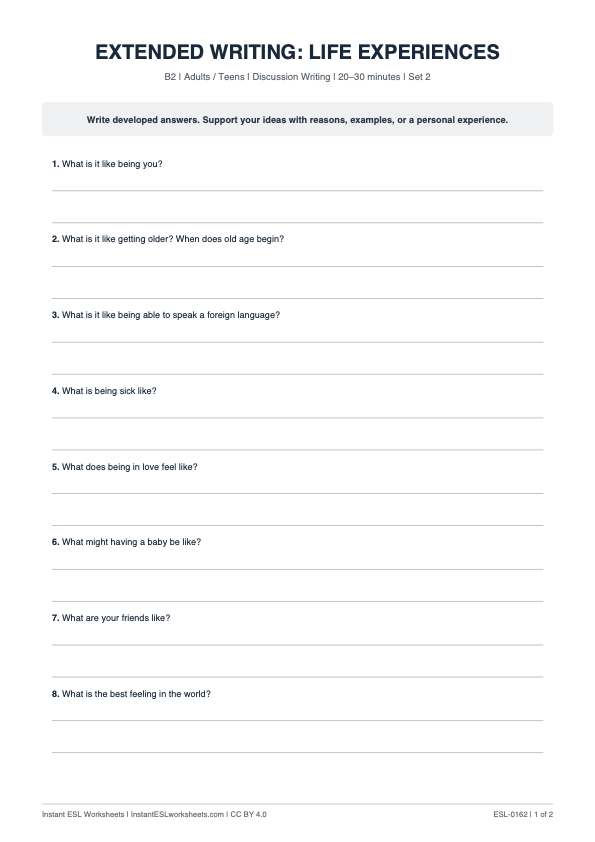
A printable B2 worksheet for extended discussion and writing on life experiences.
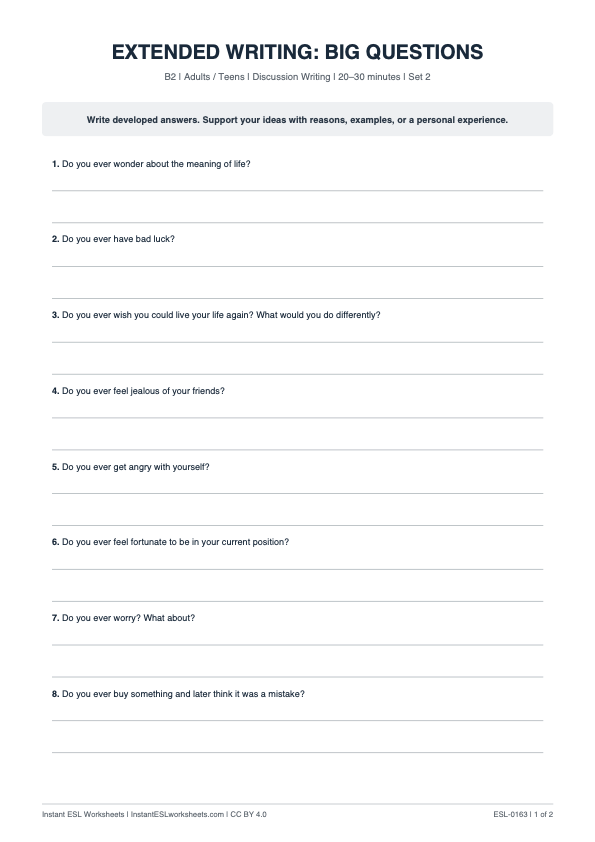
A printable B2 worksheet for extended discussion and writing on big questions.
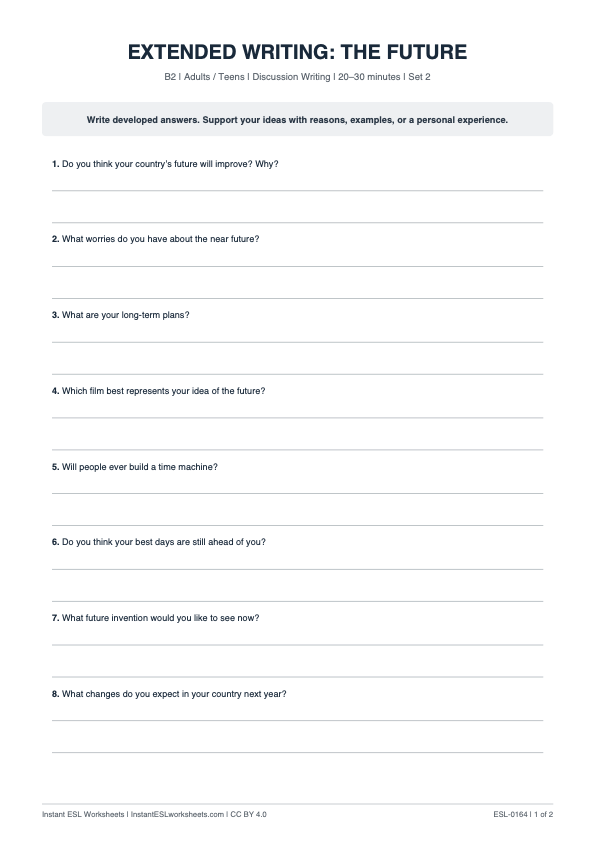
A printable B2 worksheet for extended discussion and writing on the future.
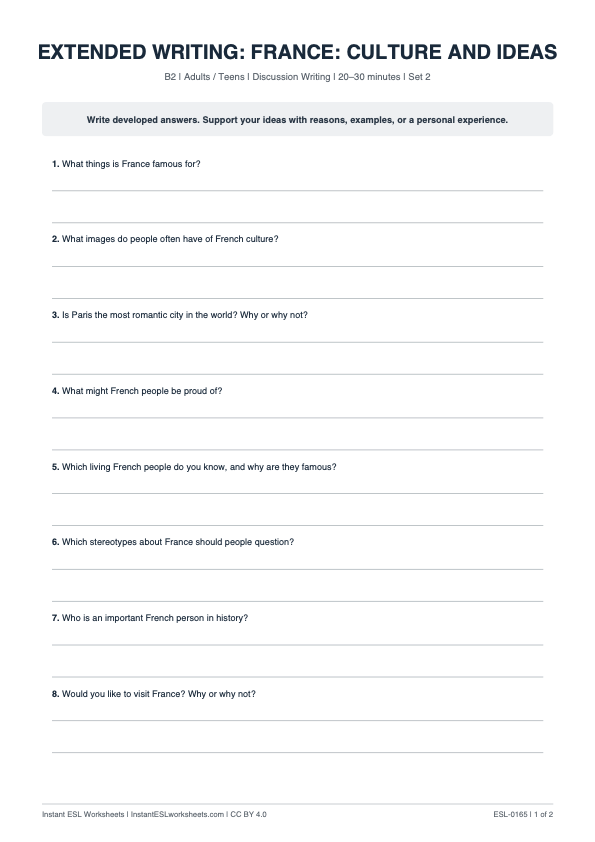
A printable B2 worksheet for extended discussion and writing on france culture and ideas.
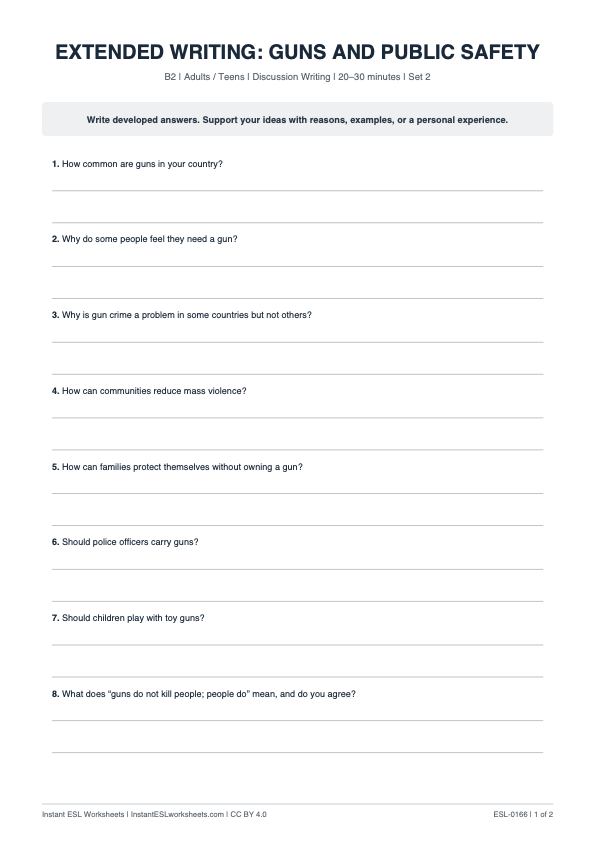
A printable B2 worksheet for extended discussion and writing on guns and public safety.
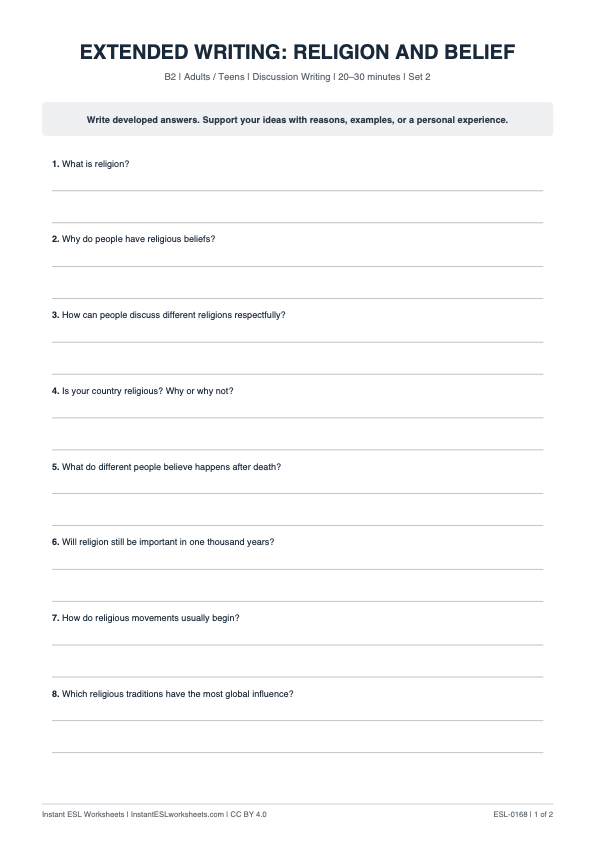
A printable B2 worksheet for extended discussion and writing on religion and belief.
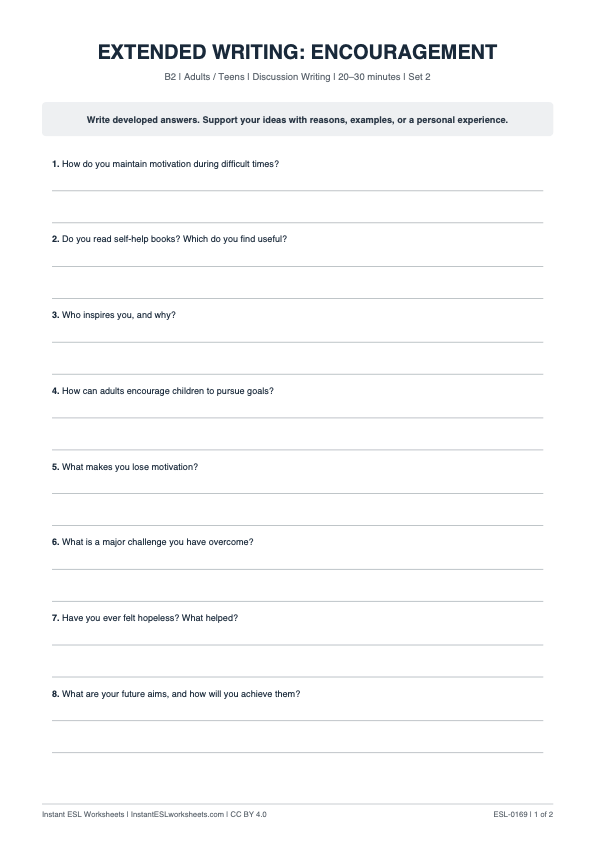
A printable B2 worksheet for extended discussion and writing on encouragement.
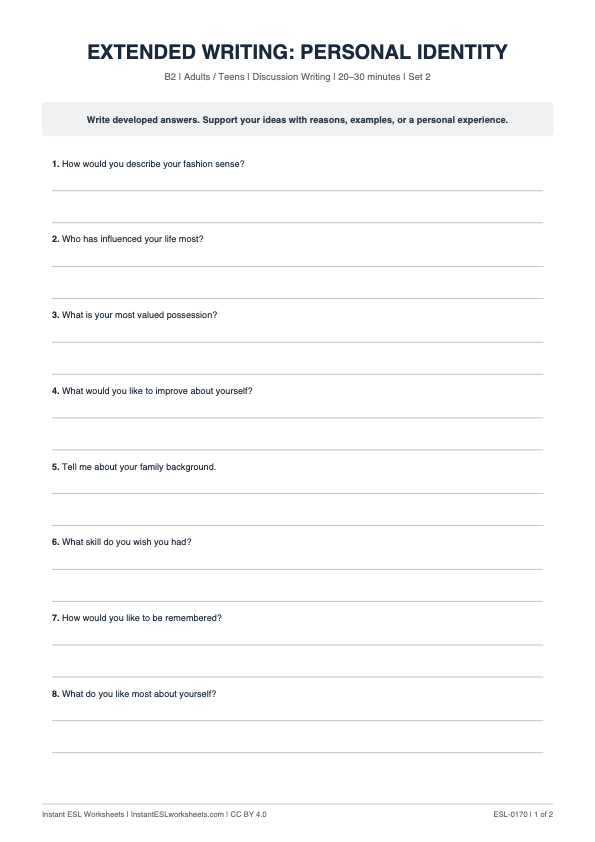
A printable B2 worksheet for extended discussion and writing on personal identity.
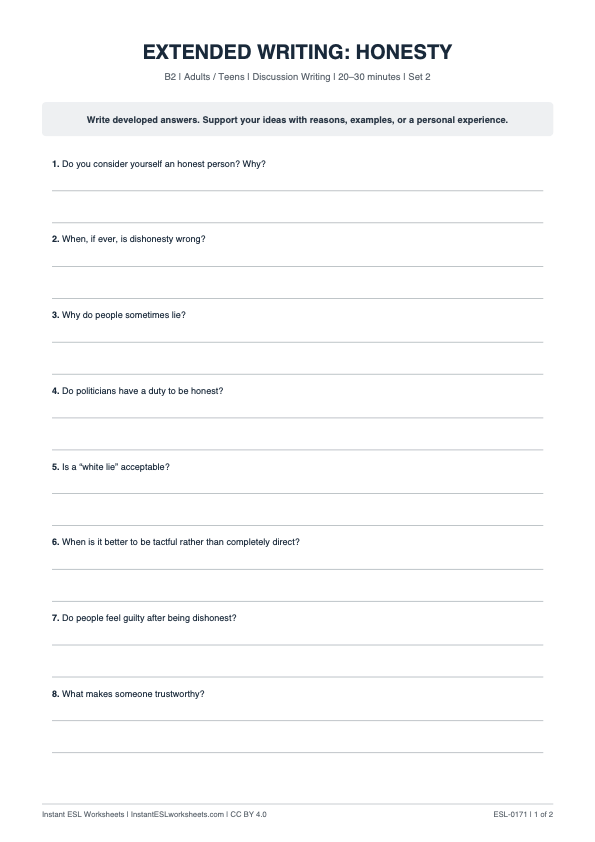
A printable B2 worksheet for extended discussion and writing on honesty.
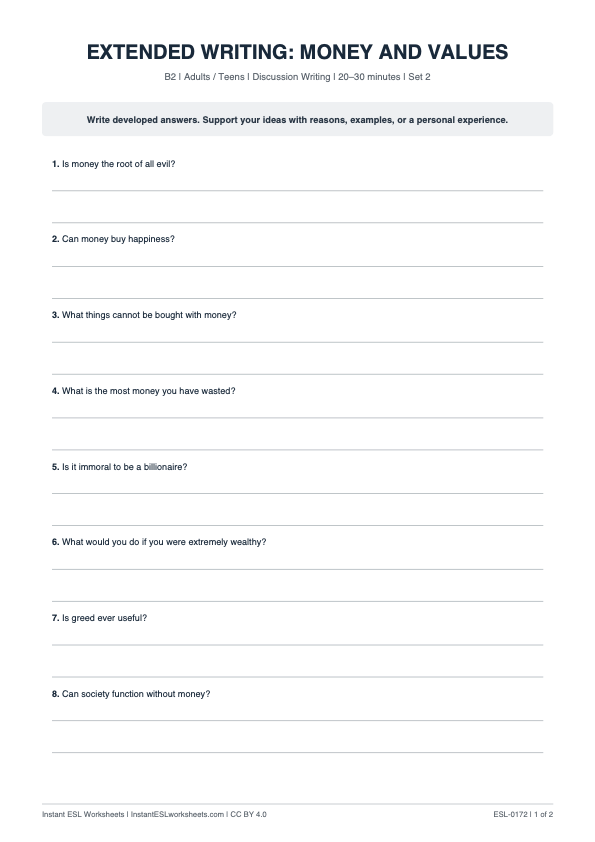
A printable B2 worksheet for extended discussion and writing on money and values.
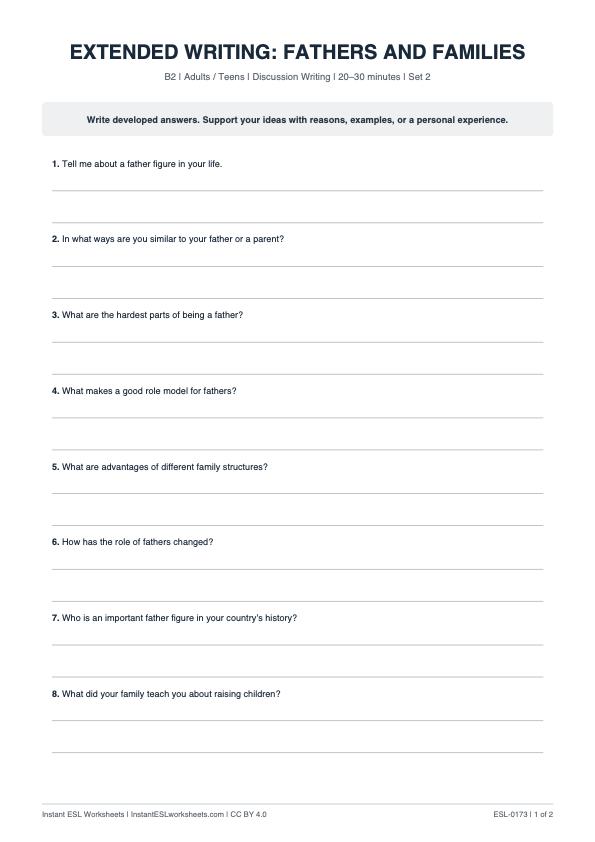
A printable B2 worksheet for extended discussion and writing on fathers and families.
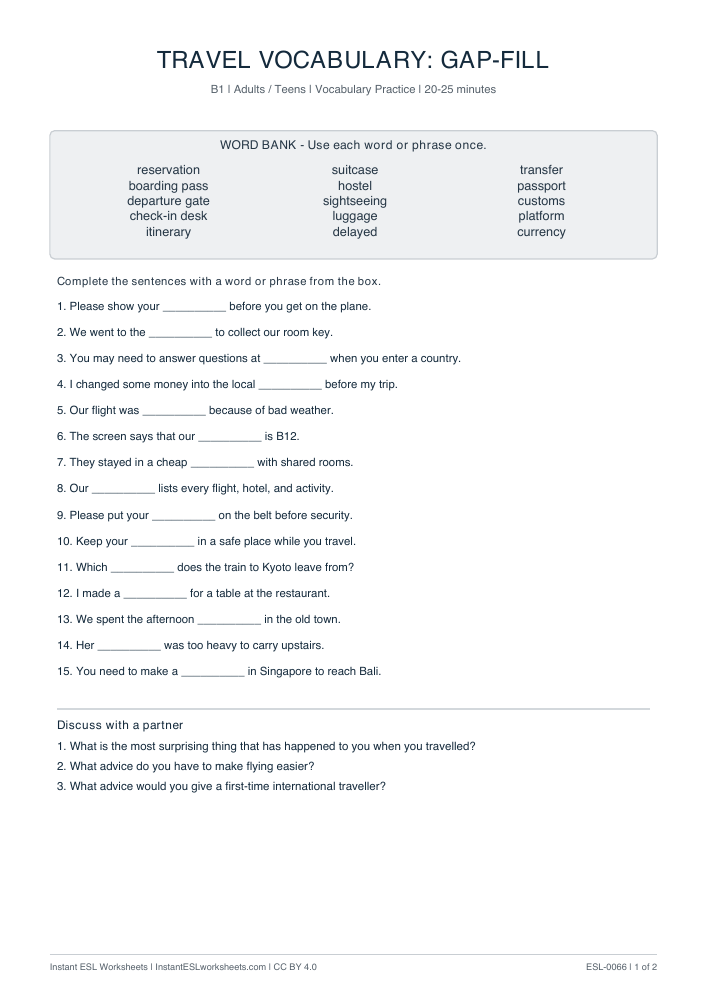
Practise 15 useful travel words and phrases in a B1 gap-fill activity, with a word bank and a separate full-sentence answer key.
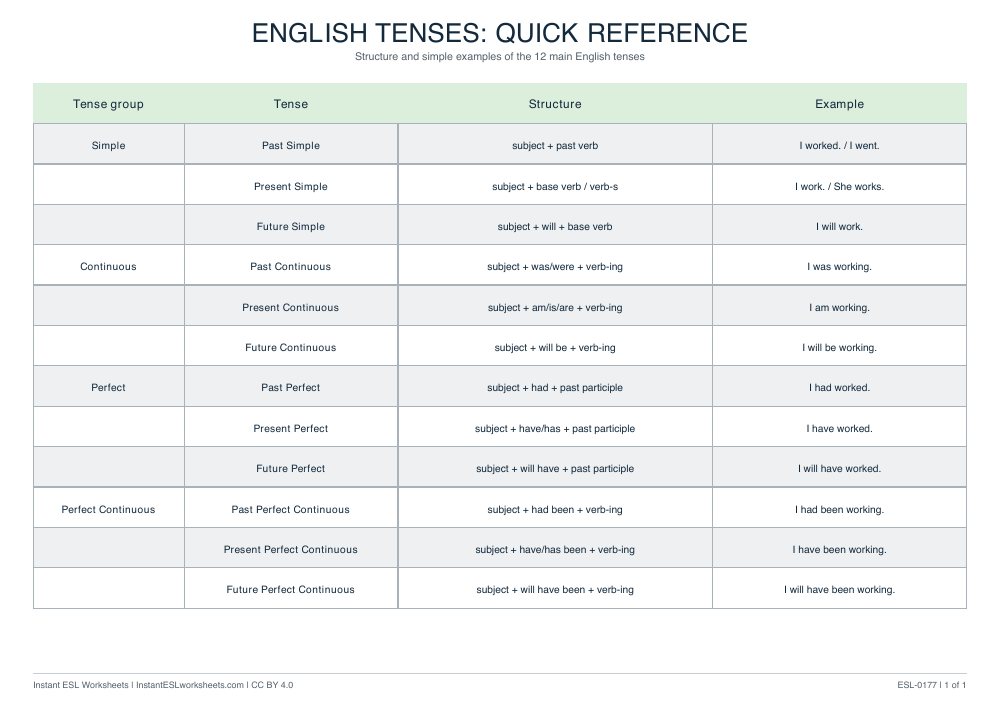
Compare the structures and simple examples of 12 English tense forms in one printable reference table.
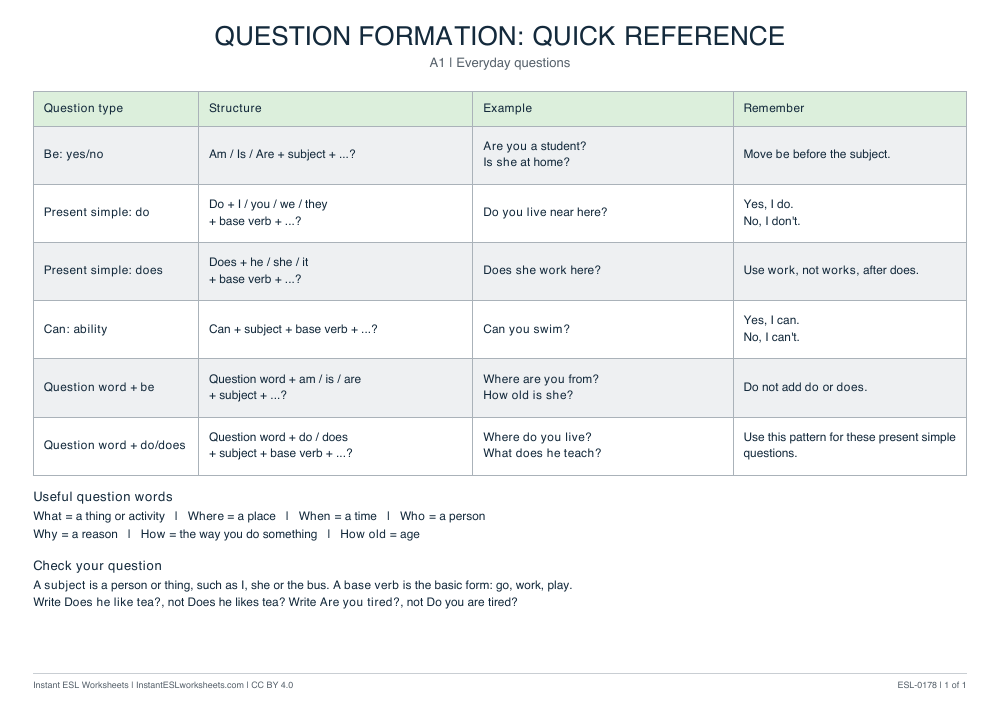
An A1 reference for questions with be, do, does and can, including question words and short answers.
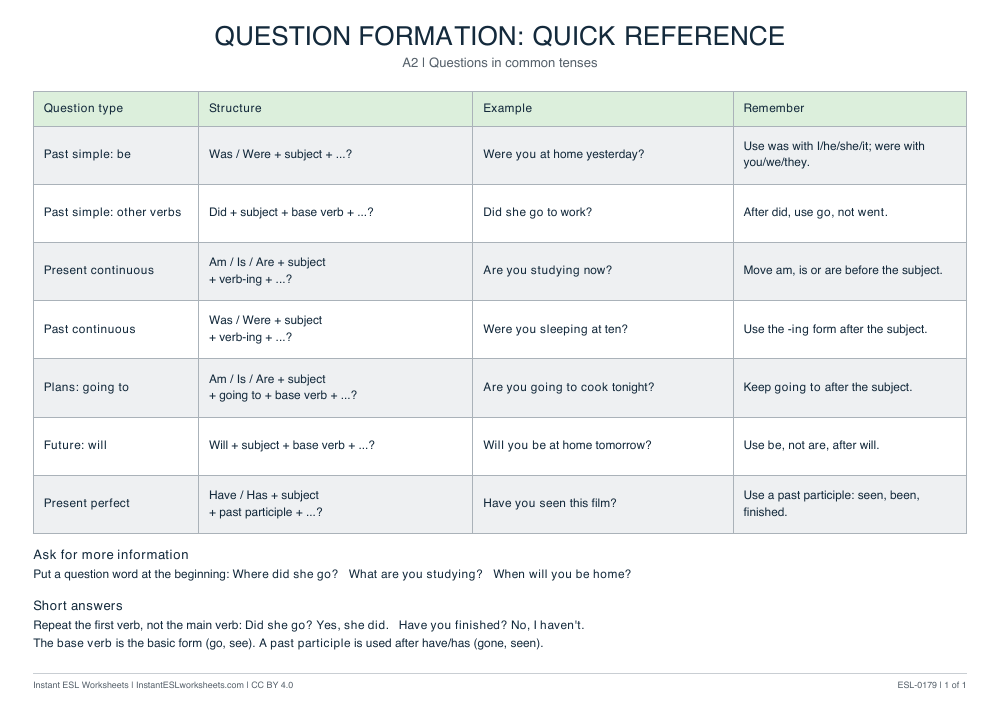
An A2 guide to forming questions in common tenses, with structures, examples and reminders.
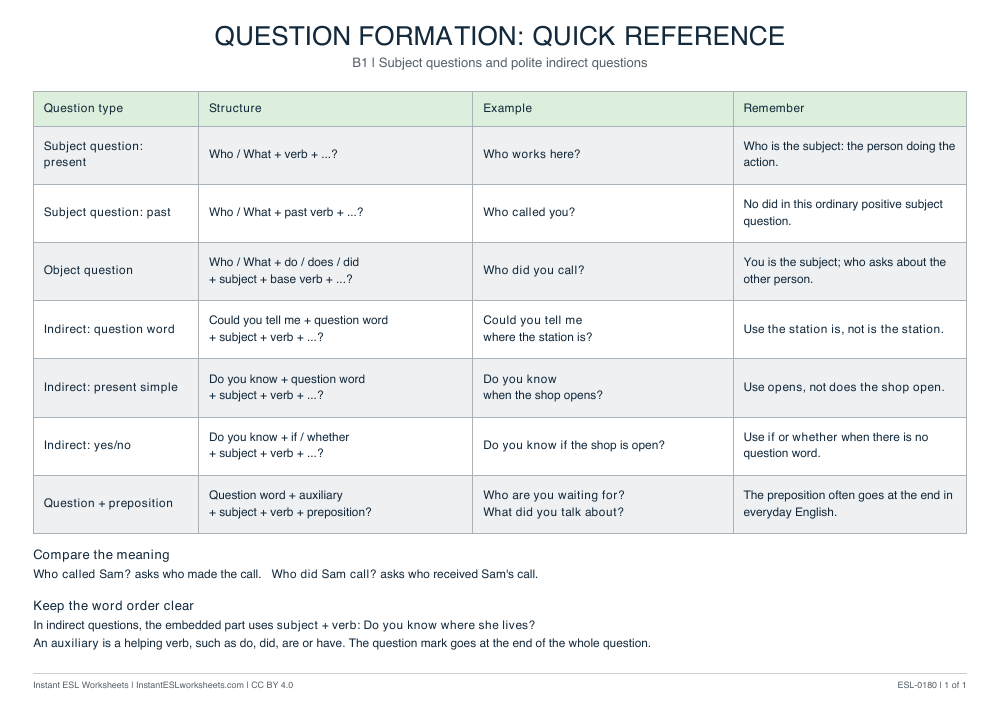
A B1 reference for subject questions, object questions and polite indirect questions.
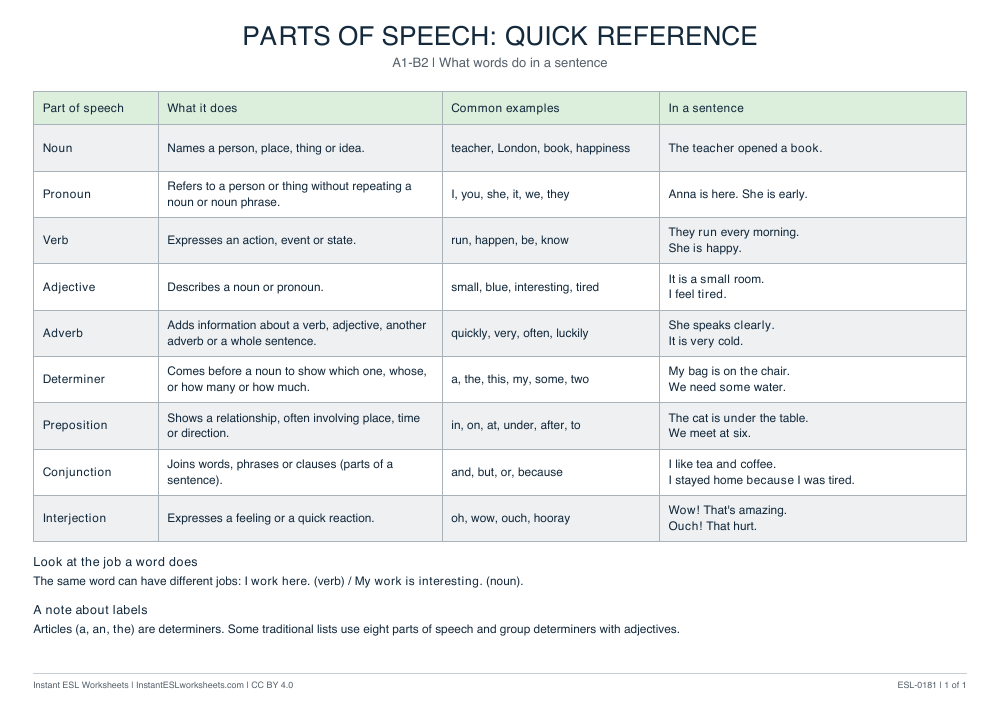
Explore nine parts of speech with definitions, examples and highlighted words in sentences.
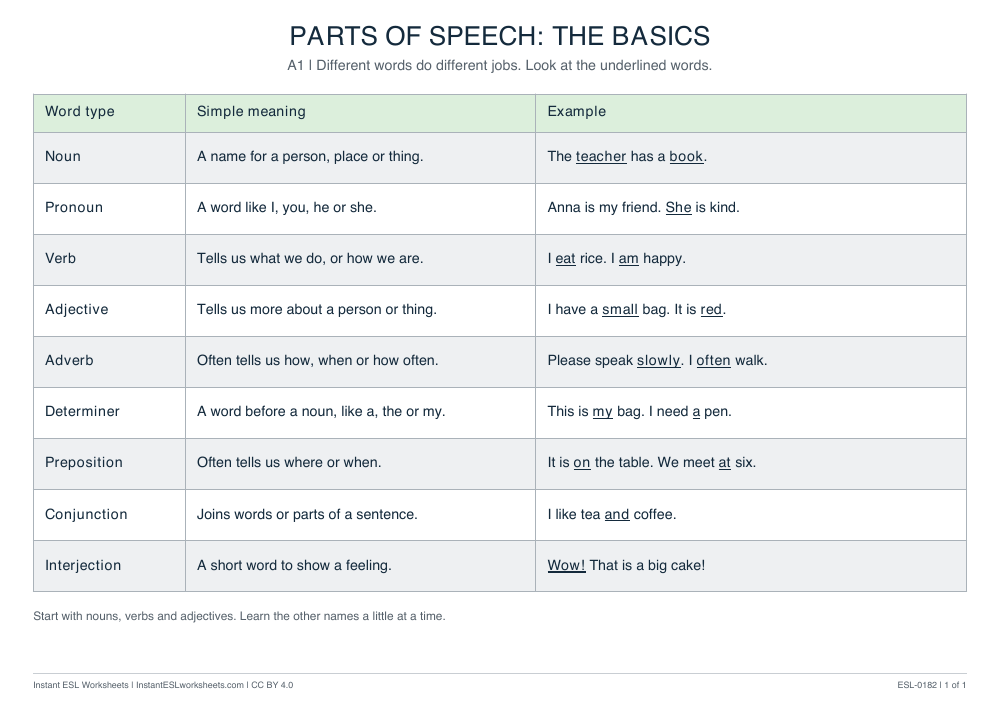
A simple A1 introduction to nine parts of speech, with short explanations and clearly marked examples.
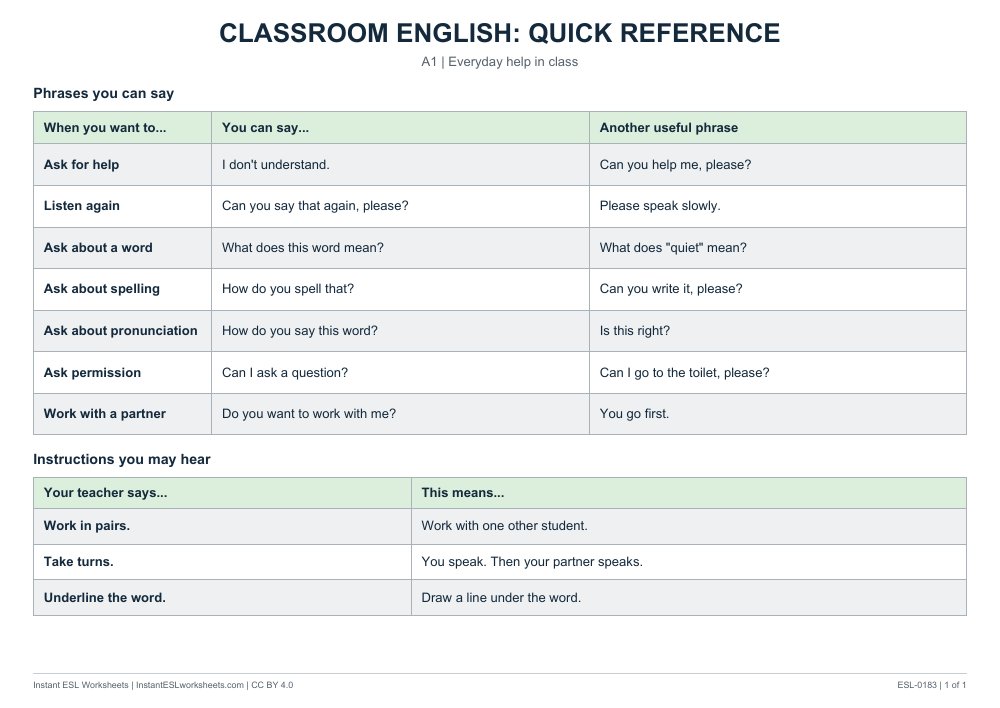
Simple A1 phrases for asking for help, checking words, working with a partner and understanding classroom instructions.
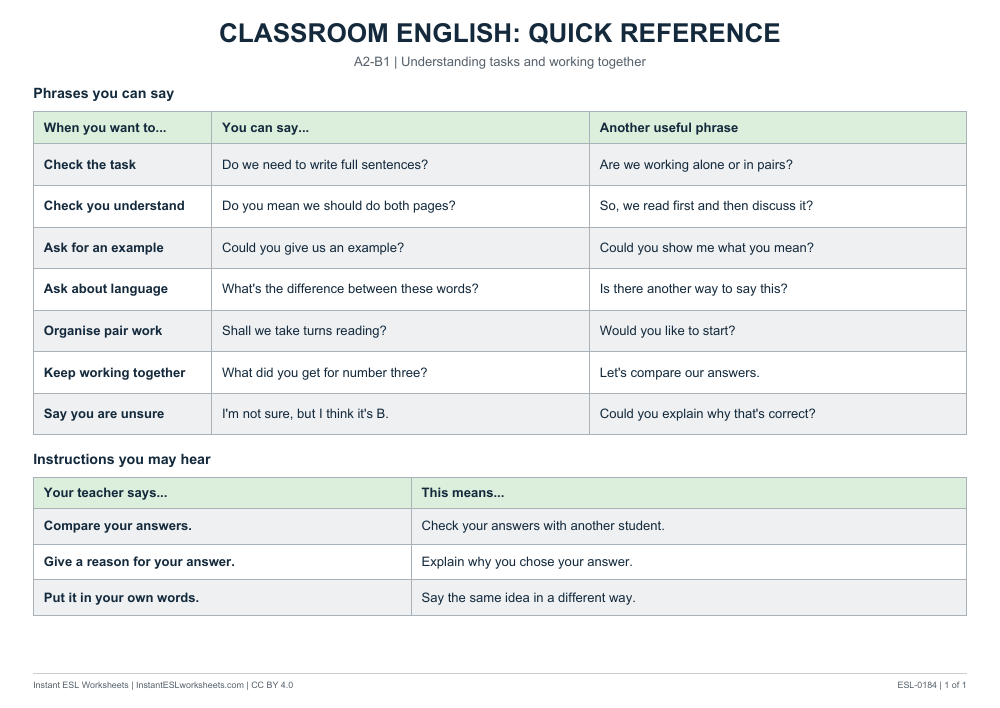
Useful A2–B1 phrases for checking tasks, asking for examples and comparing answers with a partner.
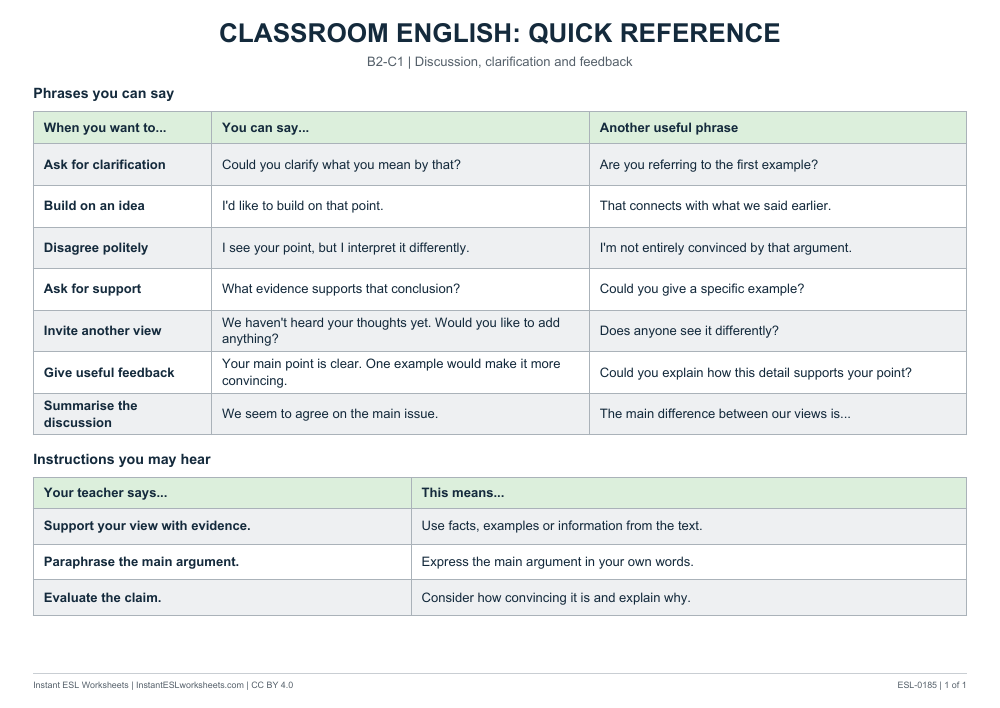
B2–C1 classroom phrases for clarifying ideas, discussing evidence, disagreeing politely and giving useful feedback.
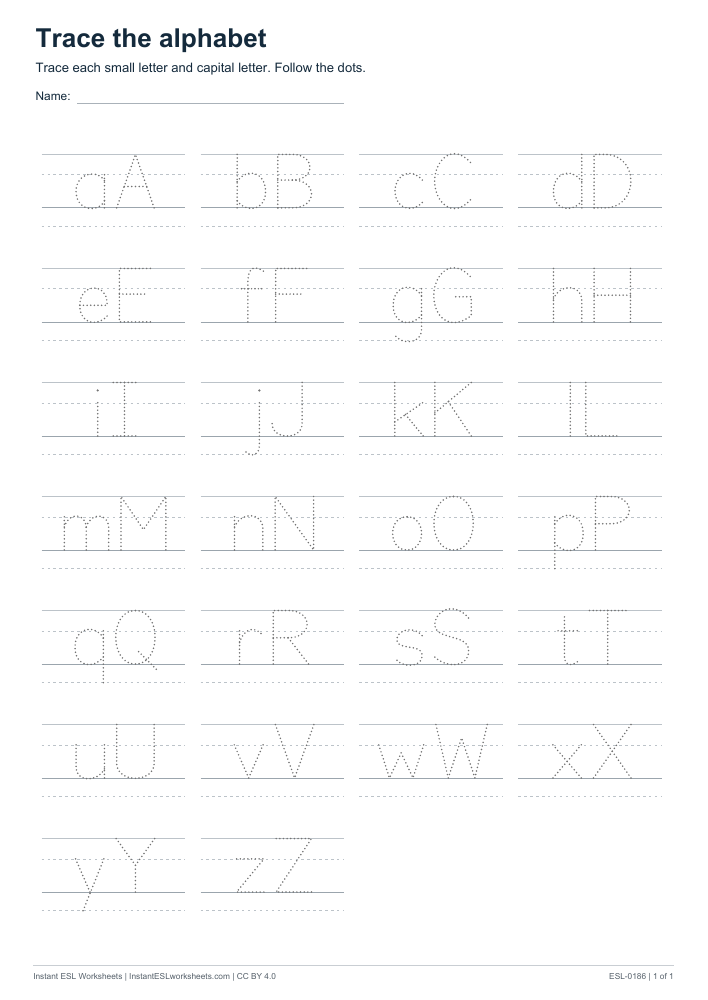
All 26 lowercase and uppercase letter pairs on one printable tracing sheet for young learners.
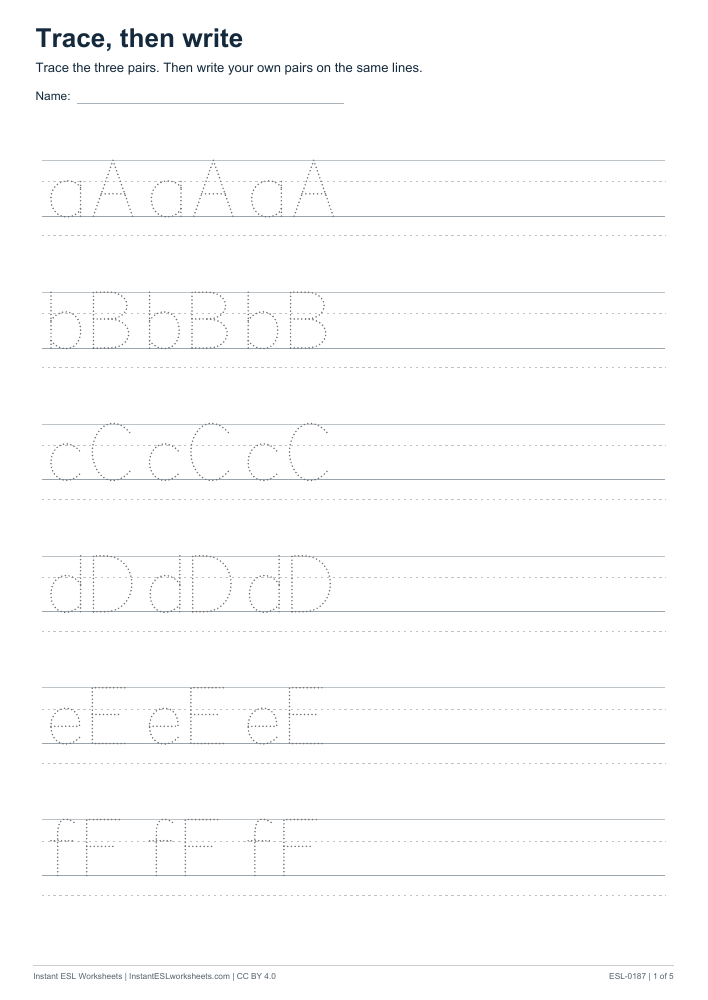
A complete five-page alphabet set with three traceable letter pairs followed by space for independent writing.
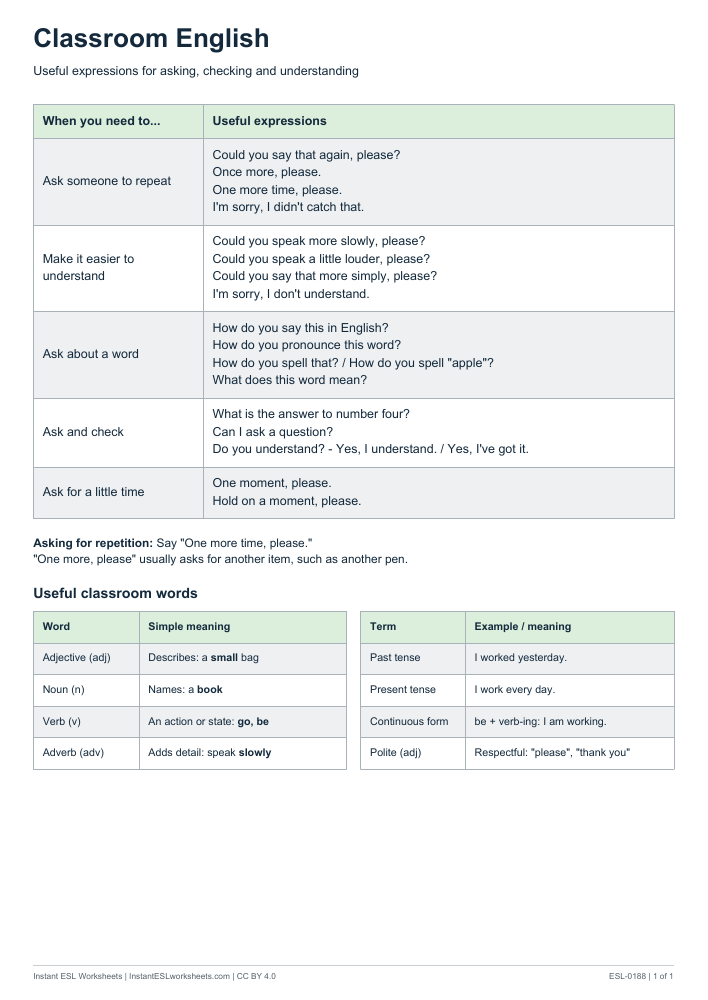
A classroom reference for asking, checking and understanding, plus useful language-learning terms.
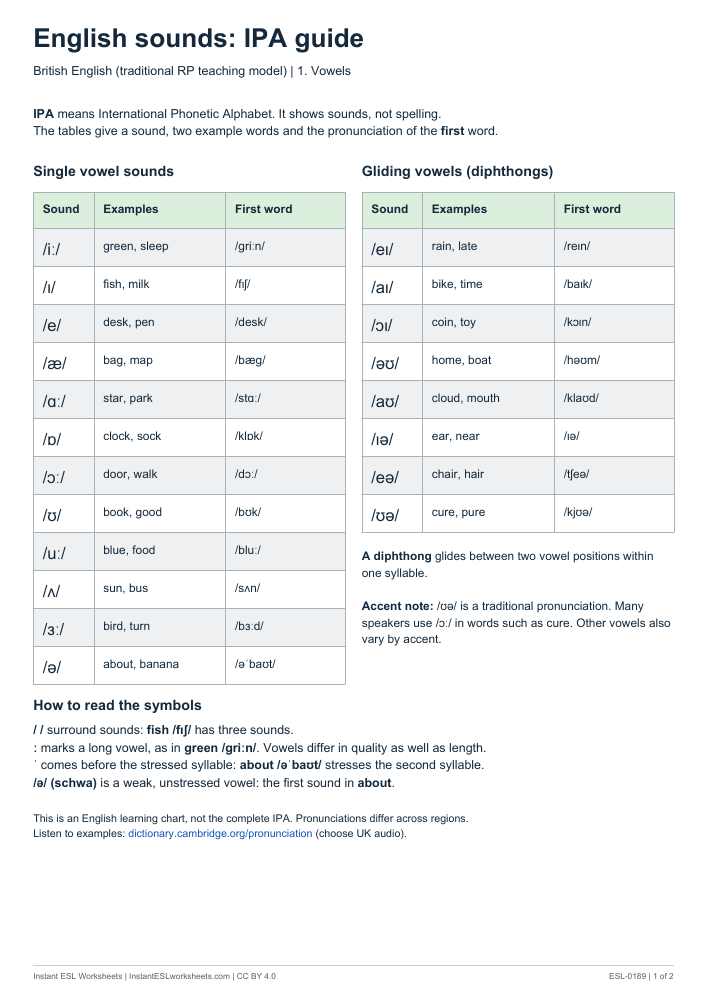
A two-page IPA guide to vowels and consonants with example words, using a traditional British English teaching model.
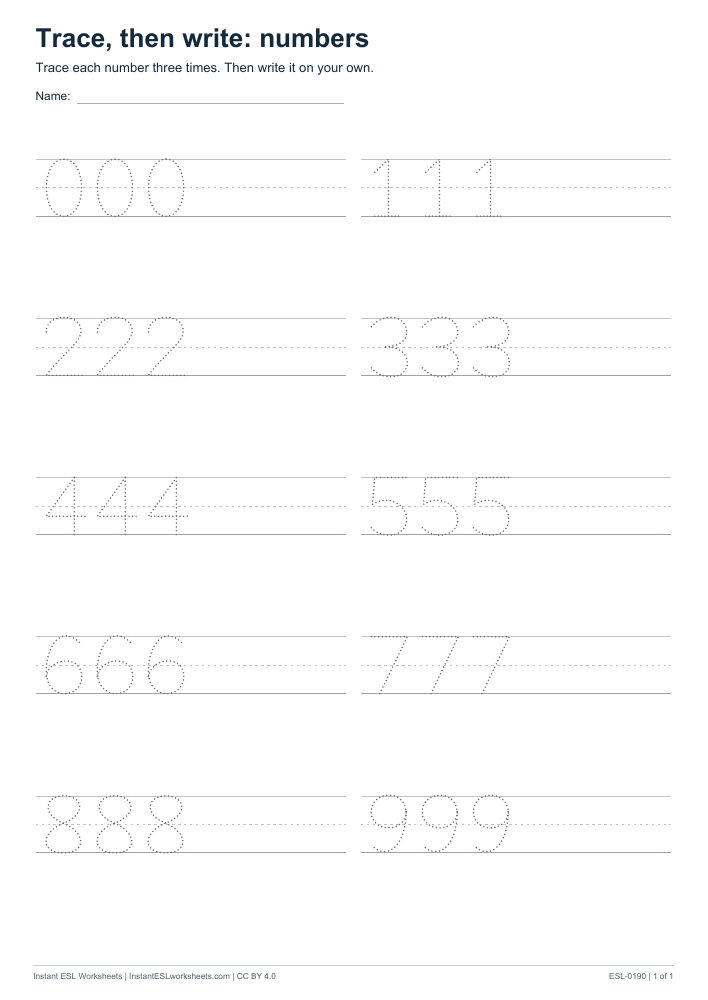
Trace each digit three times, then practise writing independently on this printable number sheet for children.
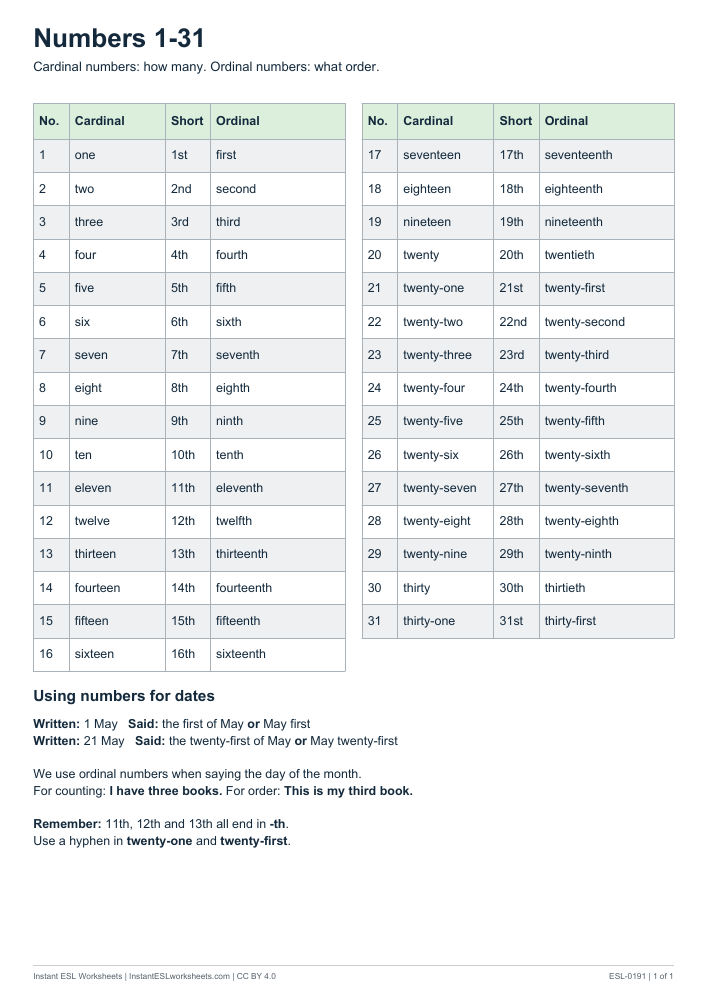
A printable guide to number words, ordinal forms and dates, including both the first of May and May first.
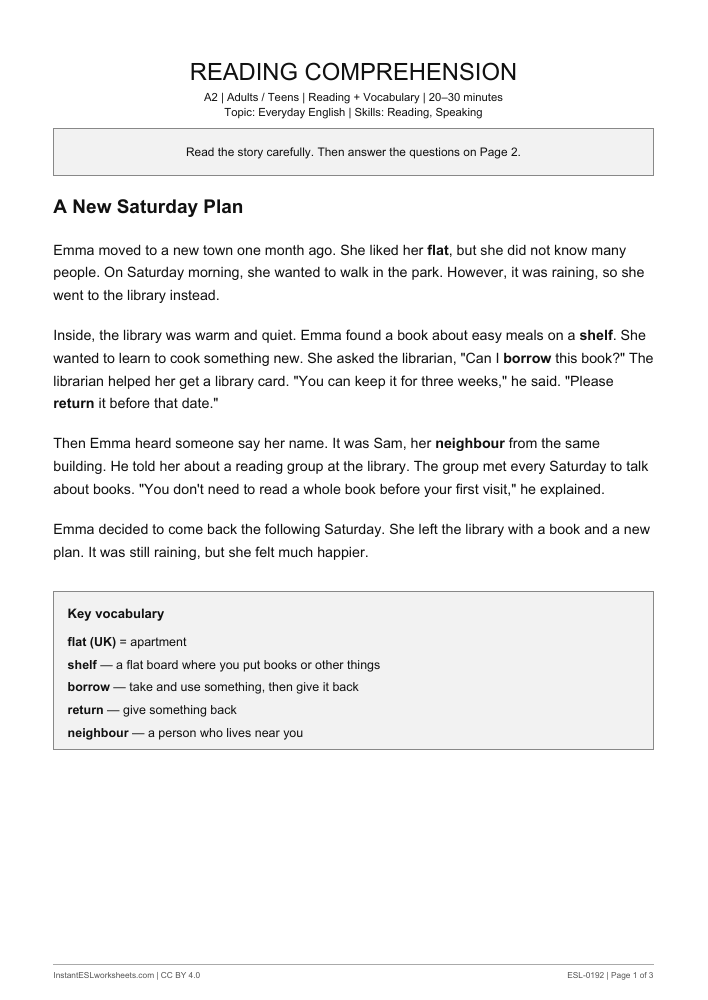
A2 reading: Emma moved to a new town one month ago. Includes vocabulary, six comprehension questions, discussion prompts and full-sentence answers.
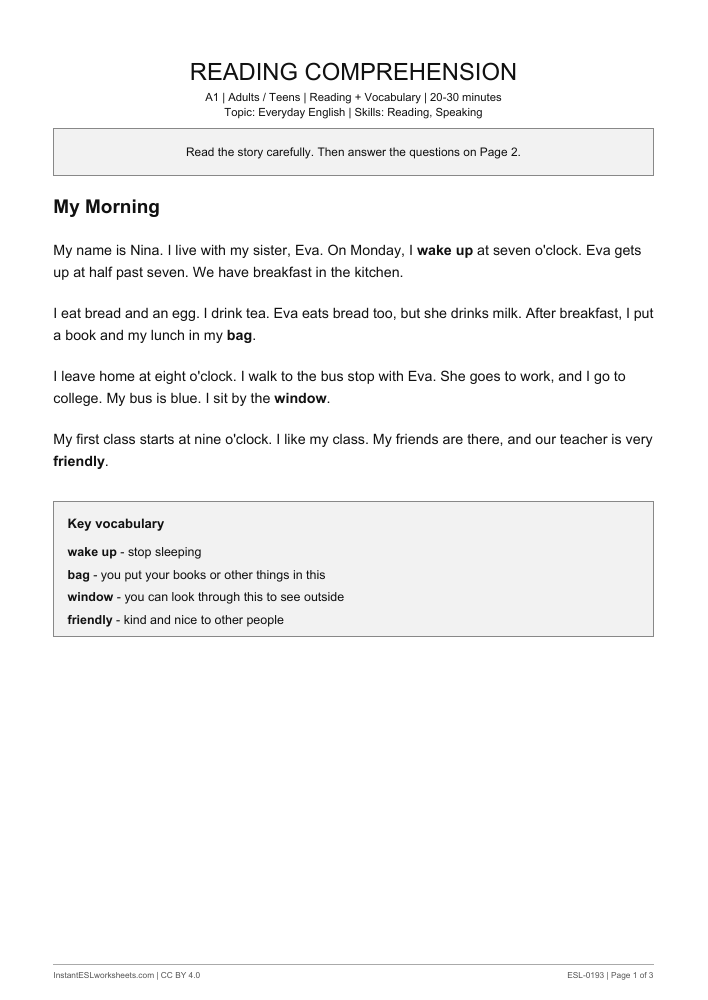
A1 reading: My name is Nina. Includes vocabulary, six comprehension questions, discussion prompts and full-sentence answers.
A1 reading: My name is Ben. Includes vocabulary, six comprehension questions, discussion prompts and full-sentence answers.
A1 reading: It is Saturday. Includes vocabulary, six comprehension questions, discussion prompts and full-sentence answers.
A1 reading: On Sundays, Maya goes to the park with her father. Includes vocabulary, six comprehension questions, discussion prompts and full-sentence answers.
A1 reading: My name is Leo. Includes vocabulary, six comprehension questions, discussion prompts and full-sentence answers.
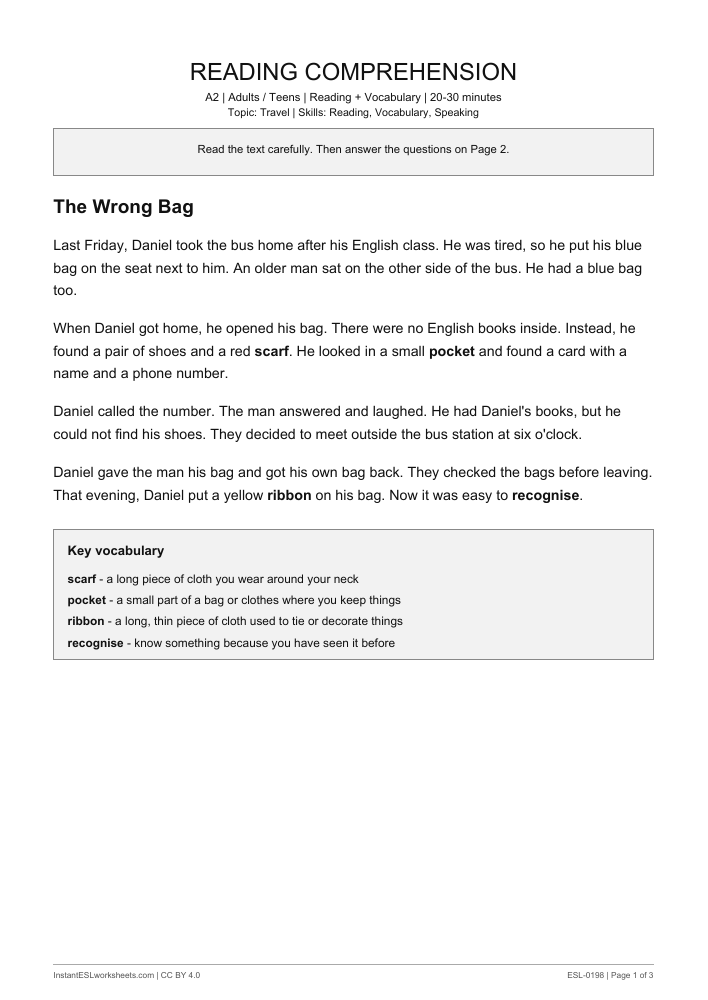
A2 reading: Last Friday, Daniel took the bus home after his English class. Includes vocabulary, six comprehension questions, discussion prompts and full-sentence answers.
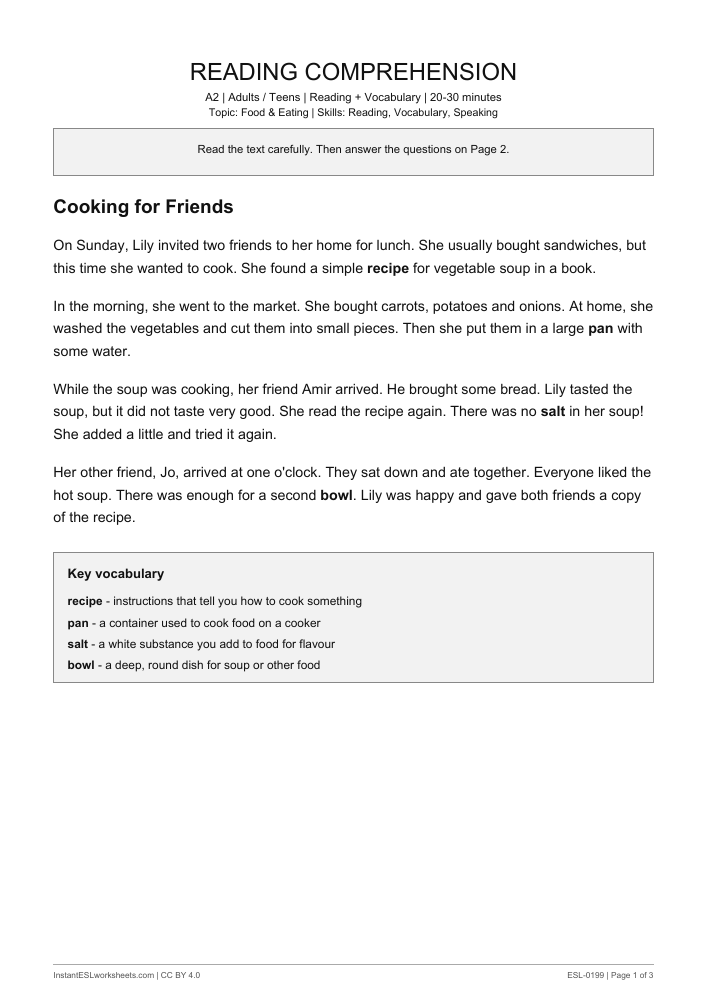
A2 reading: On Sunday, Lily invited two friends to her home for lunch. Includes vocabulary, six comprehension questions, discussion prompts and full-sentence answers.
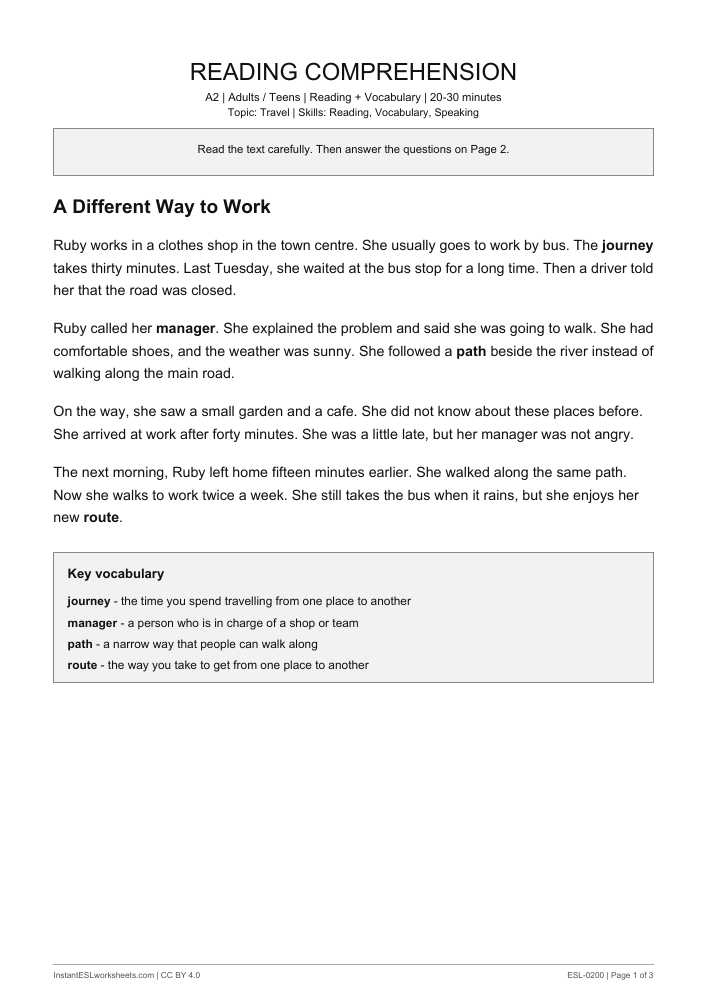
A2 reading: Ruby works in a clothes shop in the town centre. Includes vocabulary, six comprehension questions, discussion prompts and full-sentence answers.
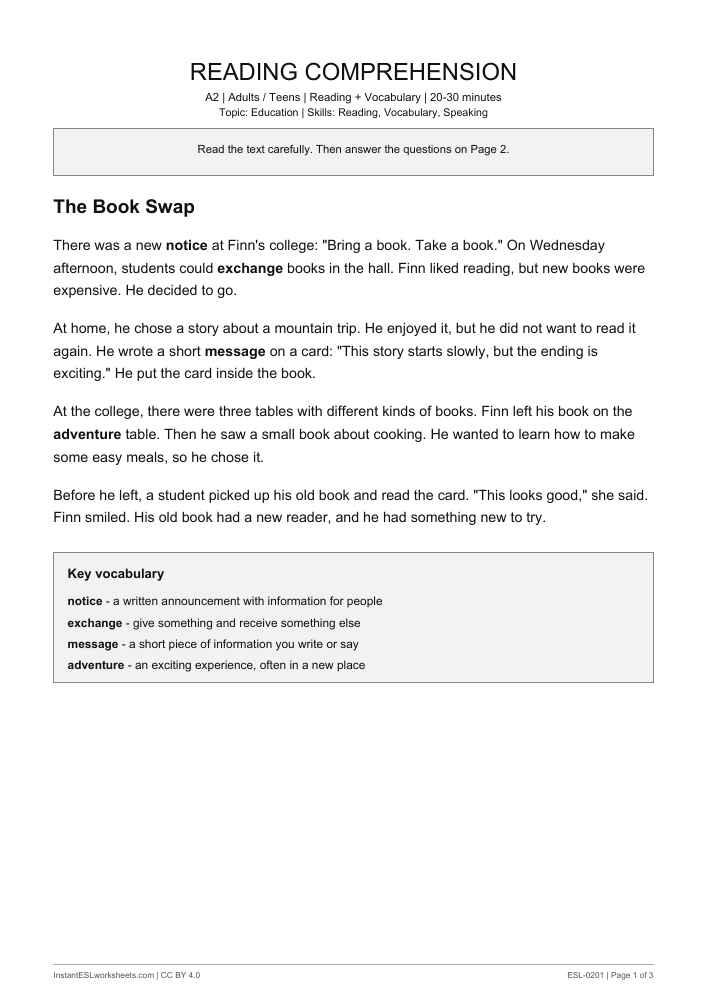
A2 reading: There was a new notice at Finn's college: "Bring a book. Includes vocabulary, six comprehension questions, discussion prompts and full-sentence answers.
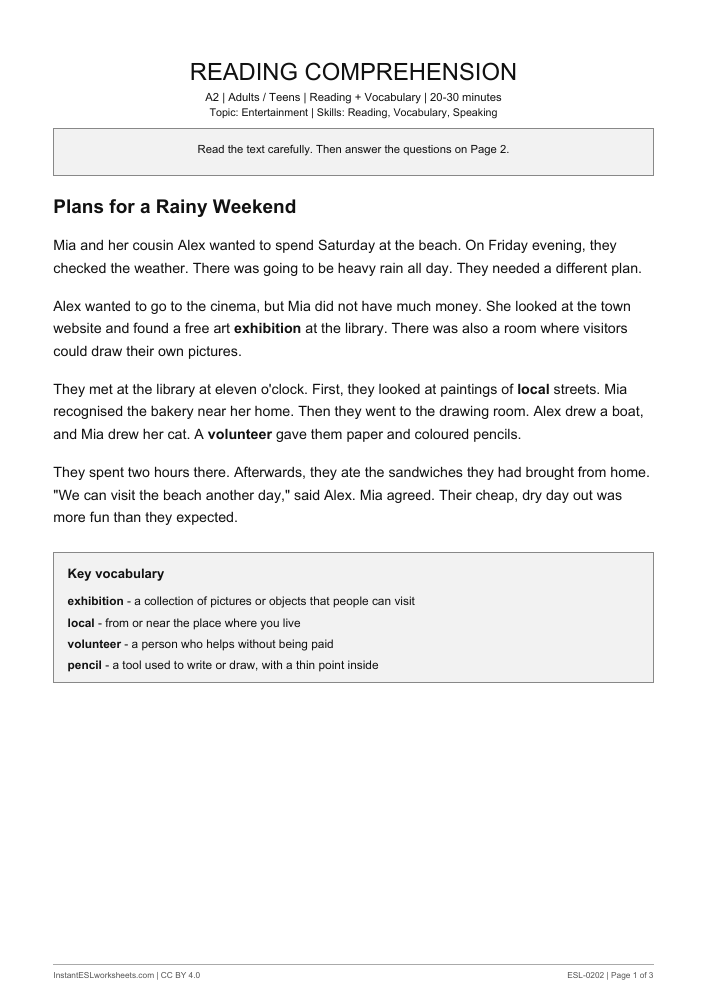
A2 reading: Mia and her cousin Alex wanted to spend Saturday at the beach. Includes vocabulary, six comprehension questions, discussion prompts and full-sentence answers.
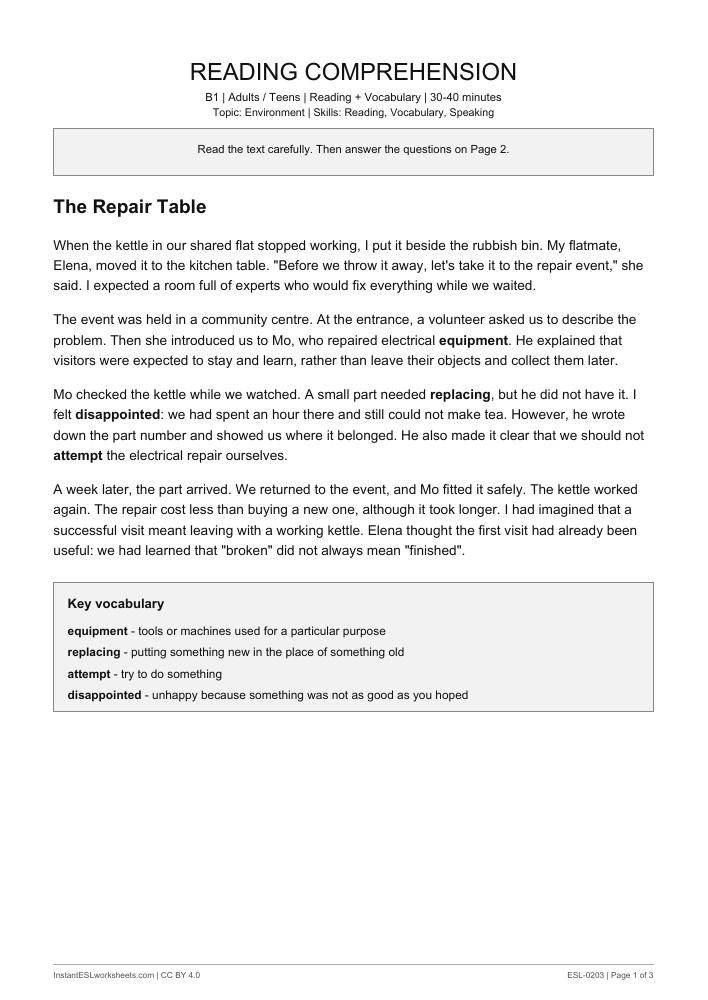
B1 reading: When the kettle in our shared flat stopped working, I put it beside the rubbish bin. Includes vocabulary, six comprehension questions, discussion prompts and full-sentence answers.
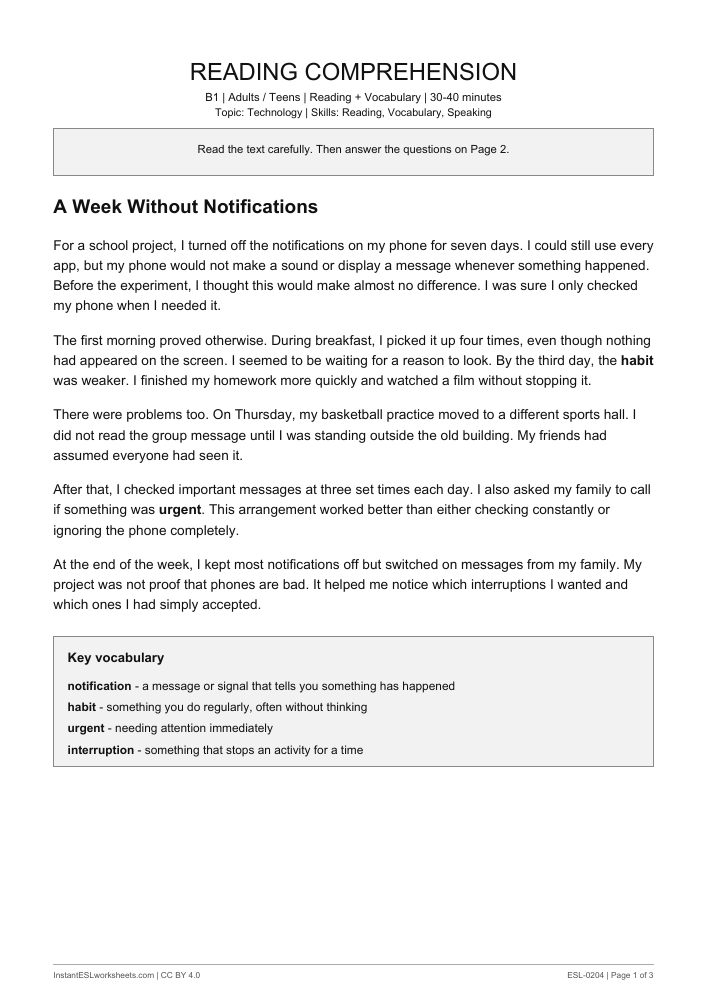
B1 reading: For a school project, I turned off the notifications on my phone for seven days. Includes vocabulary, six comprehension questions, discussion prompts and full-sentence answers.
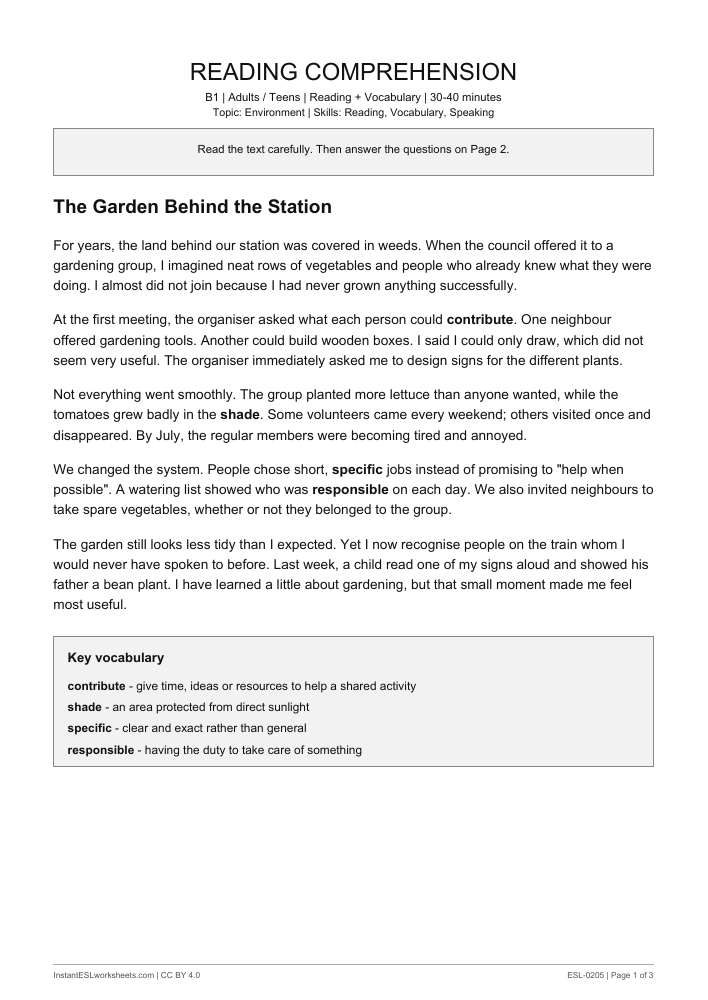
B1 reading: For years, the land behind our station was covered in weeds. Includes vocabulary, six comprehension questions, discussion prompts and full-sentence answers.
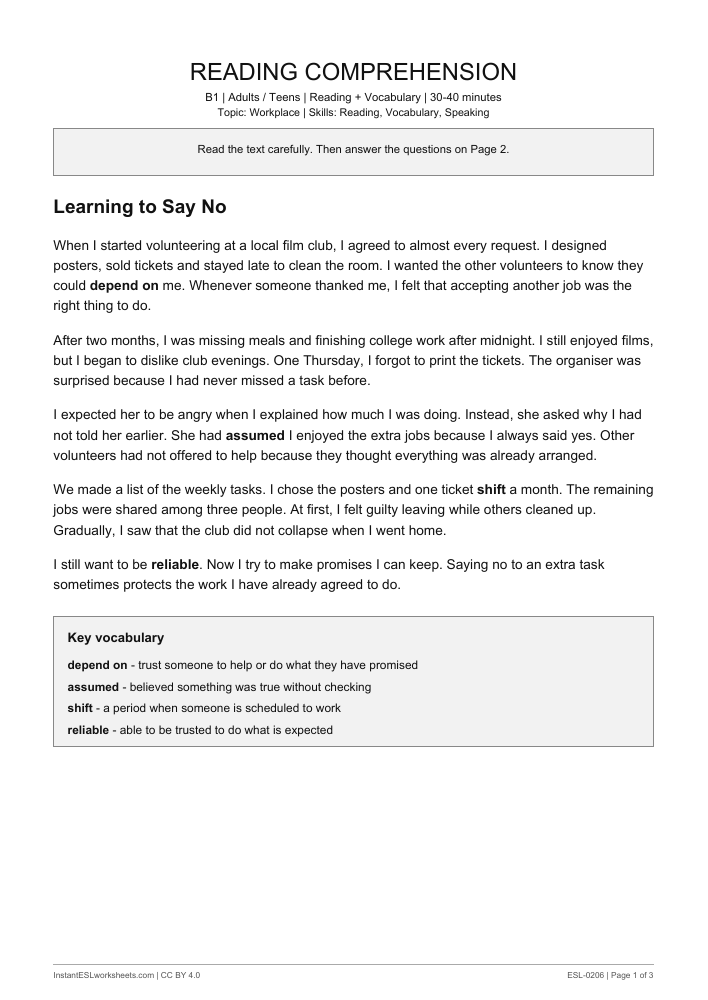
B1 reading: When I started volunteering at a local film club, I agreed to almost every request. Includes vocabulary, six comprehension questions, discussion prompts and full-sentence answers.
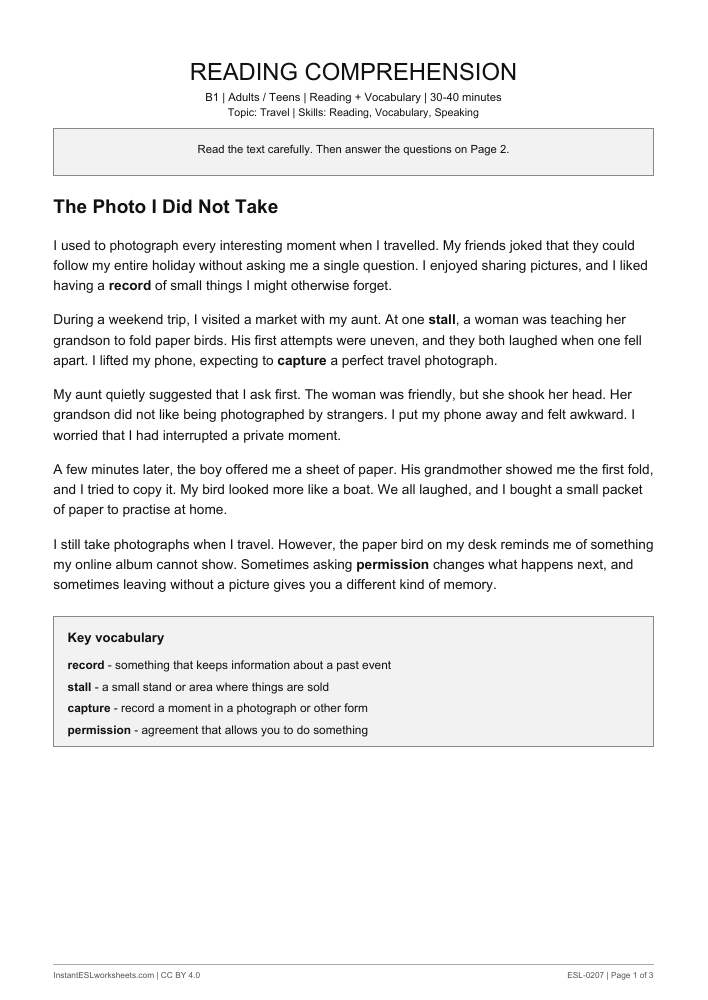
B1 reading: I used to photograph every interesting moment when I travelled. Includes vocabulary, six comprehension questions, discussion prompts and full-sentence answers.
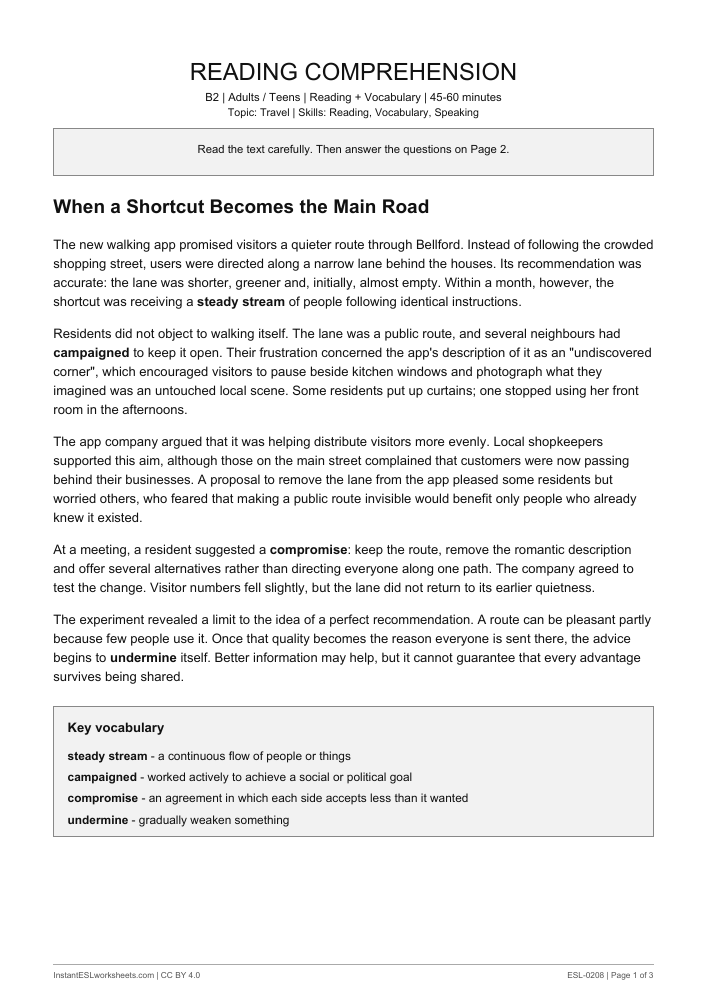
B2 reading: The new walking app promised visitors a quieter route through Bellford. Includes vocabulary, six comprehension questions, discussion prompts and full-sentence answers.
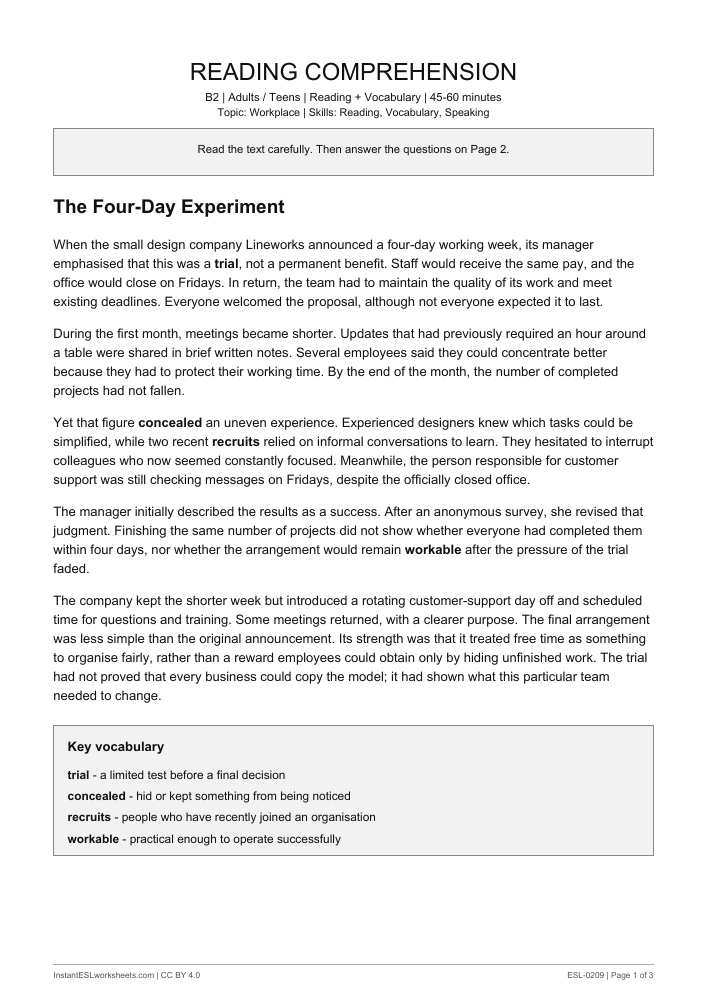
B2 reading: When the small design company Lineworks announced a four-day working week, its manager emphasised that this was a trial, not a permanent benefit. Includes vocabulary, six comprehension questions, discussion prompts and full-sentence answers.
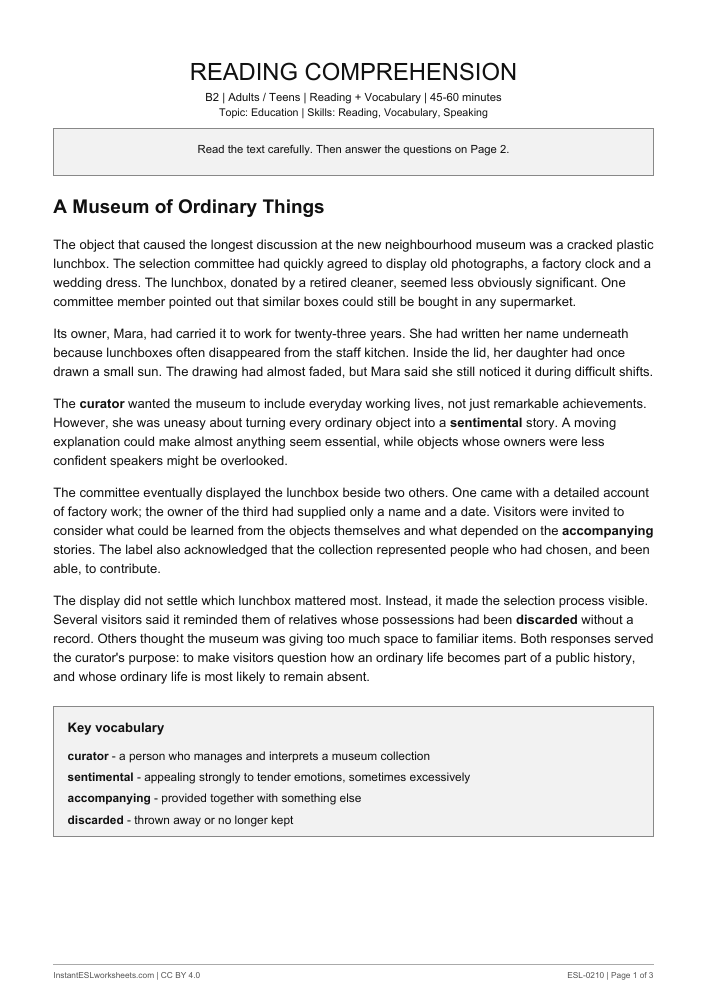
B2 reading: The object that caused the longest discussion at the new neighbourhood museum was a cracked plastic lunchbox. Includes vocabulary, six comprehension questions, discussion prompts and full-sentence answers.
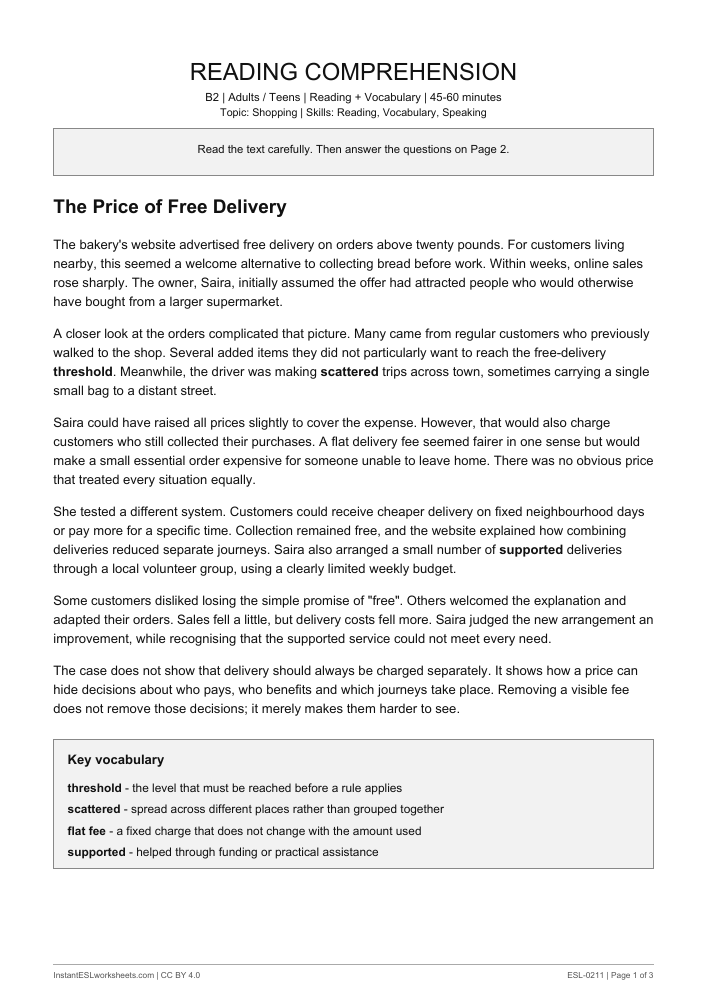
B2 reading: The bakery's website advertised free delivery on orders above twenty pounds. Includes vocabulary, six comprehension questions, discussion prompts and full-sentence answers.
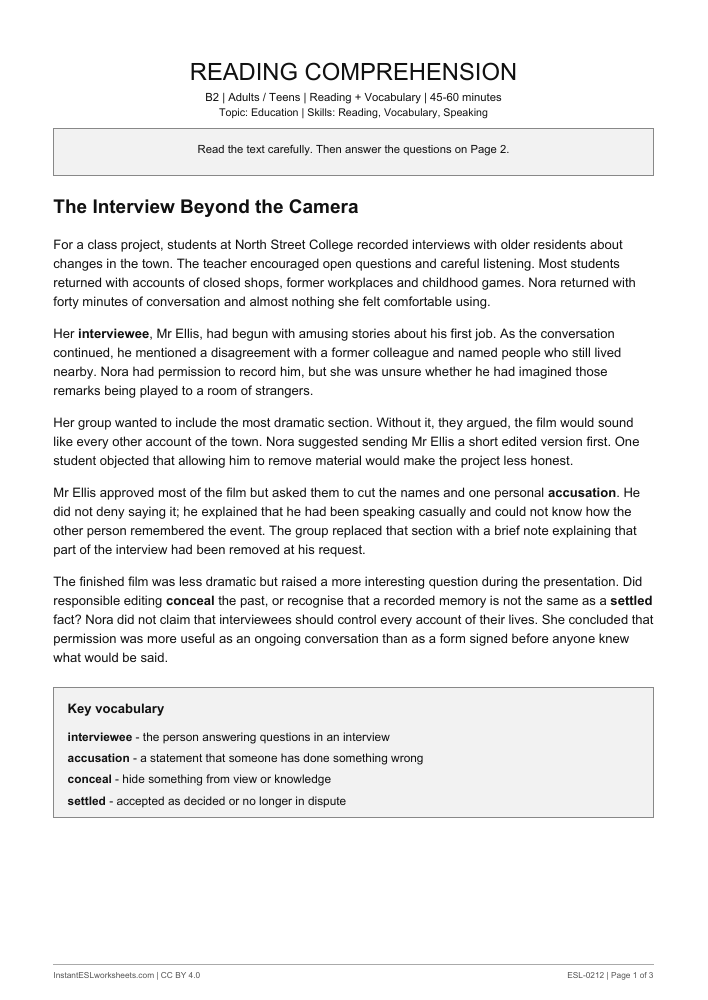
B2 reading: For a class project, students at North Street College recorded interviews with older residents about changes in the town. Includes vocabulary, six comprehension questions, discussion prompts and full-sentence answers.
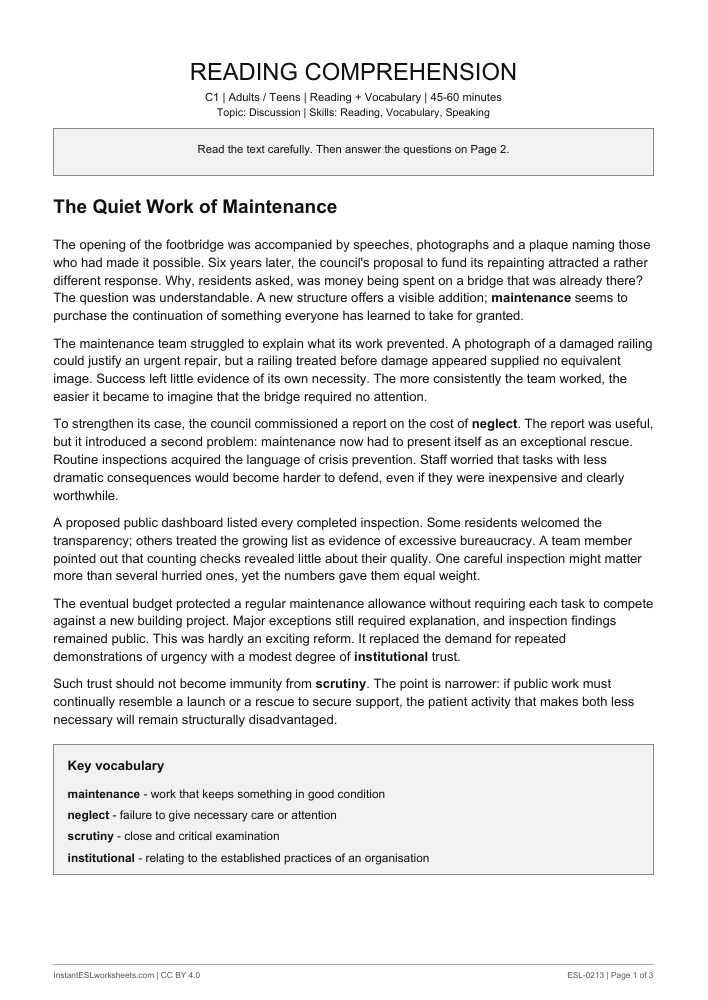
C1 reading: The opening of the footbridge was accompanied by speeches, photographs and a plaque naming those who had made it possible. Includes vocabulary, six comprehension questions, discussion prompts and full-sentence answers.
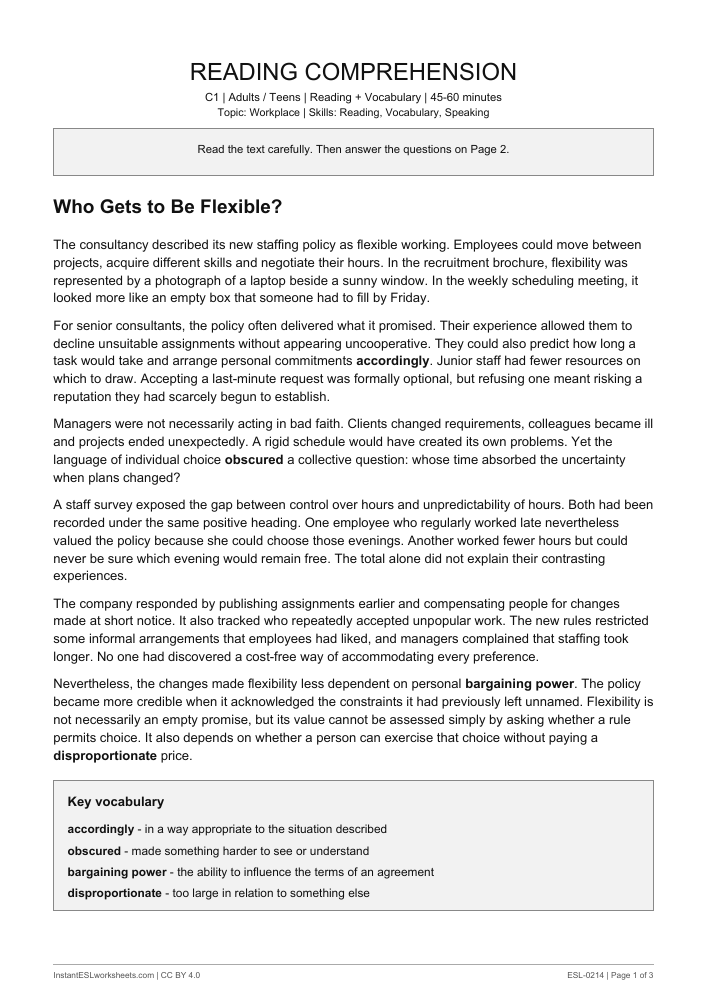
C1 reading: The consultancy described its new staffing policy as flexible working. Includes vocabulary, six comprehension questions, discussion prompts and full-sentence answers.
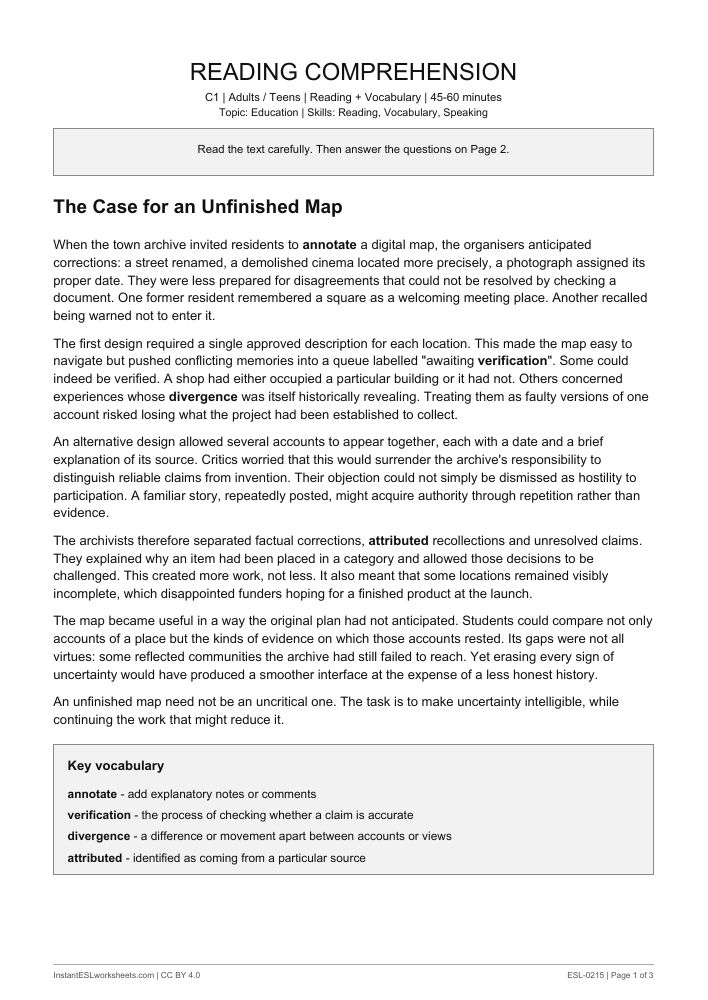
C1 reading: When the town archive invited residents to annotate a digital map, the organisers anticipated corrections: a street renamed, a demolished cinema located more precisely, a photograph assigned its proper date. Includes vocabulary, six comprehension questions, discussion prompts and full-sentence answers.
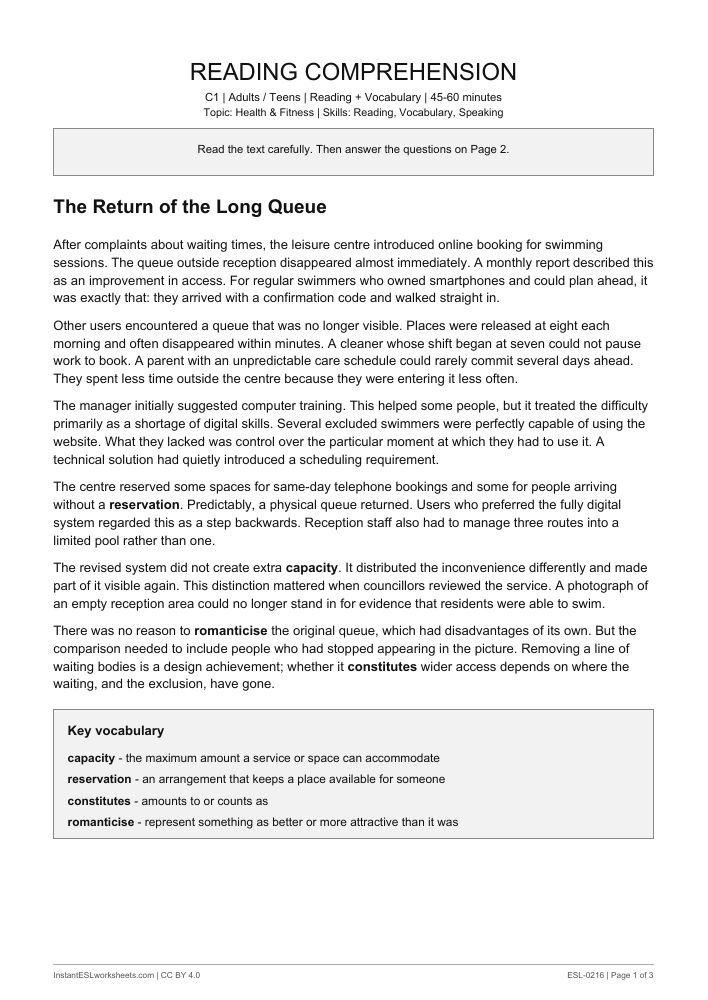
C1 reading: After complaints about waiting times, the leisure centre introduced online booking for swimming sessions. Includes vocabulary, six comprehension questions, discussion prompts and full-sentence answers.
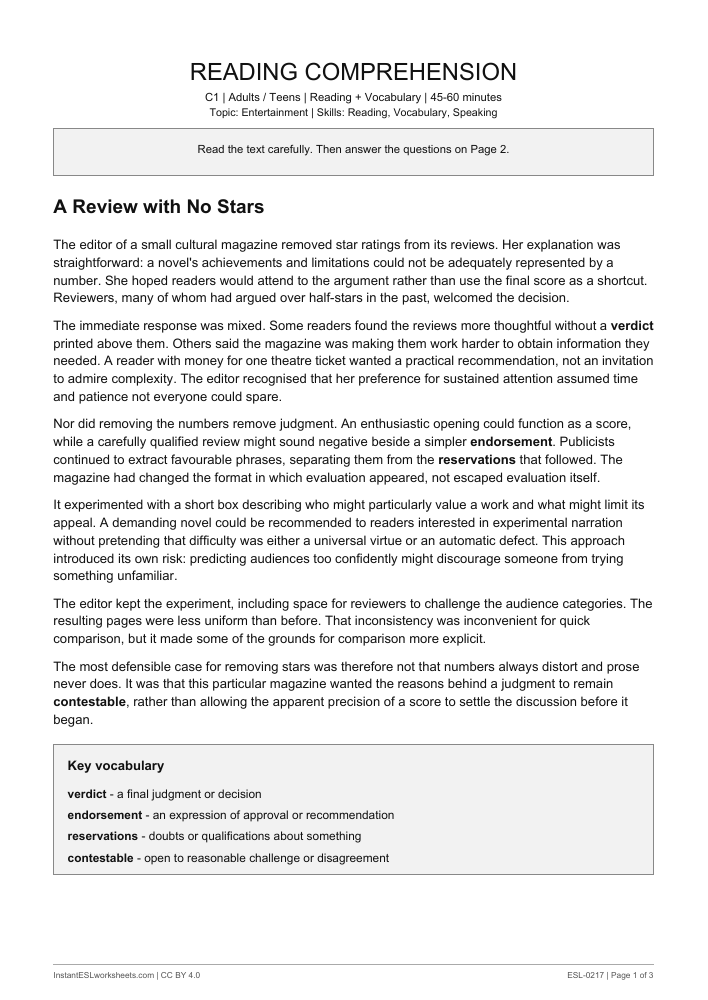
C1 reading: The editor of a small cultural magazine removed star ratings from its reviews. Includes vocabulary, six comprehension questions, discussion prompts and full-sentence answers.
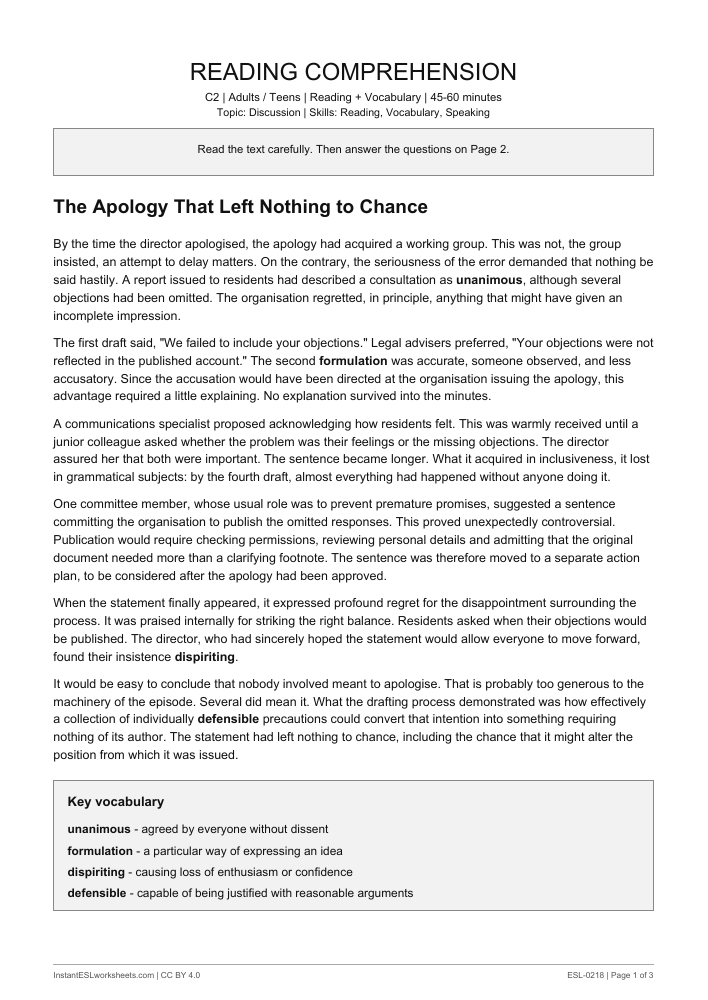
C2 reading: By the time the director apologised, the apology had acquired a working group. Includes vocabulary, six comprehension questions, discussion prompts and full-sentence answers.
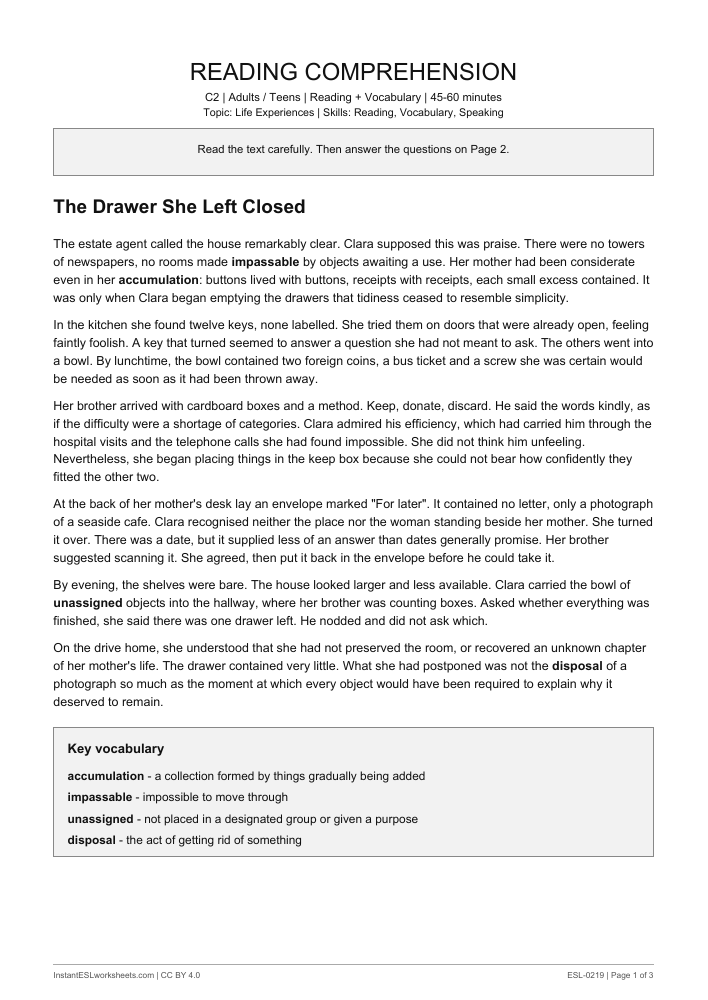
C2 reading: The estate agent called the house remarkably clear. Includes vocabulary, six comprehension questions, discussion prompts and full-sentence answers.
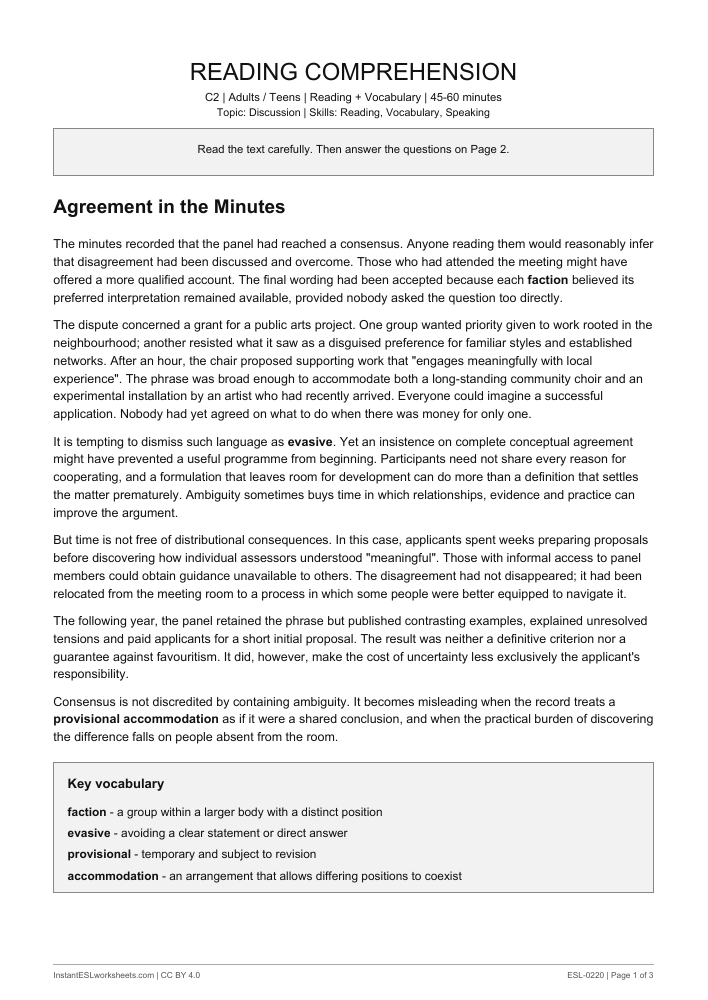
C2 reading: The minutes recorded that the panel had reached a consensus. Includes vocabulary, six comprehension questions, discussion prompts and full-sentence answers.
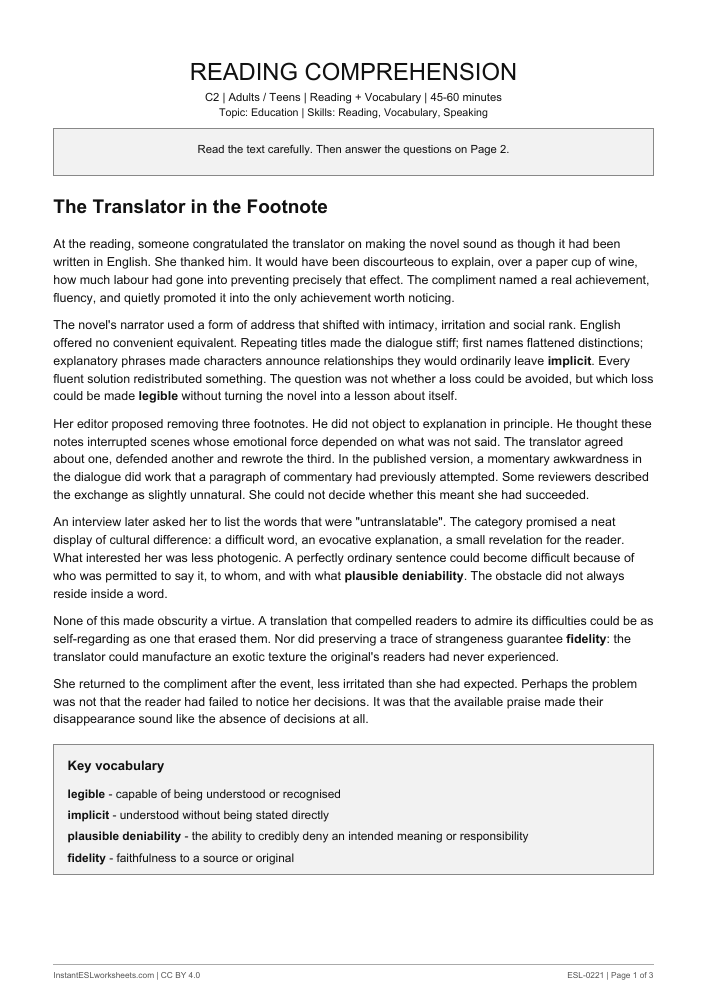
C2 reading: At the reading, someone congratulated the translator on making the novel sound as though it had been written in English. Includes vocabulary, six comprehension questions, discussion prompts and full-sentence answers.
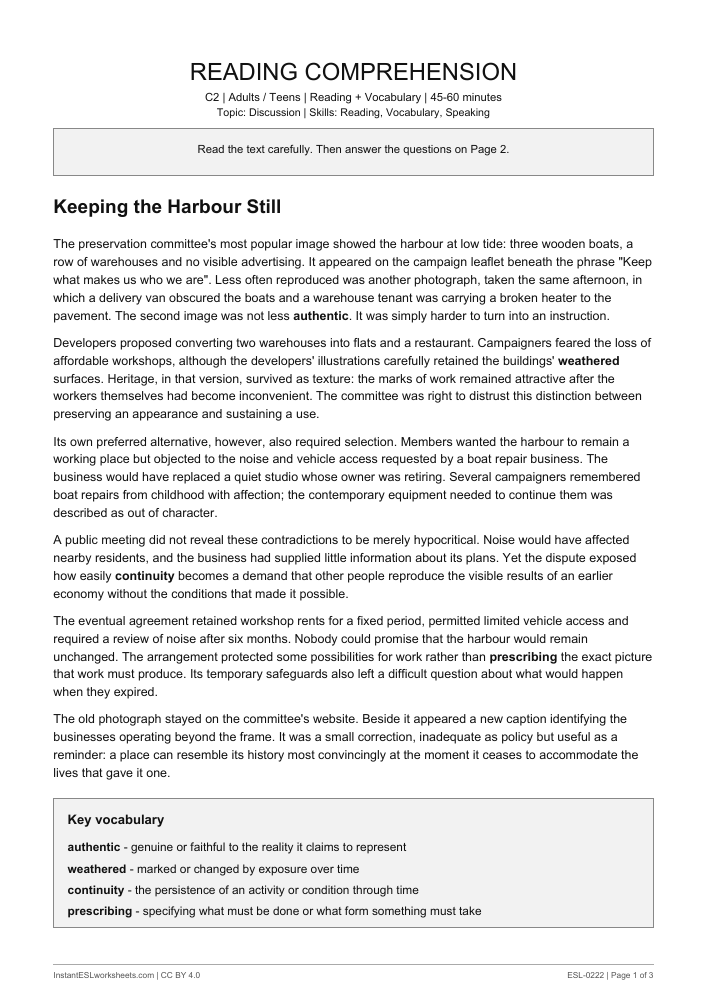
C2 reading: The preservation committee's most popular image showed the harbour at low tide: three wooden boats, a row of warehouses and no visible advertising. Includes vocabulary, six comprehension questions, discussion prompts and full-sentence answers.
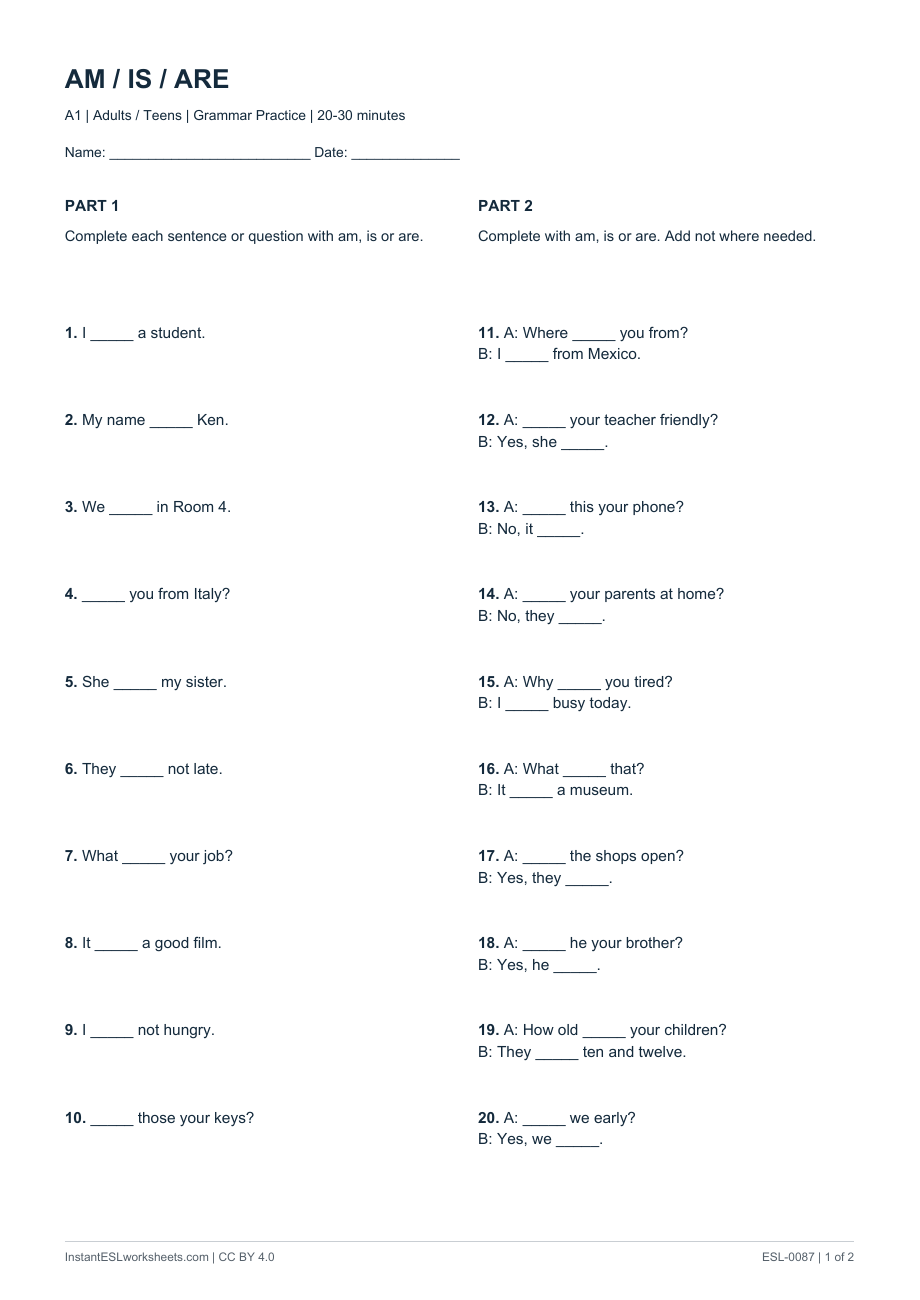
Practise am / is / are with 20 focused A1 grammar questions on one student page. Includes a separate teacher answer key with suggested answers.
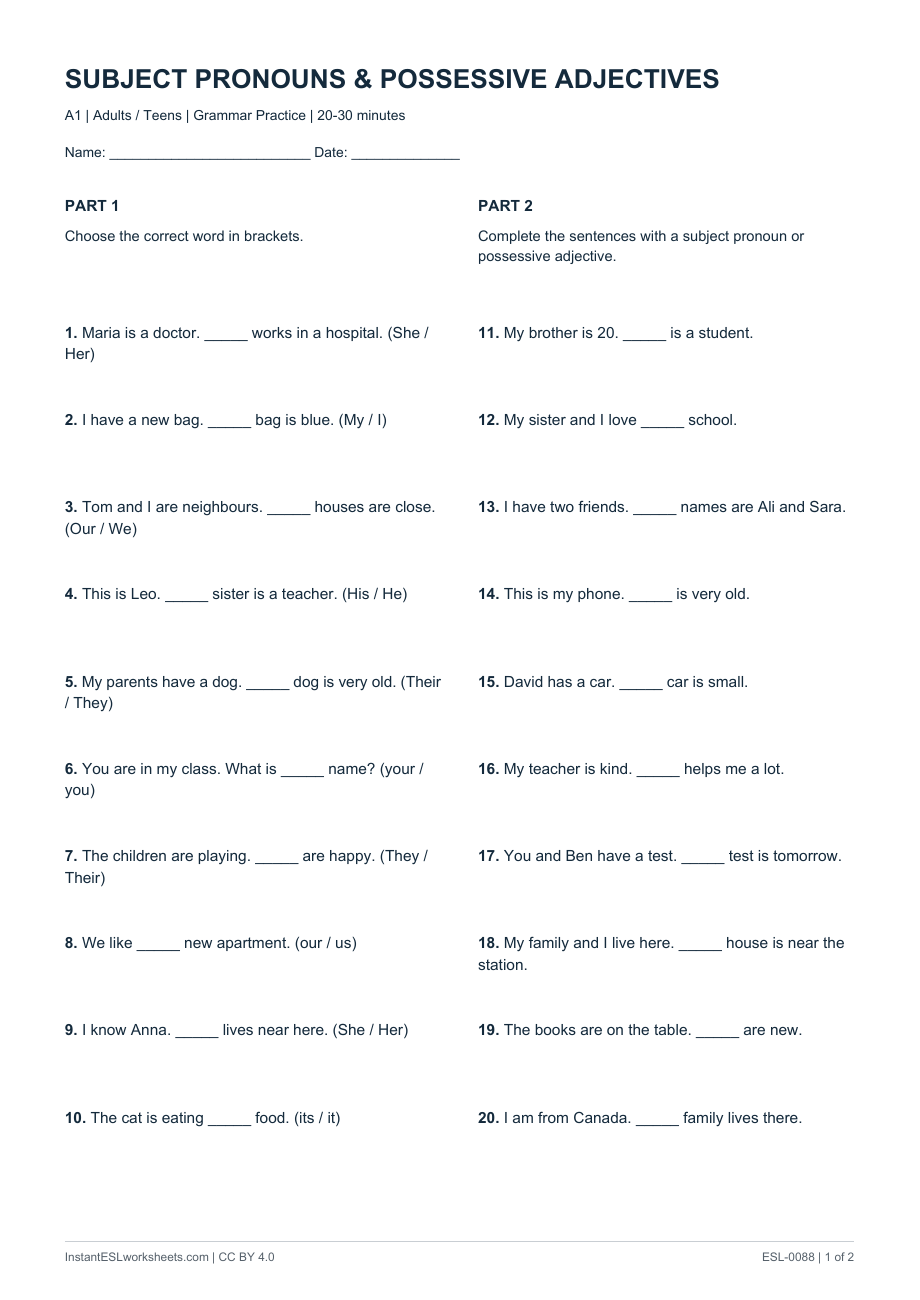
Practise subject pronouns & possessive adjectives with 20 focused A1 grammar questions on one student page. Includes a separate teacher answer key with suggested answers.
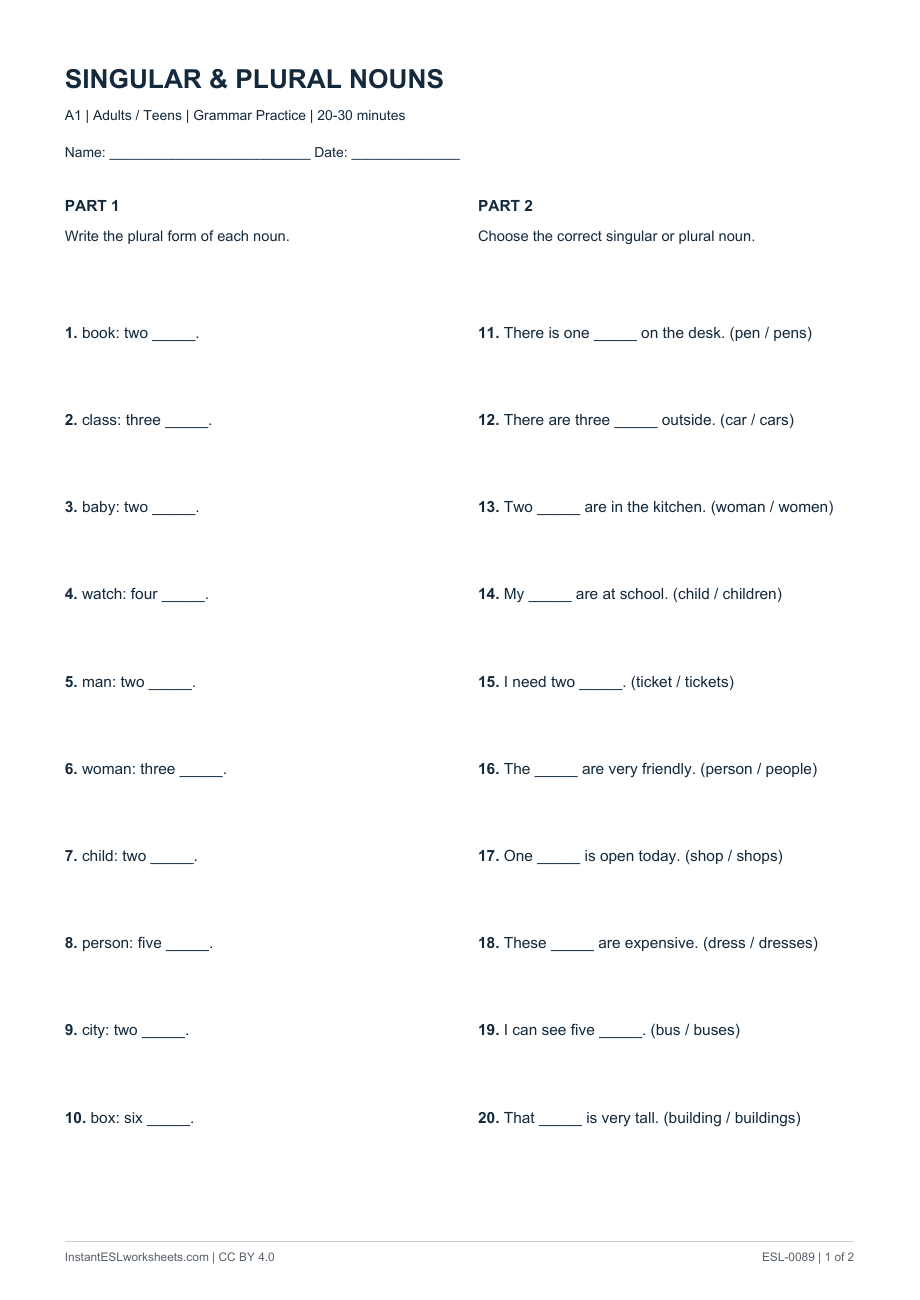
Practise singular & plural nouns with 20 focused A1 grammar questions on one student page. Includes a separate teacher answer key with suggested answers.
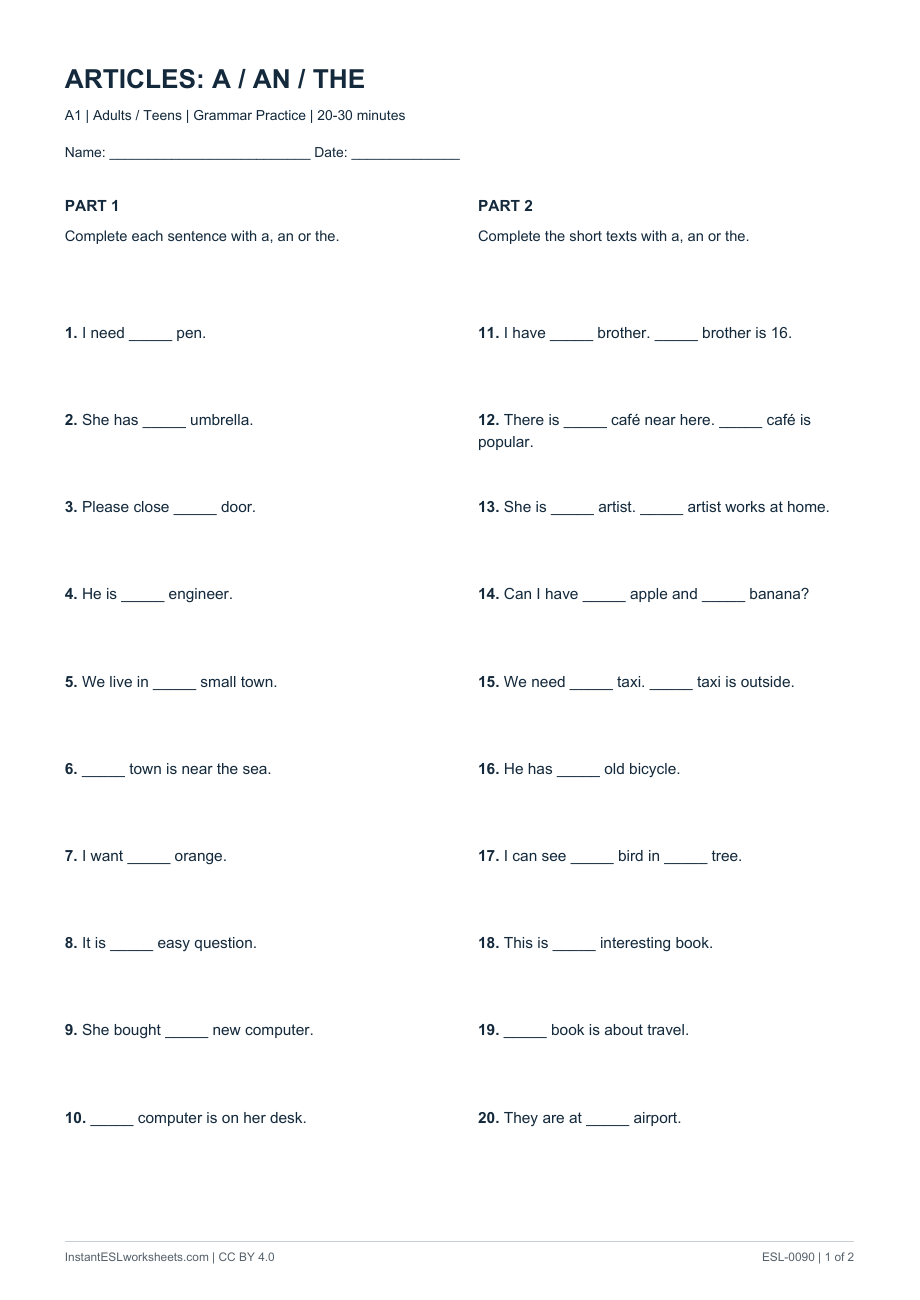
Practise articles: a / an / the with 20 focused A1 grammar questions on one student page. Includes a separate teacher answer key with suggested answers.
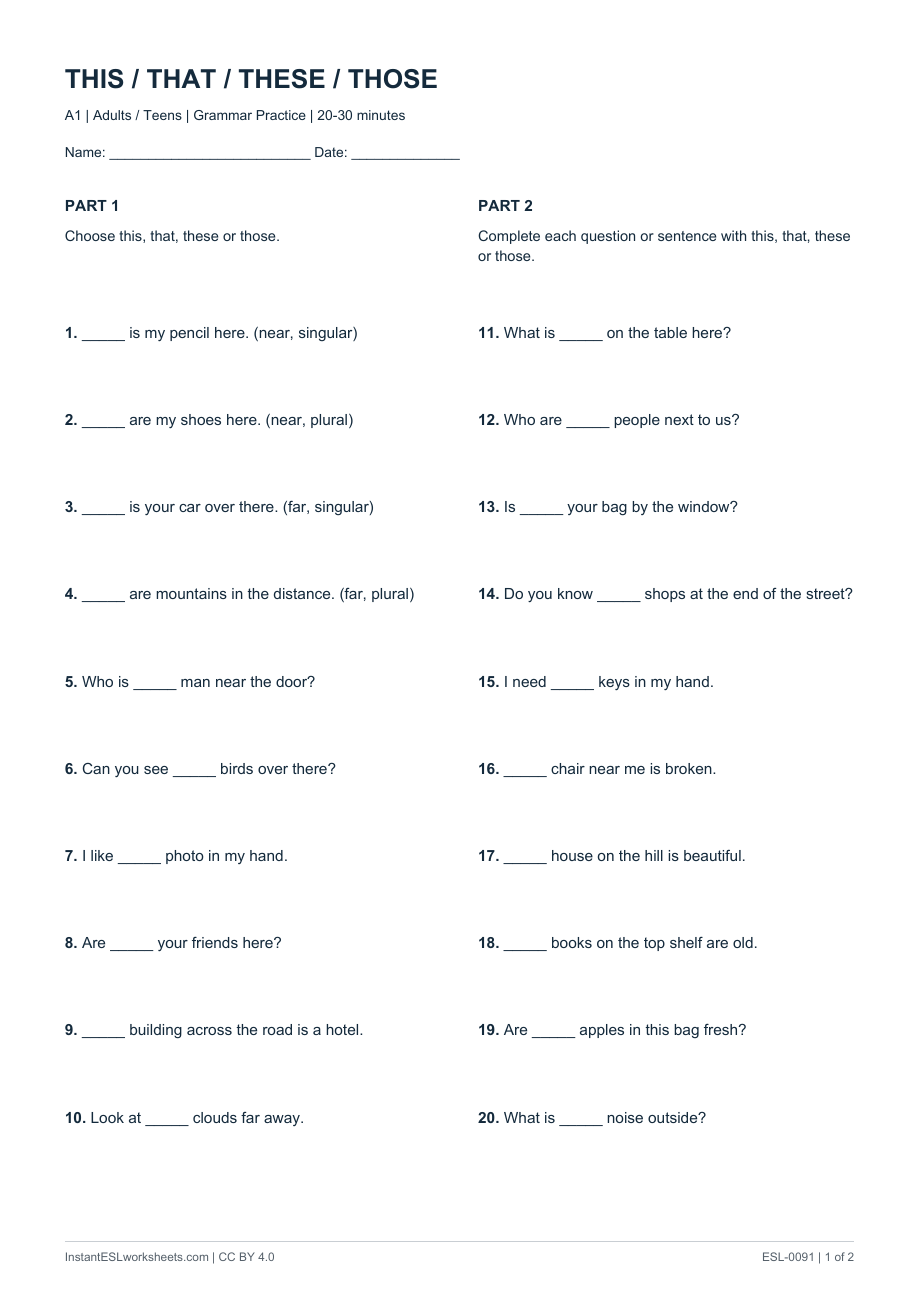
Practise this / that / these / those with 20 focused A1 grammar questions on one student page. Includes a separate teacher answer key with suggested answers.
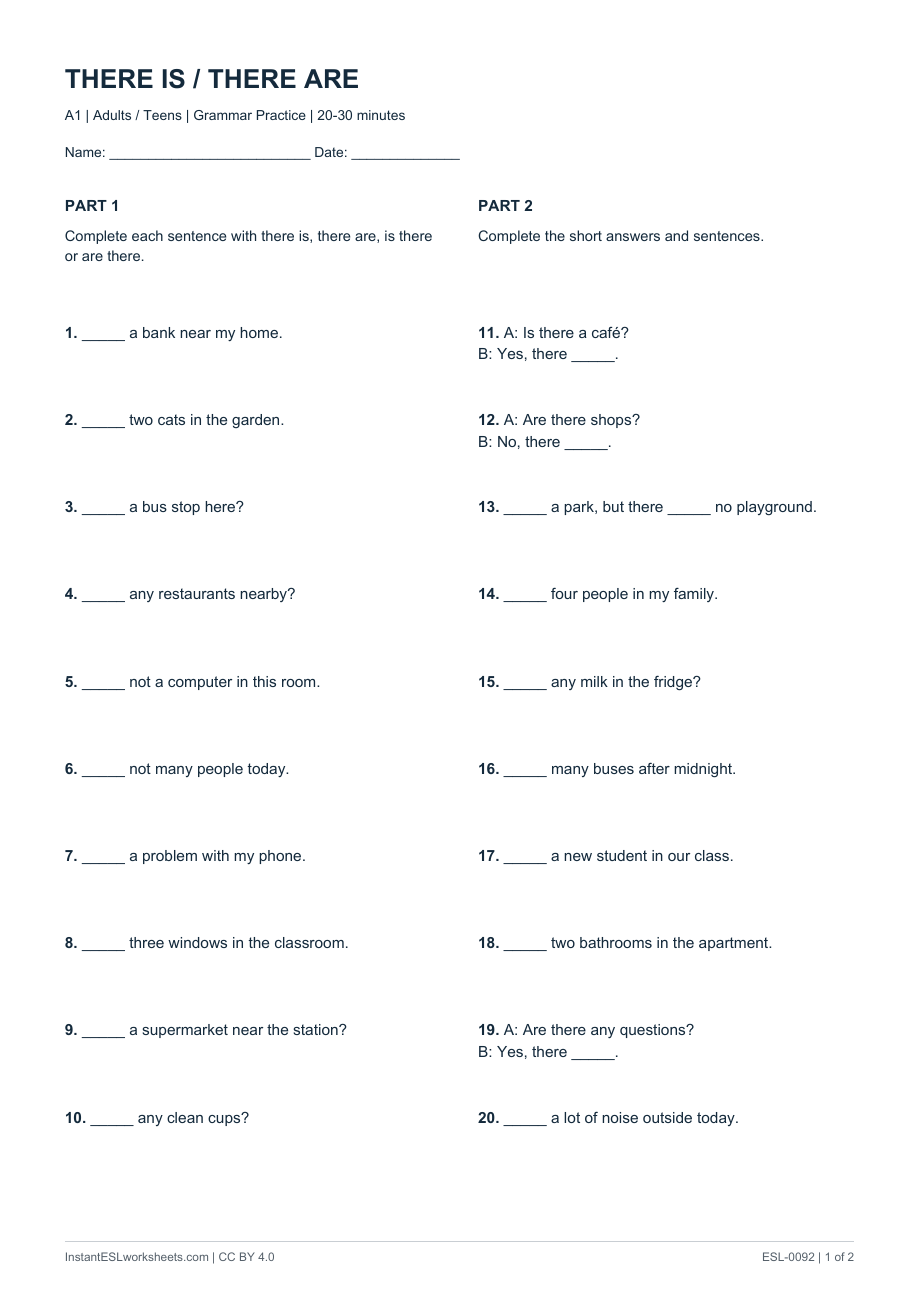
Practise there is / there are with 20 focused A1 grammar questions on one student page. Includes a separate teacher answer key with suggested answers.
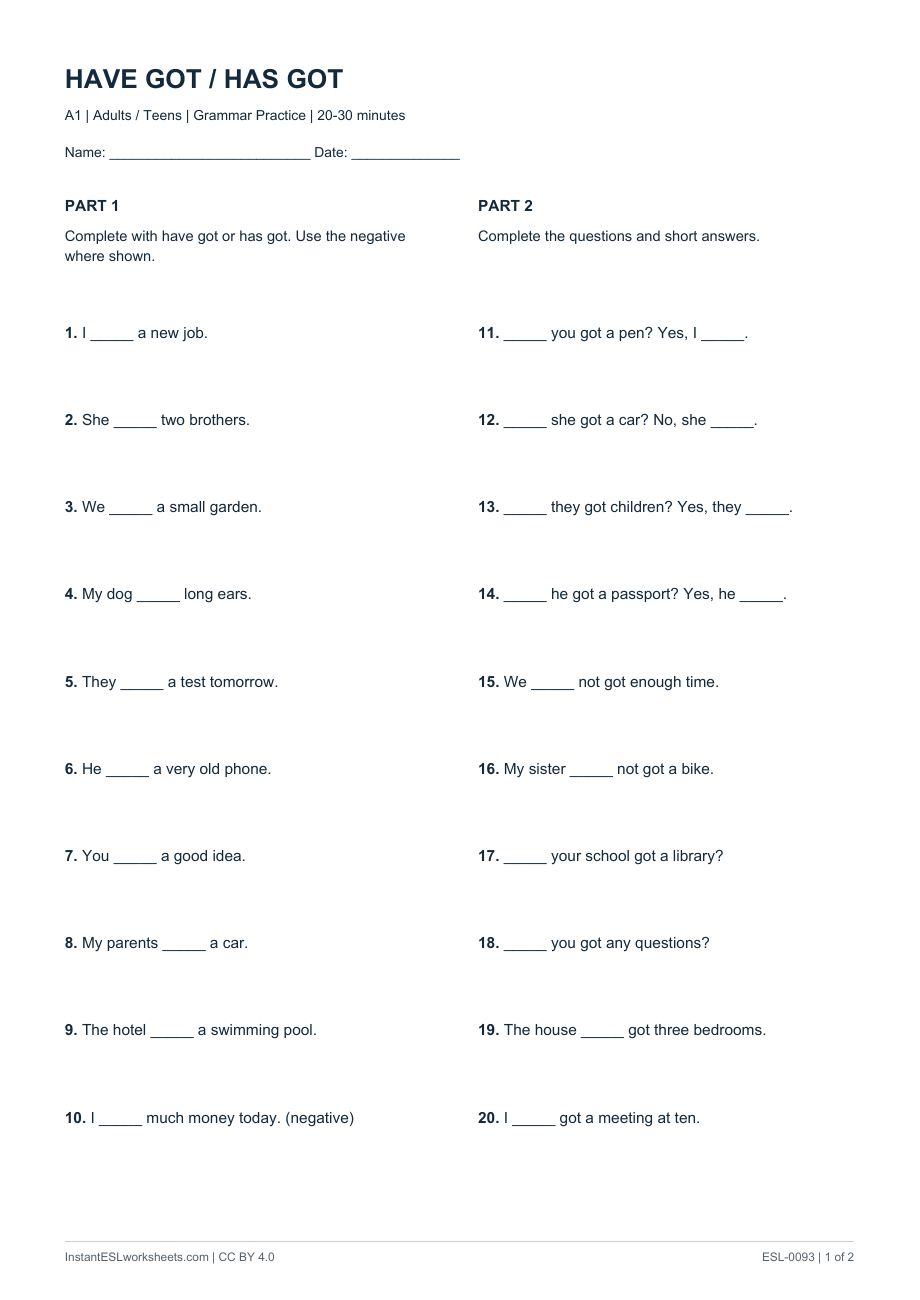
Practise have got / has got with 20 focused A1 grammar questions on one student page. Includes a separate teacher answer key with suggested answers.
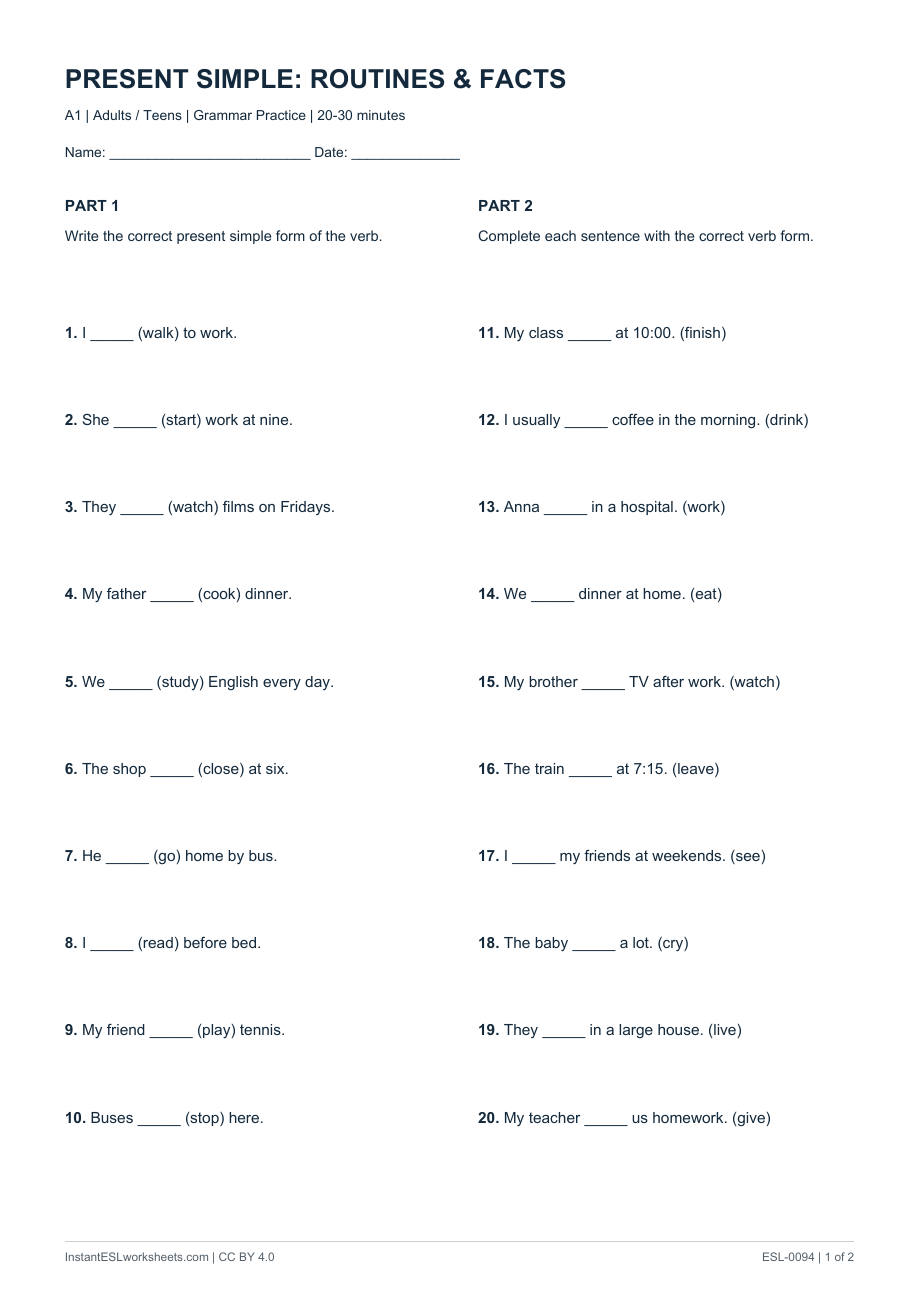
Practise present simple: routines & facts with 20 focused A1 grammar questions on one student page. Includes a separate teacher answer key with suggested answers.
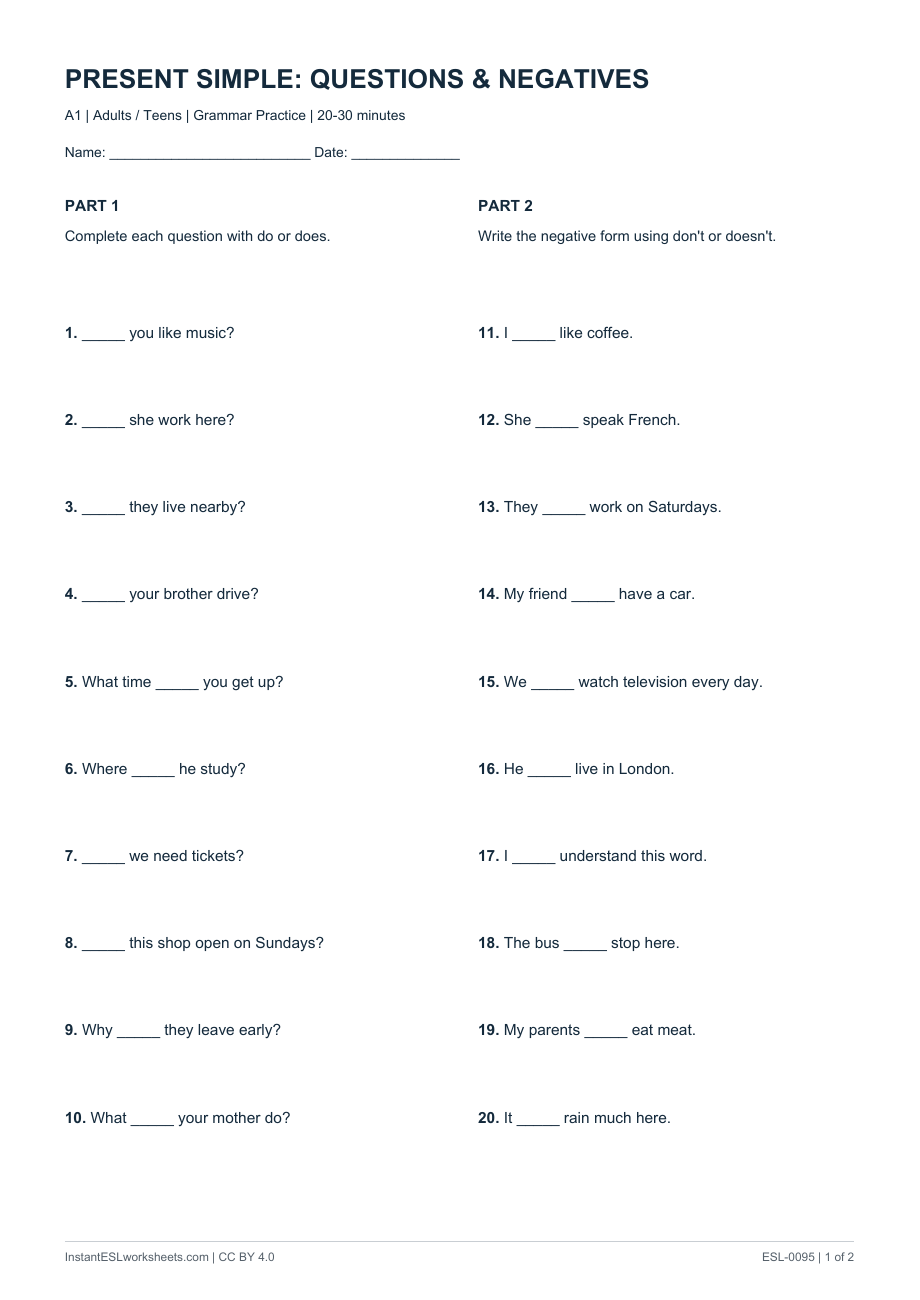
Practise present simple: questions & negatives with 20 focused A1 grammar questions on one student page. Includes a separate teacher answer key with suggested answers.
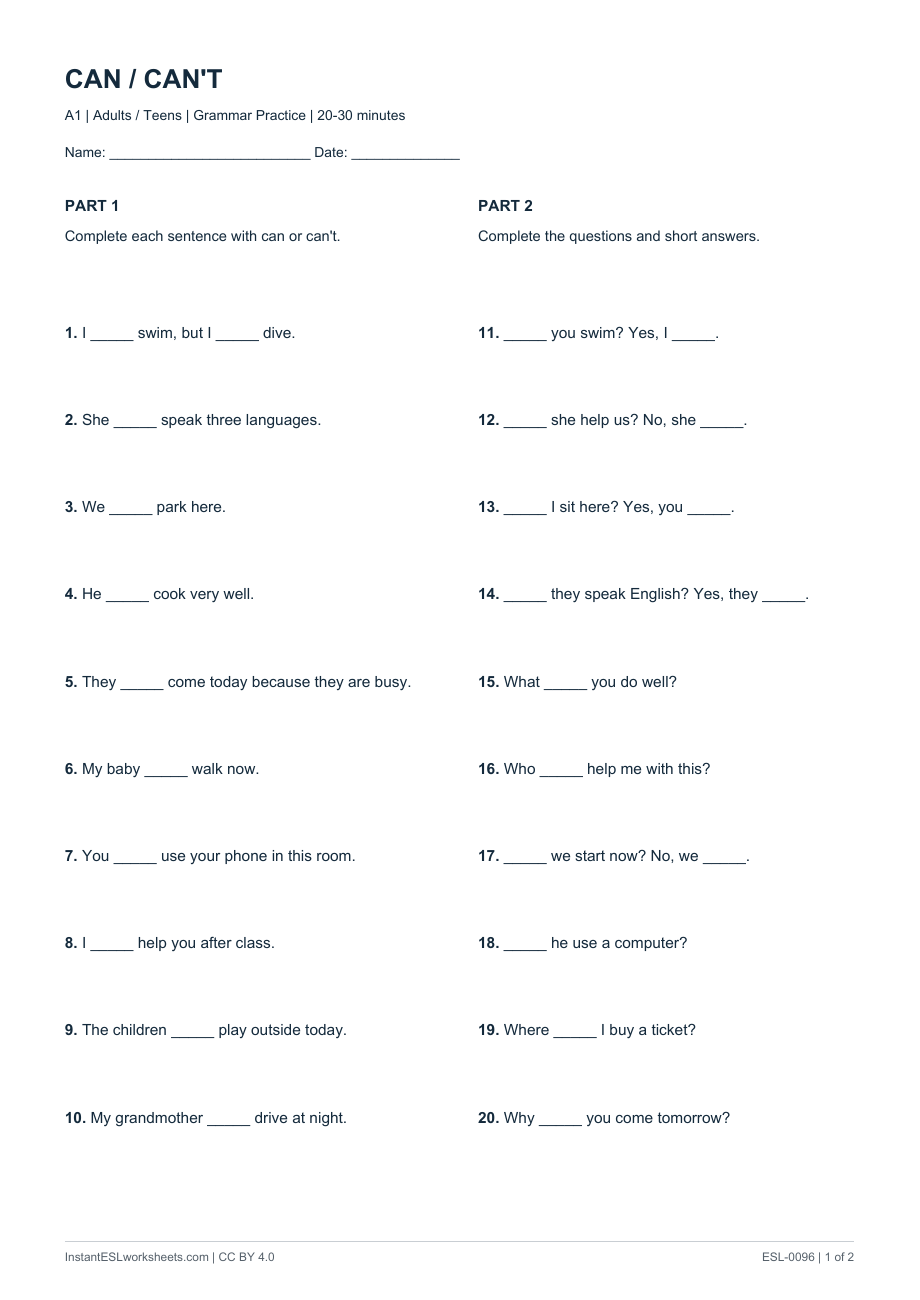
Practise can / can't with 20 focused A1 grammar questions on one student page. Includes a separate teacher answer key with suggested answers.
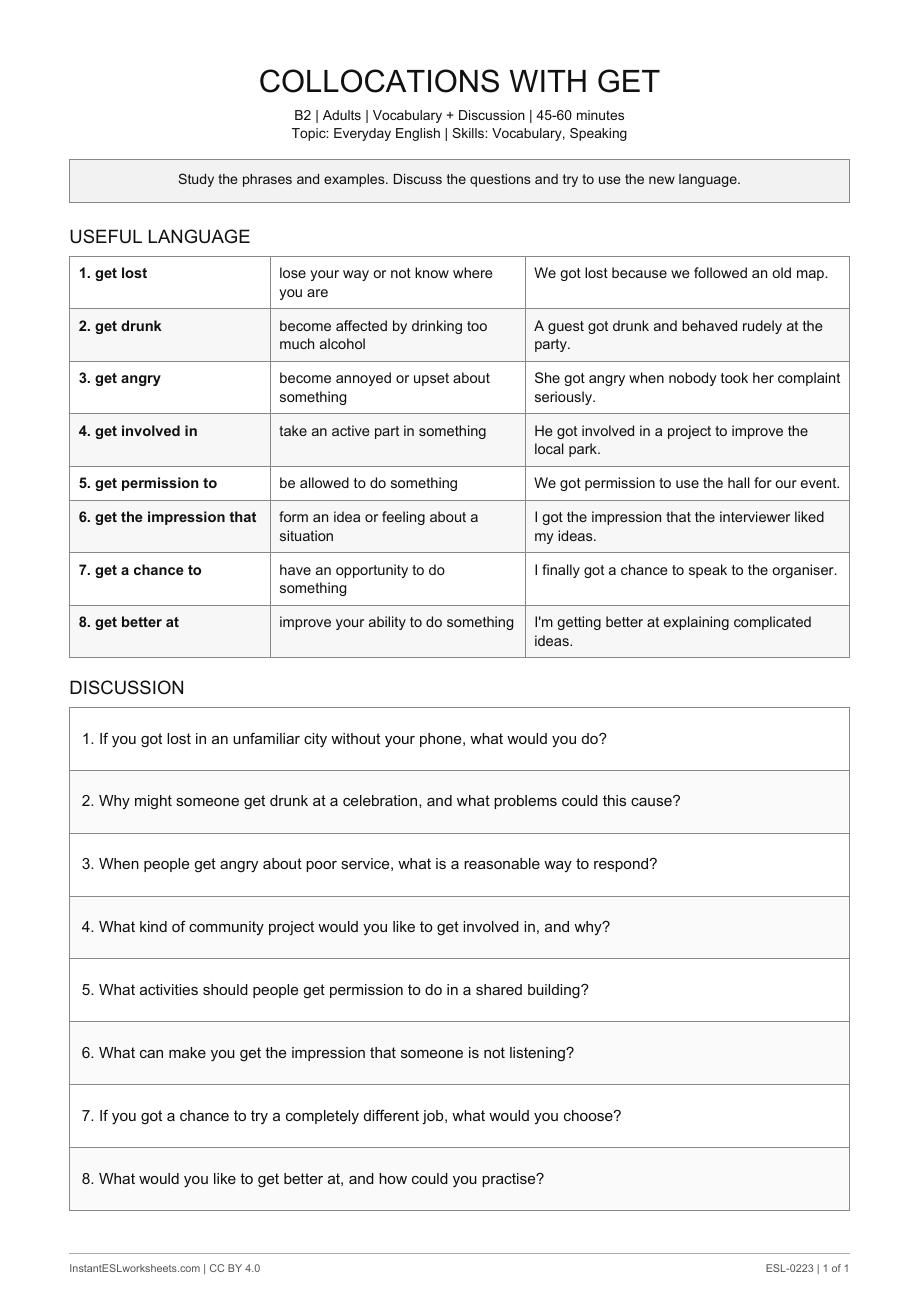
Practise eight common collocations with get, including get lost, get drunk, get angry. Use the meanings and examples to prepare for eight matching B2 discussion questions.
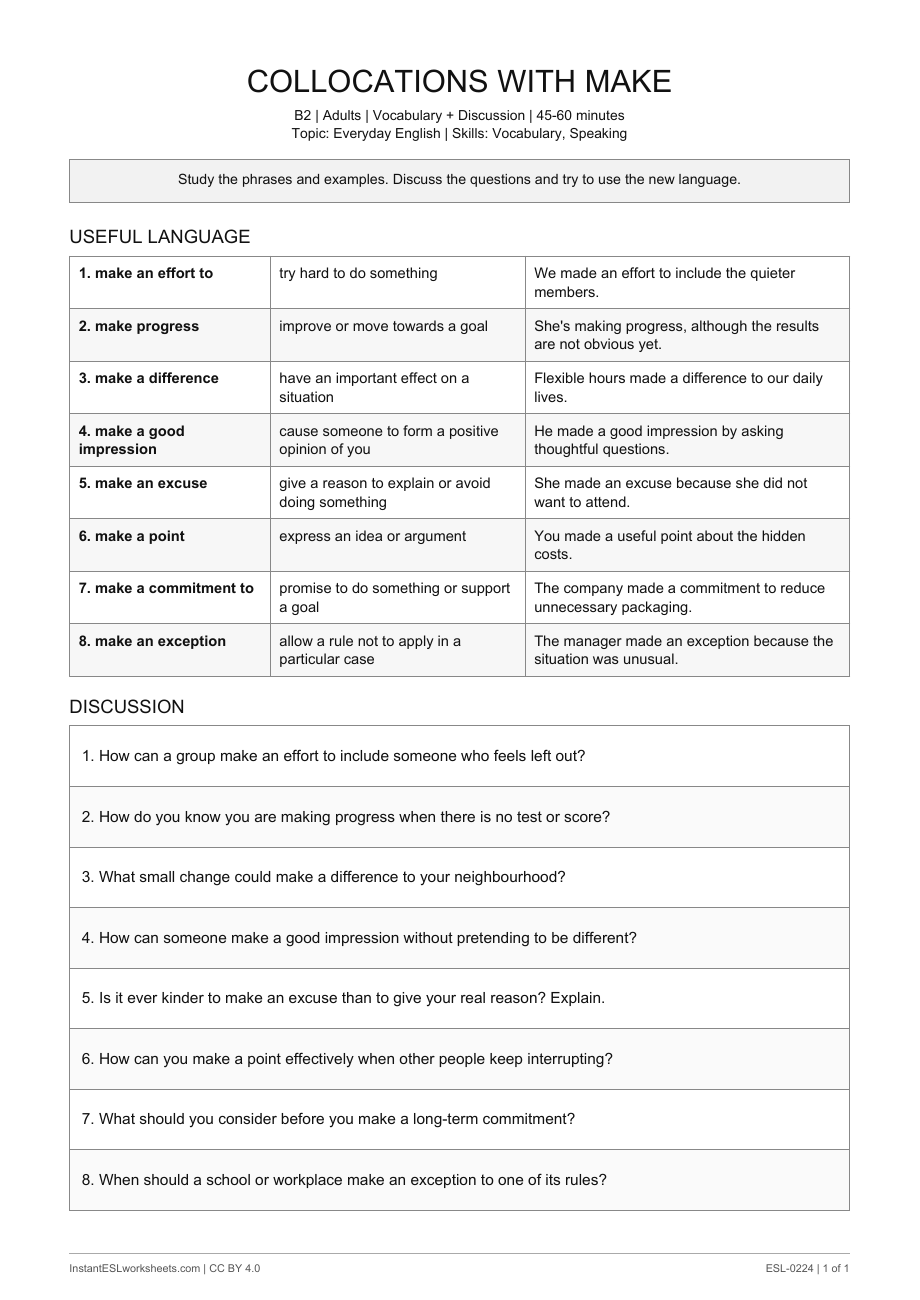
Practise eight common collocations with make, including make an effort to, make progress, make a difference. Use the meanings and examples to prepare for eight matching B2 discussion questions.
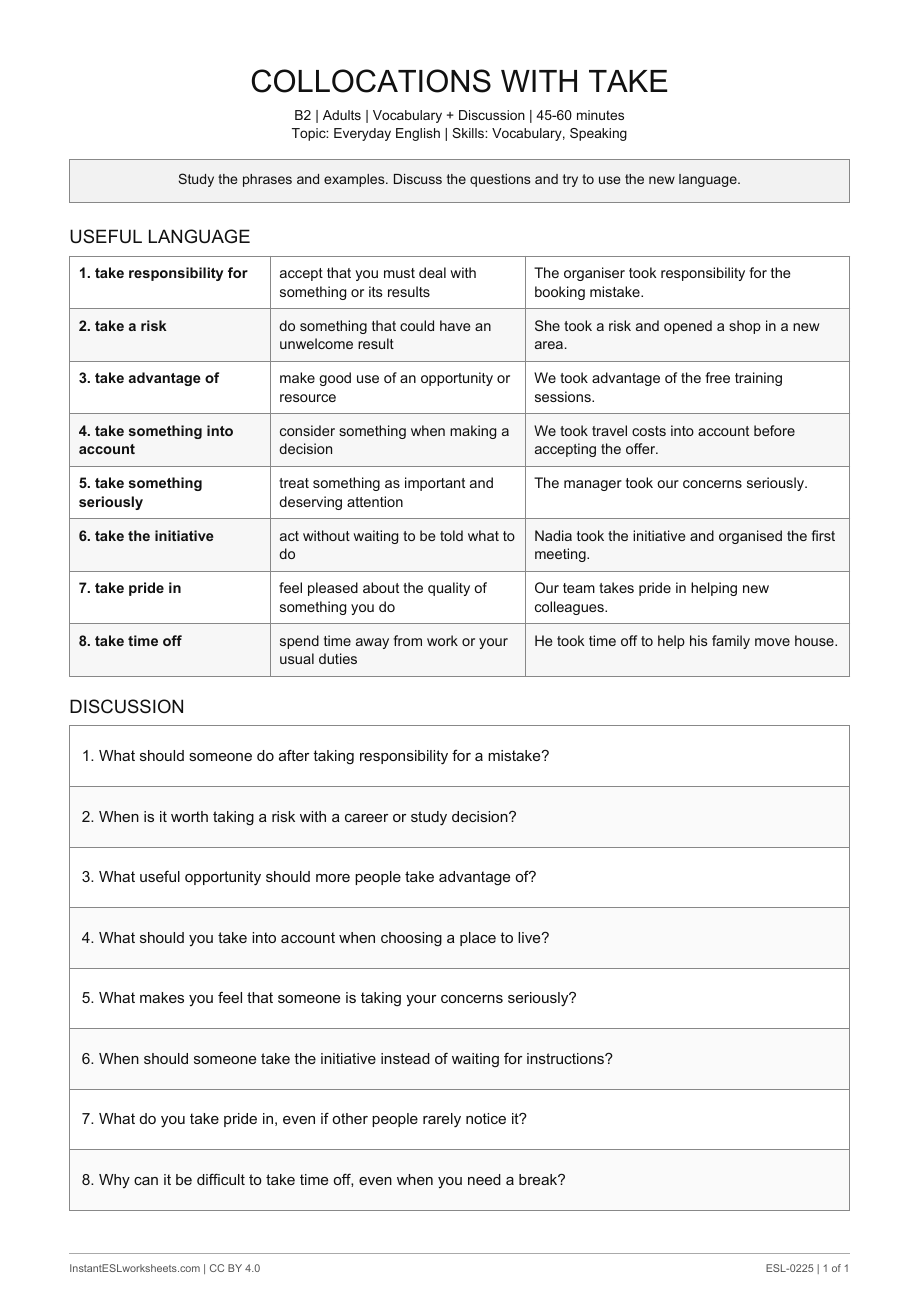
Practise eight common collocations with take, including take responsibility for, take a risk, take advantage of. Use the meanings and examples to prepare for eight matching B2 discussion questions.
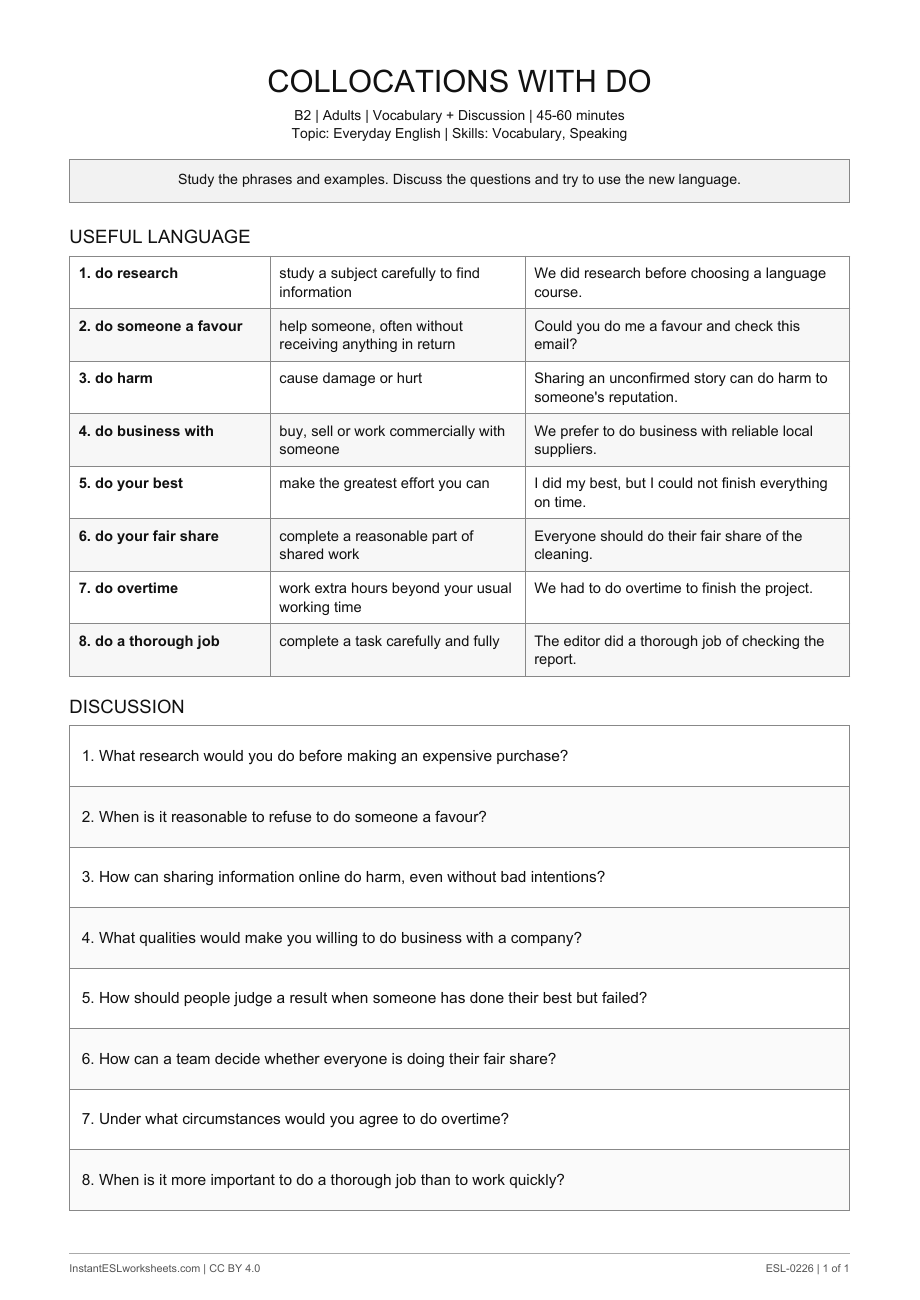
Practise eight common collocations with do, including do research, do someone a favour, do harm. Use the meanings and examples to prepare for eight matching B2 discussion questions.
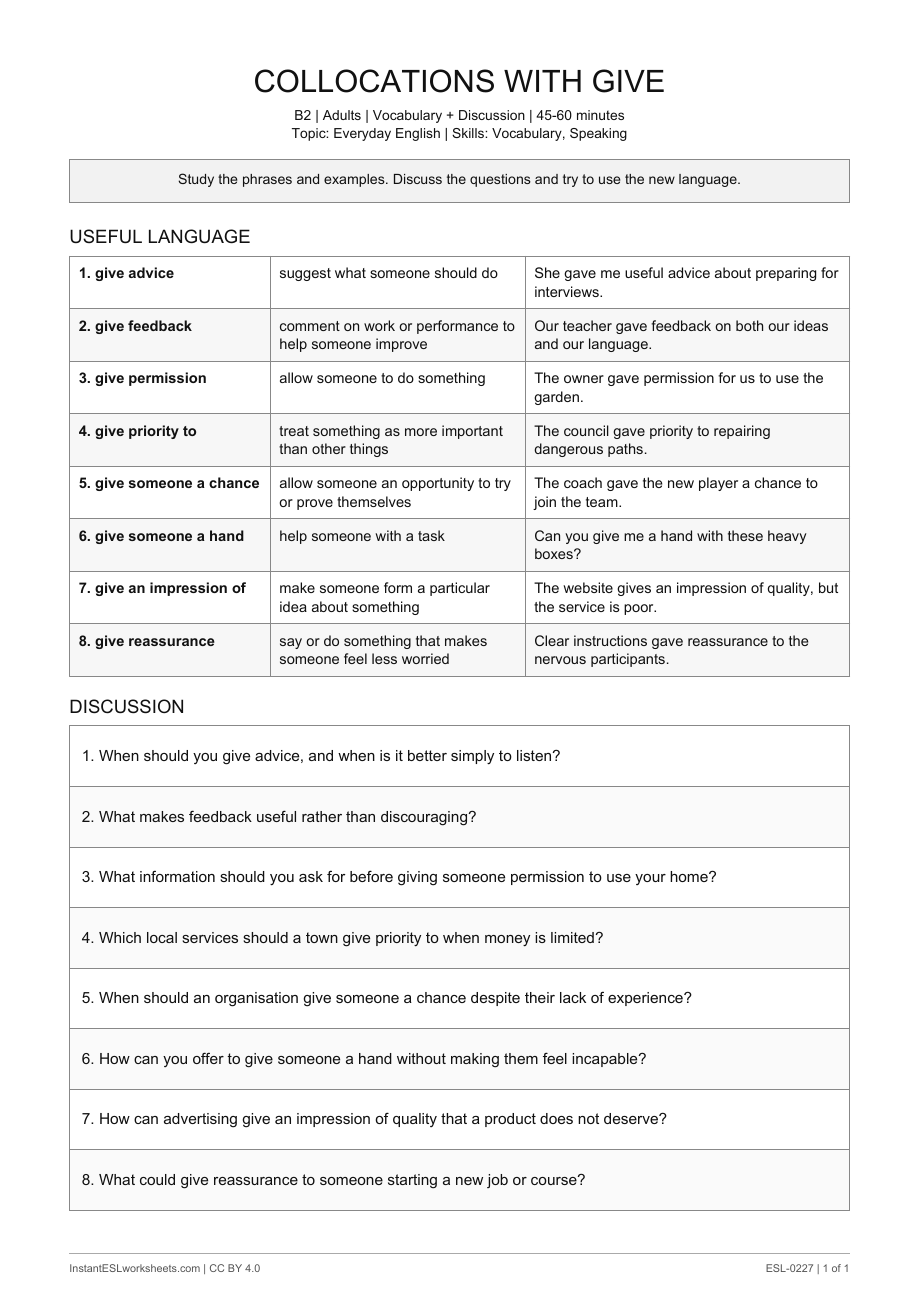
Practise eight common collocations with give, including give advice, give feedback, give permission. Use the meanings and examples to prepare for eight matching B2 discussion questions.
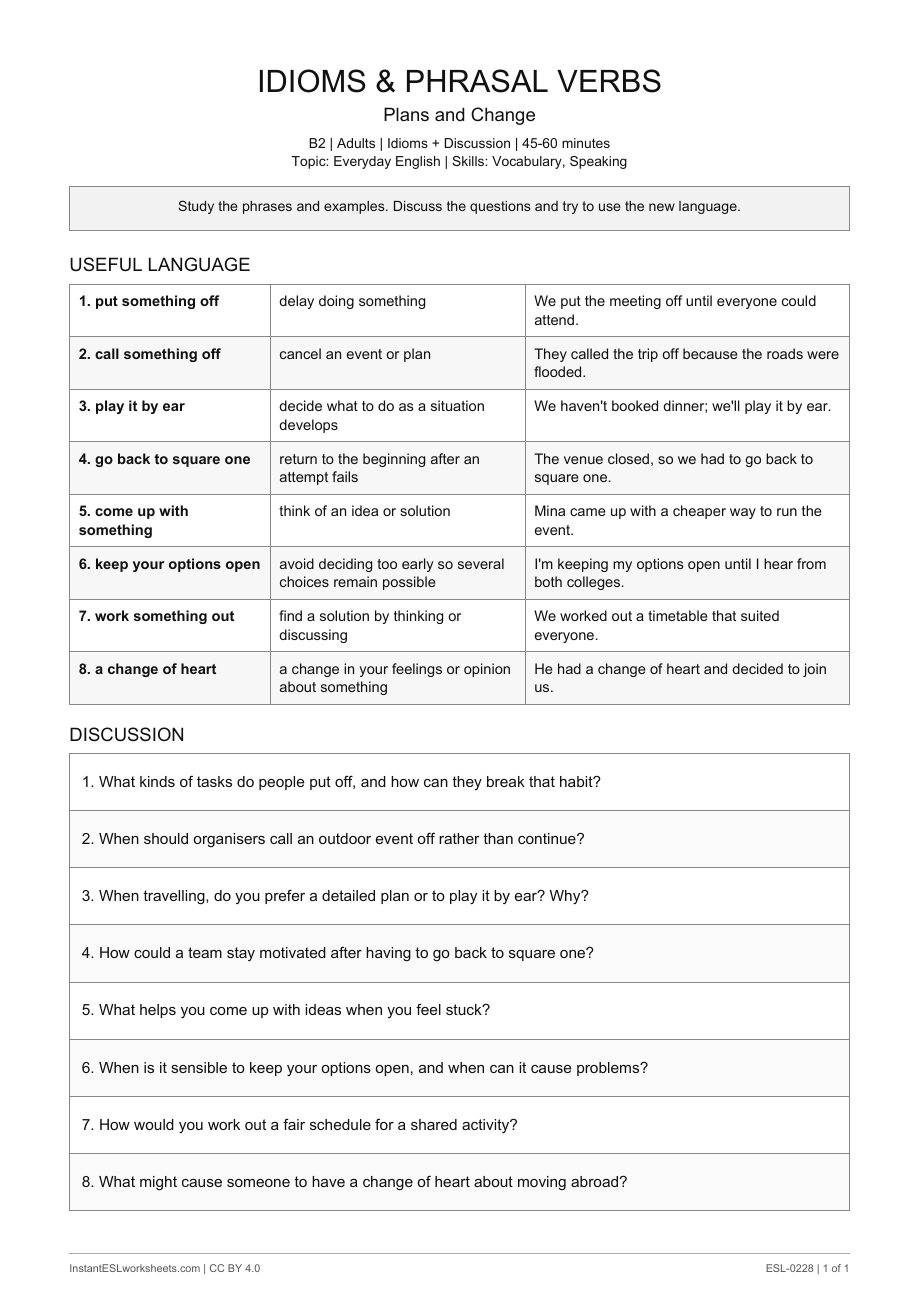
Explore plans and change with eight useful expressions, including put something off, call something off, play it by ear. Read the meanings and examples, then use the language in eight B2 discussion questions.
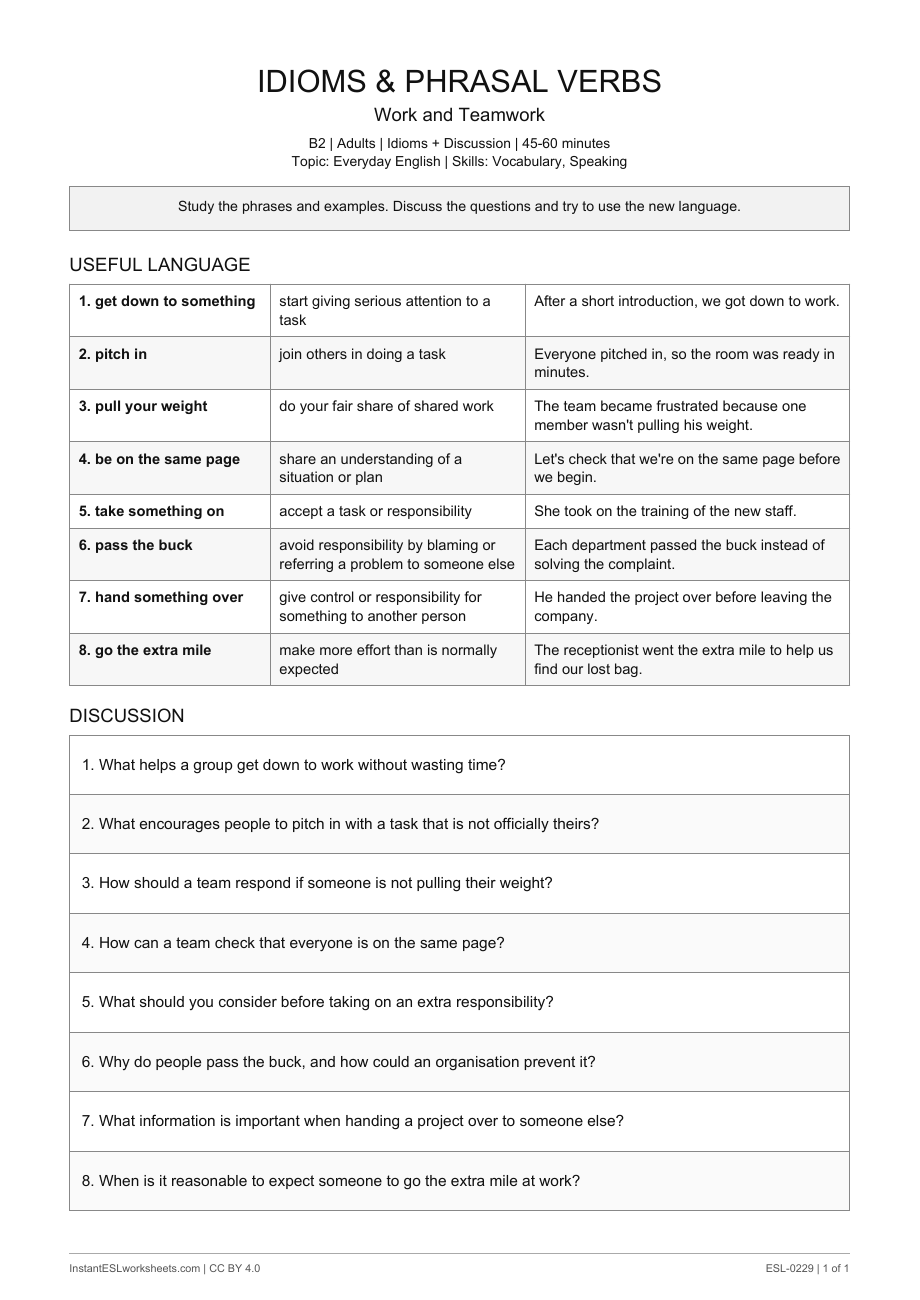
Explore work and teamwork with eight useful expressions, including get down to something, pitch in, pull your weight. Read the meanings and examples, then use the language in eight B2 discussion questions.
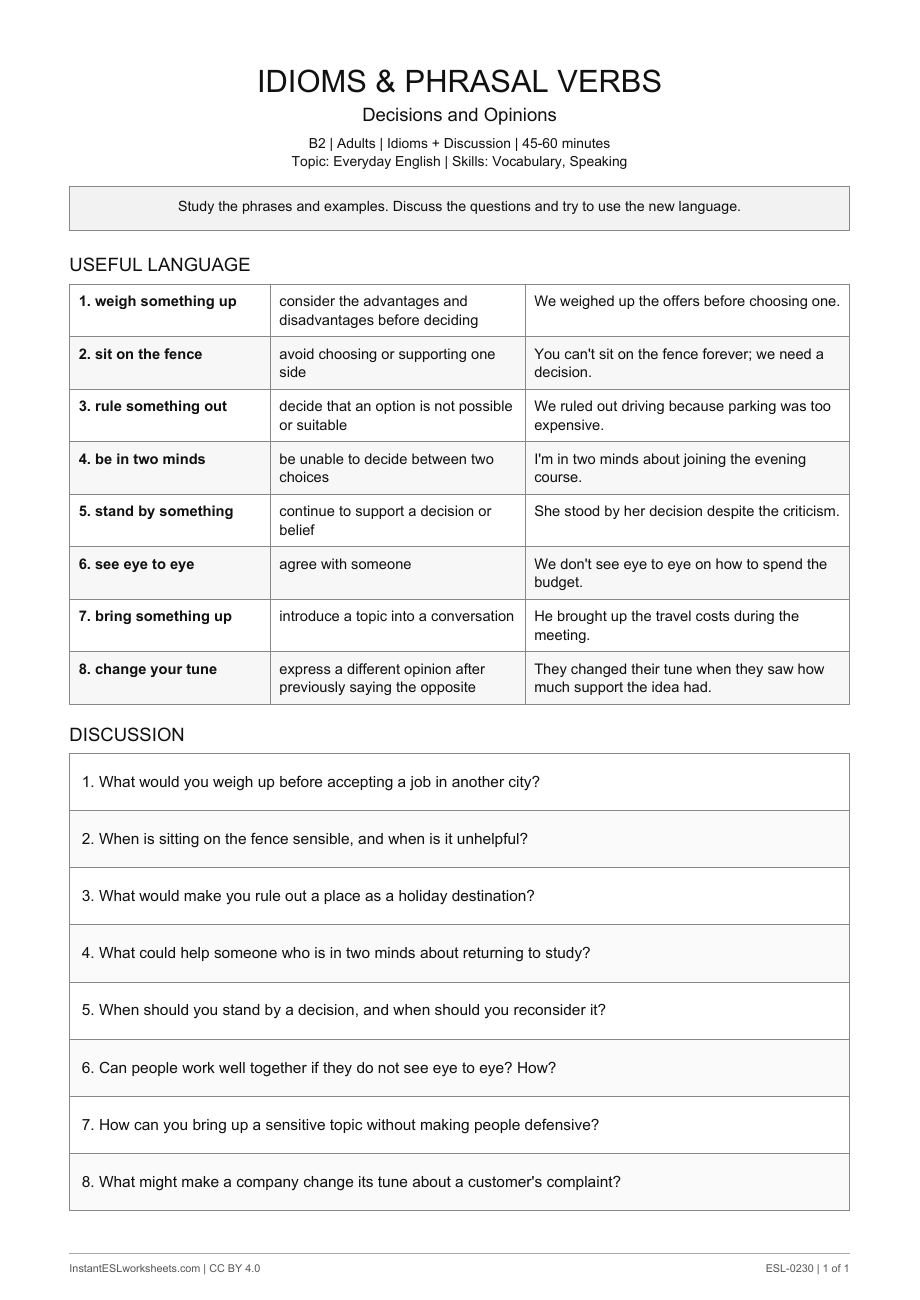
Explore decisions and opinions with eight useful expressions, including weigh something up, sit on the fence, rule something out. Read the meanings and examples, then use the language in eight B2 discussion questions.
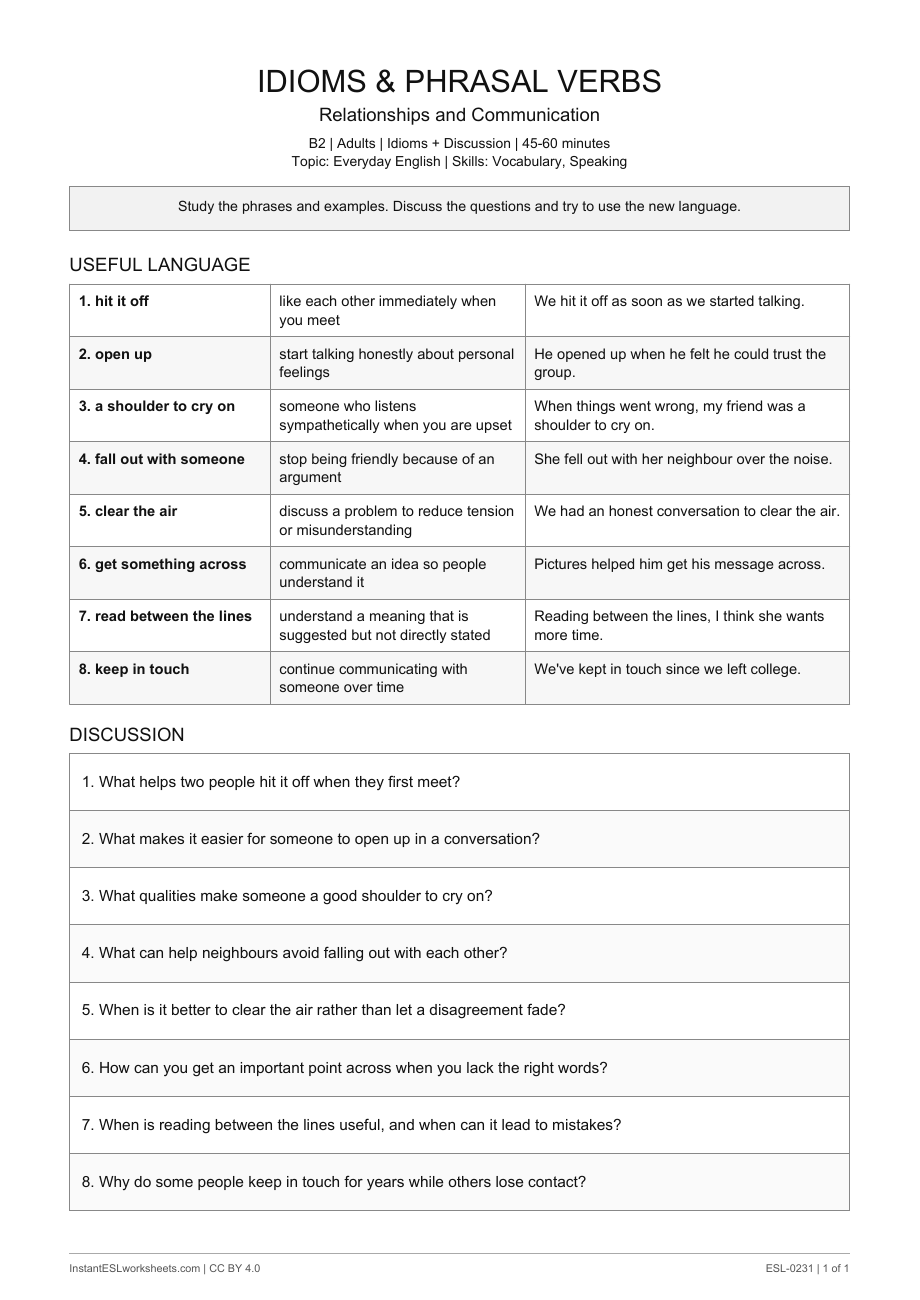
Explore relationships and communication with eight useful expressions, including hit it off, open up, a shoulder to cry on. Read the meanings and examples, then use the language in eight B2 discussion questions.
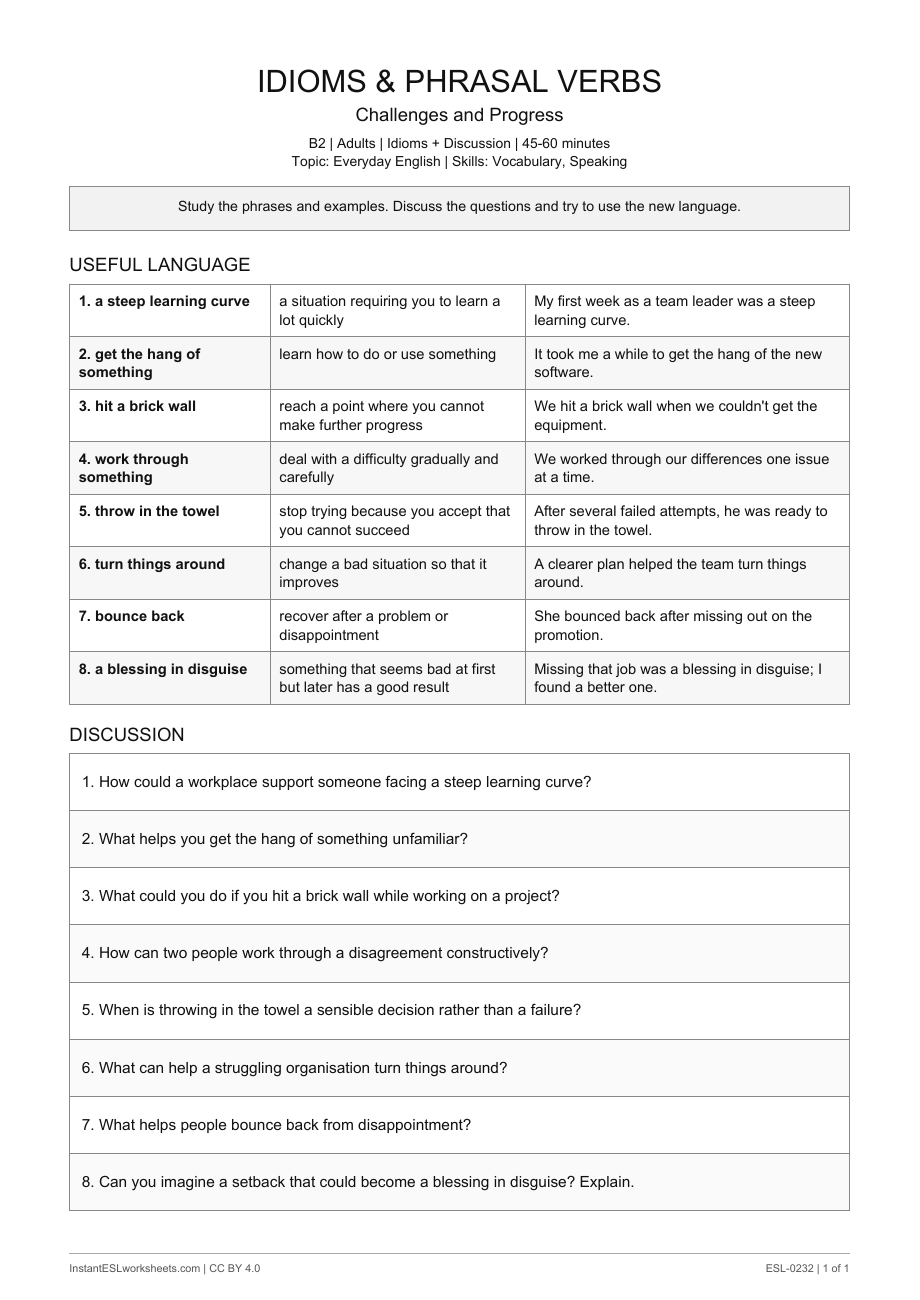
Explore challenges and progress with eight useful expressions, including a steep learning curve, get the hang of something, hit a brick wall. Read the meanings and examples, then use the language in eight B2 discussion questions.
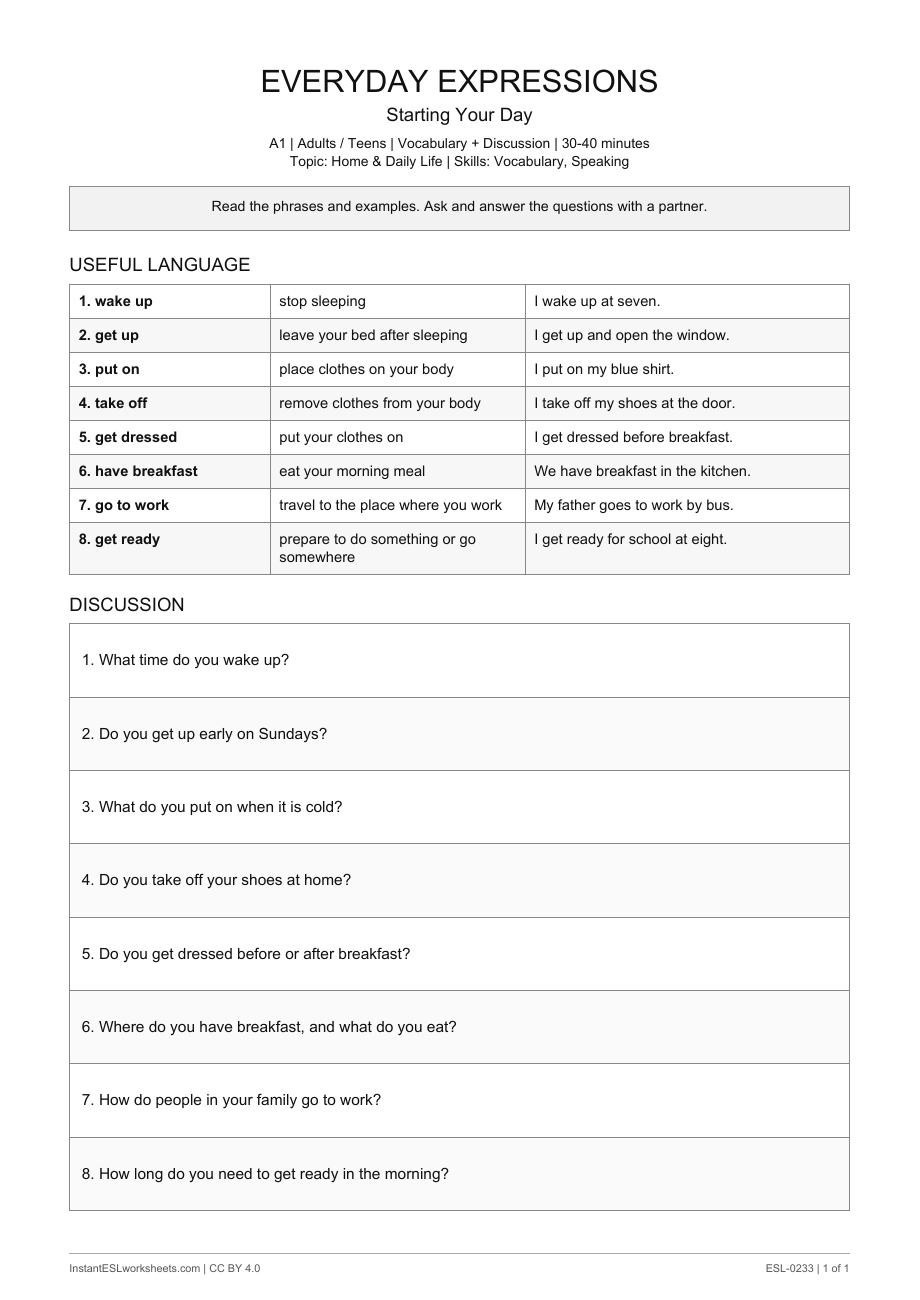
Explore starting your day with eight useful expressions, including wake up, get up, put on. Read the meanings and examples, then use the language in eight A1 discussion questions.
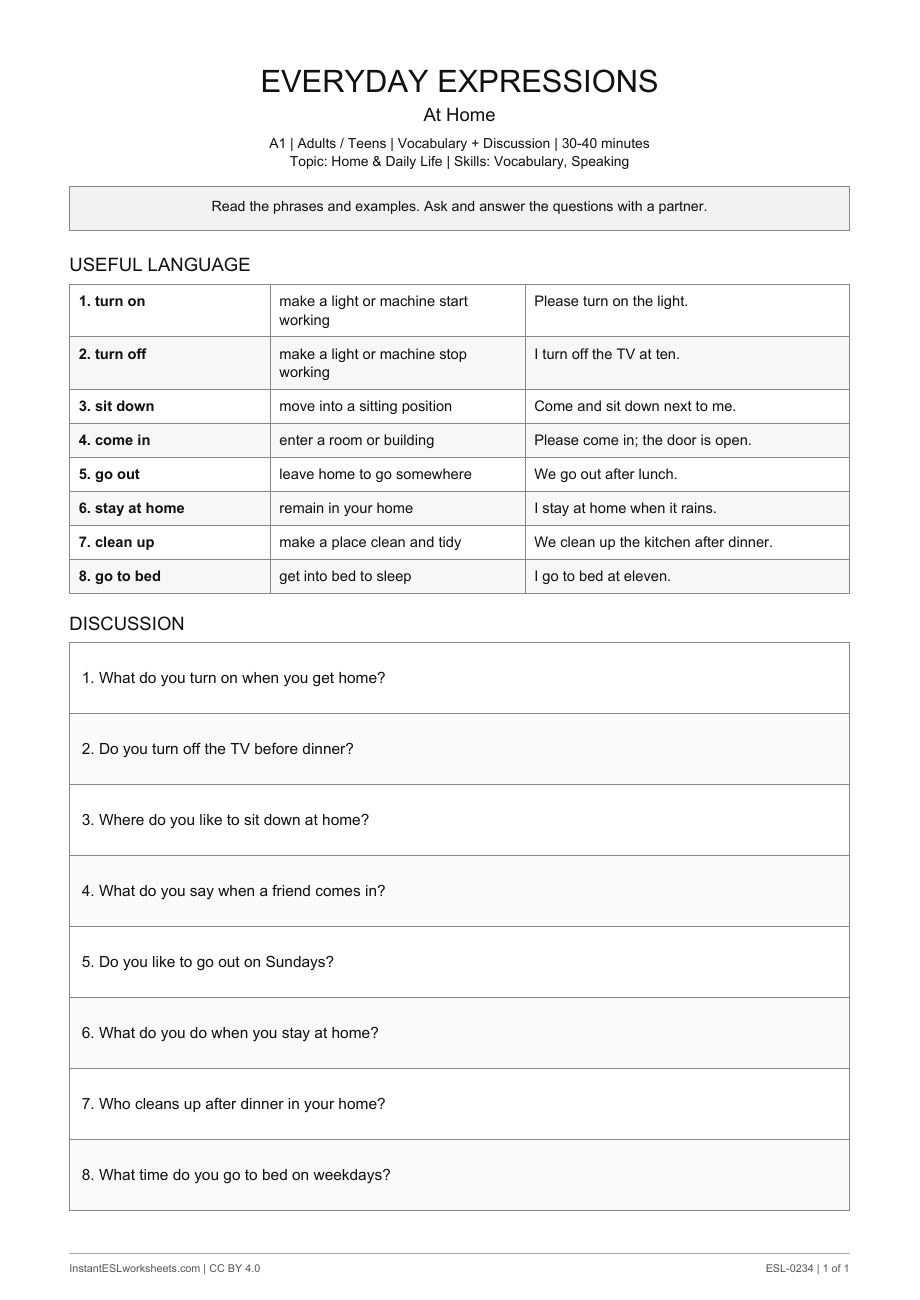
Explore at home with eight useful expressions, including turn on, turn off, sit down. Read the meanings and examples, then use the language in eight A1 discussion questions.
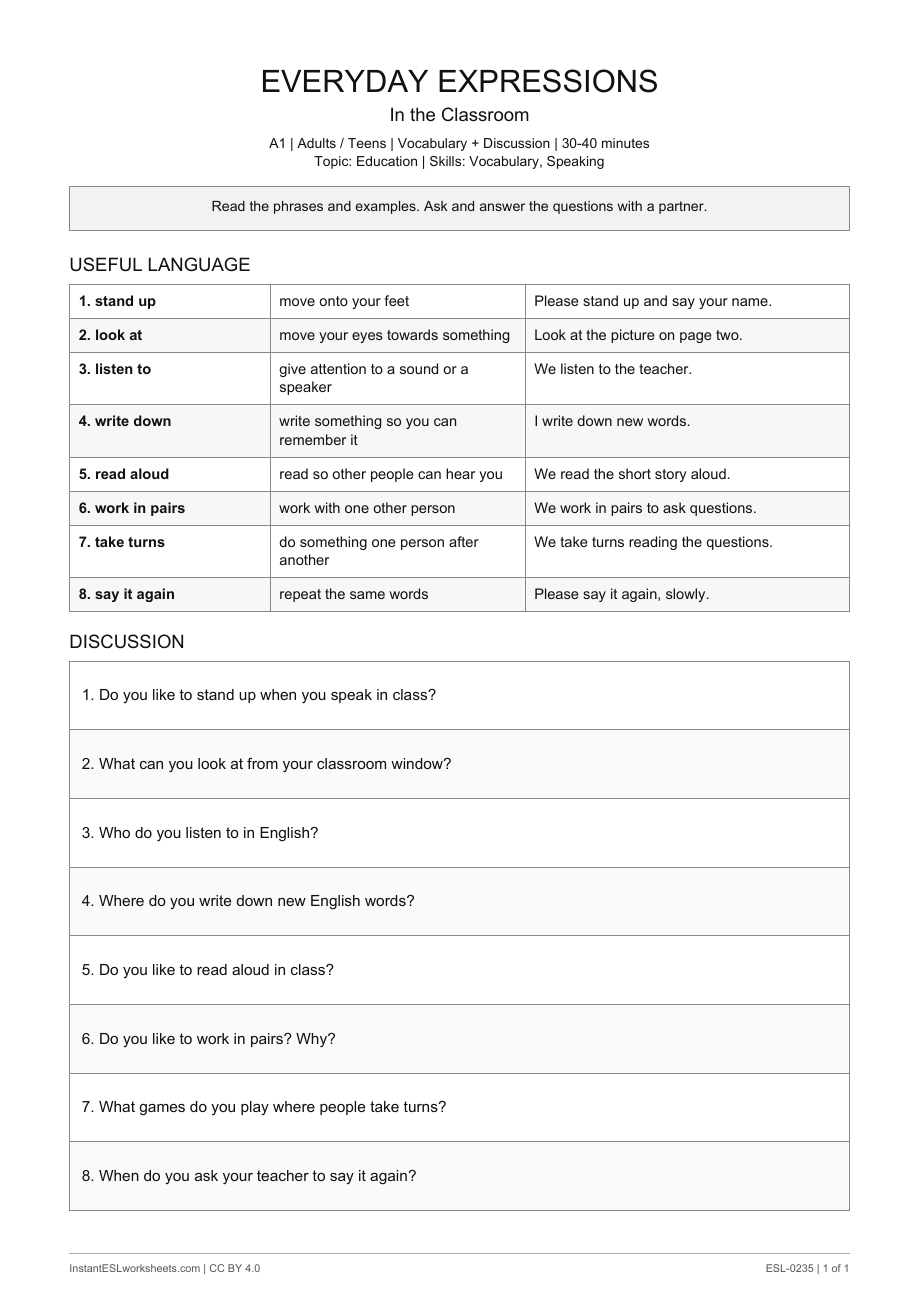
Explore in the classroom with eight useful expressions, including stand up, look at, listen to. Read the meanings and examples, then use the language in eight A1 discussion questions.
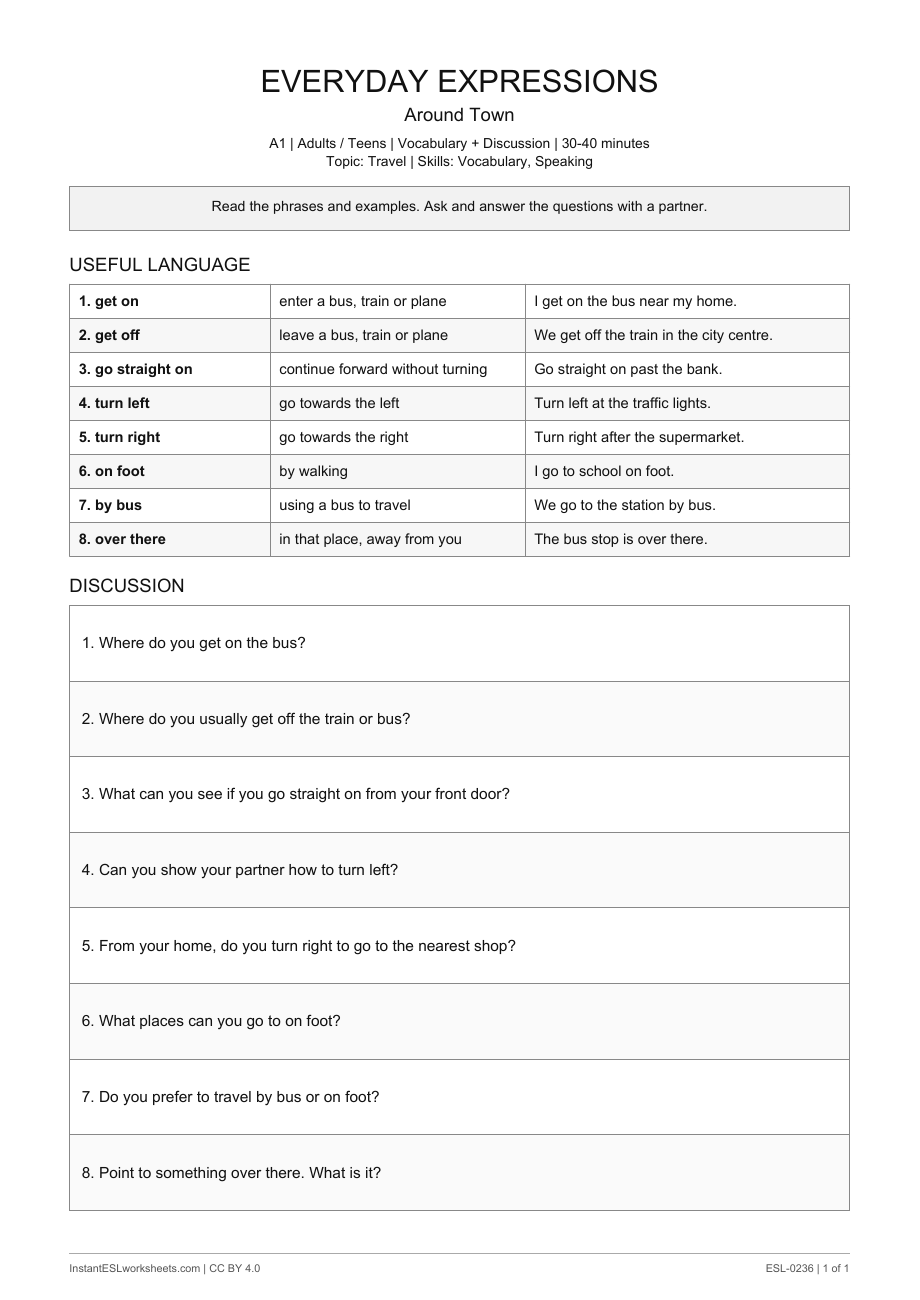
Explore around town with eight useful expressions, including get on, get off, go straight on. Read the meanings and examples, then use the language in eight A1 discussion questions.
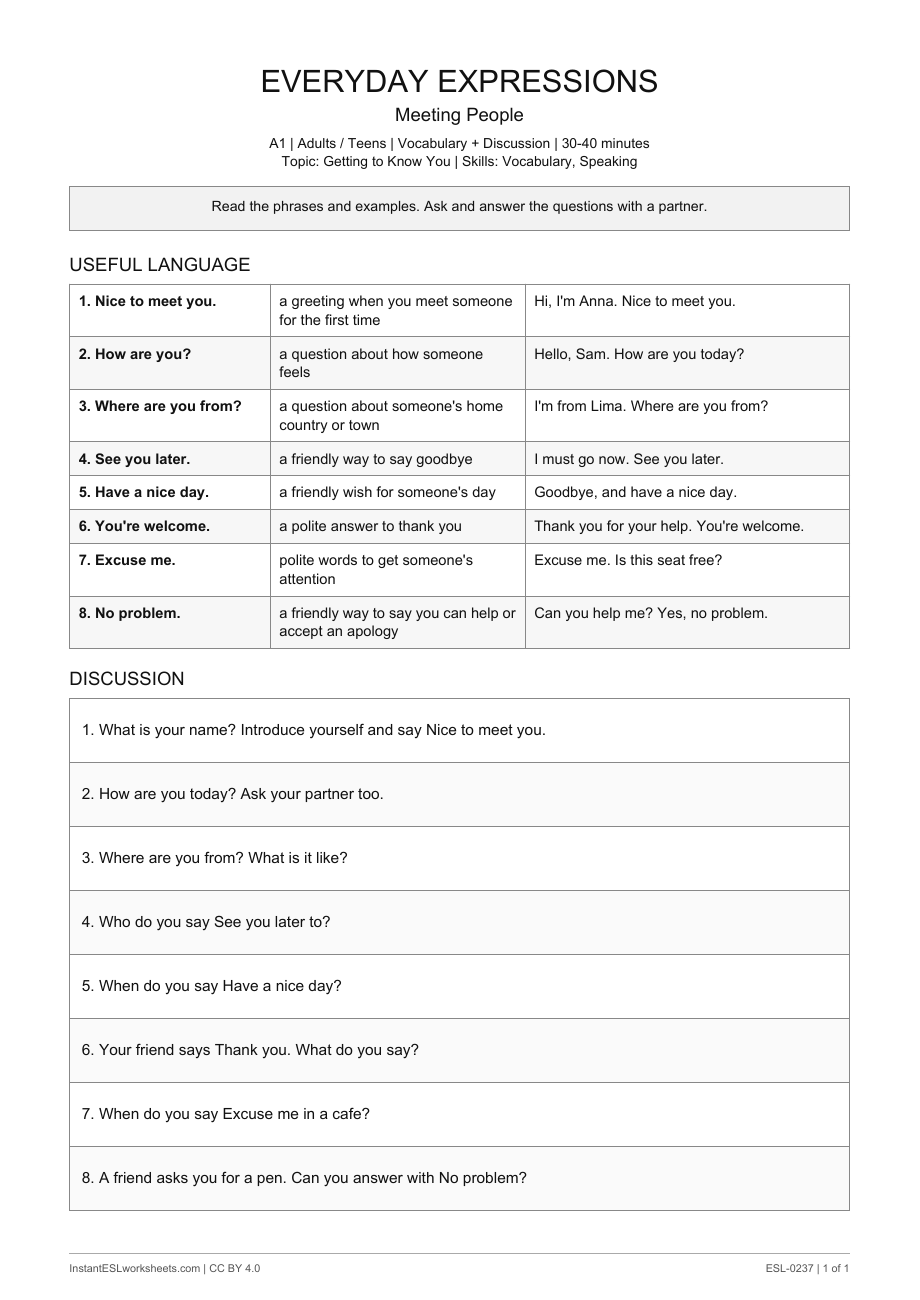
Explore meeting people with eight useful expressions, including Nice to meet you., How are you?, Where are you from?. Read the meanings and examples, then use the language in eight A1 discussion questions.
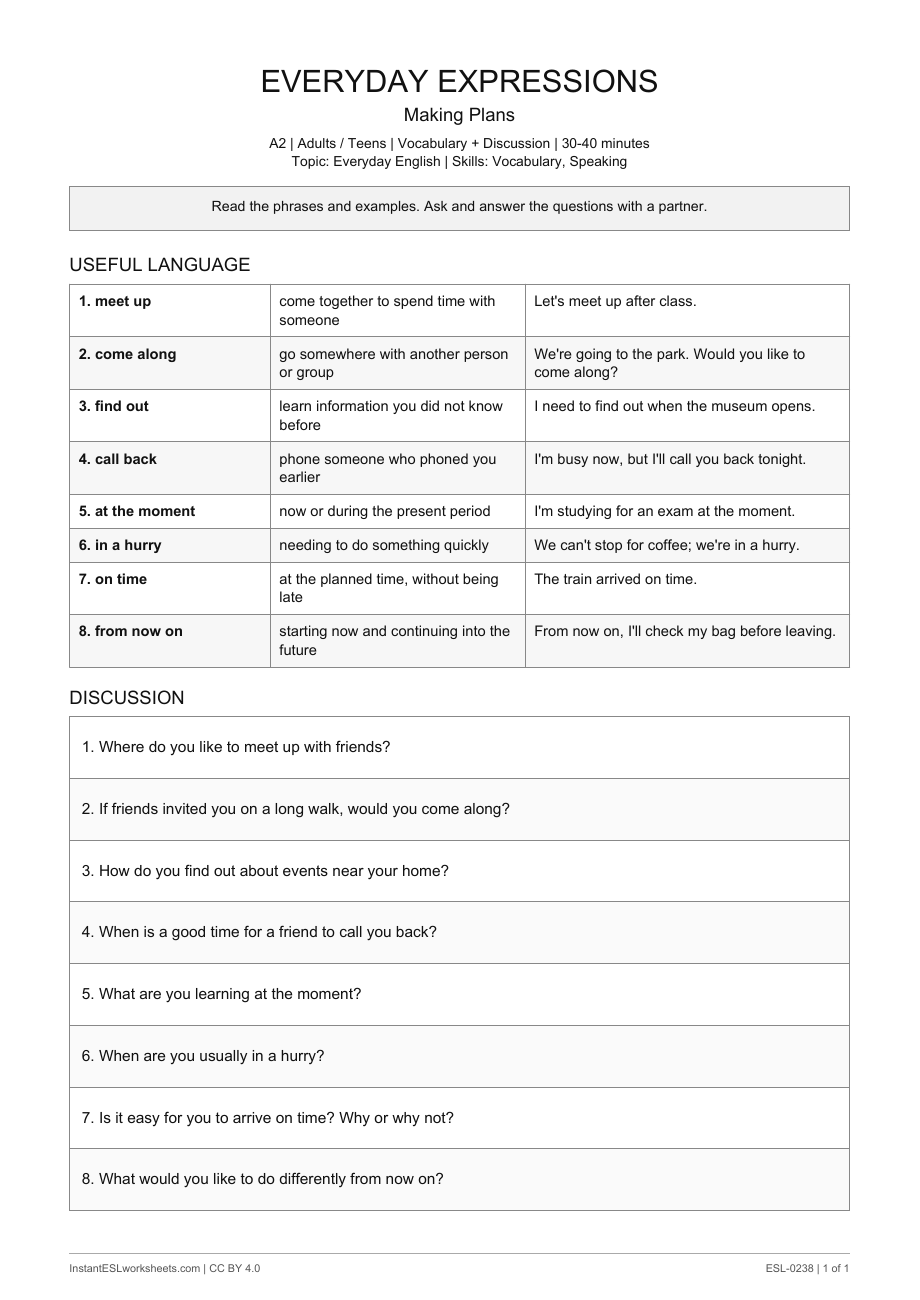
Explore making plans with eight useful expressions, including meet up, come along, find out. Read the meanings and examples, then use the language in eight A2 discussion questions.
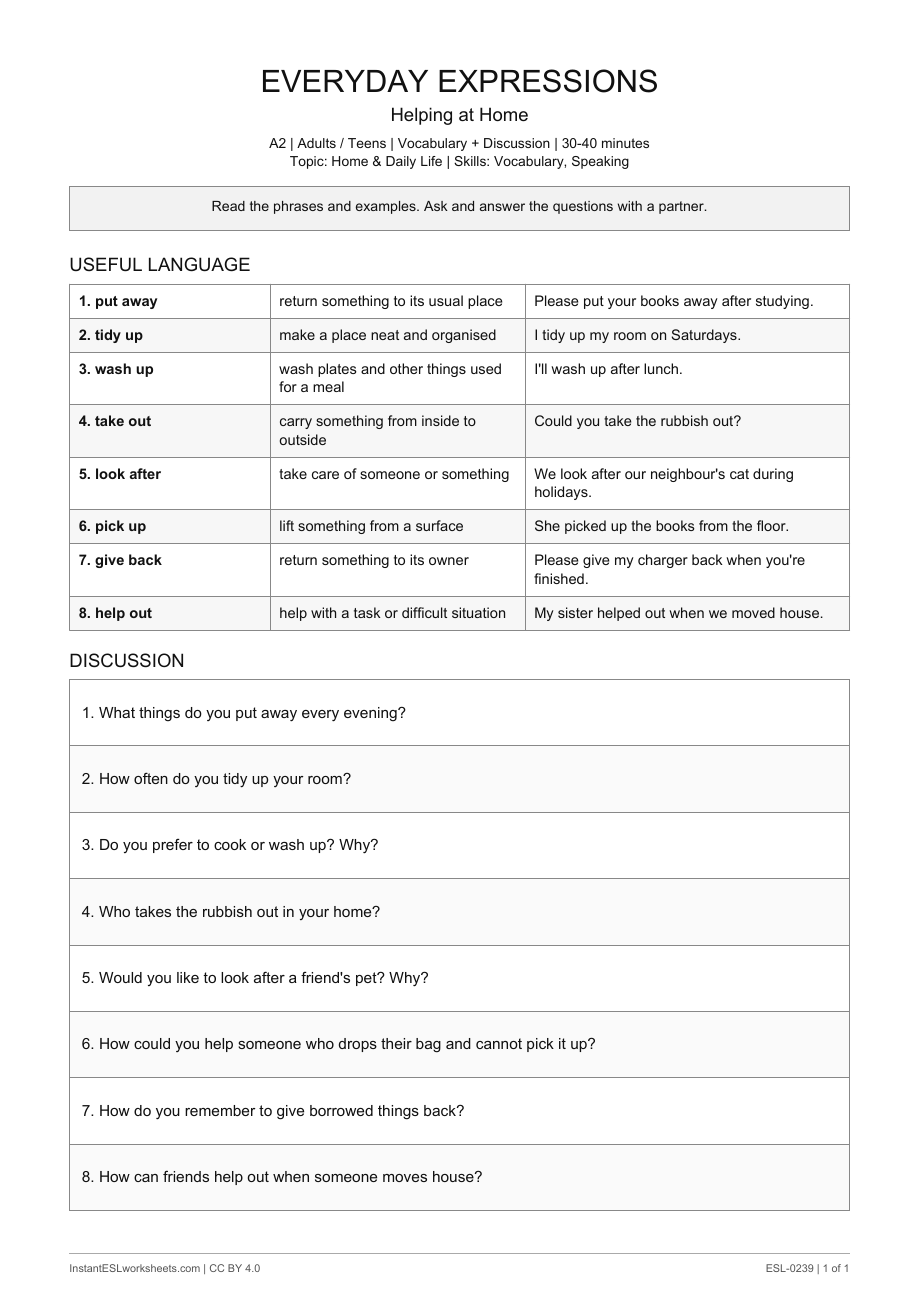
Explore helping at home with eight useful expressions, including put away, tidy up, wash up. Read the meanings and examples, then use the language in eight A2 discussion questions.
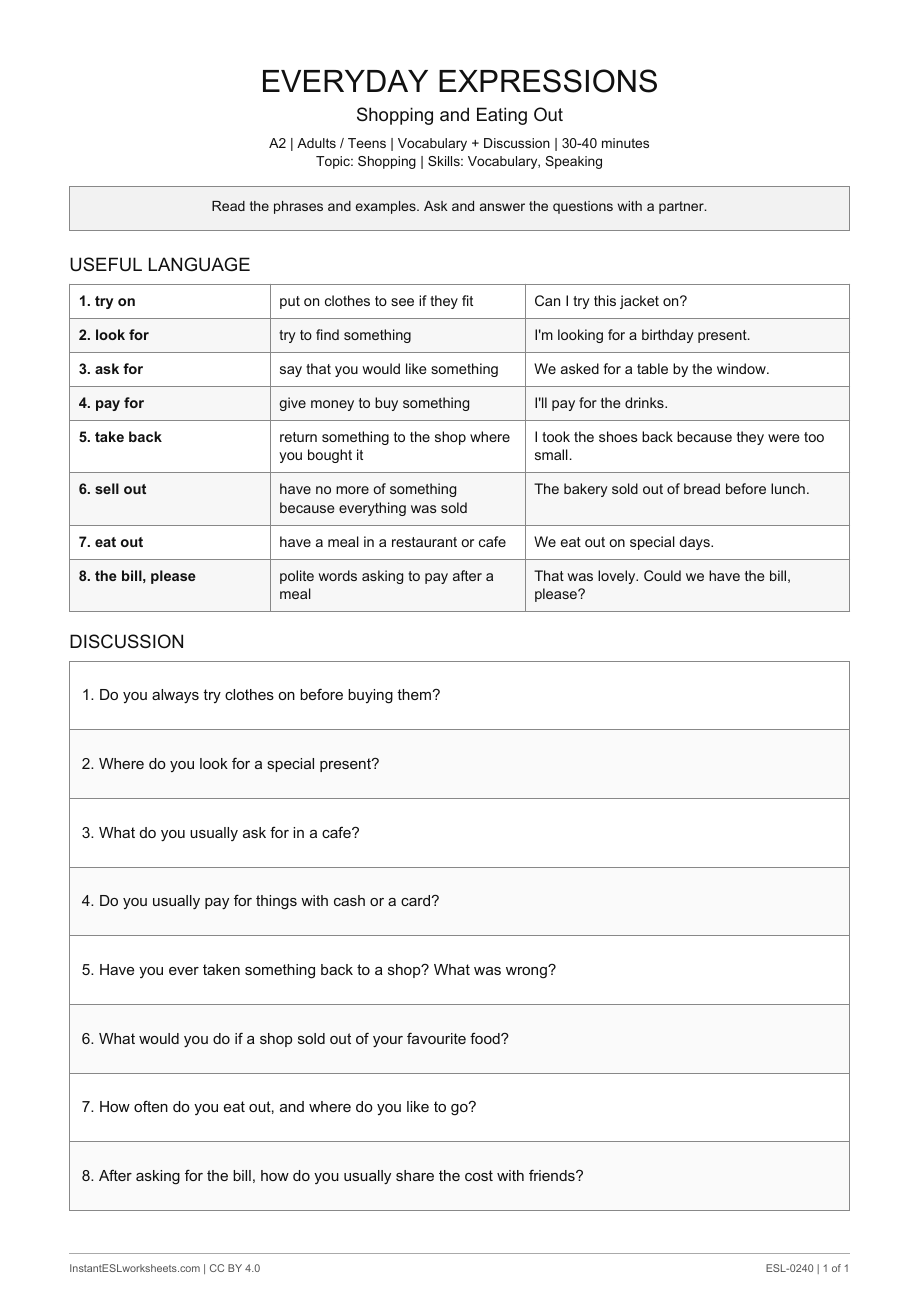
Explore shopping and eating out with eight useful expressions, including try on, look for, ask for. Read the meanings and examples, then use the language in eight A2 discussion questions.
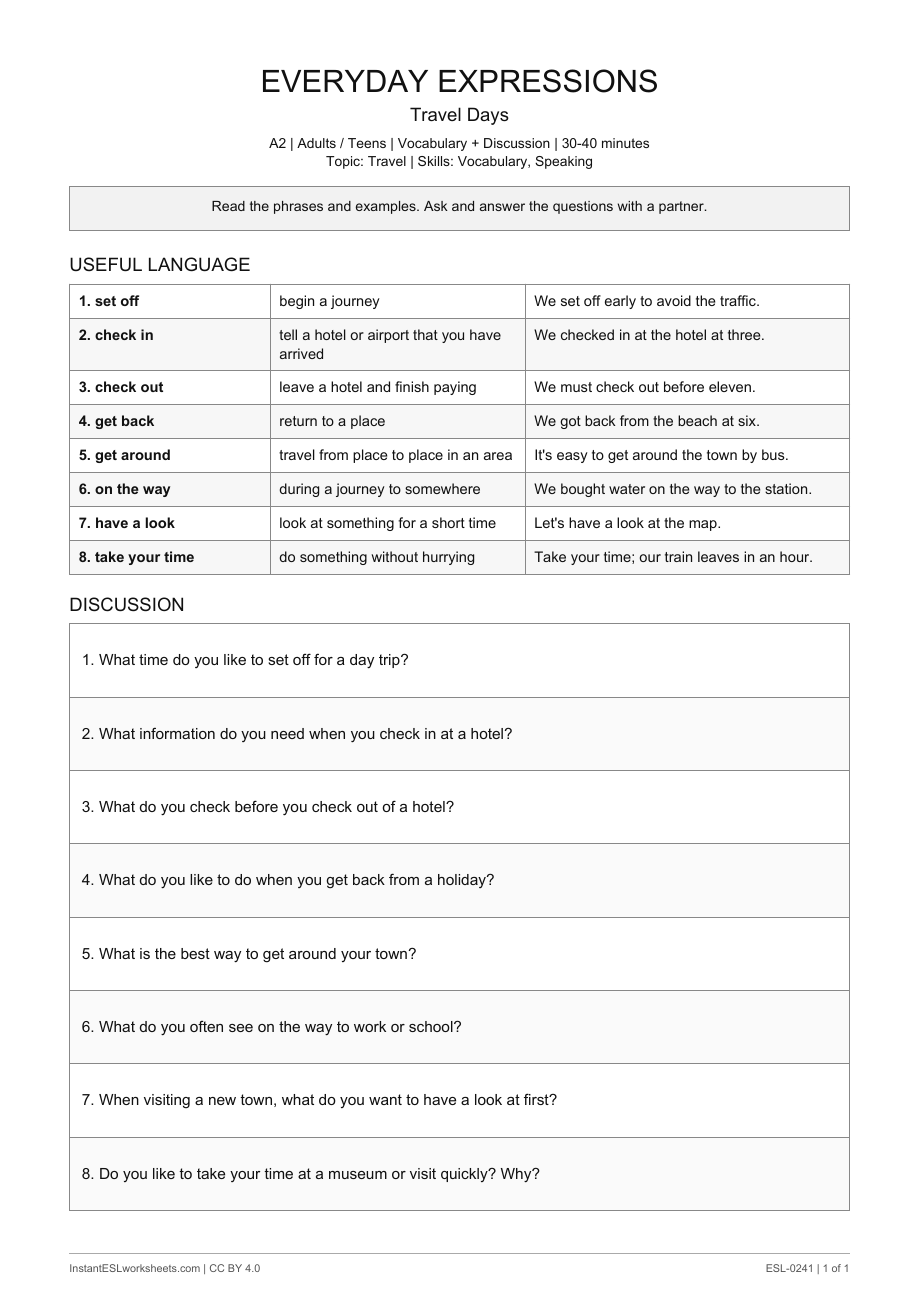
Explore travel days with eight useful expressions, including set off, check in, check out. Read the meanings and examples, then use the language in eight A2 discussion questions.
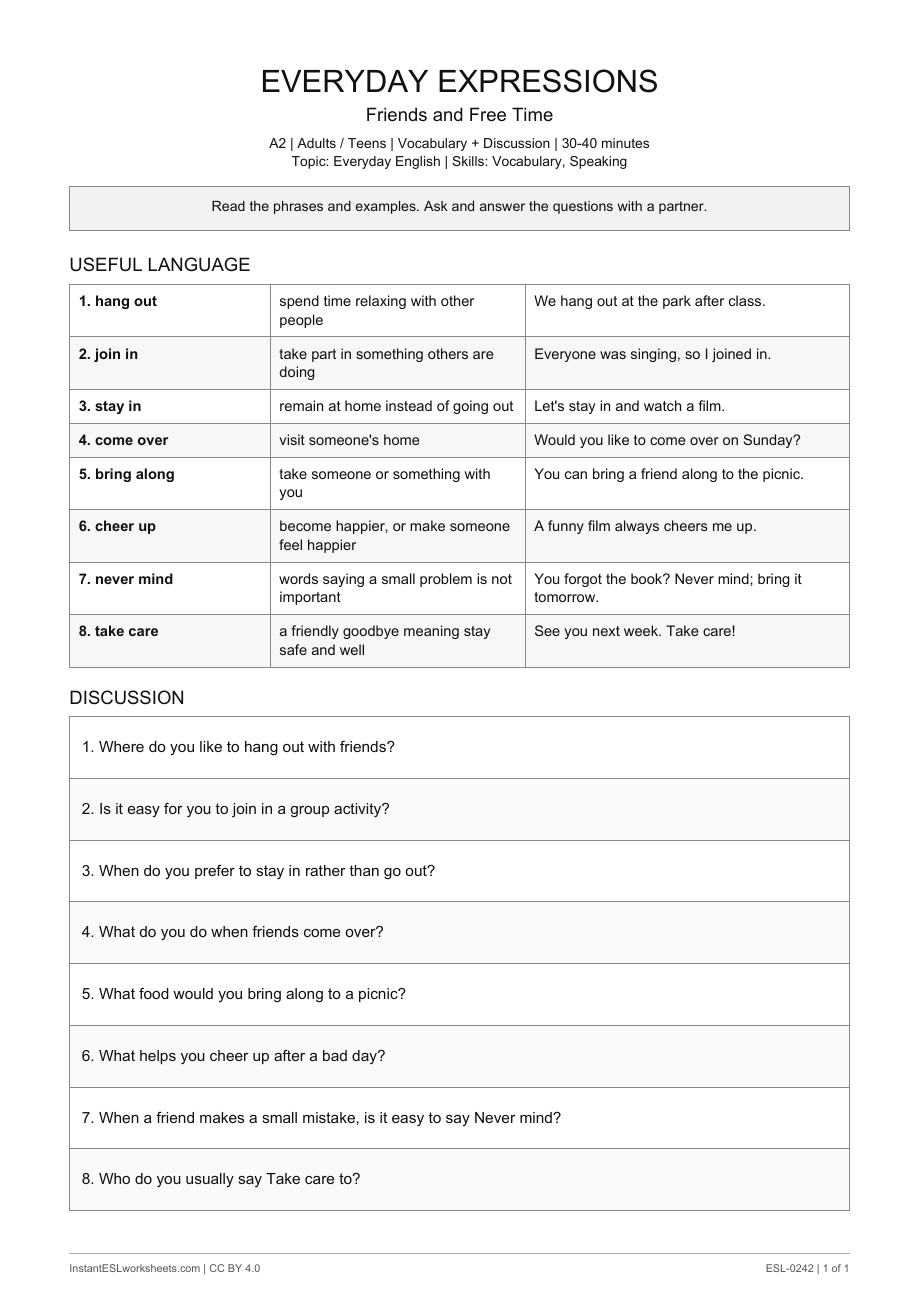
Explore friends and free time with eight useful expressions, including hang out, join in, stay in. Read the meanings and examples, then use the language in eight A2 discussion questions.
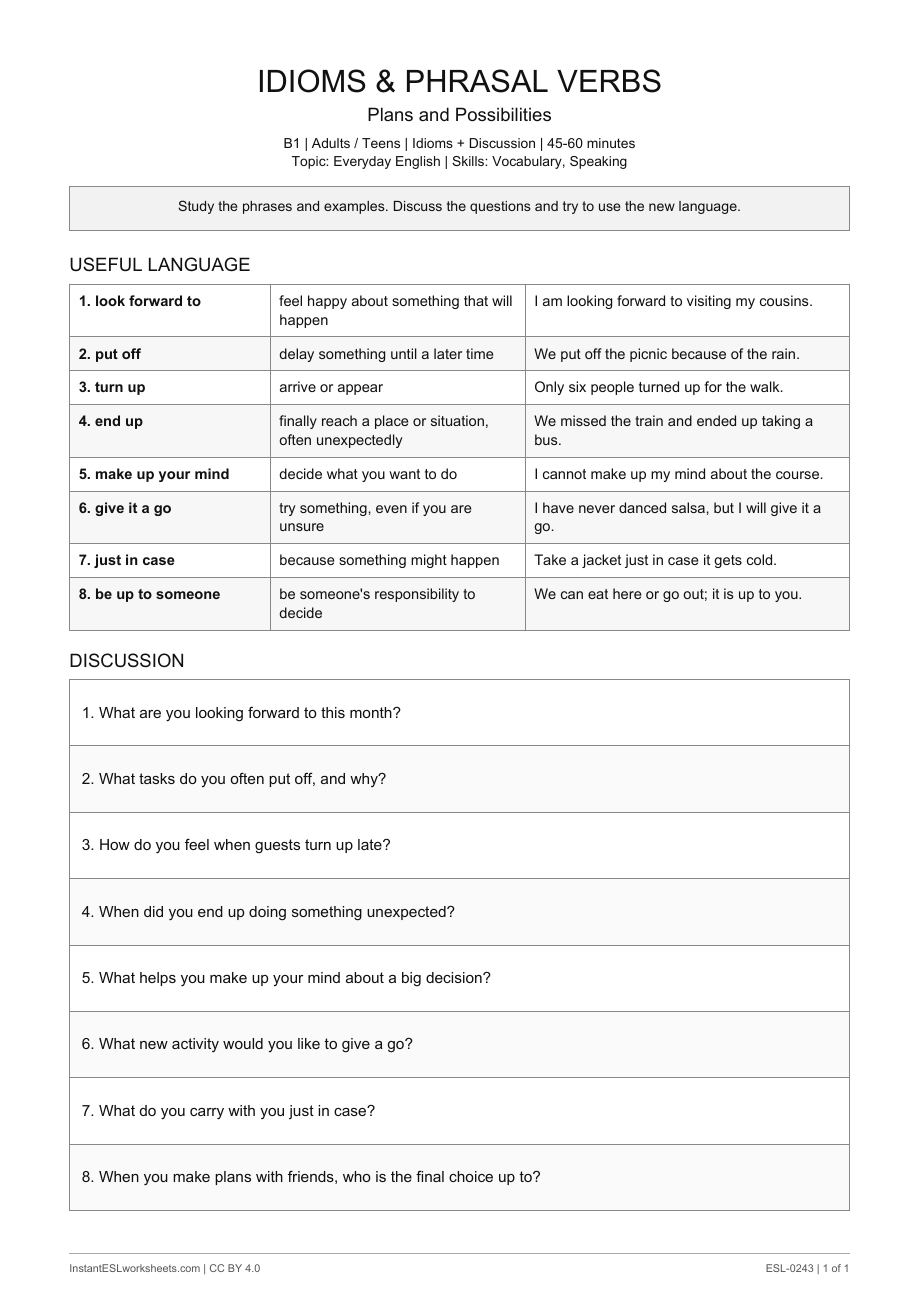
Explore plans and possibilities with eight useful expressions, including look forward to, put off, turn up. Read the meanings and examples, then use the language in eight B1 discussion questions.
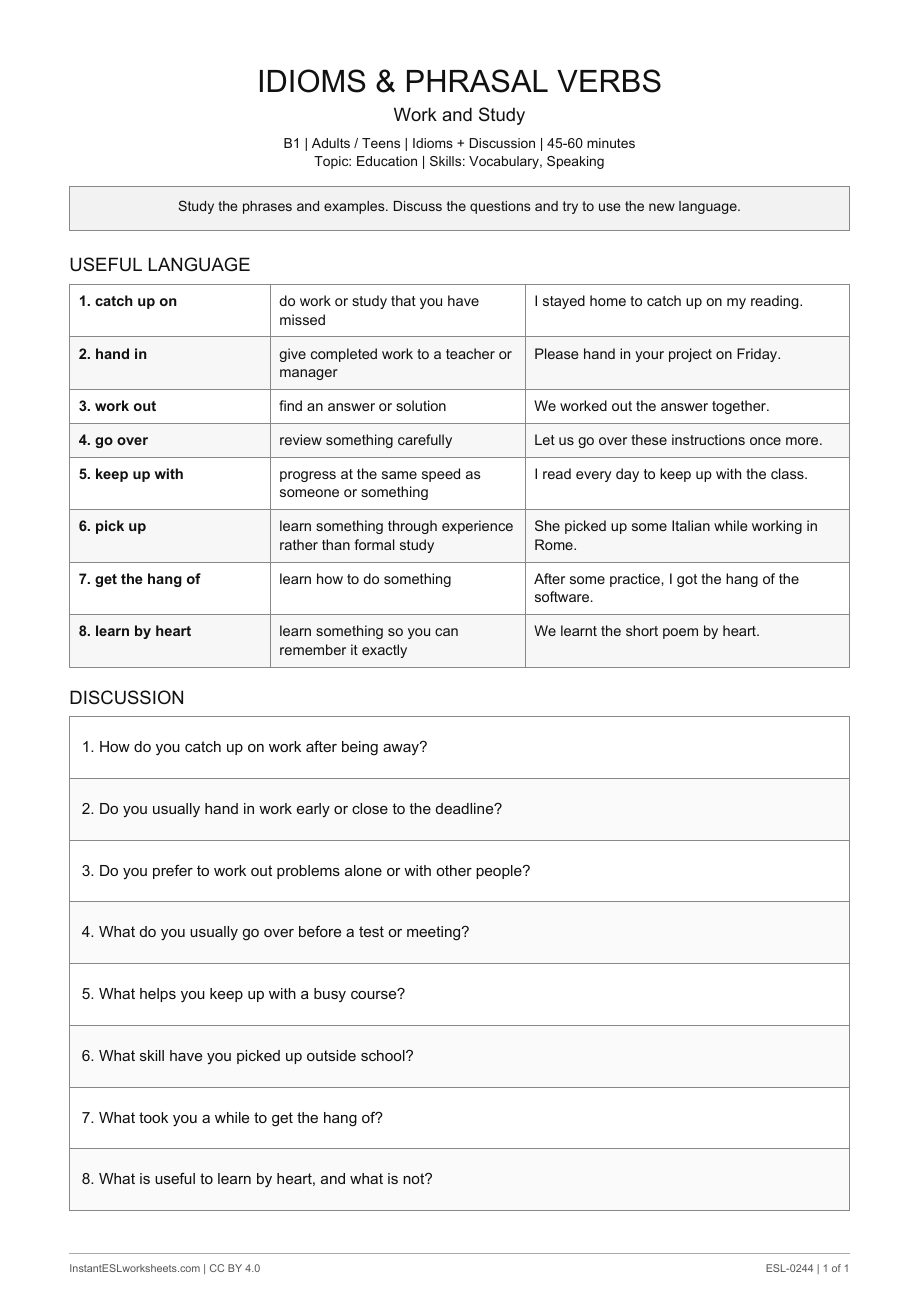
Explore work and study with eight useful expressions, including catch up on, hand in, work out. Read the meanings and examples, then use the language in eight B1 discussion questions.
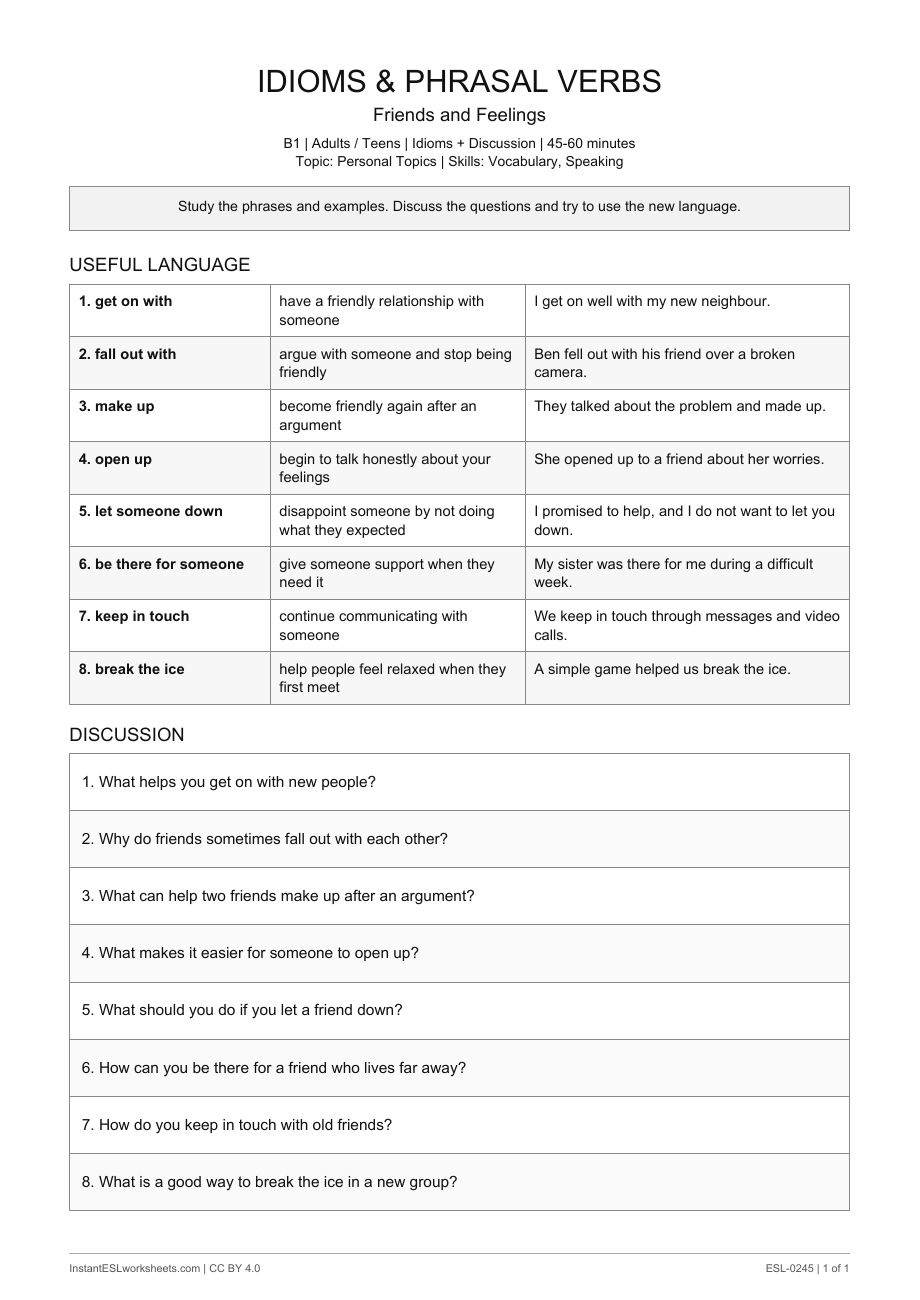
Explore friends and feelings with eight useful expressions, including get on with, fall out with, make up. Read the meanings and examples, then use the language in eight B1 discussion questions.
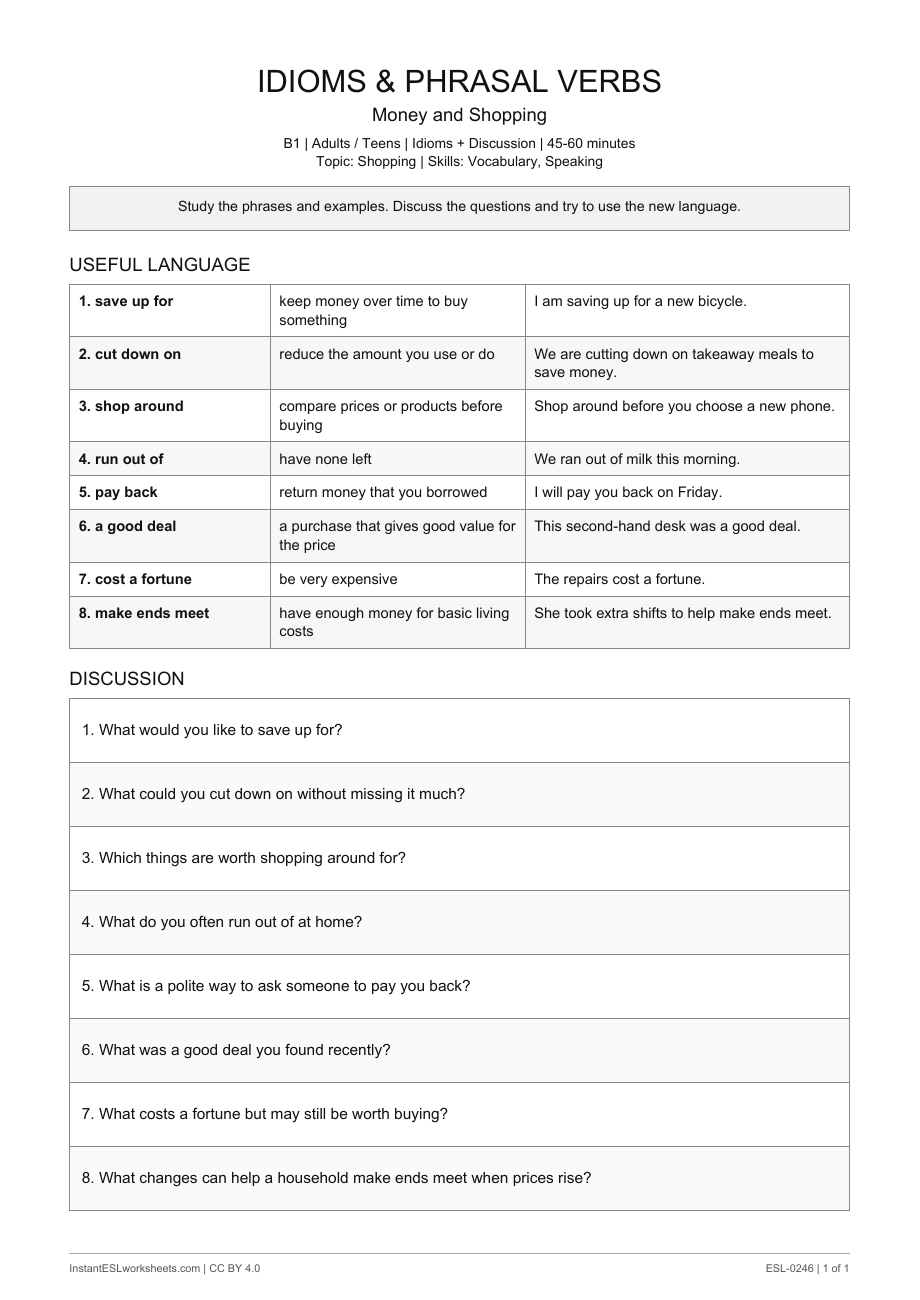
Explore money and shopping with eight useful expressions, including save up for, cut down on, shop around. Read the meanings and examples, then use the language in eight B1 discussion questions.
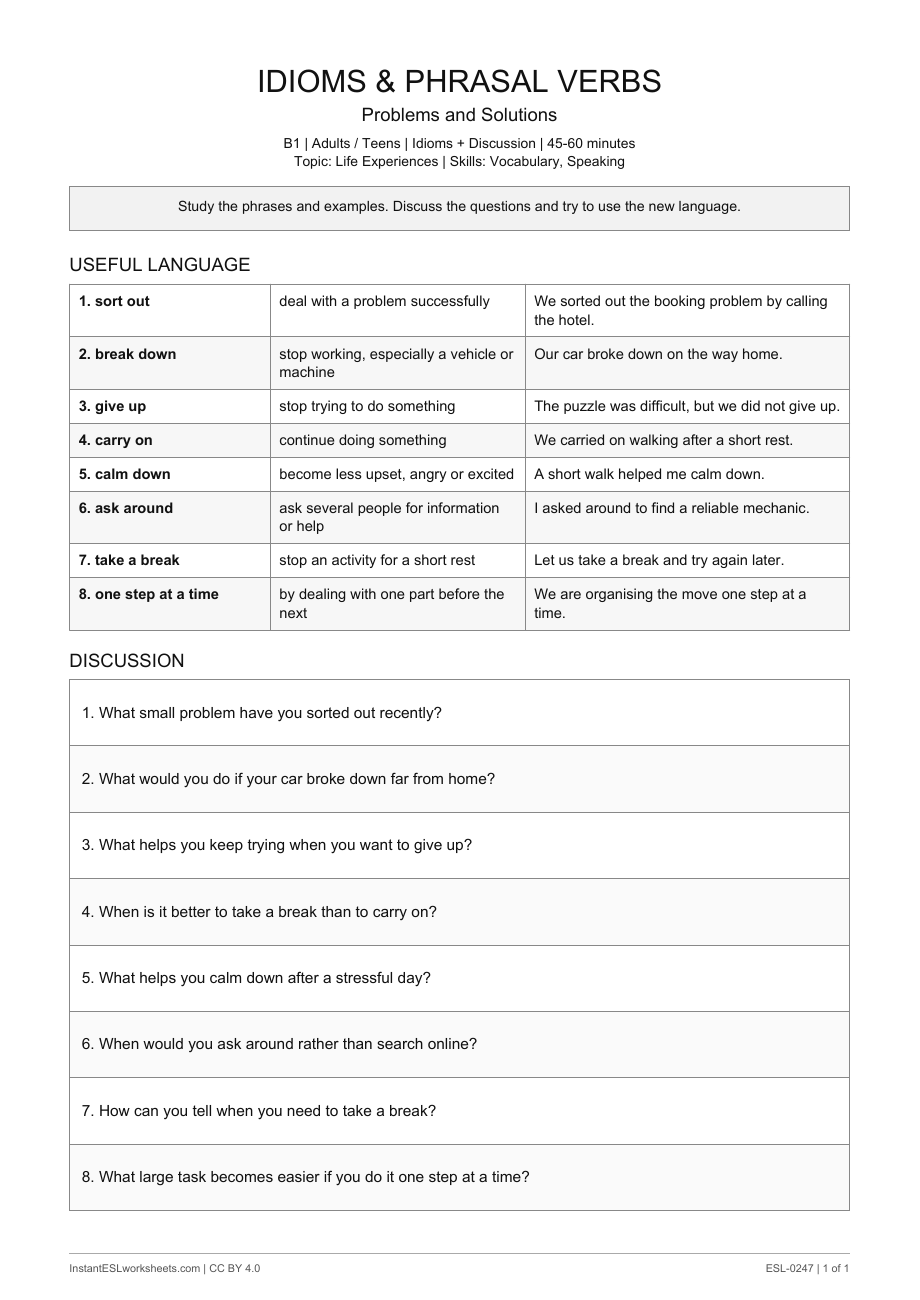
Explore problems and solutions with eight useful expressions, including sort out, break down, give up. Read the meanings and examples, then use the language in eight B1 discussion questions.
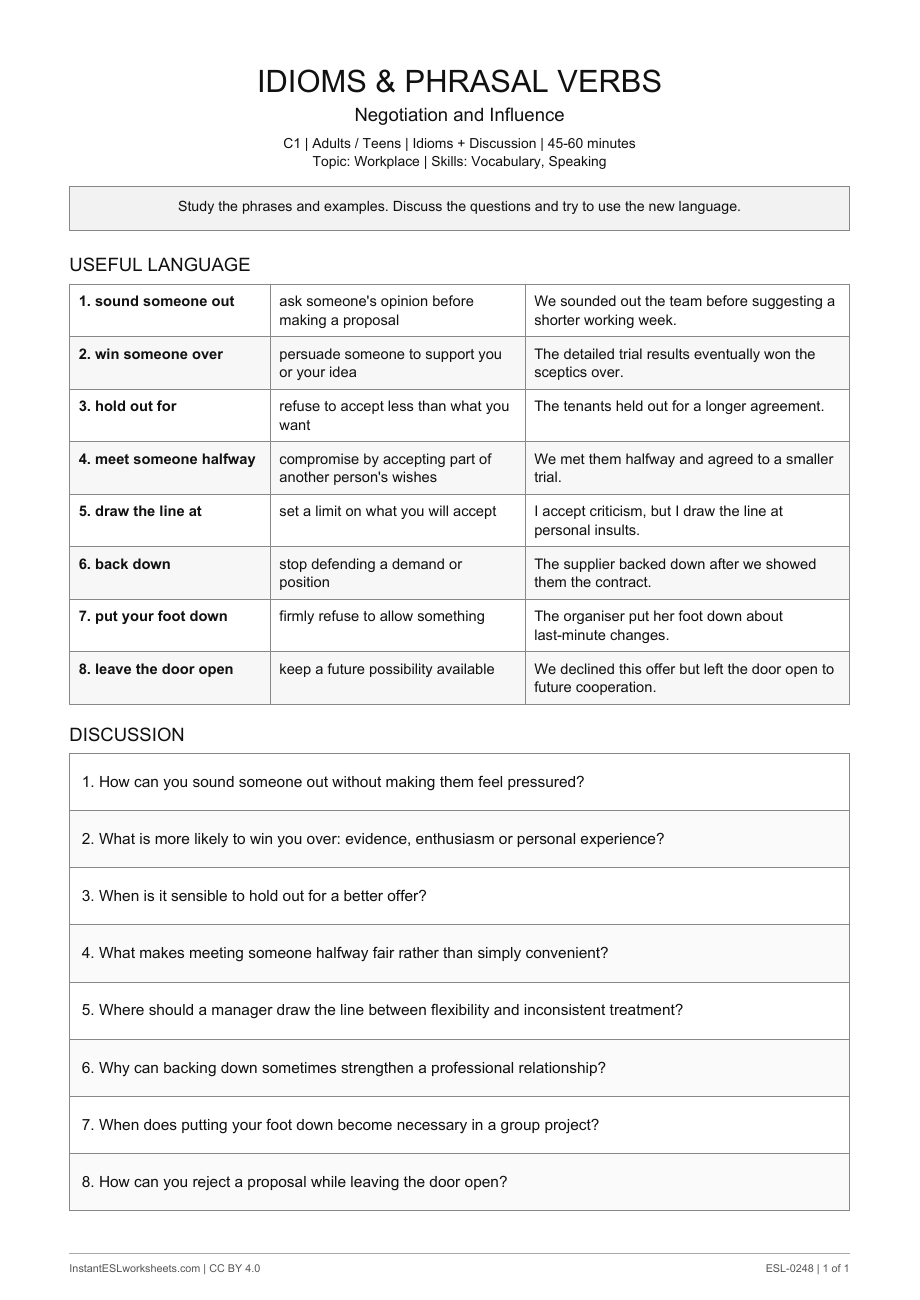
Explore negotiation and influence with eight useful expressions, including sound someone out, win someone over, hold out for. Read the meanings and examples, then use the language in eight C1 discussion questions.
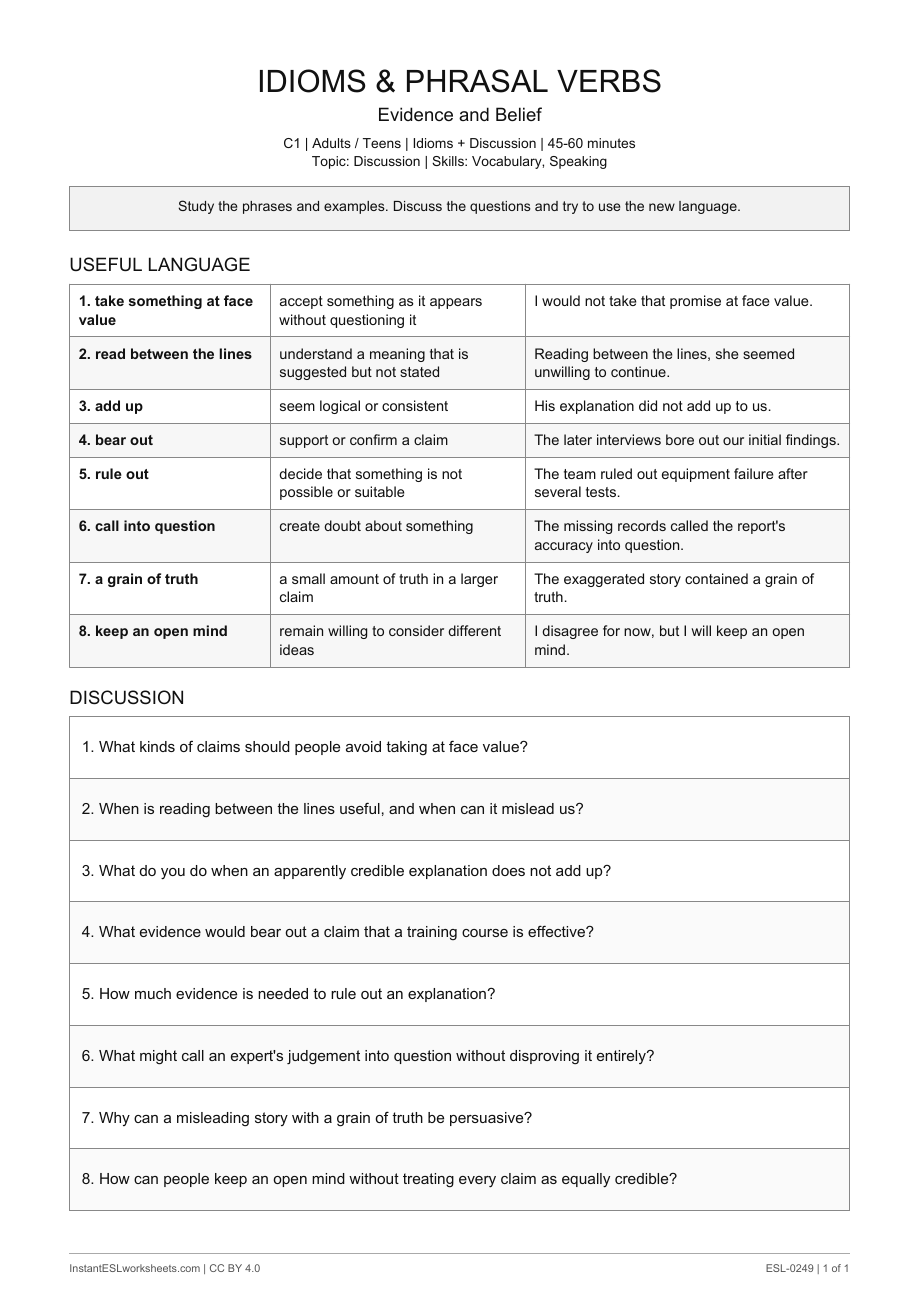
Explore evidence and belief with eight useful expressions, including take something at face value, read between the lines, add up. Read the meanings and examples, then use the language in eight C1 discussion questions.
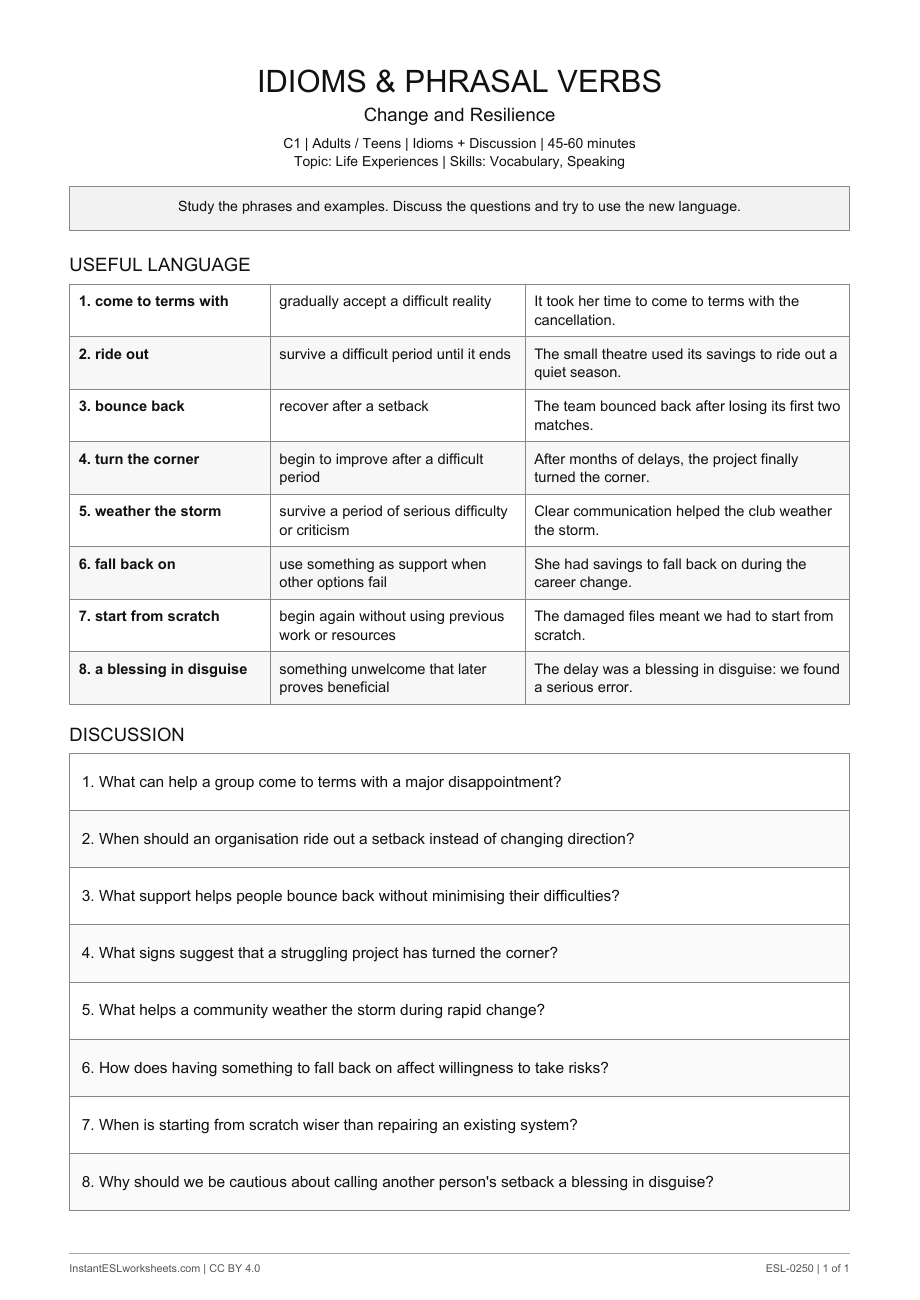
Explore change and resilience with eight useful expressions, including come to terms with, ride out, bounce back. Read the meanings and examples, then use the language in eight C1 discussion questions.
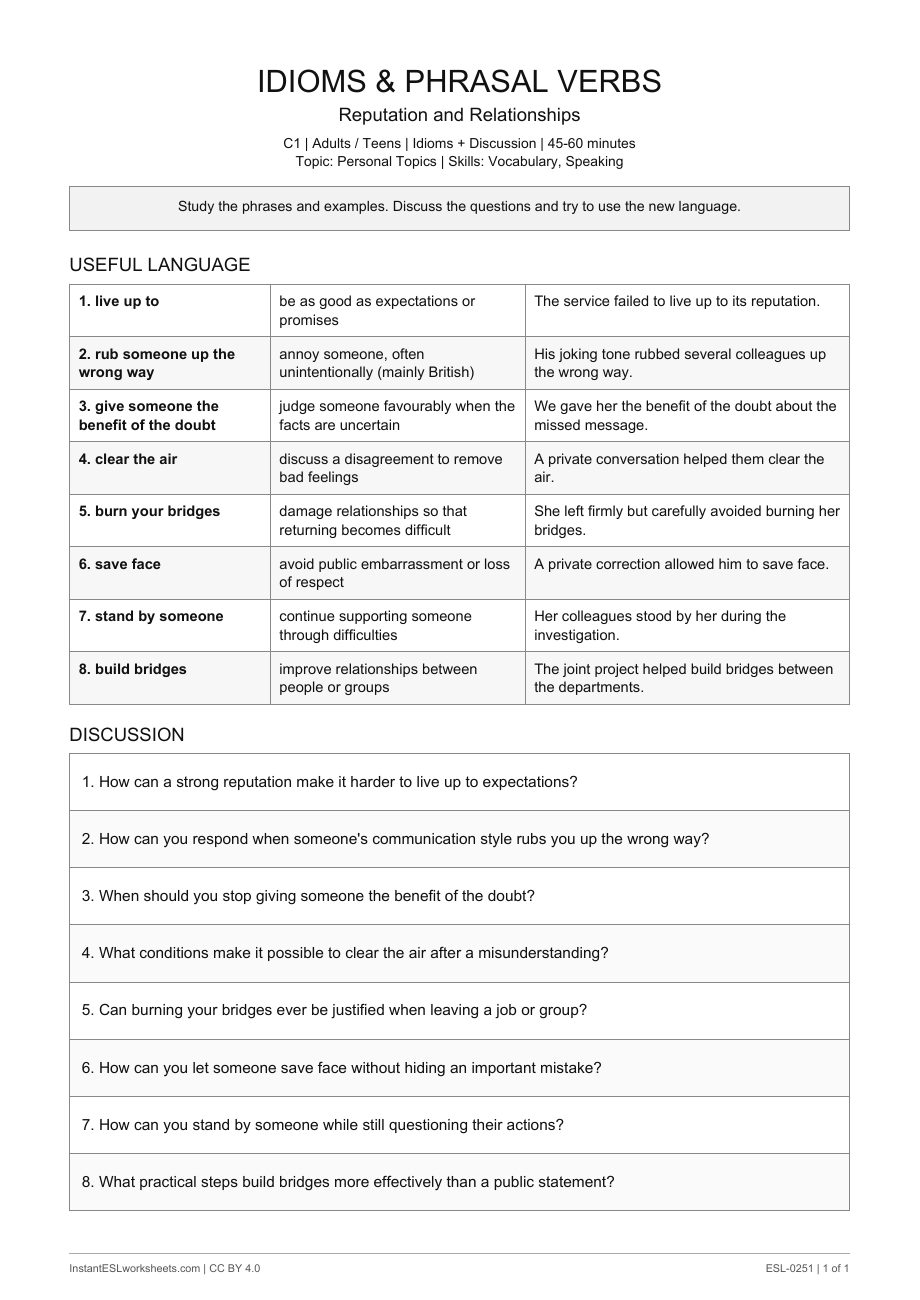
Explore reputation and relationships with eight useful expressions, including live up to, rub someone up the wrong way, give someone the benefit of the doubt. Read the meanings and examples, then use the language in eight C1 discussion questions.
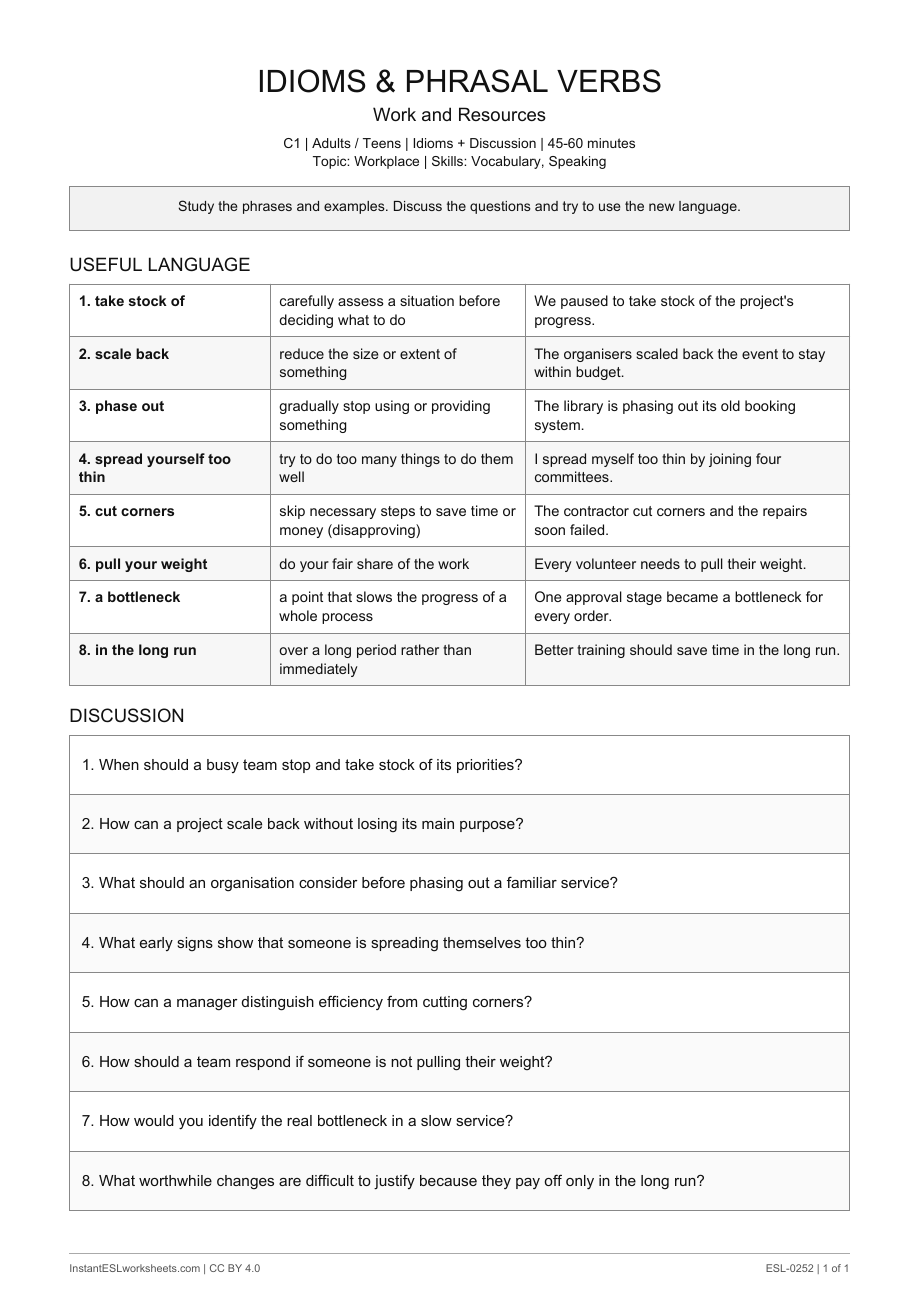
Explore work and resources with eight useful expressions, including take stock of, scale back, phase out. Read the meanings and examples, then use the language in eight C1 discussion questions.
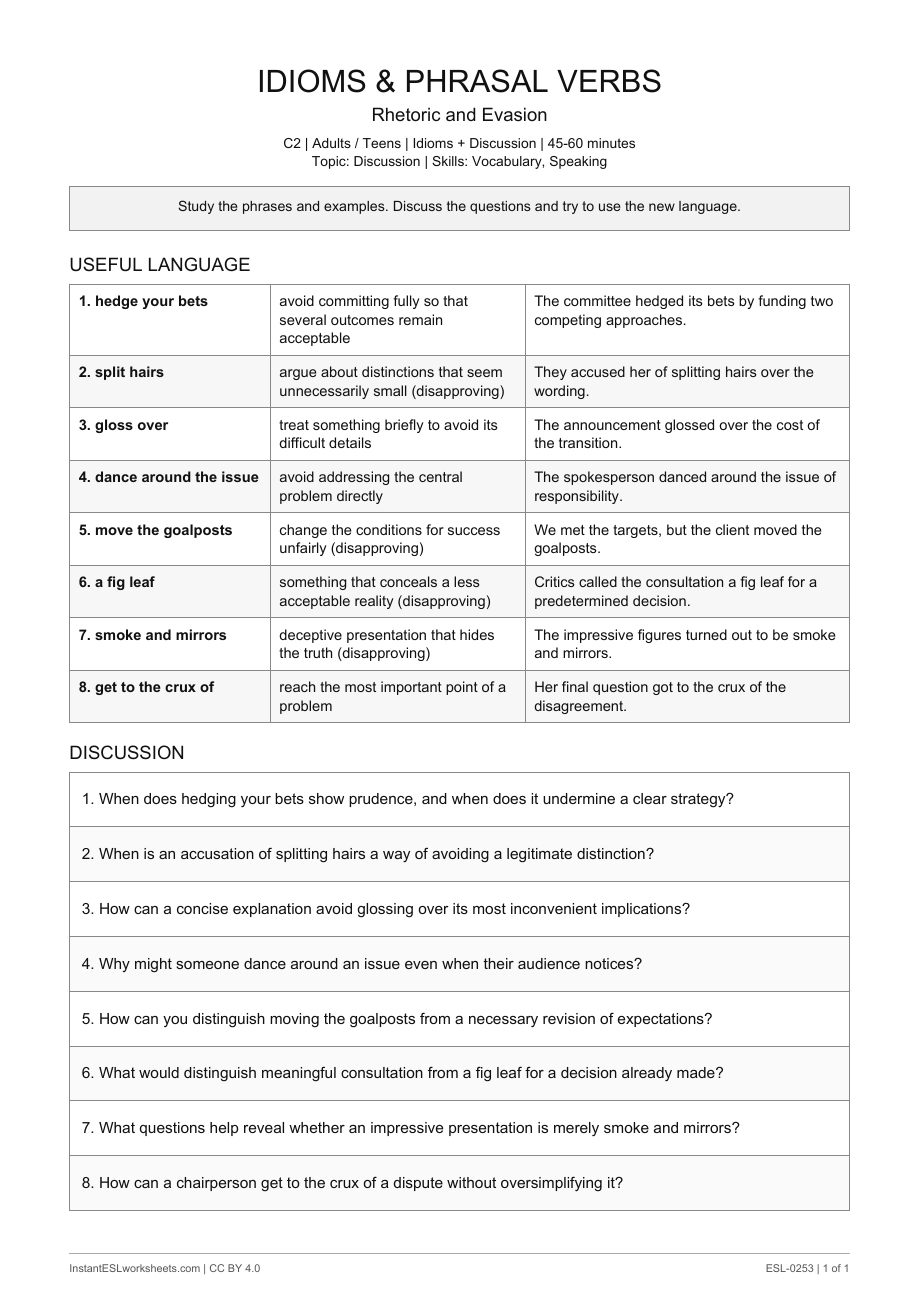
Explore rhetoric and evasion with eight useful expressions, including hedge your bets, split hairs, gloss over. Read the meanings and examples, then use the language in eight C2 discussion questions.
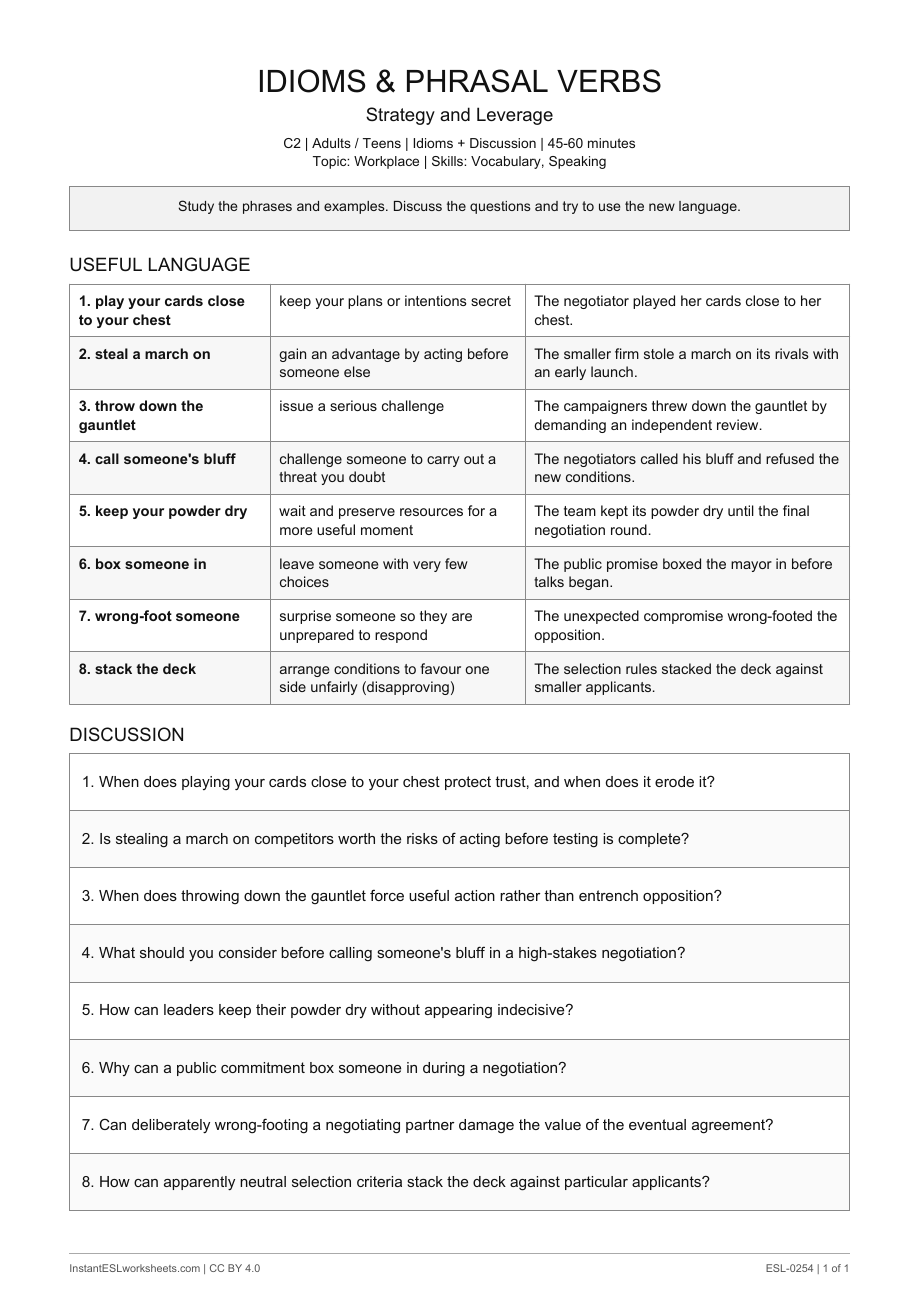
Explore strategy and leverage with eight useful expressions, including play your cards close to your chest, steal a march on, throw down the gauntlet. Read the meanings and examples, then use the language in eight C2 discussion questions.
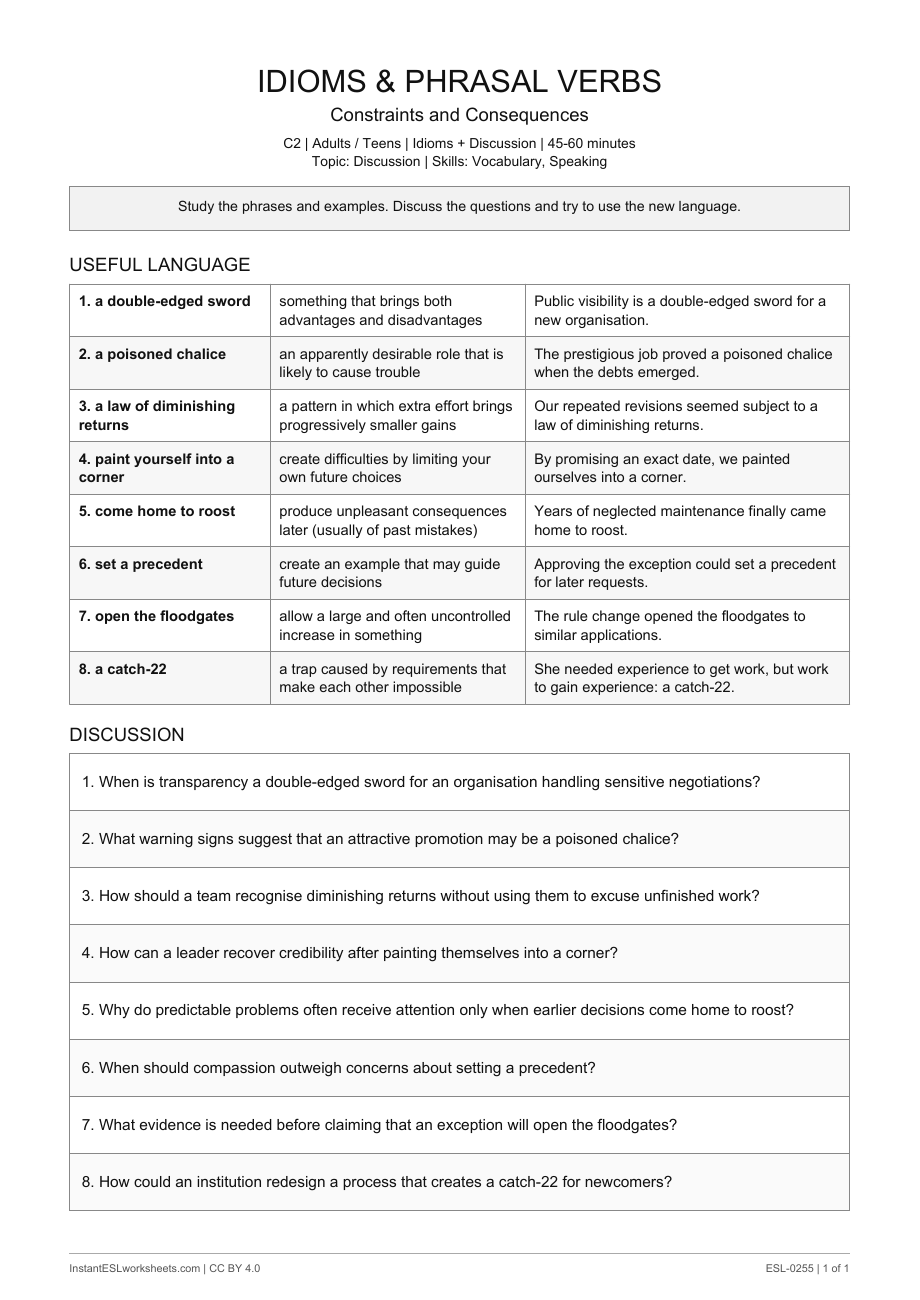
Explore constraints and consequences with eight useful expressions, including a double-edged sword, a poisoned chalice, a law of diminishing returns. Read the meanings and examples, then use the language in eight C2 discussion questions.
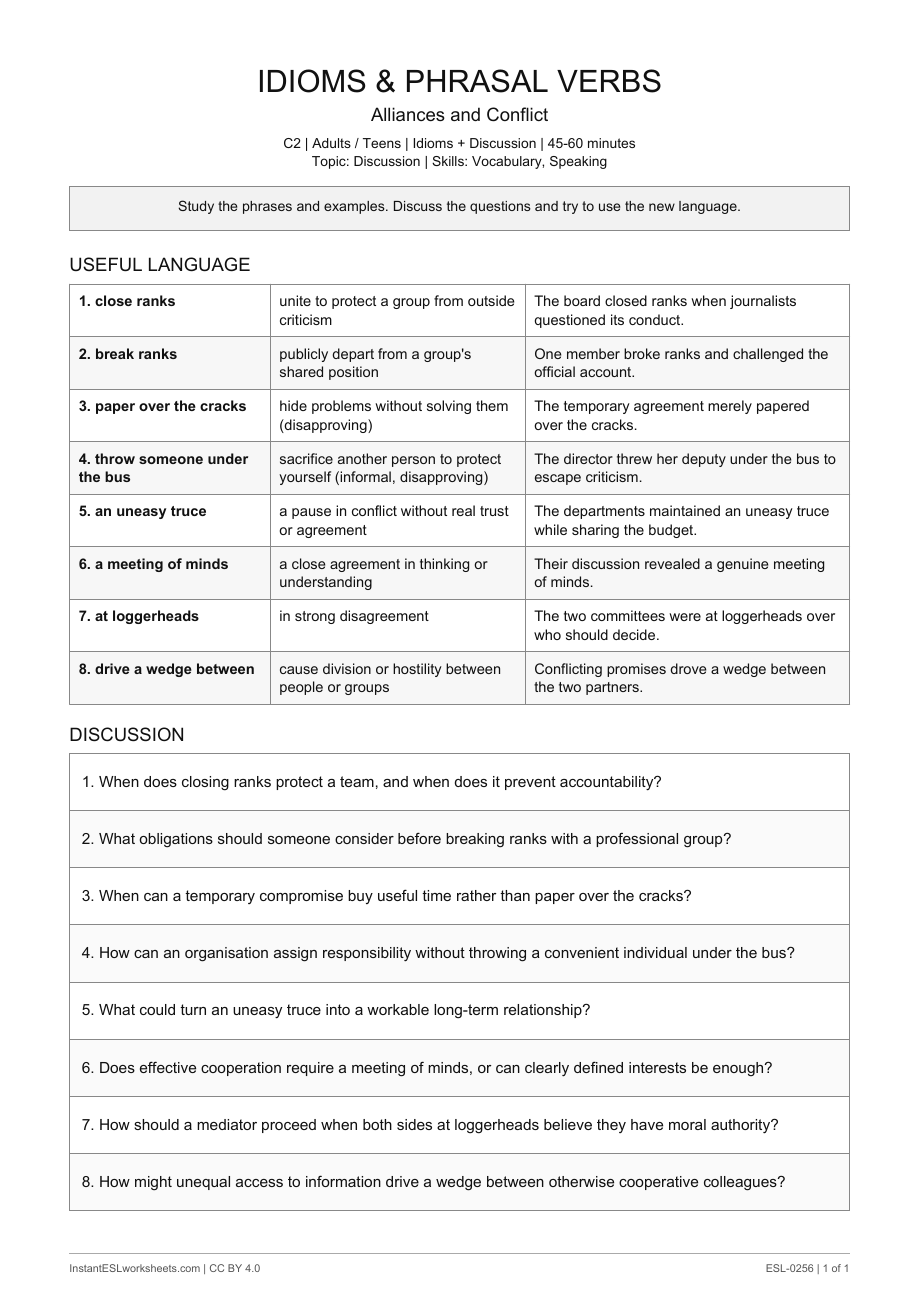
Explore alliances and conflict with eight useful expressions, including close ranks, break ranks, paper over the cracks. Read the meanings and examples, then use the language in eight C2 discussion questions.
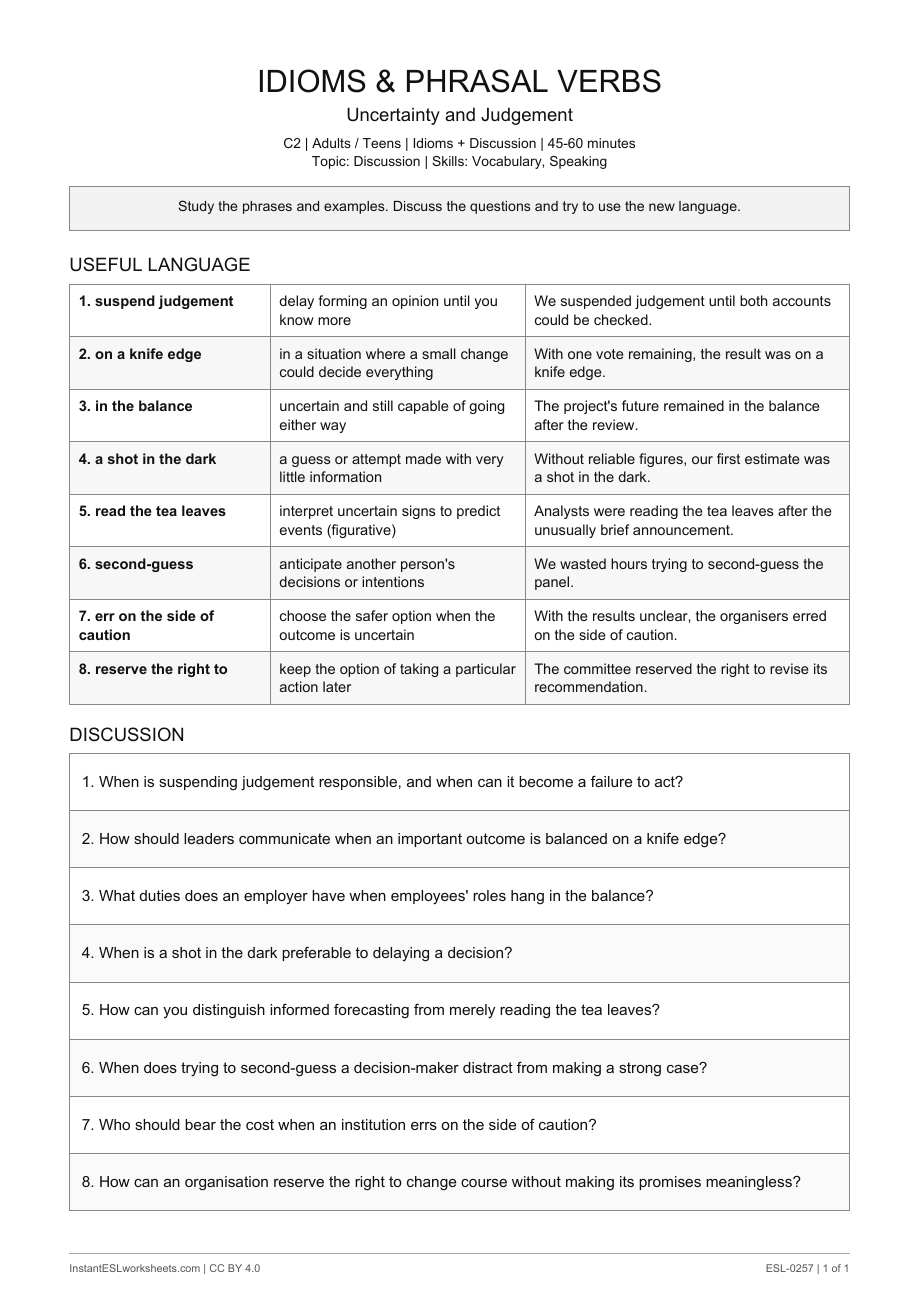
Explore uncertainty and judgement with eight useful expressions, including suspend judgement, on a knife edge, in the balance. Read the meanings and examples, then use the language in eight C2 discussion questions.
Try a broader search or remove a filter.