Talking About Getting Around
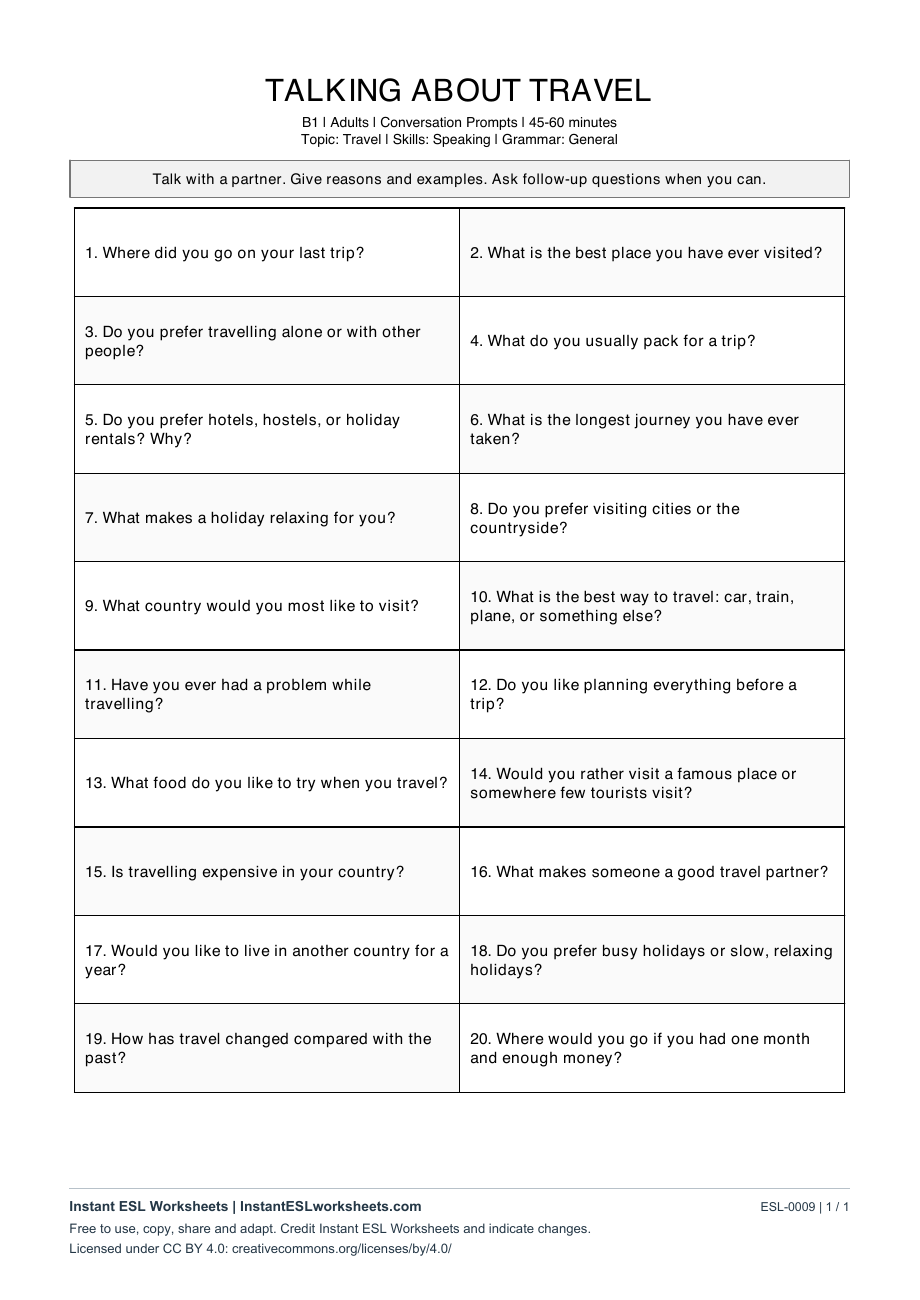
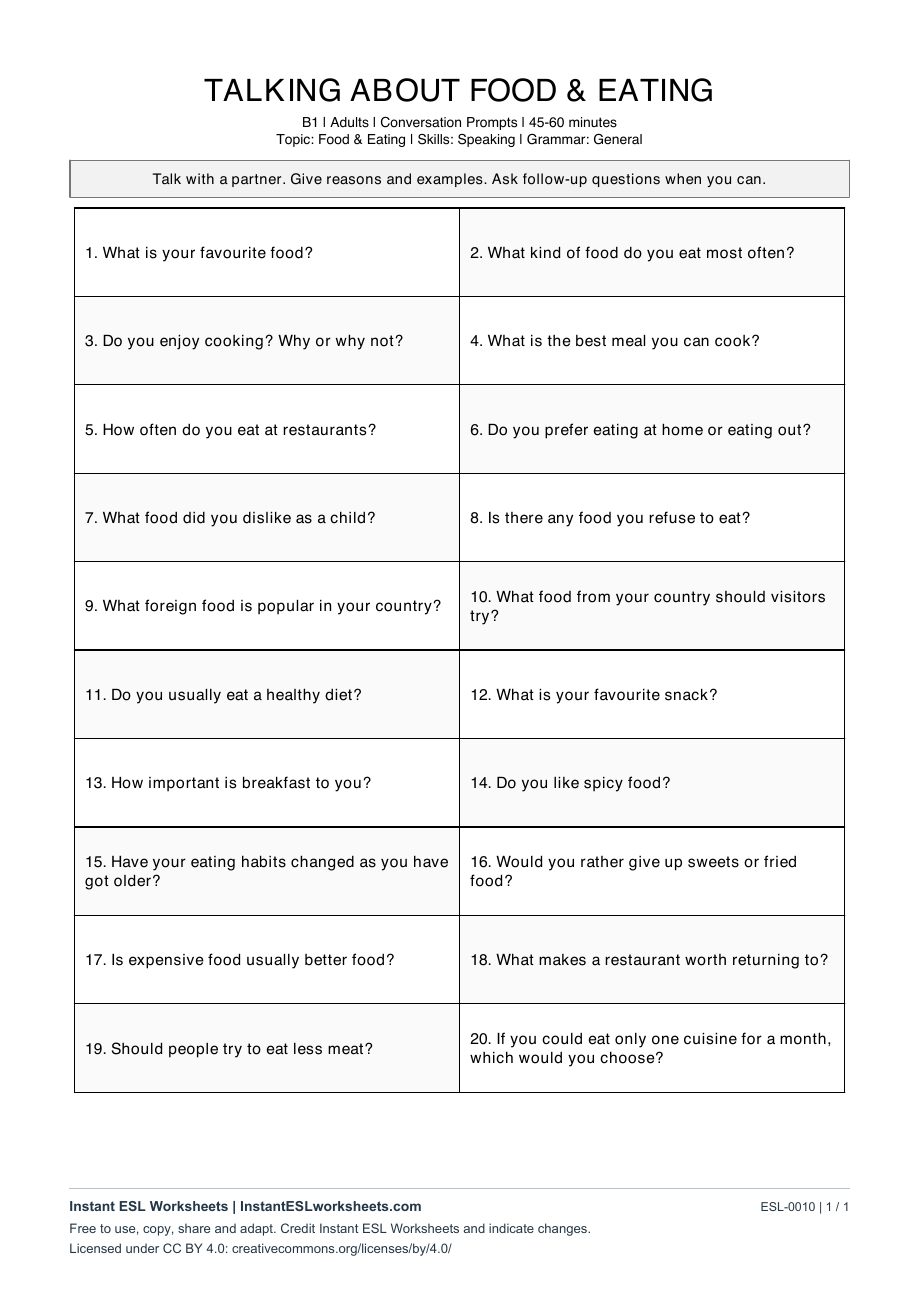
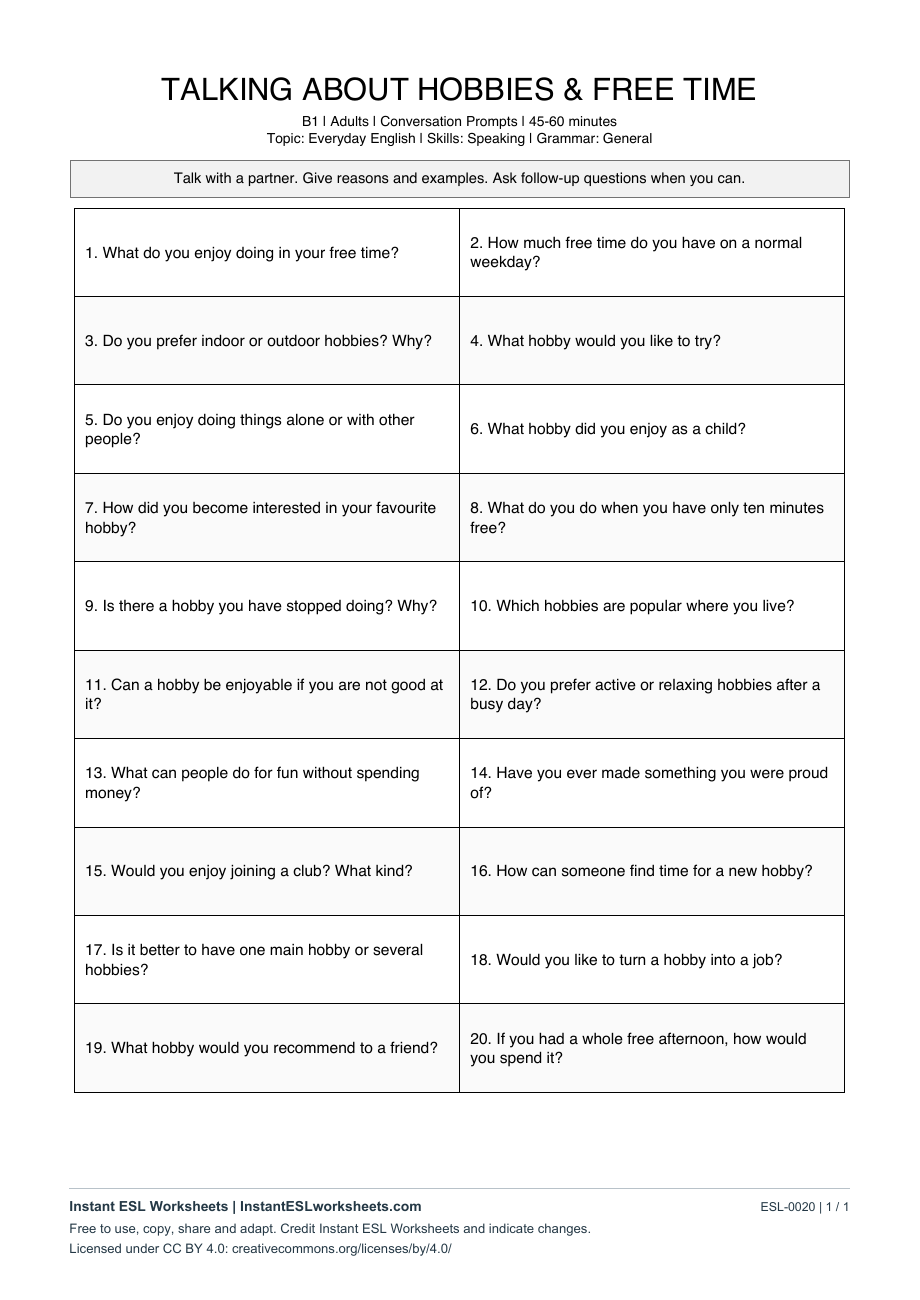
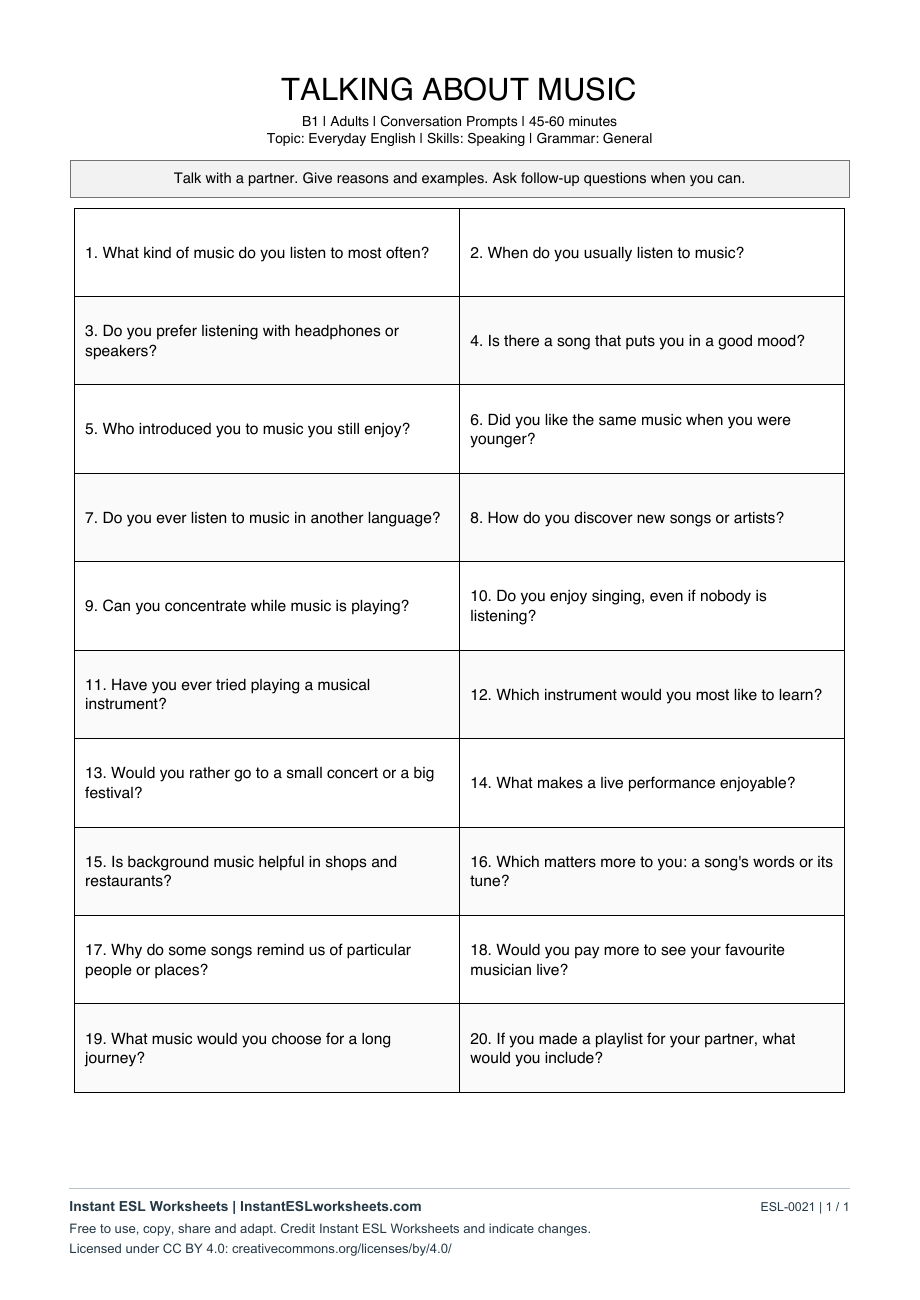
A one-page B1 conversation worksheet with 20 questions about getting around. Learners exchange personal experiences, explain preferences and discuss everyday choices.
What’s in the worksheet?
- 20 conversation questions
- Personal experiences, preferences and everyday choices
- Pair discussion with reasons and follow-up questions
Use 20 B1 questions to compare ways of travelling locally, describe journey preferences and suggest transport improvements. This is a conversation sheet, not a directions-map or scripted role-play activity.
Worksheet preview
Open PDF ↗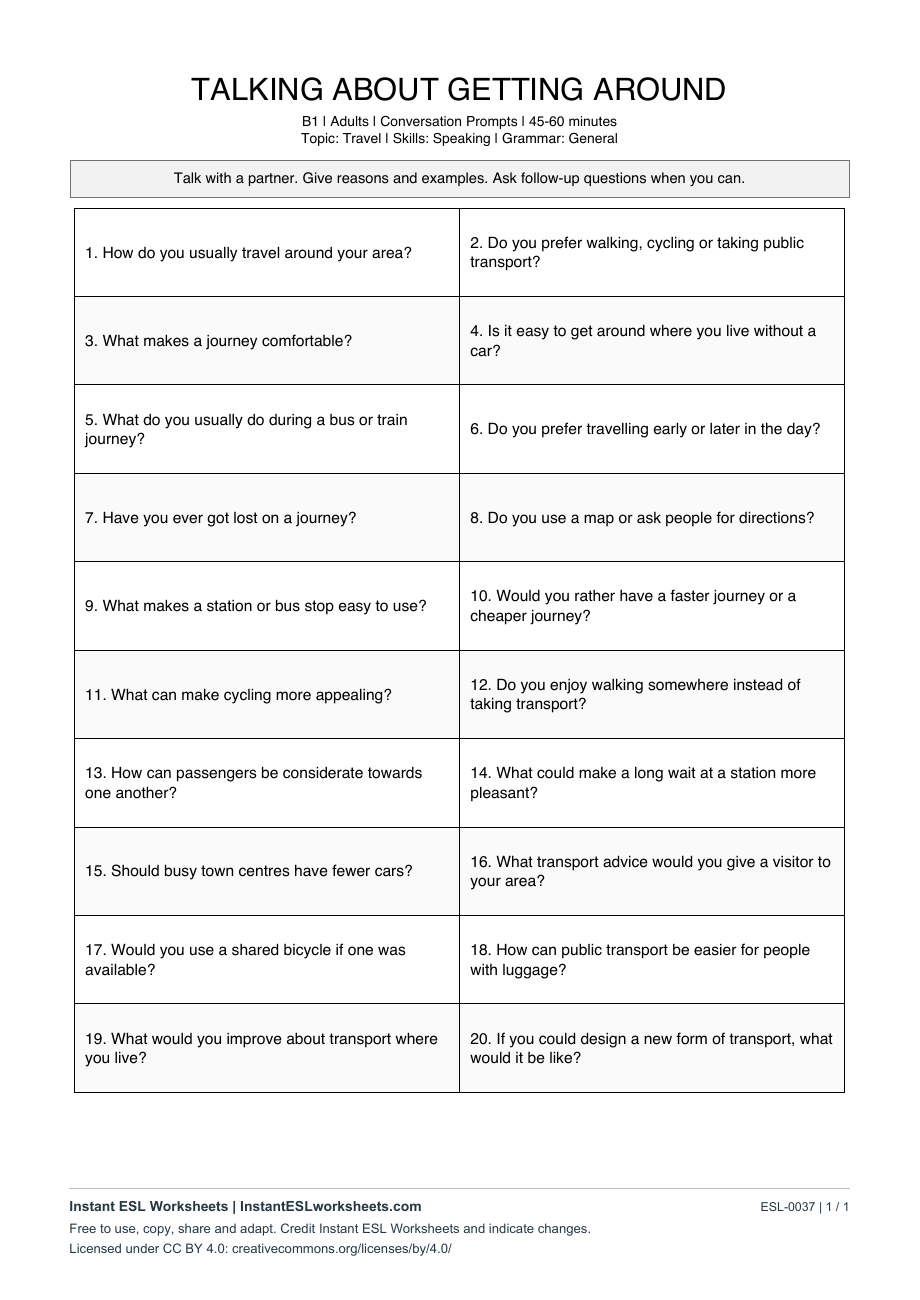
Page 1 of 1 · A4 printable PDF
A simple way to teach it
Before the lesson
Review public transport, shared bicycle, passenger and luggage. Choose examples relevant to the class, including places where public transport is limited. Model comparing a faster journey with a cheaper one.
- Discuss usual ways of getting around and what makes a journey comfortable. Ask learners to support each preference with an example.
- Pairs choose prompts about getting lost, stations, cycling and considerate passengers. Encourage follow-ups such as What would make that easier?
- Finish with question 16 or 19: give a visitor transport advice or explain one local improvement. As an optional extension, partners choose the most useful suggestion and justify it.
Support and extension
For support, offer transport vocabulary and You can… or It would be better if… starters. For an extension, discuss the benefits and drawbacks of the proposed improvement. There is no fixed answer key; accept different local circumstances and assess clear comparisons rather than expecting one preferred mode of transport.
Suggested approach. Adjust the pace and number of questions to suit your class.