A1 Grammar Check - Test 1
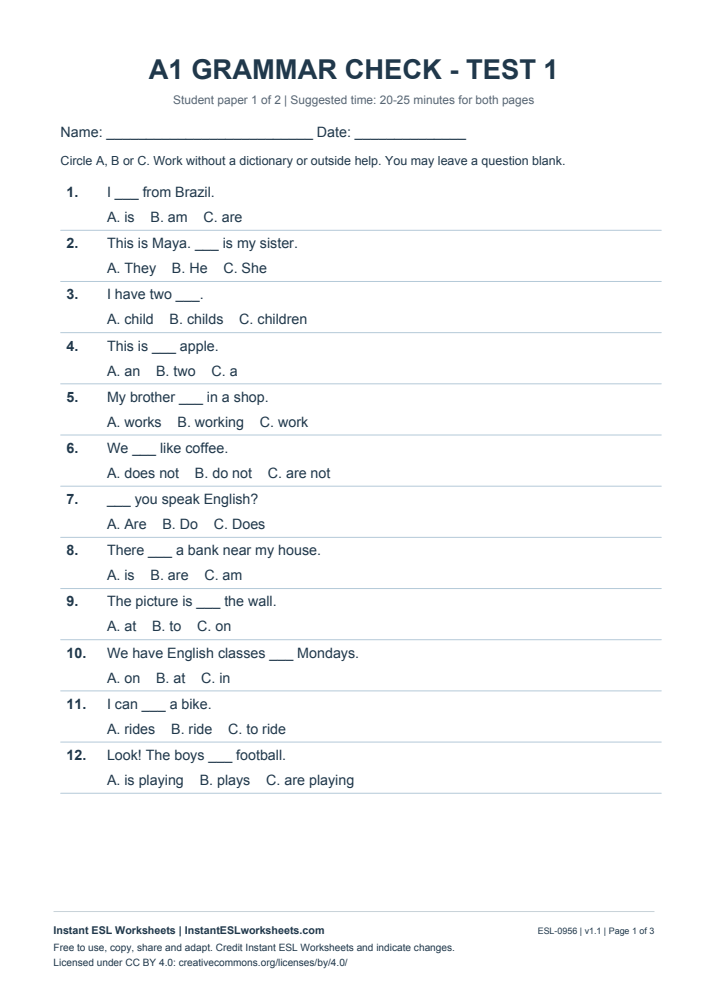
A1 Grammar Check Test 1 samples 20 points through twelve multiple-choice items and eight short answers. Be, pronouns, plurals, articles and everyday verb patterns provide a starting picture of basic grammar knowledge.
Topic collection
Worksheets focusing on Grammar review. Compare the levels and formats to choose a reference, practice or discussion sheet.
27 worksheets · Free PDFs · No signup
A1 Grammar Check Test 1 samples 20 points through twelve multiple-choice items and eight short answers. Be, pronouns, plurals, articles and everyday verb patterns provide a starting picture of basic grammar knowledge.
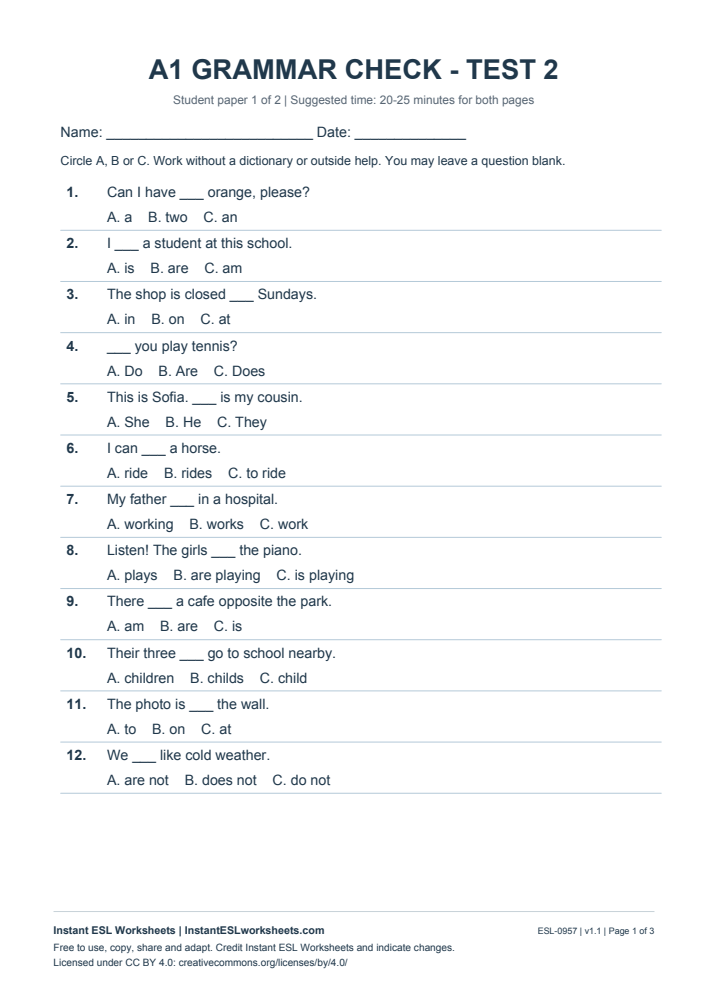
A fresh A1 grammar check with 20 items, including an orange, school identity, Sunday opening and can plus a verb. Test 2 changes wording and order while retaining the series' recognition-and-production format.
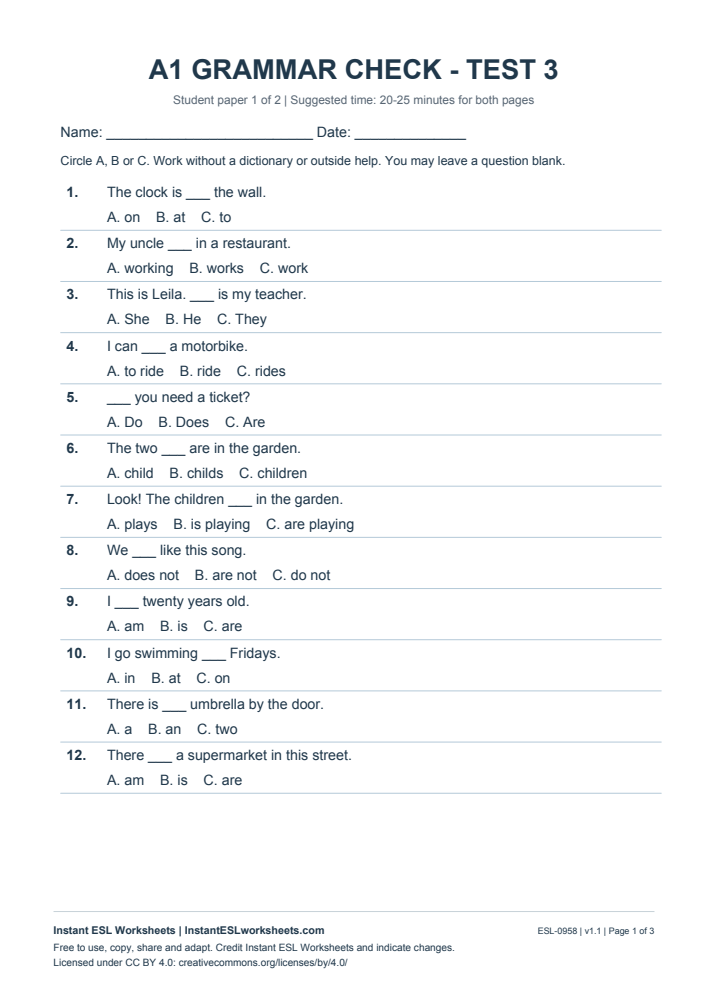
Test 3 offers another 20-item A1 check, moving between everyday places, work, ability, pronouns and possession. Multiple-choice items are followed by short-answer tasks and a teacher key explaining each target.
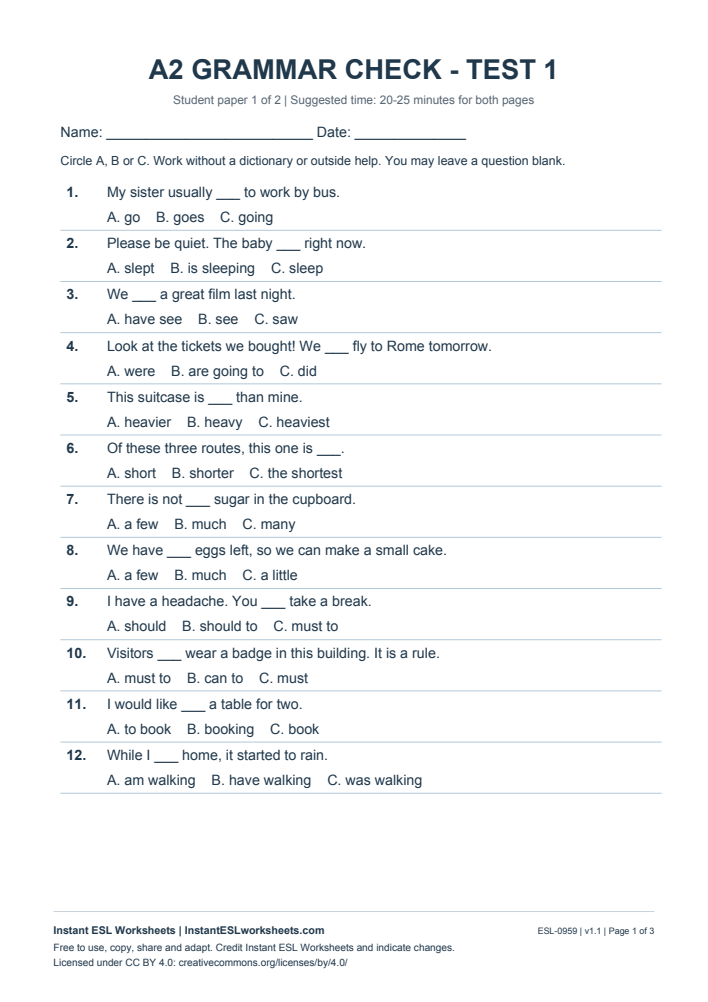
A2 Grammar Check Test 1 contrasts routines with actions happening now and reviews past events, plans, comparison and other selected A2 structures. Twenty items combine multiple choice with short written production.
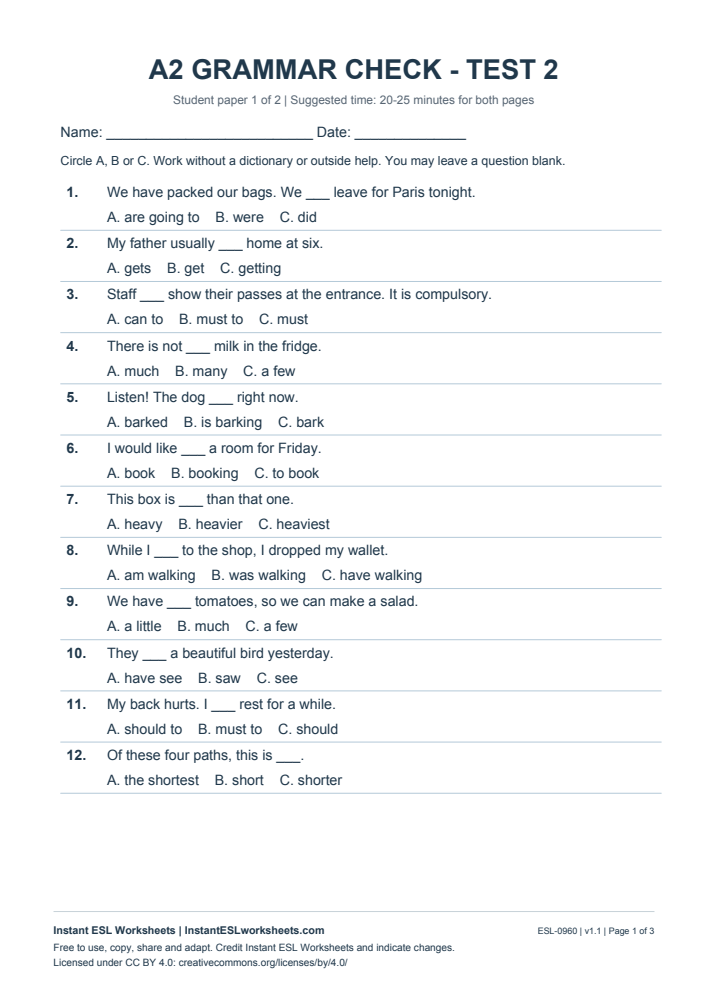
A2 Test 2 checks 20 grammar points in contexts such as packed bags, staff passes, milk quantities and hotel booking. A separate explained key helps connect incorrect responses with practical revision targets.
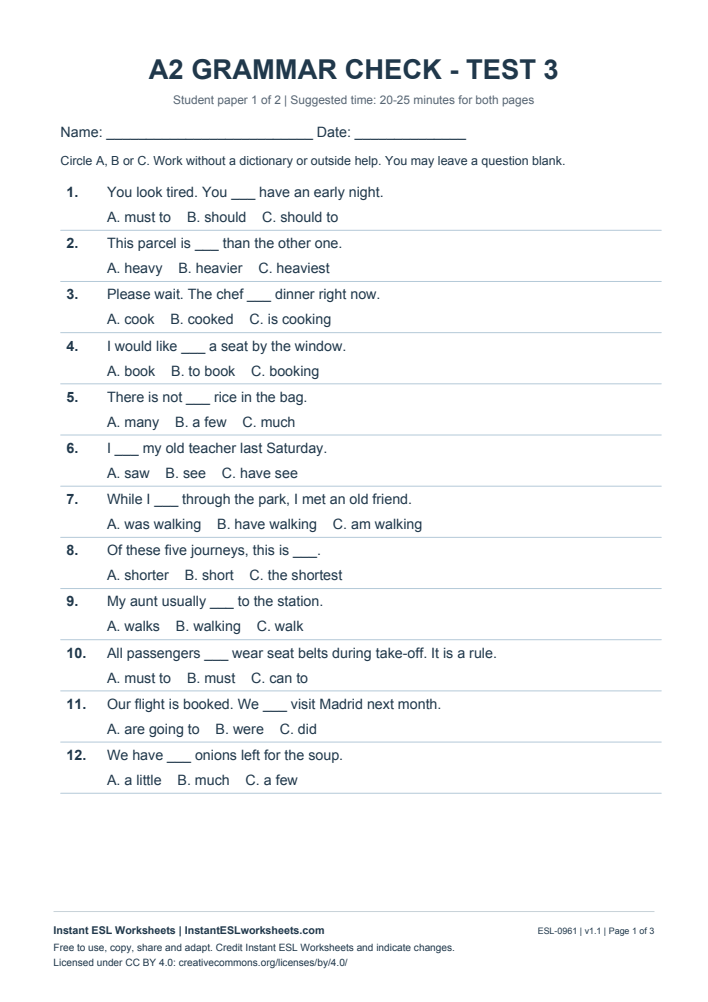
Test 3 samples A2 grammar through advice, parcel comparisons, actions in progress, booking requests and past meetings. Eight short answers follow twelve multiple-choice questions, with explanations and acceptable alternatives in the key.
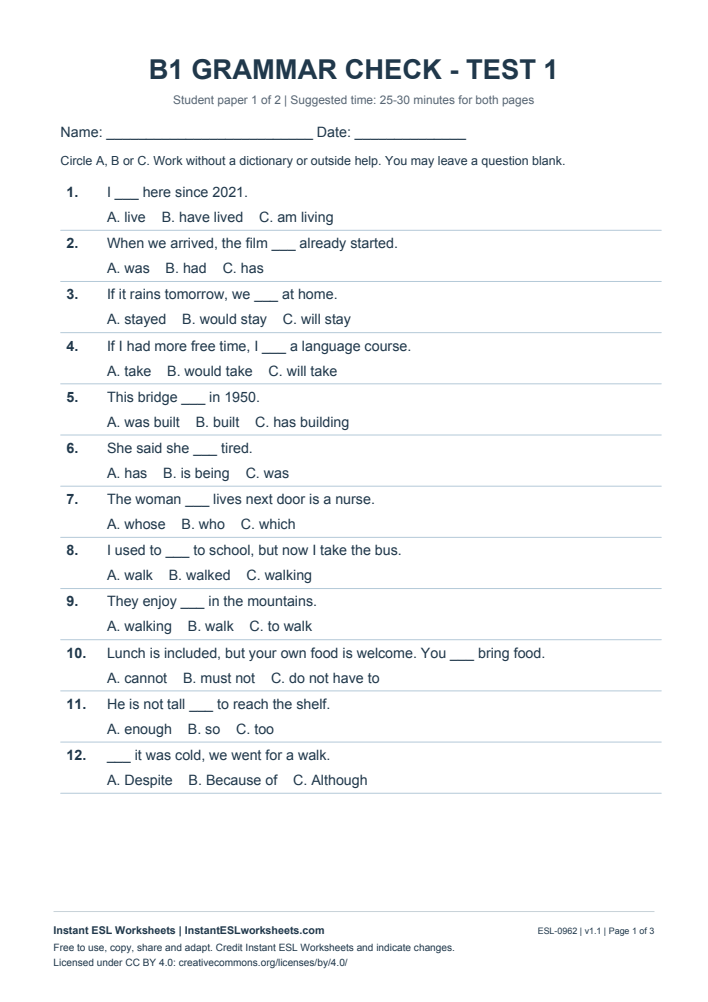
B1 Grammar Check Test 1 samples present perfect, earlier past events, conditionals, passive forms and reported speech within a 20-item paper. The key adds concise grammar explanations for targeted follow-up.
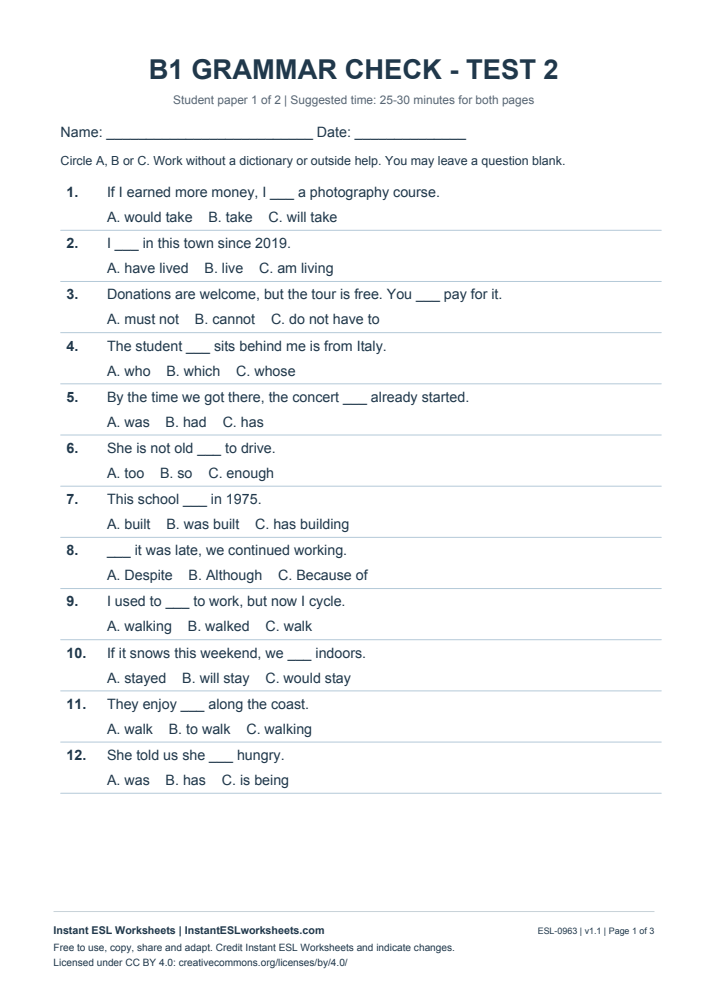
The second B1 check revisits grammar through a hypothetical photography course, residence since 2019, a free tour and relative clauses. Its 20 items reveal both recognition and short-answer production.
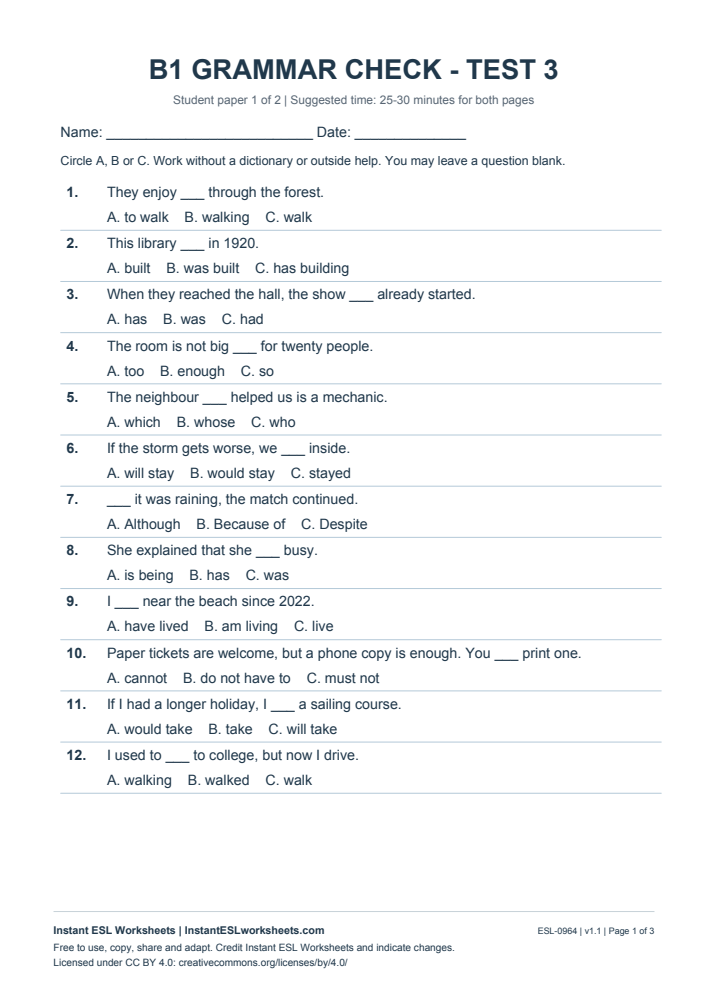
B1 Test 3 checks grammar in contexts including forest walks, an old library, a show already underway and a worsening storm. Short production tasks complement the twelve multiple-choice questions.
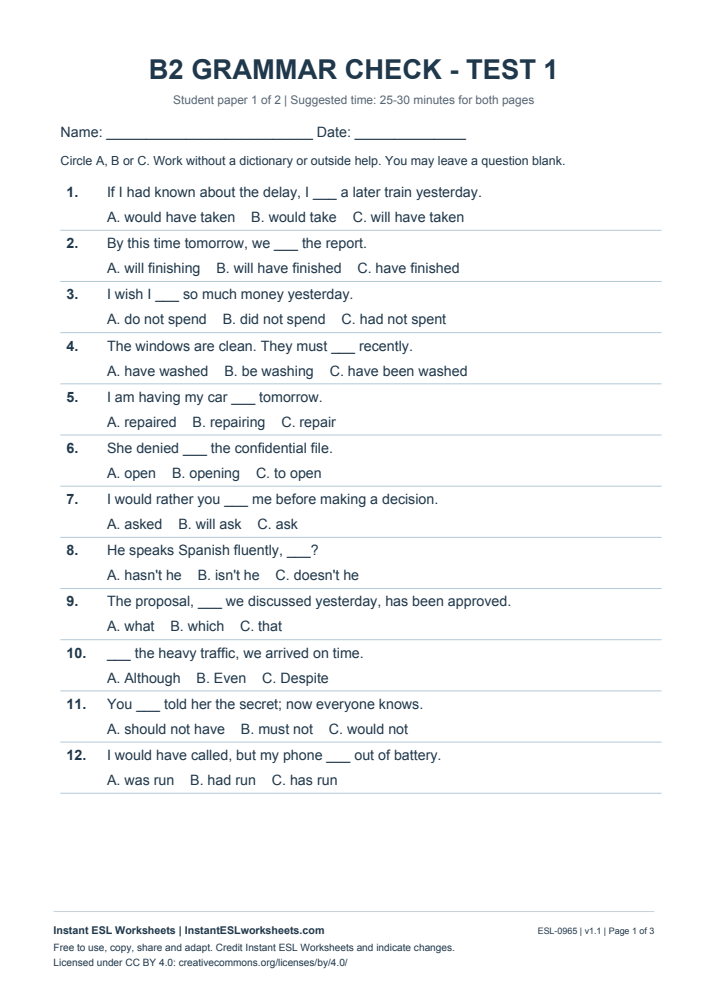
B2 Grammar Check Test 1 samples past counterfactuals, future completion, regret, deductions and causative have. Twenty recognition and production items are followed by an explained teacher key.
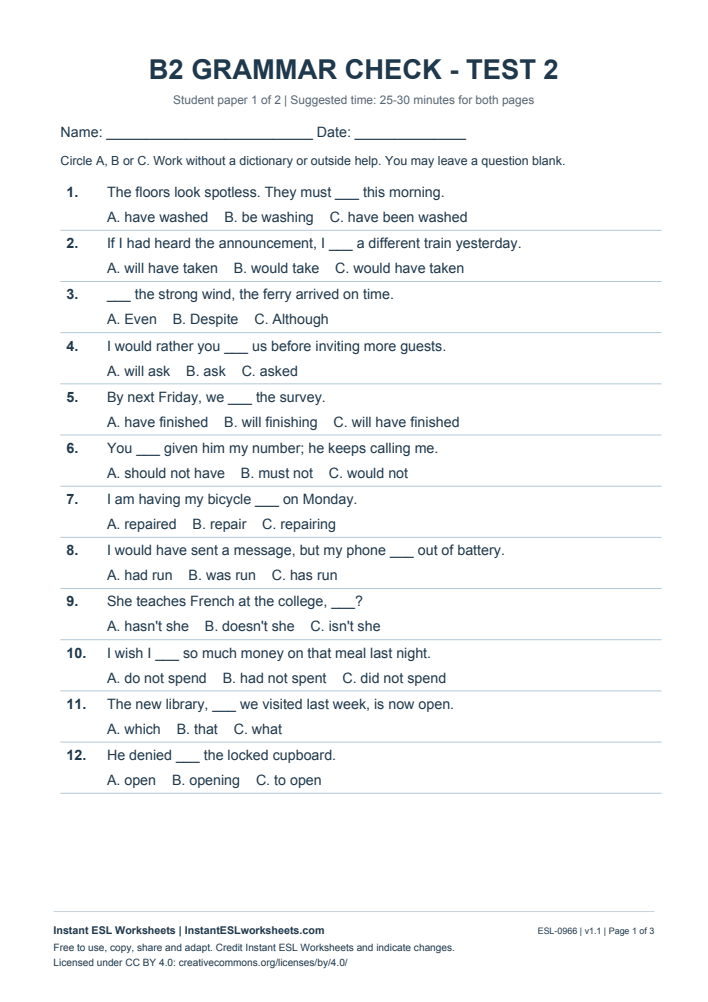
This B2 alternative uses spotless floors, a late announcement, a windy ferry journey and an unwanted phone call to test 20 structures. The key explains why a form fits its particular meaning and time.
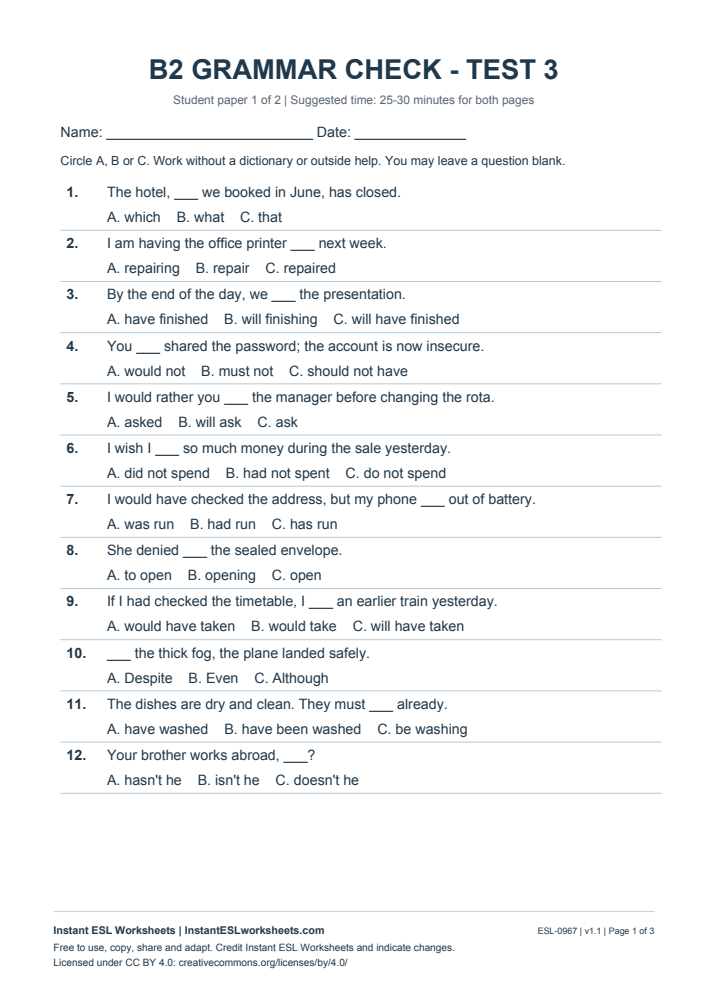
B2 Test 3 moves through a hotel relative clause, printer repairs, future deadlines, password criticism and past regrets. Twelve selections and eight short answers offer complementary evidence of grammatical control.
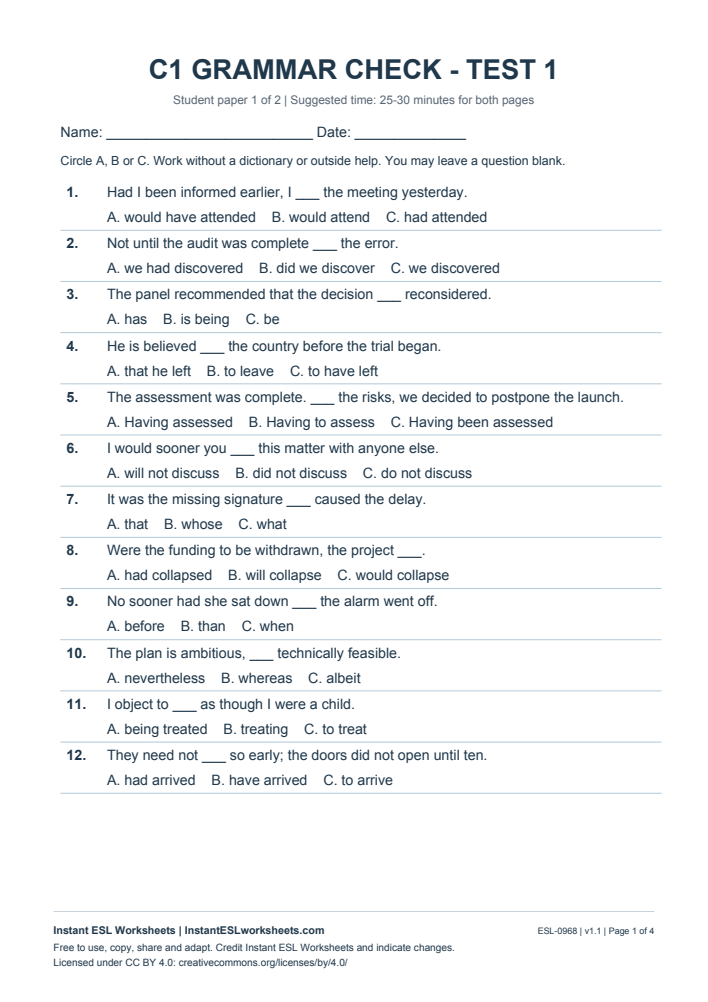
C1 Grammar Check Test 1 explores inversion, formal recommendations, reporting passives, participle clauses and emphasis. Its 20 items require accurate form and careful interpretation, with a teacher explanation for each answer.
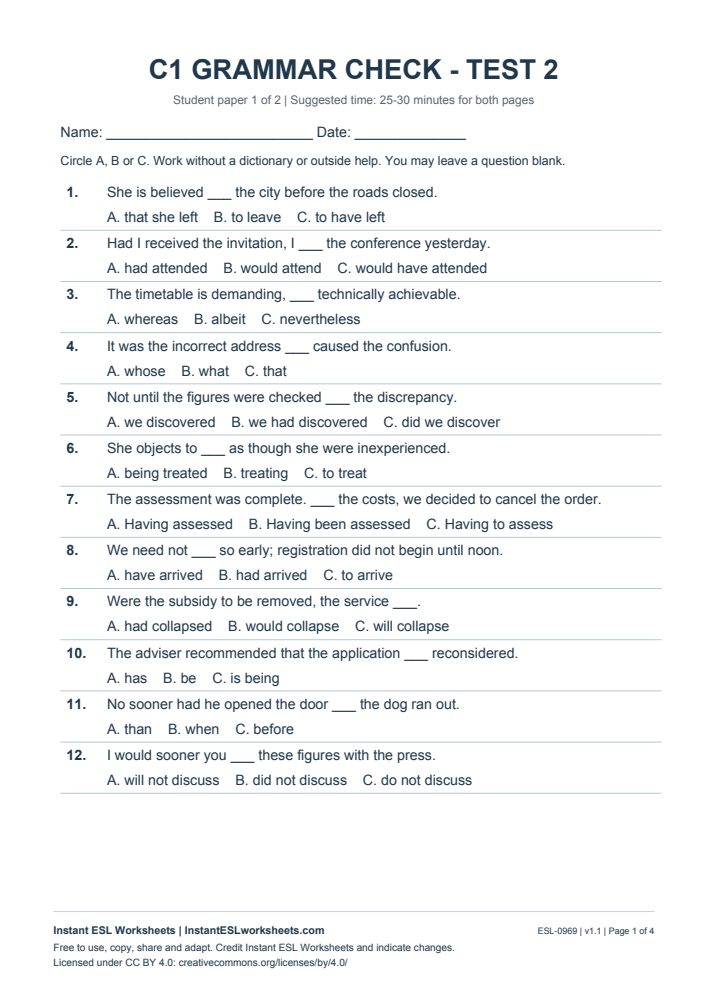
The second C1 check tests 20 points through a demanding timetable, checked figures, a removed subsidy and formal reporting. It includes albeit, unnecessary completed actions and being treated constructions.
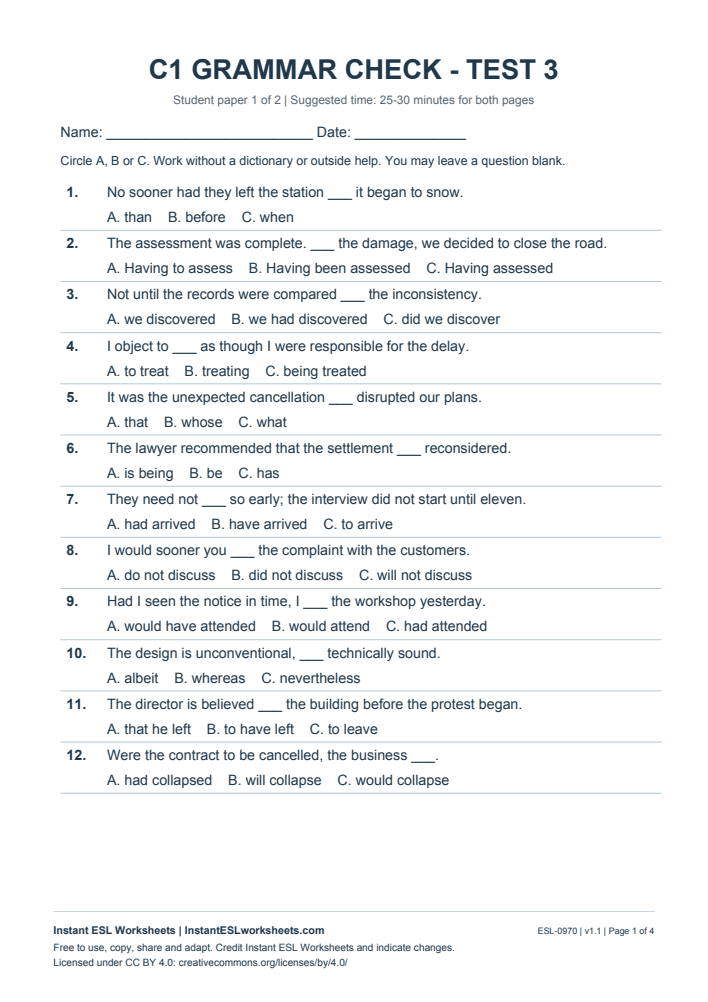
C1 Test 3 samples emphatic inversion, participle clauses, formal recommendations, clefts and hypothetical meaning. Examples about a station departure, road closure and a cancelled plan keep the 20-item check contextual.
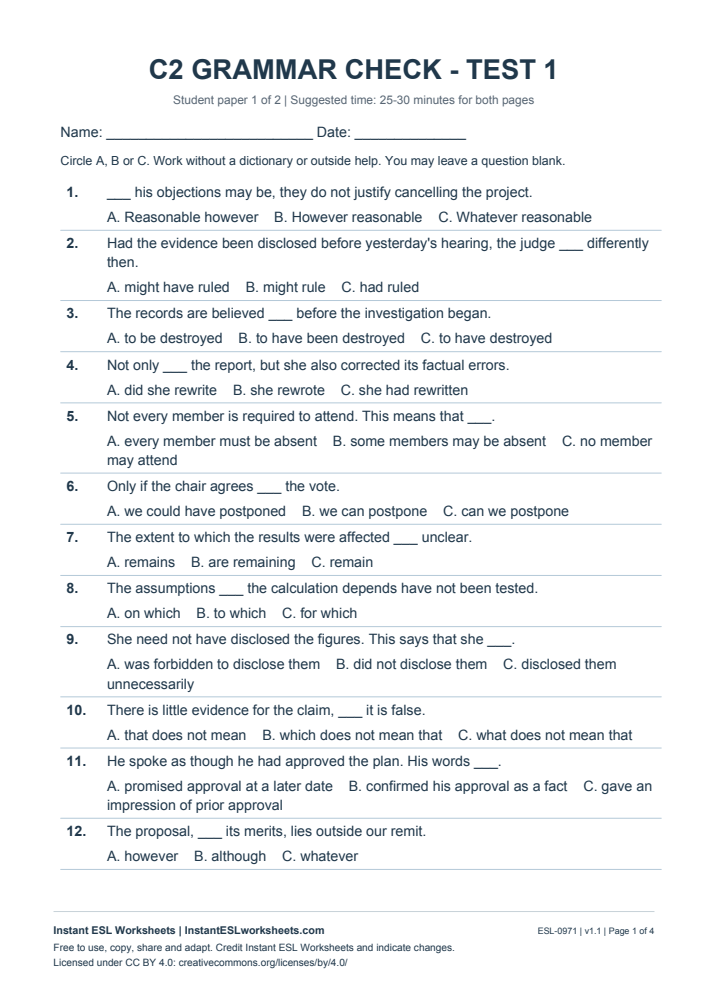
C2 Grammar Check Test 1 probes inversion, concessive structures, reporting passives and scope of meaning across 20 items. The explained key gives particular attention to preserving the original claim in rewrites.
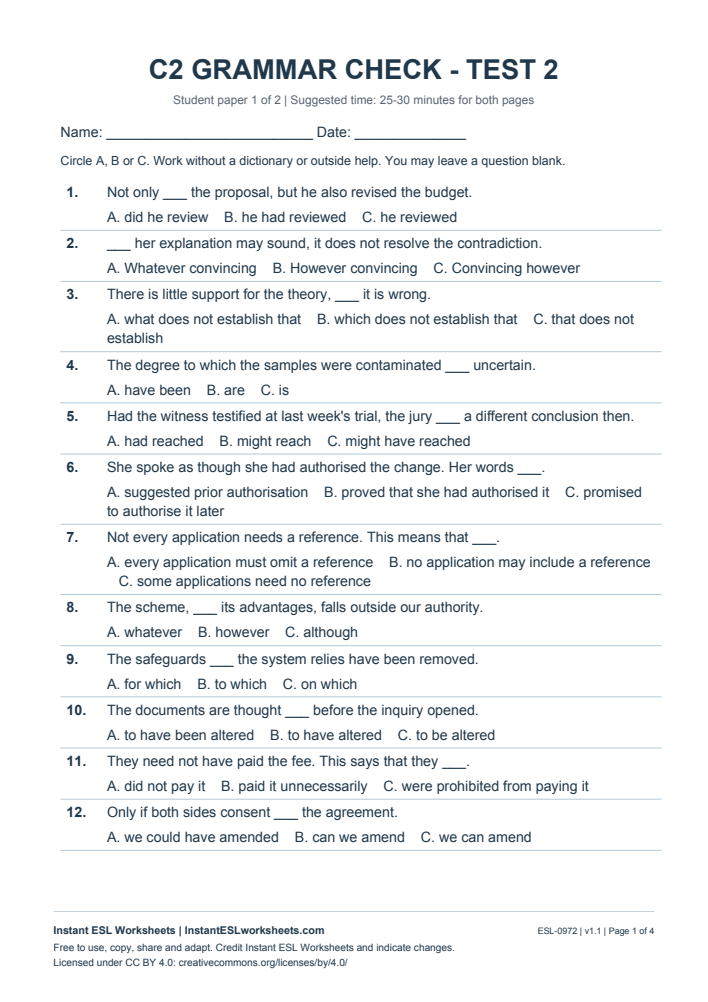
C2 Test 2 checks 20 selected structures through proposal reviews, hypothetical evidence, contaminated samples and statements of appearance. Short answers require close attention to implication and tense as well as syntax.
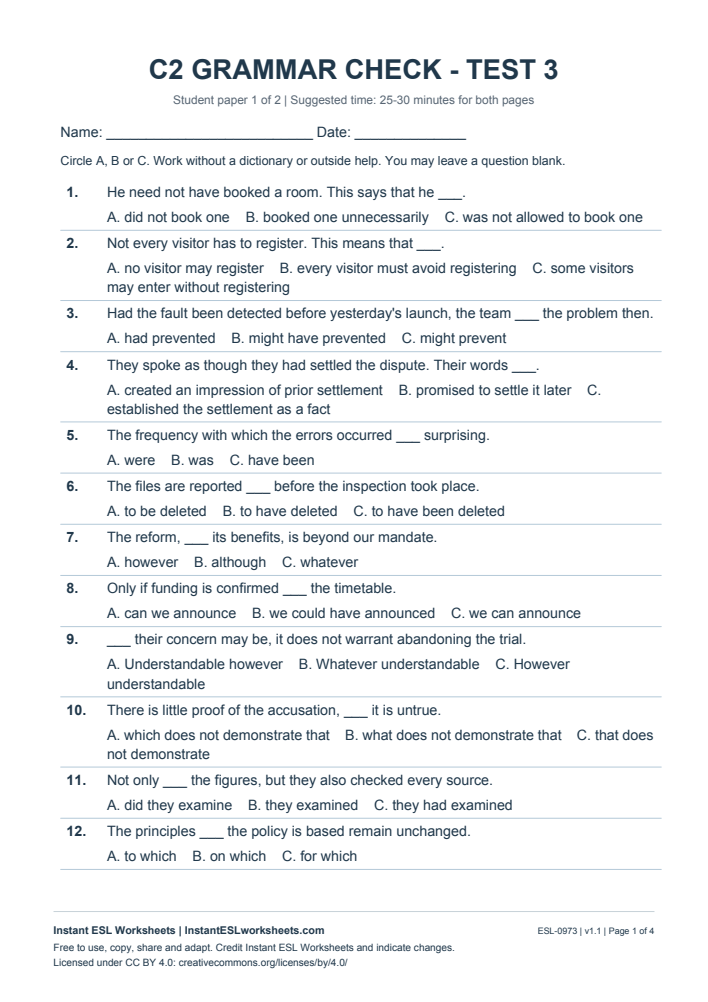
The third C2 grammar check focuses on fine distinctions such as need not have, not every, reporting sequences and hypothetical consequences. Twenty items combine selection with constrained written production.
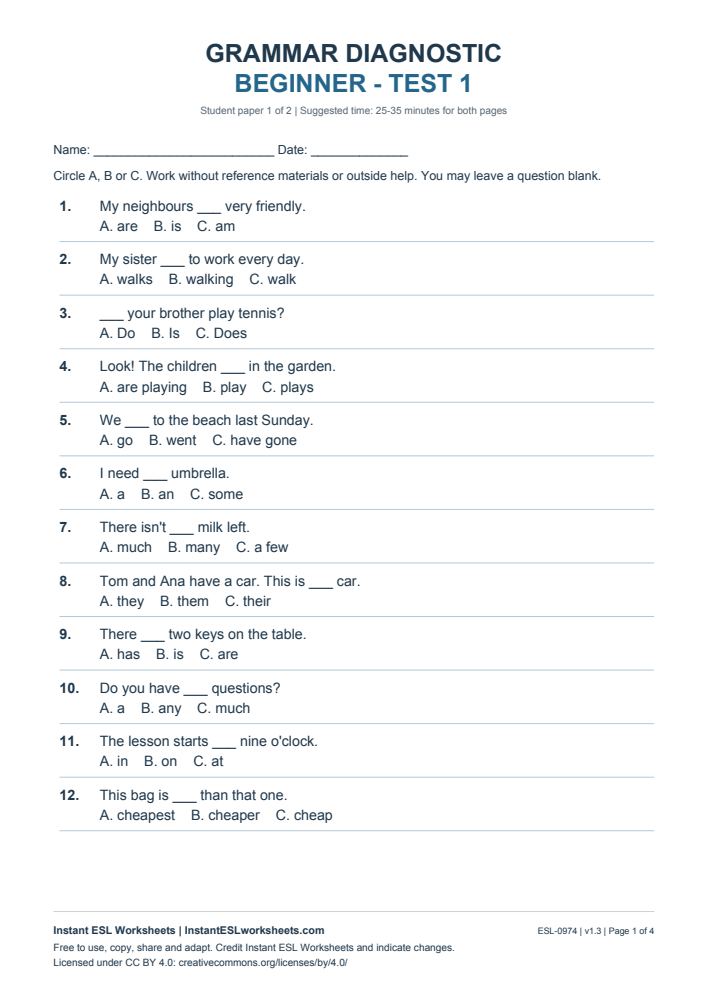
Beginner Grammar Diagnostic Test 1 checks 24 selected points across two student pages, followed by answers that identify the grammar to revise. Everyday examples cover be, routines, questions, actions now, past events and articles.
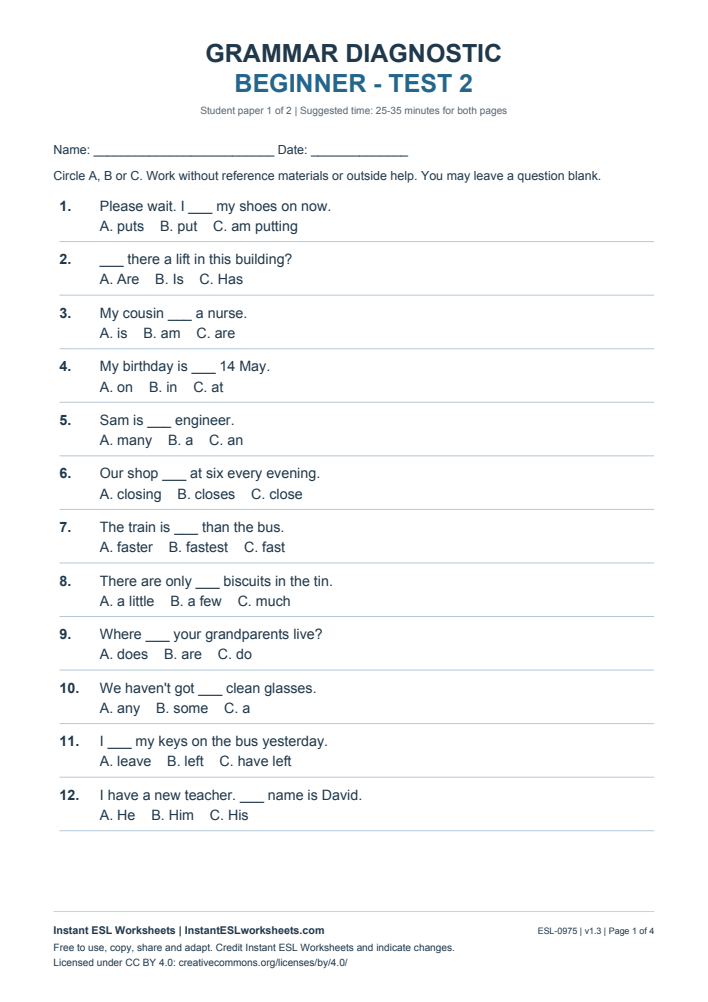
The second beginner diagnostic samples 24 grammar points using shoes being put on, a lift, an engineer and dated events. Each answer is accompanied by a revision note, with teacher material kept separate.
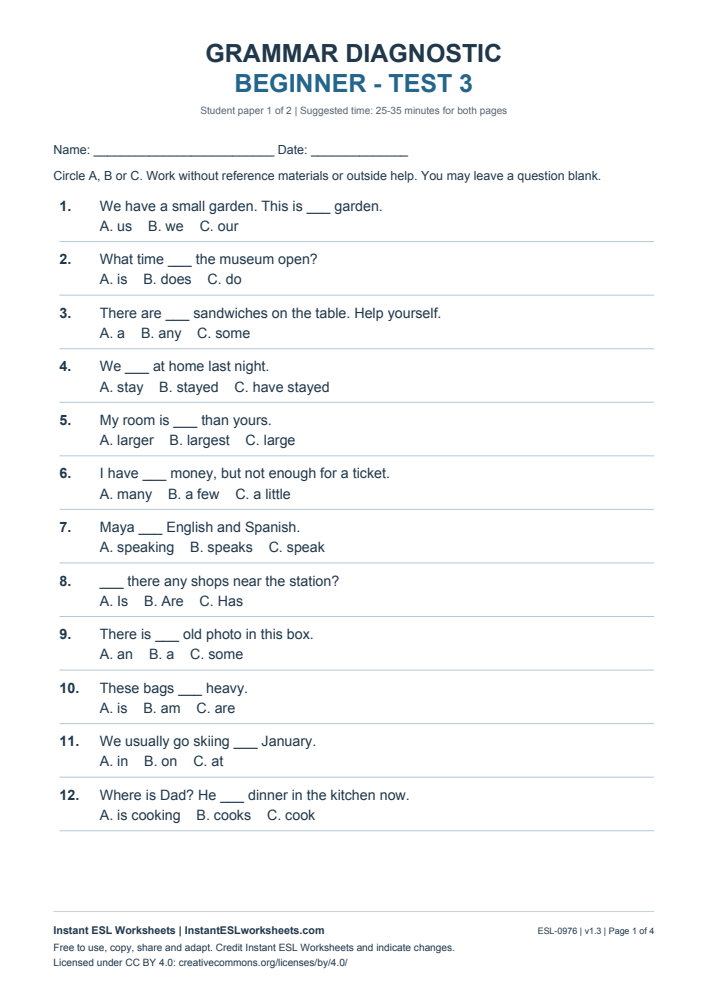
Beginner Diagnostic Test 3 revisits 24 targets through a shared garden, opening times, food quantities, past states and comparisons. The answer notes connect each response with a specific teaching point.
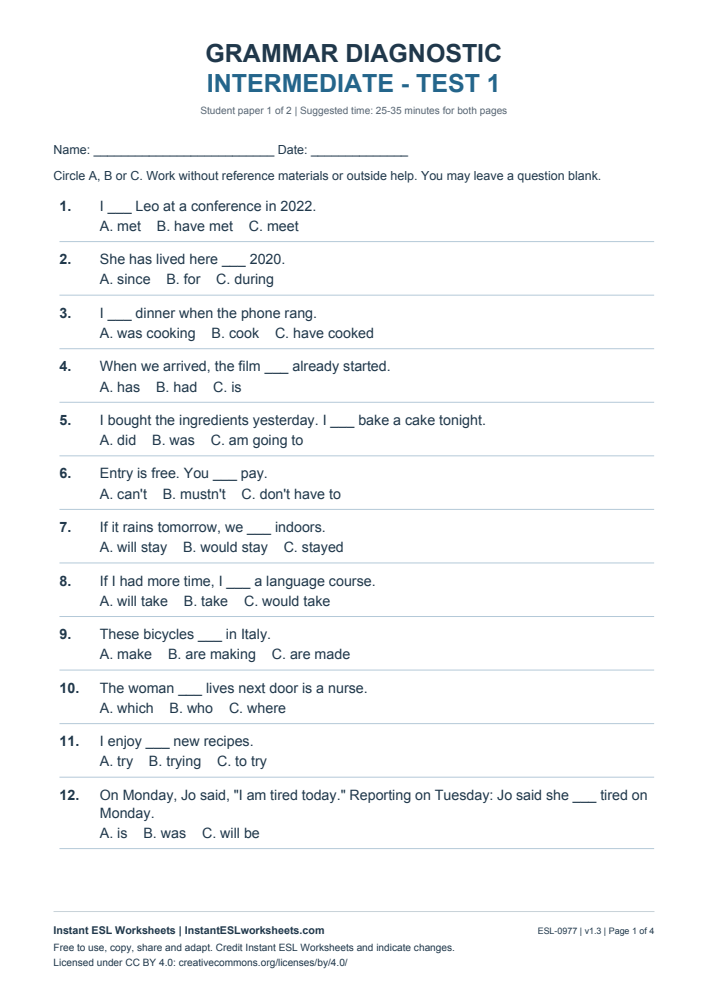
Intermediate Grammar Diagnostic Test 1 samples 24 structures through past meetings, continuing residence, interrupted actions, earlier events and future intentions. Its explained answers indicate what to revise after an error.
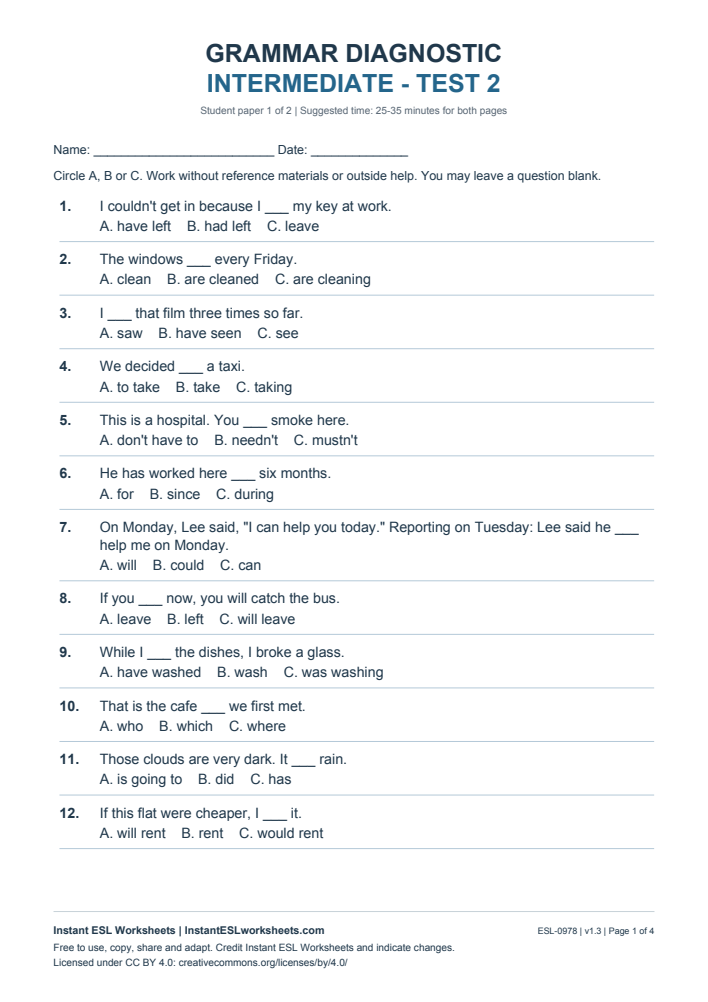
Test 2 offers another 24-item intermediate diagnostic, including a forgotten key, routinely cleaned windows, repeated film viewing and hospital rules. Answer commentary names the underlying grammar rather than only supplying letters.
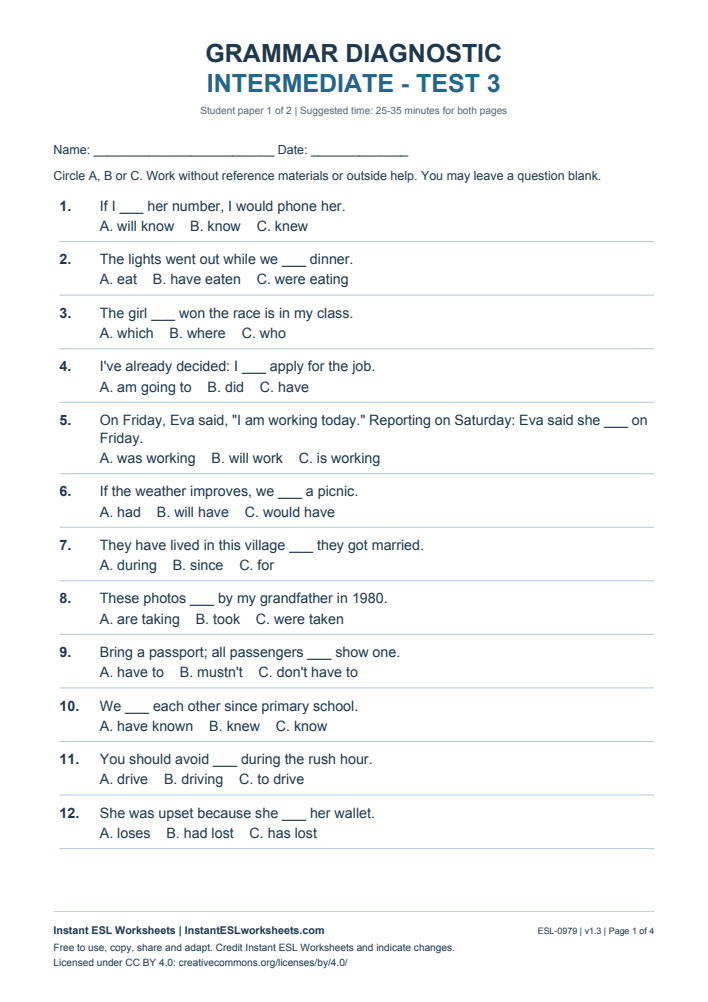
Intermediate Diagnostic Test 3 samples hypothetical conditions, interrupted meals, relatives, planned decisions and reported speech across 24 items. The teacher pages follow question order and explain the revision focus.
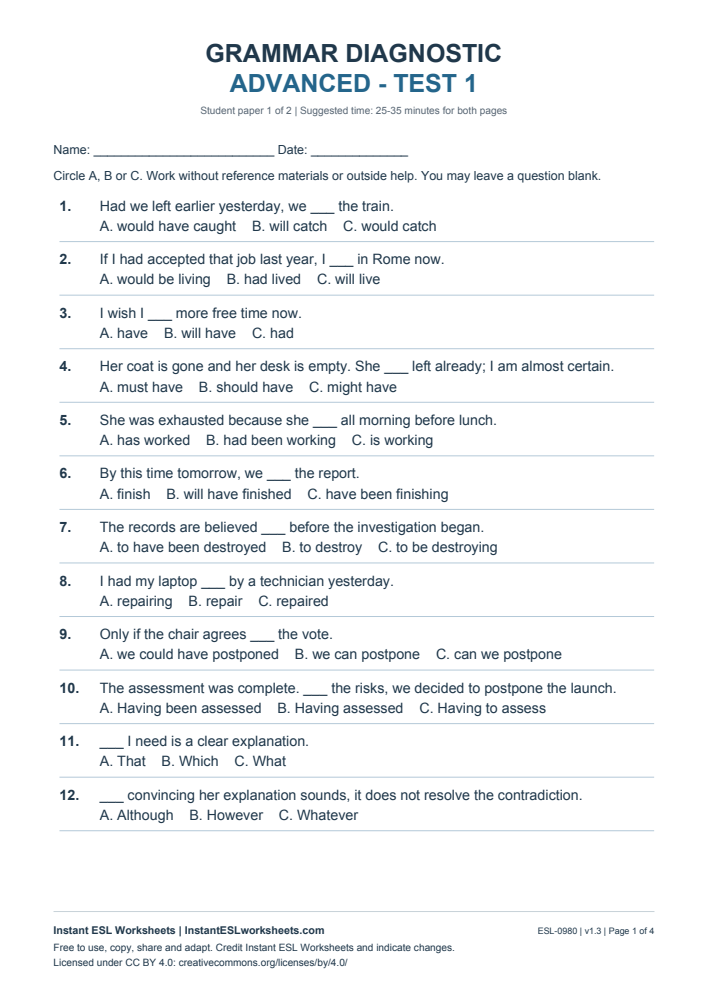
Advanced Grammar Diagnostic Test 1 checks 24 targets, including inverted conditionals, mixed-time results, regret, deduction and reporting passives. Separate answer pages explain the structures that need attention.
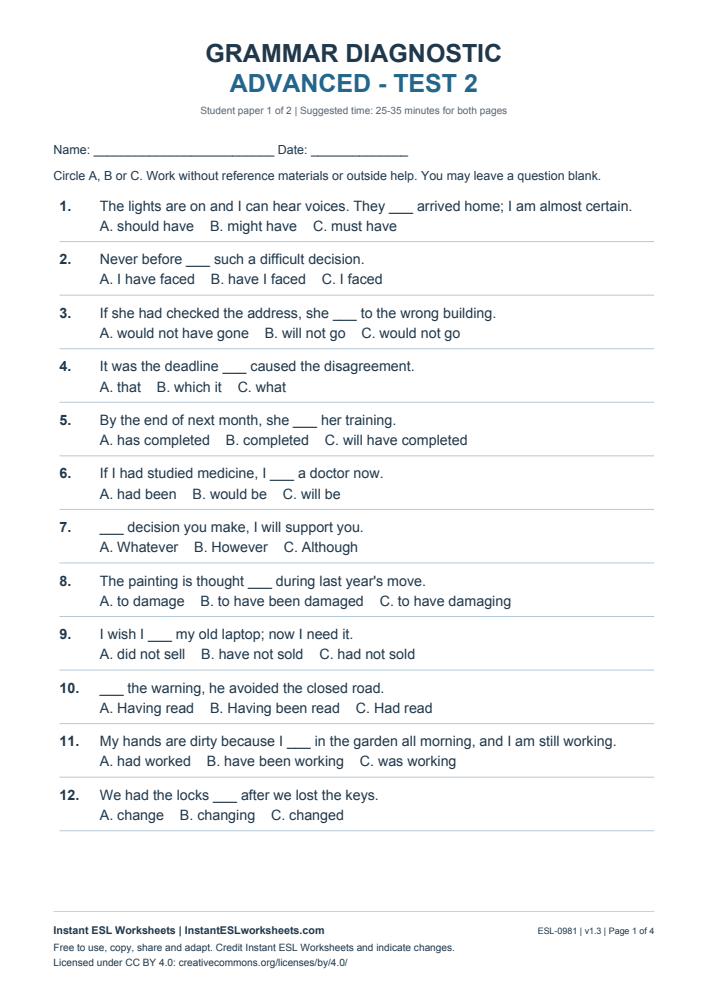
Advanced Diagnostic Test 2 covers 24 points through evidence of arrival, emphatic inversion, conditional regrets and reported past events. The key explains both the correct language and the target for revision.
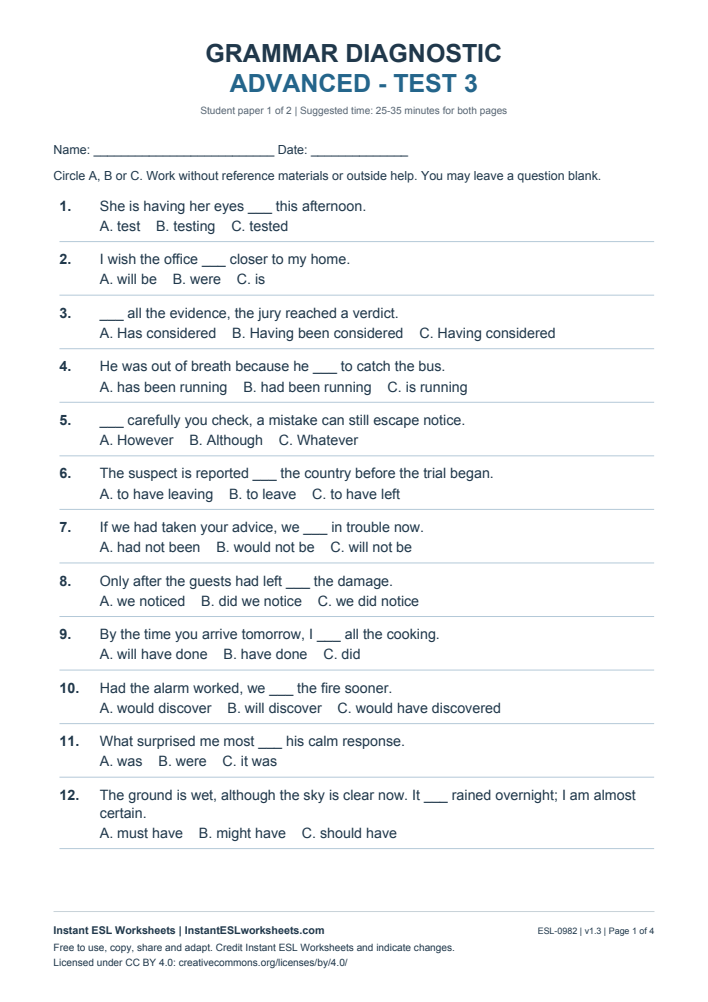
The third advanced diagnostic combines causatives, wishes, participle clauses, inversion and complex time reference in 24 items. Its ordered teacher notes link errors to grammar that can be taught next.